

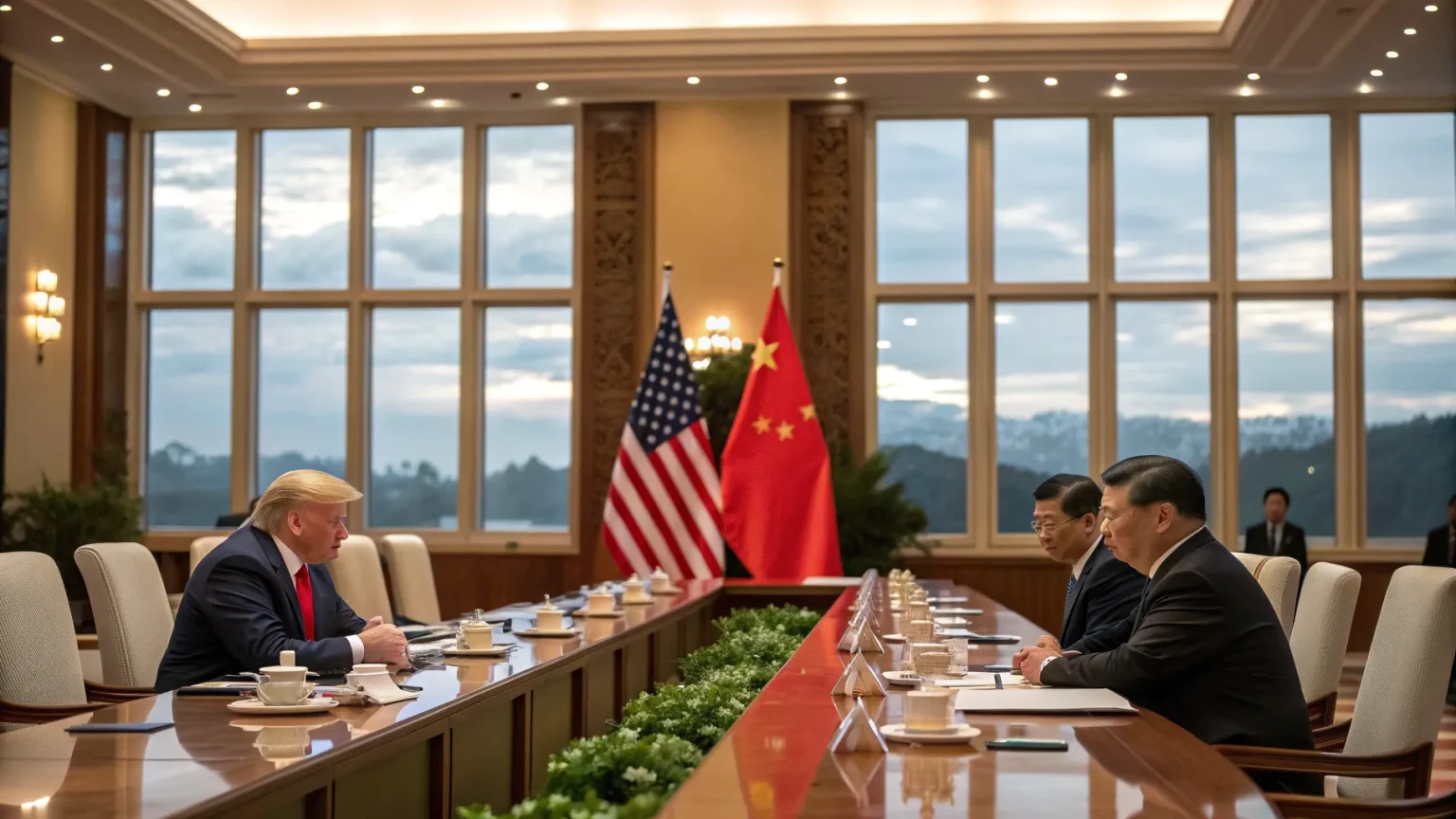
A high-level meeting on Thursday between President Trump and China’s leader Xi Jinping yielded steps to ease trade strains, but left TikTok’s future unresolved. Both sides signaled an interest in stabilizing economic ties after months of friction, even as negotiations over the social media app’s ownership remain stuck.
The talks produced decisions aimed at reducing pressure in areas of trade and investment, according to official statements. Yet one of the most watched issues—who controls TikTok’s U.S. operations—was not settled. Beijing said it is ready to keep talking with Washington to find a way forward.
A Truce With Loose Ends
Concerns over TikTok have simmered for years in Washington. Officials argue the app’s ownership by ByteDance, a China-based company, could expose American user data to foreign access. TikTok rejects that claim and says it has built safeguards for U.S. data. The debate has drawn bipartisan attention and has triggered efforts to force a sale of the U.S. business or face restrictions.
China, for its part, treats recommendation algorithms as sensitive technology. Past export-control rules require approvals for the transfer of such software, a step that complicates any sale. That legal backdrop has repeatedly slowed talks between buyers, the company, and regulators in both countries.
After the meeting, China’s Commerce Ministry signaled a cautious opening. In a brief statement, it said,
“China will work with the U.S. to properly resolve issues related to TikTok.”
What Was Achieved on Trade
Officials described a set of moves to dial down trade tensions, though neither side released a full list. The focus, according to people familiar with the discussions, centers on steps that could lower the risk of sudden policy changes and give companies clearer signals for planning. That includes renewed channels for dialogue and timelines for follow-up sessions.
Business groups have long sought predictability on tariffs, licensing, and market access. Even incremental easing can help firms manage costs and supply chains. Any measures that reduce uncertainty could support investment and hiring, especially in sectors exposed to tariffs and export controls.
TikTok Standoff Remains
The sticking point is ownership. U.S. lawmakers and security officials continue to press for structural change rather than new compliance promises. They argue that data access and content moderation risks are tied to control, not just to technical safeguards.
Beijing has its own red lines. Allowing the transfer of core recommendation technology would require special approval. Those controls give Chinese regulators leverage over any deal. That is why a political handshake alone cannot deliver a quick sale.
Analysts say the path to resolution runs through regulators, not only the two leaders. Any agreement must satisfy U.S. security reviews while also passing China’s export checks. Without that dual approval, potential buyers face uncertainty, financing challenges, and valuation gaps.
Industry and Policy Implications
The unresolved status has immediate effects. Media and tech companies looking at partnerships with TikTok will hesitate until there is clarity. Competitors could try to attract creators and advertisers who prefer a stable home for their content and budgets.
Policy makers also face a test. If trade ties warm while the app dispute drags on, markets may stabilize but the digital policy fight will continue. That could split economic talks into two tracks: tangible trade steps on one side and hard security issues on the other.
What Could Happen Next
- Regulatory talks: Working groups may define what a compliant ownership or data structure would require.
- Interim measures: Expanded data controls or audits could be proposed while a sale is explored.
- Legal paths: Court challenges could shape timing and options if new rules or orders are issued.
For now, the trade thaw offers businesses a measure of relief, but TikTok remains a flashpoint. The latest statements show both capitals want progress, yet neither is ready to give ground on control of key technology. The coming weeks will show whether regulators can craft a deal that protects data, respects export rules, and satisfies political demands on both sides. If not, companies and users should prepare for extended uncertainty and a renewed push for stricter measures.


