

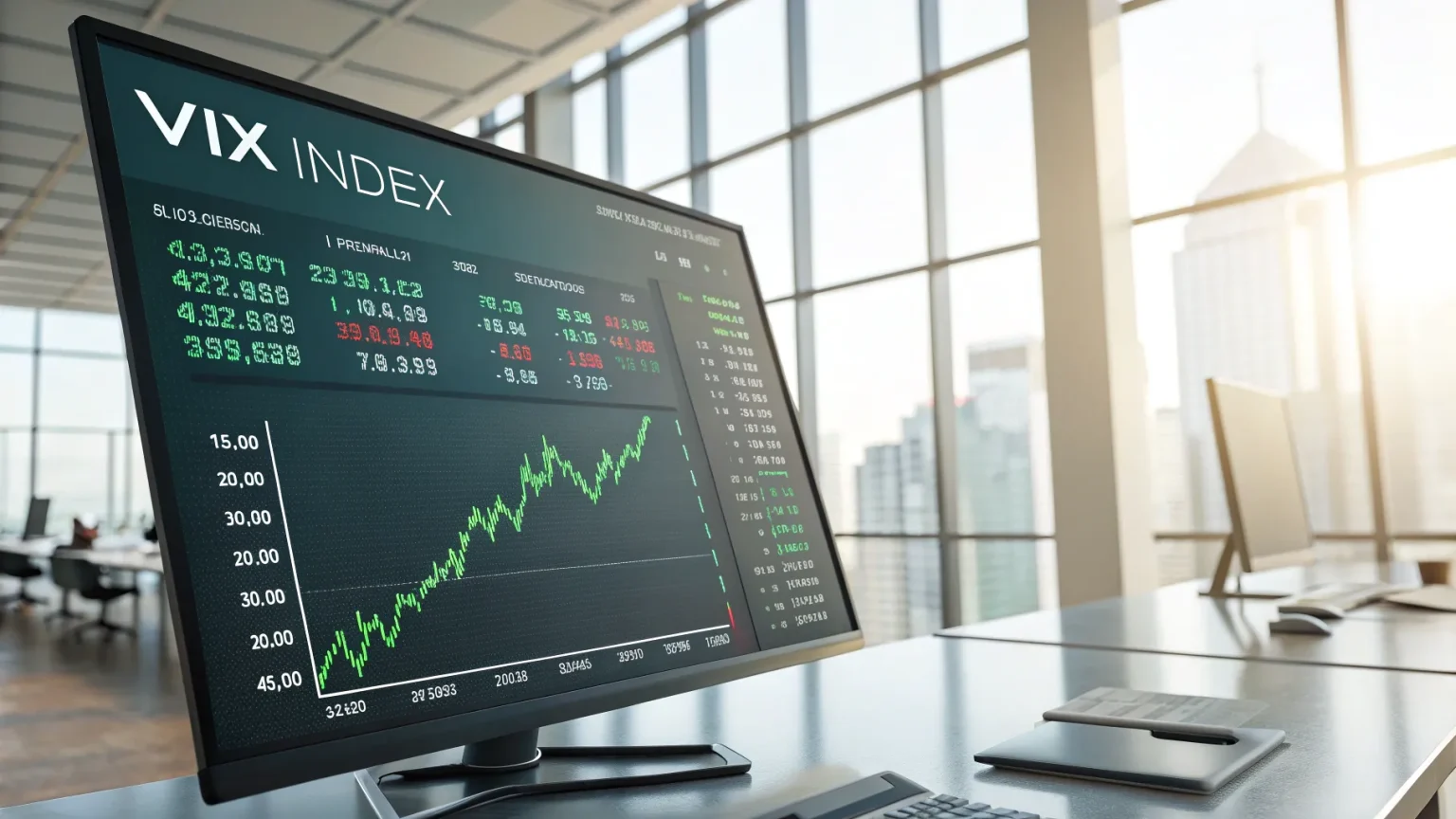
The VIX earnings week setup has been a reliable cue for self-employed investors, small business owners with stock-based compensation, and solo RIAs tracking client risk. When the Cboe Volatility Index ticks higher ahead of a packed earnings calendar, traders are buying protection, and the signal deserves more attention than the headline number suggests. This week’s VIX print just under 17, nudging up from the prior session, landed in the zone that historically precedes meaningful sector rotation rather than broad panic.
After watching the VIX earnings relationship across more than a decade of market cycles, I’ll unpack what this specific VIX move means, how self-employed operators with market exposure should read it, and what it does not tell you.
What a VIX earnings week reading of 17 actually signals
The VIX measures implied volatility on S&P 500 options over the next 30 days. A reading under 15 is classic complacency. A reading above 25 is fear. Between 15 and 20 is normal market caution, and within that band, the direction of the move matters more than the level itself.
A VIX at just under 17 rising during earnings week means traders are buying modest protection without actually fleeing equities. The options market is pricing in the chance of downside surprises from individual company reports, not a macro shock. That is a distinction that matters for any small operator thinking about hedging client accounts or personal portfolios.
Why the VIX earnings week pattern is worth tracking
Earnings weeks create clustered tail risk. On a typical week, 30 to 50 S&P 500 components report, and any single miss can drag a sector down without signaling a broader market problem. The VIX tends to drift 1 to 3 points higher during these windows, then settle back once results are digested.
For self-employed investors who manage their own retirement accounts or advisory clients, this pattern creates a predictable volatility seasonality. Selling covered calls into the VIX earnings week spike typically captures higher premium than selling them during quiet weeks. That can add meaningful annual yield on a long equity portfolio.
What the VIX earnings signal does not mean
Three common misreads are worth flagging.
It does not mean a crash is coming
A VIX print of 17 is well below the 2022 and 2024 crisis readings. It is a cautious number, not an alarm number. Self-employed people who panic-sell at this level usually regret it within a quarter.
It does not confirm an individual stock will miss
The VIX is an index-level measure. It cannot tell you whether Nvidia, Tesla, or Netflix will beat or miss. For stock-specific reactions, look at single-stock implied volatility and options skew, not the VIX.
It does not tell you how long the caution lasts
VIX spikes during earnings weeks tend to collapse within 7 to 10 trading days. If you are making hedging decisions, assume a short duration unless macro news intervenes.
How self-employed investors can use a VIX earnings signal
Four moves match this specific market setup for self-employed operators managing their own money or a small advisory practice.
Sell covered calls at a modestly higher strike
Elevated VIX lifts premium on out-of-the-money calls. Writing 30-day calls 5% to 7% above the market on long equity positions captures more yield than the same trade at VIX 13.
Add short-dated protection selectively
If a material portion of your net worth sits in concentrated equity, 30-day put protection is cheaper relative to potential downside at this volatility level than it will be if the VIX pushes past 22. Buy it as insurance, not as speculation.
Reduce single-stock earnings bets
Binary earnings trades look attractive during high VIX windows because premiums are rich, but the risk-reward is usually worse than advertised. Stick to diversified positions through earnings rather than concentrated single-name trades.
Hold cash for rotation opportunities
Sector rotations following earnings often create entry points in oversold names. Holding 5% to 10% cash through earnings week gives you ammunition without timing the bottom perfectly.
For more on managing personal finances as a self-employed professional, our bookkeeping step-by-step guide is a useful companion to any investment planning.
VIX earnings behavior across recent cycles
Looking at the past five years of data, the VIX’s average earnings-week reading has sat between 15 and 19 during non-recessionary periods. The spikes above 25 in 2022 were driven by macro factors, not earnings. That historical context matters because it frames the current 17 print as routine, not exceptional.
The Cboe VIX information hub publishes historical data and methodology if you want to go deeper. The SEC’s investor education on asset allocation is a neutral starting point for broader portfolio design around volatility signals.
How VIX earnings signals interact with self-employment income
If you are self-employed, your income is already more volatile than a W-2 paycheck. That changes how you should use market volatility signals. A salaried employee can afford to dollar-cost-average steadily without watching the VIX. A freelancer with lumpy income and estimated quarterly taxes needs tighter coordination between cash flow and investment decisions.
Practical guardrails I coach self-employed clients toward include:
- Keeping 6 to 12 months of operating expenses in cash or short-term Treasuries
- Separating tax reserves into a high-yield savings account, not a brokerage account
- Funding retirement contributions automatically based on a percentage of deposits, not on market reads
Our guide to essential self-employment tax forms covers the quarterly tax piece. Our California self-employment tax guide handles CA-specific filings.
Why VIX earnings matter for stock-based compensation
If you are self-employed but hold stock or RSU packages from a current or former W-2 role, the VIX earnings signal has a very practical use. Elevated implied volatility is the right time to collar concentrated positions. A zero-cost collar (buying a put, selling a call) costs less during higher VIX windows because the call premium you receive is richer.
Concentrated stock is one of the most common self-employment wealth situations that goes unaddressed until a crash exposes the risk. Use volatility windows to hedge systematically rather than reacting after the fact.
What the next two to three weeks may look like
Based on historical patterns, a VIX move from 16 to just under 17 during earnings week typically reverts within 10 trading days if macro conditions remain stable. If macro news (Fed decisions, geopolitical events, credit market stress) layers on top of earnings concerns, the VIX can push to 22 or higher and stay there longer.
The signals to watch are credit spreads, the 2-year Treasury yield direction, and dollar index moves. If two of those three move in the same risk-off direction, the VIX will likely follow. If they stay stable, expect the index to drift back to 14 or 15 by month-end.
Bottom line on this VIX earnings move
A VIX earnings week reading just under 17 is a routine caution signal, not a crash warning. Self-employed investors with equity exposure should use the window to sell covered calls, add selective protection, and avoid concentrated single-stock earnings bets. The move is an opportunity to collect premium and tune hedges, not a reason to sell into weakness.
For ideas on adding income streams that reduce concentration on market returns, see our guide to self-employment ideas.
Frequently asked questions
What does VIX earnings week actually measure?
The VIX measures 30-day implied volatility on S&P 500 options. During earnings week, it reflects how much option traders expect the index to move based on clustered company reports. A VIX earnings reading near 17 signals modest caution, not broad market fear.
Is a VIX of 17 high or low?
A VIX of 17 is moderate. Readings under 15 are historically complacent, 15 to 20 is normal caution, 20 to 25 is elevated concern, and above 25 is fear. A print of 17 during earnings week is typical, not alarming.
Should I sell stocks when the VIX rises?
Not automatically. A modest VIX rise during earnings week often reverses within 7 to 10 trading days. Panic-selling at a VIX of 17 usually costs investors more than waiting. The better move is often to hedge selectively or collect premium via covered calls.
How can self-employed investors use the VIX?
Self-employed investors can use elevated VIX windows to sell covered calls at higher premiums, add cheaper short-dated put protection, and collar concentrated stock positions. The VIX is a useful volatility signal, but individual stock implied volatility is a better guide for single-name decisions.
Does VIX always rise during earnings season?
The VIX tends to drift 1 to 3 points higher during heavy earnings weeks and settle back after results are digested. This earnings-week pattern is not guaranteed every cycle, but it is consistent enough that many options traders plan around it.
What is the difference between VIX and VXN?
The VIX measures implied volatility on S&P 500 options. The VXN measures the same on Nasdaq-100 options and usually runs a few points higher because tech earnings create sharper single-stock moves. Both are useful, but self-employed investors with broad market exposure typically watch the VIX first.
How is VIX earnings activity different from crisis-level VIX?
Earnings-week VIX moves tend to stay in the 15 to 20 range and reverse within two weeks. Crisis-level VIX (25 and above) reflects macro events like rate shocks, credit stress, or geopolitical crises and can stay elevated for months. The two setups warrant very different responses.


