

When will I get my tax refund is one of the most pressing questions I hear from self-employed professionals and business owners each year. If you’ve filed your return and are now anxiously waiting for that refund, you’re not alone. The IRS processes millions of tax returns annually, and understanding the timeline for when your refund will arrive can help you plan your finances more effectively.
In this guide, I’ll walk you through IRS refund processing times, explain how to check your refund status in real time, and share what commonly causes delays for self-employed filers like us. Whether you’ve just submitted your return or you’ve been waiting for weeks, this information will help you understand what to expect and when you can realistically expect your money back.
How long does it take to get a refund from the IRS?
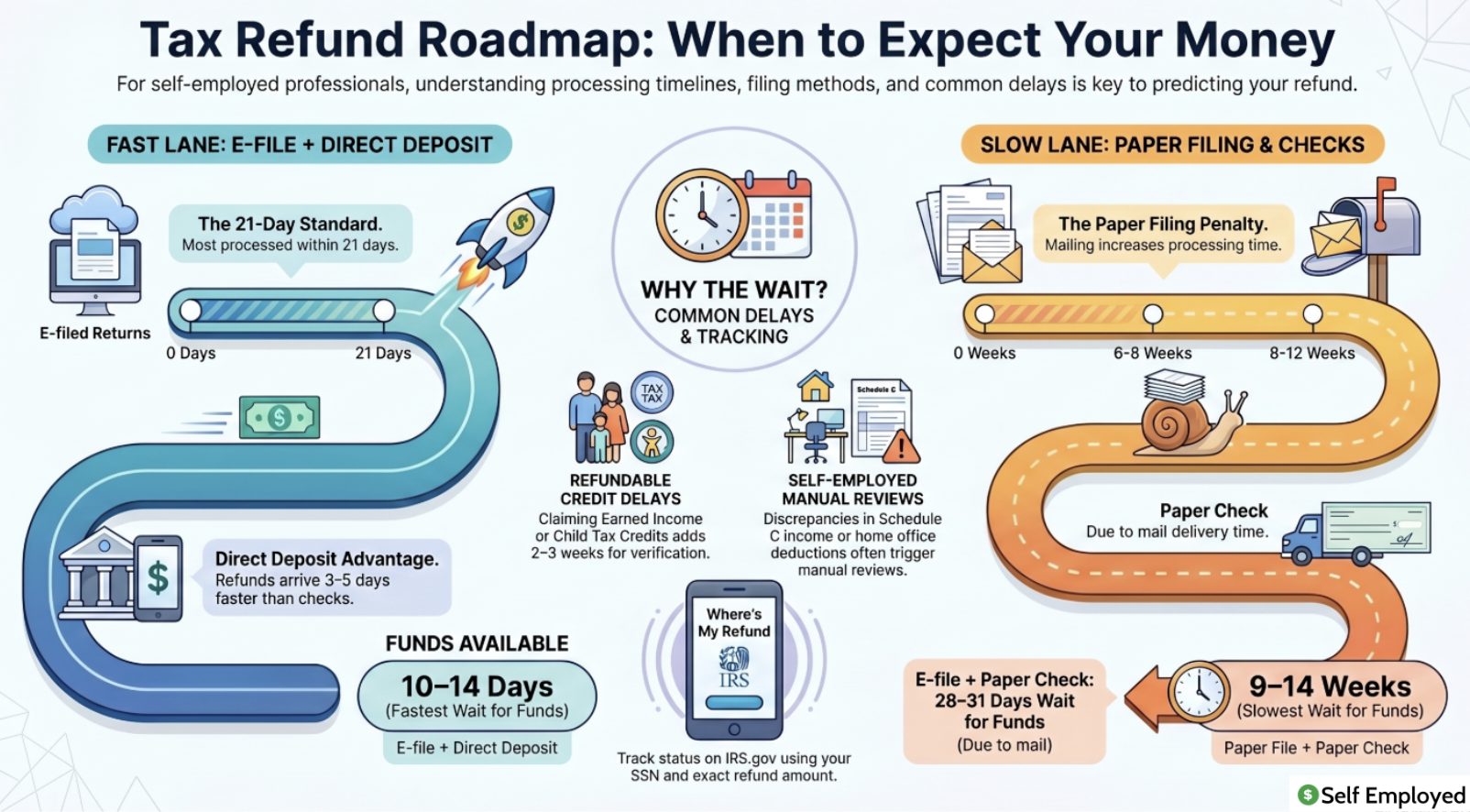
The most common question I field is about timing. The IRS typically issues refunds within 21 calendar days of receiving your return, but this is just an average. The actual timeline depends on several factors, including how you filed, whether you claimed certain credits, and if your return requires additional review.
If you file electronically, you can expect faster processing compared to paper returns. Most e-filed returns are processed within 21 days, though some can be issued sooner. When will I get my tax refund becomes easier to predict once you understand these variables and track your return through the IRS system.
When will I get my tax refund by filing method?
The way you file makes a significant difference in processing speed. I always recommend electronic filing to my clients because it’s both faster and more accurate than paper filing.
Electronic filing: Most returns filed electronically are processed within 21 days. This is the fastest method available. Direct deposit deposits refunds faster than paper checks, typically within 3-5 business days once the IRS releases your refund.
Paper filing: If you mail in a paper return, expect processing to take 6-8 weeks or longer. The IRS must manually scan and input information from paper returns, which significantly increases processing time. For self-employed professionals, I strongly recommend avoiding this method.
IRS refund processing timeline table
| Filing method | Standard processing time | Fastest possible time |
|---|---|---|
| E-filed with direct deposit | 21 days | 10-14 days |
| E-filed with paper check | 21 days plus 7-10 days mail | 14-21 days |
| Paper filed with direct deposit | 6-8 weeks | 4-6 weeks |
| Paper filed with paper check | 8-12 weeks | 6-8 weeks |
How to check your refund status
Rather than wondering when will I get my tax refund, you can check the status yourself through the IRS. I recommend checking your status regularly once you’ve filed.
The easiest way to check is through Where’s My Refund on IRS.gov. This tool updates once per day and shows you exactly where your return is in the processing queue. You’ll need your Social Security number, filing status, and the exact refund amount to use this tool.
You can also call the IRS at 1-800-829-1040 to speak with a representative about your refund status. While phone lines are often busy during tax season, this option works if you prefer speaking to someone directly.
If you used a tax professional or software to file, check your account on that platform as well. Many services provide real-time updates about your return’s status.
What causes refund delays?
Sometimes when will I get my tax refund takes longer than expected. Understanding common delay factors helps you prepare. For self-employed filers, several issues frequently trigger additional processing time.
Math errors or discrepancies: The IRS uses automated systems to catch calculation errors. If there’s a mismatch, your return goes to manual review, which adds time.
Missing or incorrect information: If your Social Security number, banking details, or other key information doesn’t match IRS records, processing slows down.
Claimed credits: If you claimed the Earned Income Tax Credit, Child Tax Credit, or other refundable credits, the IRS conducts additional verification. This is required by law and can add 2-3 weeks to processing.
Self-employment income documentation: As a self-employed professional, if your return shows significant business income or losses, the IRS may conduct additional review to verify your documentation matches.
Previous year issues: If your return from the prior year had problems, this year’s return may go into a review queue automatically.
Refund timing for self-employed professionals
I work specifically with self-employed professionals, and I want to be clear about what impacts your refund timing specifically. Self-employment income adds complexity that W-2 employees don’t face.
When you report business income on Schedule C, the IRS spends extra time verifying that your income and deductions are reasonable. If you claim significant deductions related to your home office, vehicle, or meals and entertainment, expect additional review.
For comprehensive guidance on what deductions you can legitimately claim, check out our guide to essential forms for self-employed professionals. Having proper documentation before you file significantly reduces delays.
Additionally, maintaining detailed records throughout the year through proper self-employed bookkeeping means your return is less likely to trigger a review.
When will I get my tax refund if I have back taxes or penalties?
If you owe back taxes from a previous year, the IRS will offset your current refund against what you owe. This means your refund will be reduced or eliminated entirely, depending on the amount owed. You should receive notification about this offset before your refund is issued.
Student loan defaults and unpaid child support can also result in offsets. While this isn’t a delay per se, it does affect when you receive your refund money.
Tax refund FAQs
Can I get my refund faster than 21 days?
Yes, some refunds are issued faster than 21 days. E-filed returns with direct deposit can be issued in as few as 10-14 days. However, 21 days is the standard timeframe you should expect. Certain factors like claimed credits may add time even for e-filed returns.
What if my refund doesn’t arrive by the promised date?
If your refund doesn’t arrive within the expected timeframe, first check your status on Where’s My Refund. If it shows as issued but hasn’t arrived, contact your bank. Mail delays can add 5-7 extra days. If the tool shows no refund issued, call the IRS at 1-800-829-1040.
Does filing jointly vs. filing separately affect refund timing?
Filing status doesn’t directly impact processing time, but it can affect whether certain credits and deductions trigger additional review. For married couples, filing jointly is typically simpler and less likely to cause delays than filing separately.
Will amending my return delay my refund?
If you discover an error and file an amended return on Form 1040-X, processing takes significantly longer. Amended returns are processed manually and can take 8-12 weeks or longer. Always double-check before submitting your original return.
Can I request my refund by check instead of direct deposit?
You can request a paper check if you provide that information on your return. However, paper checks take longer to arrive. Most direct deposit refunds arrive within 3-5 business days of being issued, while paper checks take an additional 7-10 business days.
Do estimated tax payments affect my refund timeline?
Estimated tax payments don’t affect processing time. However, they do affect your refund amount. If you’ve paid estimated taxes throughout the year and still get a large refund, that might indicate you withheld too much. Consider adjusting your estimated payments for the next year.
What’s the difference between when the IRS issues my refund and when I receive it?
These are two different dates. The IRS issues the refund when it approves your return and releases the funds. For direct deposits, your bank receives the money 3-5 business days later. For paper checks, add another 7-10 business days for mail delivery.
Are there state refund timing differences I should know about?
Yes, your state tax refund processes separately from your federal refund. State processing times vary by state. Some states process in 2-3 weeks, while others take 4-8 weeks or longer. Check your state tax authority’s website for specific timing. For California residents, our self-employment tax guide for California covers state-specific considerations.
Bottom line on tax refund timing
When will I get my tax refund depends on multiple factors, but most electronically filed returns are processed within 21 days. File early in the tax season, use direct deposit for faster delivery, ensure your information is accurate, and check your status regularly using the IRS tools available.
As a self-employed professional, taking time to organize your records and documentation throughout the year prevents delays. The effort you invest in proper bookkeeping and organization pays off not just in reduced refund delays, but in confidence that your return is accurate and defensible.


