

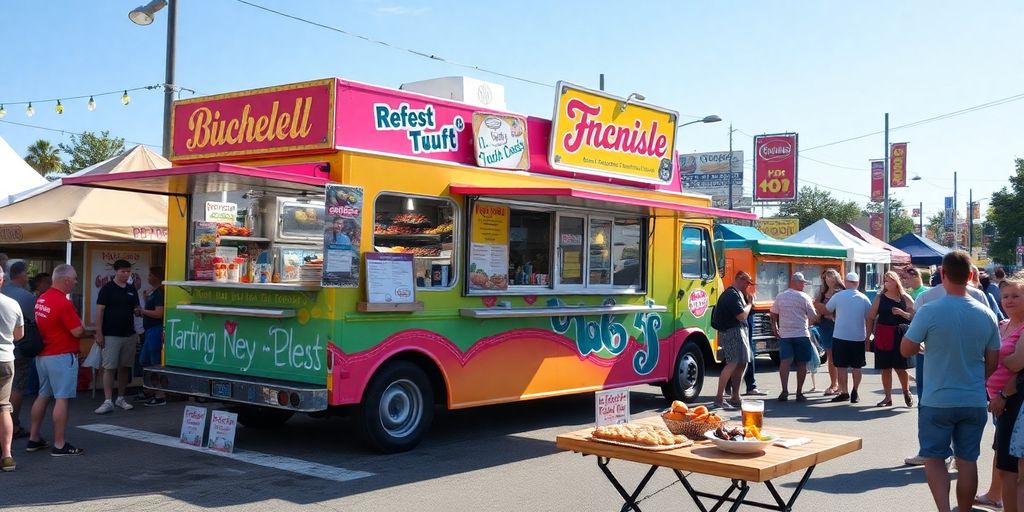
Picking from the right list of food truck names can quietly make or break a new mobile food business. After helping several self-employed food truck owners launch over the last few years, I have learned that the name is more than a label. It is your first sales pitch, your first piece of marketing, and the foundation of every social handle, decal, and menu you will ever print. This guide walks through how to land on memorable food truck names, the legal checks you should never skip, and dozens of name ideas you can use as inspiration.
The good news is that you do not need a marketing degree to nail this. You need clarity about your concept, a sense of humor, and a few hours to test ideas with the real people you hope to serve. The work pays you back every time someone repeats your name to a friend.
Why food truck names matter more than most owners realize
I have watched two trucks open in the same city with similar menus and very different outcomes. The one with a clean, memorable name pulled regulars within weeks. The other had a name nobody could spell or repeat, and the owner spent the first season fighting for visibility. Food truck names do real work in your marketing, and the cost of getting it wrong is months of wasted social ad spend and word-of-mouth that never quite catches.
A strong food truck name signals what you serve, hints at your personality, and survives the fast scroll on Instagram or TikTok. It also has to look right wrapped on the side of a vehicle, fit on a square logo, and be easy enough to say that a customer can recommend you without stumbling. Those are tougher tests than most first-time owners expect.
Qualities every great food truck name shares
Before we get to specific food truck names, it helps to understand the traits that consistently separate winning names from forgettable ones. After studying hundreds of trucks across multiple cities, the same five qualities show up over and over.
Clarity about the cuisine
The best food truck names hint at what you serve without spelling it out word for word. “Wokstar” instantly suggests Asian stir-fry. “Cheesy Does It” telegraphs comfort food. The customer should not have to read your menu to figure out whether they want to stop.
Easy to say and spell
If your customer has to think about how to pronounce your name, you have already lost a referral. Stick to words that flow naturally in conversation. Test by saying the name out loud in a noisy environment and watching whether someone hears it correctly the first time.
A personality that matches the food
A street taco truck and a fine-dining hot chicken truck have different personalities, and their food truck names should reflect that. Playful names work for casual concepts. Cleaner, more confident names work better for elevated or chef-driven menus.
Visual potential
Your name needs to look great as a logo, on a wrap, on a paper bag, and on a phone screen. Short names with strong consonants almost always design better than long, abstract phrases. Try to imagine the name in five-foot-tall letters down the side of your truck.
Legal and digital availability
Even the most clever name is useless if it is already trademarked, taken on Instagram, or claimed as a domain. The qualities above mean nothing if you cannot legally and digitally claim what you create.
Creative strategies for inventing memorable food truck names
When I sit down with a new food truck owner to brainstorm, we always work through these five strategies in order. They give you a structured way to generate dozens of food truck names so you can pick the strongest, instead of chasing the first idea that sounds cute.
Lean into puns and wordplay
Food puns work. A truck called “Lord of the Fries,” “Wok This Way,” or “Naan of Your Business” gets a smile, and a smile gets a follow. Start with the dish you serve, then list five to ten phrases that sound similar to common idioms or pop culture references. Read each out loud. The ones that make you grin without trying too hard are the keepers.
Pull from your cultural roots
If your menu draws from a specific cuisine, your name can honor that heritage with a single word, phrase, or family reference. “Abuela’s Kitchen,” “Fika Truck,” or “Bao Down” work because they are specific without being closed off. Customers love a name that hints at a real story.
Anchor it to your city or neighborhood
Local pride sells. “Brooklyn Bites,” “Austin Smoke Co.,” and “Brick Street BBQ” all work because they tell customers exactly where the food belongs. This strategy is especially strong if you plan to operate in one metro area for the long term, because locals start defending you on social media as their truck.
Use your founder’s name or initials
Some of the most enduring food truck names are simply the founder’s name or a casual nickname. Think “Joe’s Cheesesteaks,” “Mama Lou’s Tacos,” or “DJ’s BBQ.” Personal names humanize your brand, and they age well. They also make it easier to expand into catering, a brick-and-mortar location, or a product line later on.
Combine two unexpected words
Some of the most viral food truck names are mash-ups of two ordinary words. “Burger Bliss,” “Crepe Crusader,” or “The Halal Guys” all work because the combination is unexpected enough to stick in memory. Make a list of food words and a list of feeling words, then mix them.
50 food truck names to inspire your shortlist
Here is a working list of food truck names organized by cuisine. Use these as starting points, not finished answers. The goal is to spark ideas, not copy.
Tacos and Mexican
Taco ‘Bout Awesome, Holy Mole, Taco la Vista, Que Pasa Tacos, El Rolling, Casa Calle, Tacomotive, La Trompa, Taco Trail, Salsa Verde Truck.
Burgers and American comfort
Burger Bliss, Patty Cake, The Grilled Cheese Garage, Smoke and Sizzle, Big Buns Co., Fry Hard, Bun Voyage, Chuck Town, The Greasy Spoon Express, Sliders Mobile.
BBQ and Southern
Pit Stop BBQ, Smoke Signal, Hog Wild, Brisket Boss, Low and Slow, Honey Hush BBQ, Cluck and Squeal, Bones Mobile, The Smoking Section, Drippin’ Pit.
Asian and fusion
Wok This Way, Bao Down, Pho Real, Naan Stop, Sushi Samba, Curry On, The Dumpling Drop, Kimchi Cab, Ramen Roadshow, Banh Mi Bound.
Sweet and dessert
Scoops Mobile, The Donut Drive, Sugar Rush, Whisk Me Away, Churros Y Mas, Cookie Crawl, Pie in the Sky, Sweet Tooth Truck, Cakes on Wheels, Frosting and Friends.
How to test food truck names before you commit
I never let a client lock in a name without a real-world test. The list of food truck names that look good on paper and the list that actually win in the wild rarely match. Run your top three through these four tests before you put a deposit on a wrap.
Say it in a noisy room
Pull up the name on your phone and say it out loud in a coffee shop or a busy street. If you cannot get the name across in one shot without spelling it, the name is too clever or too soft. Customers will not work harder than that to remember you.
Show your top three to your target customer
Walk three names into a friend’s office, a barbershop, or a Saturday market and ask people to vote. Watch their face, not just their answer. The name that makes someone smile or repeat it without prompting is the one you want.
Search every social platform
Look up your shortlist on Instagram, TikTok, Threads, and YouTube. If a similar account already has a strong following in your category, drop the name. Even if you are technically allowed to use it, you will spend years competing with another brand for the same hashtag and search results.
Run a quick Google check
Search the name in quotes plus your city. If another local food business is already operating under the same or a similar name, the customer confusion is not worth it. Look at the second and third pages of results too, because a small competitor can still steal traffic.
Legal checks you should never skip
Once you have a winner, the legal step is what separates a hobby food truck from a real business. I have seen too many self-employed owners pour money into branding before they cleared the basic legal checks, only to receive a cease-and-desist letter six months in.
Search the federal trademark database
Run your final name through the USPTO trademark database. If a similar mark exists in the food and beverage class, talk to a trademark attorney before you go any further. Even a non-identical match can create legal exposure if it is in the same industry and geography.
Confirm domain and social handle availability
Buy your dot-com domain immediately, even if you only plan to use Instagram for now. Lock the same handle on every major platform, including ones you do not currently use. Consistent handles are worth real money when you grow because customers will remember one name across every channel.
Register your business correctly
Once you commit, file a DBA, LLC, or other business structure with your state. The right structure protects your personal assets and gives you the legal foundation to sign vendor contracts, open a business bank account, and hire help. The U.S. Small Business Administration has a clear breakdown of options if you are starting from scratch.
Check local food vending rules
Some cities require a separate permit for the business name as it appears on your truck. Confirm your name is allowed under your city’s mobile food vending ordinance before you order vinyl. A quick call to your local health or business licensing office can save you from a fine on opening day.
Branding tips that take your name from good to great
Your food truck name is the start, not the finish. The brand built around it is what turns a clever name into a business that books out events, lands catering gigs, and grows into a brick-and-mortar location.
Pair your name with a tight visual identity
A consistent color palette, two fonts, and a clear logo do most of the heavy lifting. Your wrap, menu, social posts, and uniforms should all look like they came from the same family. Customers should be able to recognize your brand from across a parking lot.
Build a tagline that earns its keep
A tagline supports your name in two or three words, often spelling out the cuisine or vibe in plain language. “Wokstar” might use “Stir-fry on demand.” “Lord of the Fries” might use “Crispy. Loaded. Local.” Taglines do the explaining your name should not have to.
Keep your menu language on brand
Once you choose a personality, carry it through every customer touchpoint. Menu item names, social captions, and even receipts can reinforce the brand. A truck named “Bao Down” is funnier when the menu is full of titles like “Bao Wow” and “Bao Out.” If you are also tracking your business finances, my self-employed bookkeeping guide walks through how to keep your truck’s books clean as the brand grows.
Let real customers help you market
The best brand work happens after launch. Encourage customers to share their food, repost the best photos, and feature your regulars. A name that customers love to repeat is the cheapest marketing channel you will ever have. As you scale, look at self-employed forms and paperwork to make sure your accounting and tax setup keeps up with the growth.
Common food truck naming mistakes to avoid
Most naming failures share the same root causes. Watch out for these traps before you commit.
Generic names fade fast. “Tasty Truck” or “Best Eats Mobile” feel safe, but they offer nothing for customers to remember. Names that try to do too much also lose their audience. A four-word name that explains every cuisine on the menu is harder to remember than a single, sharp word.
Trendy references age badly. A truck named after last year’s viral meme can feel dated within a season. Hard-to-spell or in-language names without an obvious phonetic cue can be beautiful but expensive in customer search traffic. And names that already exist in your local market, even loosely, will dilute your marketing for years.
Frequently asked questions
What makes the best food truck names stand out?
The best food truck names are short, easy to spell, hint at the cuisine, and carry a clear personality. They also have to be visually strong on a logo, available as a domain, and free of trademark conflicts in the food and beverage class.
How do I check if my food truck name is taken?
Search the USPTO trademark database, your state business registry, and every major social media platform. Also run a Google search with your city to catch local competitors that might not show up federally.
Should my food truck name include the city or neighborhood?
Including a local reference works well if you plan to stay in one market for the long term. It builds local pride, but it can limit you if you ever expand to other cities or franchise the brand later.
Is it okay to use puns in food truck names?
Puns work as long as they are easy to say, easy to spell, and tied directly to your menu. Avoid puns that require a second sentence to explain, since most customers see your name in passing and need to remember it without help.
Do I need to trademark my food truck name?
Trademarking is not required, but it is one of the strongest forms of protection if you plan to grow into multiple trucks, catering, or a brick-and-mortar location. At minimum, file a DBA or LLC under your name with your state to lock in the legal foundation.
How long should a food truck name be?
One to three words is the sweet spot. Short names design better as logos, fit cleanly on a wrap, and are easier for customers to remember and recommend. Anything longer becomes hard to read at a distance and easy to mistype.
Can I change my food truck name later?
Yes, but it is expensive. You will lose social followers, search rankings, and reorder costs for menus, signage, and the truck wrap. Get the name right the first time so you do not pay for a rebrand within your first two years.


