


Running my own business taught me cash flow discipline the hard way, but becoming a parent made me rethink risk. I wanted coverage that protected my family and my work, without wrecking my budget. I started by asking founder friends what they used. The same names popped up for comparing quotes: Ladder, Haven Life, Ethos, and Policygenius. That gave me a short list, but not an easy answer.
My goal was clear: speedy online approval, clear pricing, and the flexibility to adjust coverage as my income swung. I also needed riders that made sense for freelancers, like the option to increase coverage after big life events. What surprised me was how different the application experiences felt. Some asked for an exam, some didn’t. Some let me tweak coverage instantly; others locked me into clunky steps that felt like they were built for a past era.
The most successful founders I know don’t overcomplicate this. They pick a reputable company, get term life that matches income and debts, and review it annually. Simple beats perfect.
You don’t need the fanciest policy or the priciest rider. You need a reliable insurer, a fair rate, and a process you’ll actually finish today.
Comparison of 6 Top Affordable Life Insurance in 2026 With Pricing and Recommended Use Cases
What is an Affordable Life Insurance Provider?
An affordable life insurance provider is a company or marketplace that helps you buy term or whole life coverage online at competitive rates, with a focus on quick quotes and clear terms. There’s a saying I use with founders: protect the downside first. Life insurance follows that rule. It trades small, predictable premiums for financial stability your family can count on if the worst happens.
Think of it this way: spending $20–$40 per month for a $250,000–$500,000 term policy can replace years of income and wipe out debts. That’s far more leverage than stashing a few hundred dollars a month in savings. At its core, life insurance exists to pay a tax-free cash benefit to your beneficiaries if you pass away. Self-employed people use it to cover income replacement, childcare, mortgages, and business loans, with premiums paid monthly or annually.
Many pair life insurance with disability insurance, an emergency fund, and a simple estate plan (will, healthcare directive, and beneficiary updates) to round out protection. Not every option is equal on underwriting speed, financial strength backing, or flexibility, so it pays to compare carefully.
How to Choose the Top Affordable Life Insurance
Picking life insurance as a self-employed pro can feel overwhelming. So many sites promise instant approval, but the terms, riders, and prices can vary a lot once you apply.
Here are some questions you should ask when looking for a policy:
- Is there a free way to compare multiple quotes before applying?
- How simple is the online application for basic term coverage?
- Can I increase or decrease coverage as my income changes?
- How do premiums scale with age, coverage amount, and term length?
- Does it include riders I care about (accelerated death benefit, conversion)?
- What financial strength rating backs the policy (A.M. Best, etc.)?
- If I need to switch later, how hard is it to replace coverage?
- What’s the claims track record and customer support response time?
- Any medical exam required? If so, how flexible is scheduling?
6 Top Affordable Life Insurance in 2026
Here are my top picks for the best affordable life insurance:
- Ladder
- Haven Life
- Ethos
- Policygenius
- Bestow
- Sproutt
Let’s see which one is right for you.
1. Ladder

Ladder is a fully online term life provider designed for fast decisions and ongoing flexibility. Policies are issued by highly rated carriers (like Allianz Life Insurance Company of New York and others, depending on your state). The company is known for its “laddering” feature and a clean, modern application flow that busy freelancers actually finish.
You can check rates in minutes and apply with a mobile-friendly form. Many applicants get a decision without a medical exam, though health history can trigger one. Daily tasks are simple: view policy details, adjust coverage up or down, and download documents from your dashboard.
Ladder has leaned into speed and control over the last few years. Its instant coverage adjustments make it easier to match your policy to changes in income, new dependents, or a mortgage payoff without starting over.
On higher amounts, underwriting may be more detailed, but you still keep digital control. That flexibility—especially the ability to reduce coverage and premiums instantly—isn’t common among competitors.
I use Ladder for my own term coverage. The deal-maker for me was the ability to adjust coverage online as my needs changed, rather than reapplying or calling an agent each time.
One extra I appreciate: the interface is clear, documents are easy to find, and support responses have been straightforward and helpful when I had policy questions.
How Ladder works and key features
Ladder’s interface is minimal and fast. You answer a short health and lifestyle questionnaire, pick coverage and term, and see your price update in real time. There are no templates to fuss with—just clean screens and clear steps.
Advanced users don’t need to worry about complex settings. The power here is in policy control: you can increase or decrease coverage (subject to underwriting rules) and see the premium change instantly. You can also manage beneficiaries and download statements in your account.
Analytics are simple: you’ll see payment history and policy status. There’s no “automation” in the marketing sense, but billing and renewals are handled automatically. Support is available via chat and email, with phone support for policy questions.
As one founder friend put it, “I finished the application between client calls. No sales pressure, just clear steps.” — Independent designer, California
Overall, it’s beginner-friendly while giving power users the control they want over time.
Who Ladder is for
Best for freelancers, consultants, creators, solo agency owners, and startup founders who want flexible term life. It shines for people whose income or debts change, thanks to easy coverage adjustments. If you want permanent life insurance or complex riders, a traditional insurer or broker may fit better. No advanced technical skill needed—just basic online forms.
Ladder pricing
Ladder prices term life based on age, health, coverage amount, and term length. You can get a free online quote, and many applicants receive decisions quickly. There’s no cost to adjust coverage downward; increases may require additional underwriting.
- Term Life: Advertised from $5/month, adjustable coverage, includes online policy management and accelerated death benefit where available
- Higher Coverage Amounts: Pricing scales with coverage and age; medical exams may be required for larger face amounts
Compared to peers, Ladder is competitive for healthy applicants and very strong on value due to its instant “laddering” feature. Annual billing can simplify budgeting, but monthly auto-pay is common for self-employed folks. Because life insurance is personalized, I recommend getting quotes for a few coverage amounts (e.g., $500k vs. $750k) to see the price steps.
Ladder pros and cons
Pros
- Adjust coverage and premium online without reapplying
- Fast, fully digital application for many applicants
- Competitive pricing for healthy, non-smoker profiles
- Clear dashboard and easy policy documents
Cons
- Not designed for complex permanent policies
- Medical exam may be needed for higher coverage
- Fewer rider options than some traditional carriers
If you want flexible term life with self-serve control, Ladder is a great pick. If you need whole life or advanced riders, use a marketplace like Policygenius.
Ladder reviews
Ladder has public customer feedback on platforms like Trustpilot and the Better Business Bureau. Ratings and counts change over time; I suggest checking those pages directly for the latest snapshot.
2. Haven Life
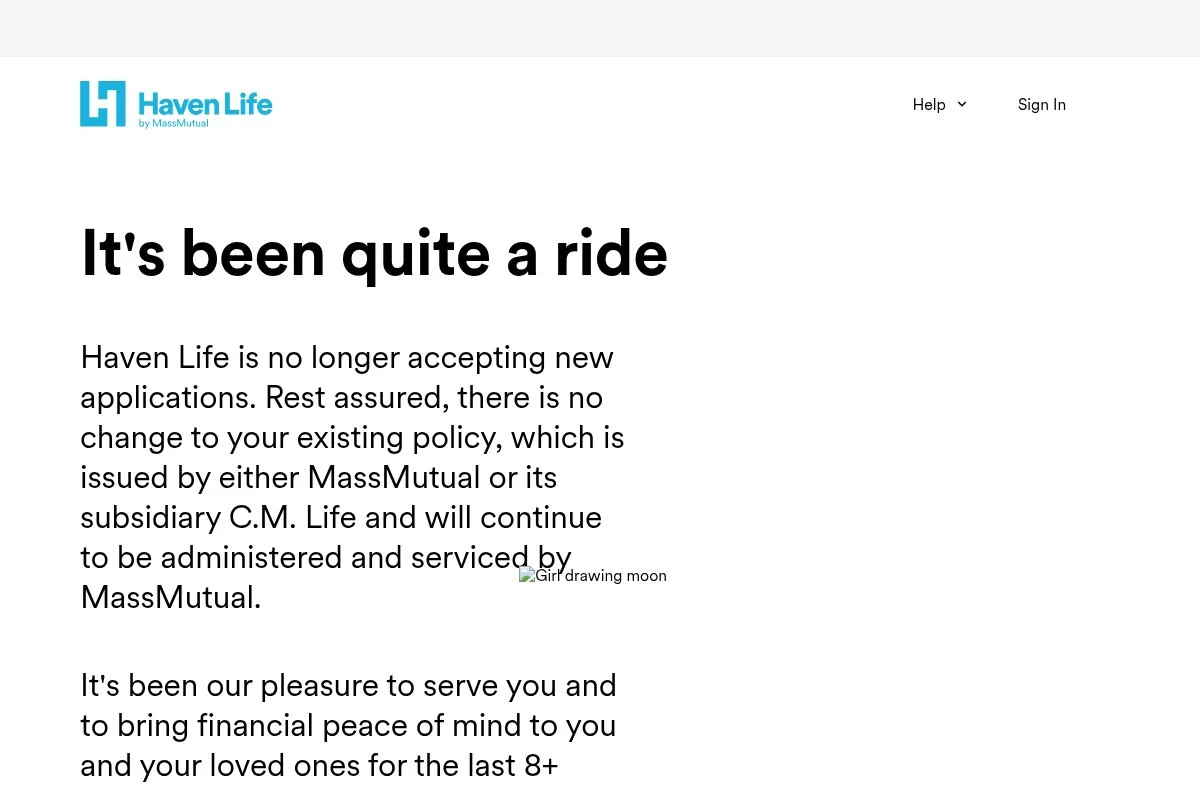
Haven Life is a digital-first term life provider backed by MassMutual, a long-standing insurer with strong financial strength ratings. That backing gives many self-employed folks confidence in long-term claims-paying ability.
Getting started is quick: answer health questions, pick a term, and see a quote. For many healthy applicants, Haven offers accelerated underwriting without a medical exam. The portal keeps paperwork tidy and lets you manage beneficiaries and billing online.
Haven has continued to streamline its online experience and broaden eligibility in recent years. The brand also offers helpful educational content that makes choosing coverage easier for first-timers.
Premium features focus on reliability: MassMutual’s backing, clear policy materials, and, in some cases, the option to convert to permanent coverage through the issuing company. Not every pure-play online insurer offers that path.
I didn’t choose Haven only because Ladder’s adjustable coverage fit me better. But I recommend Haven often to readers who want MassMutual’s strength with a modern sign-up flow.
I also like Haven’s straightforward site content and tools. For many, the clarity alone reduces the friction of finally getting insured.
How Haven Life works and key features
Haven’s application feels like a clean, guided form with clear progress markers. You’ll select a term (often 10–30 years) and coverage amount, then see pricing updates. The interface favors plain language over jargon, which I appreciate.
There’s no template system to learn. Advanced users will care more about underwriting rules and the possibility to convert to permanent coverage (availability depends on the policy). The portal includes basic account tools, documents, and beneficiary management.
Support is available by email and phone, with online FAQs that answer most first-pass questions. There’s no “automation” beyond billing and reminders, but the experience is smooth from quote to policy issue.
Bottom line: Haven is beginner-friendly and backed by a major insurer, which is exactly what many solo business owners want.
Who Haven Life is for
Great for freelancers, independent contractors, side-hustlers, and new parents who want a trusted brand and fast online approvals. It’s strong for first-time buyers who value clear guidance. If you need advanced riders or specialized business coverage, a broker may be a better fit. Minimal technical skill required.
Haven Life pricing
Haven prices term life based on age, health, coverage, and term length. You can get a free online quote, and many applicants receive quick decisions, with some approved without a medical exam.
- Haven Term: Advertised starting around $14.99/month for qualifying applicants, includes accelerated underwriting for some profiles and online account management
- Higher Coverage/Older Ages: Prices scale with risk and amount; exams may be required based on your profile
Value is competitive for healthy applicants, and the MassMutual connection is a draw. If you’re comparing, price out multiple terms (e.g., 20 vs. 30 years) to see long-run cost differences. Monthly and annual payment options are available, with standard savings tied to term length and age at purchase.
Haven Life pros and cons
Pros
- Backed by MassMutual’s financial strength
- Fast, online application with accelerated decisions
- Clear, beginner-friendly education and tools
Cons
- No on-demand coverage adjustments like Ladder
- Medical exam may be needed for some profiles
- Fewer niche riders than certain traditional carriers
Choose Haven if you want a modern flow plus the comfort of a major insurer. If dynamic coverage control is key, Ladder edges it out.
Haven Life reviews
Haven Life has public customer feedback on sites such as Trustpilot and the Better Business Bureau. Ratings can shift; check those listings for the most current scores and comments.
3. Ethos
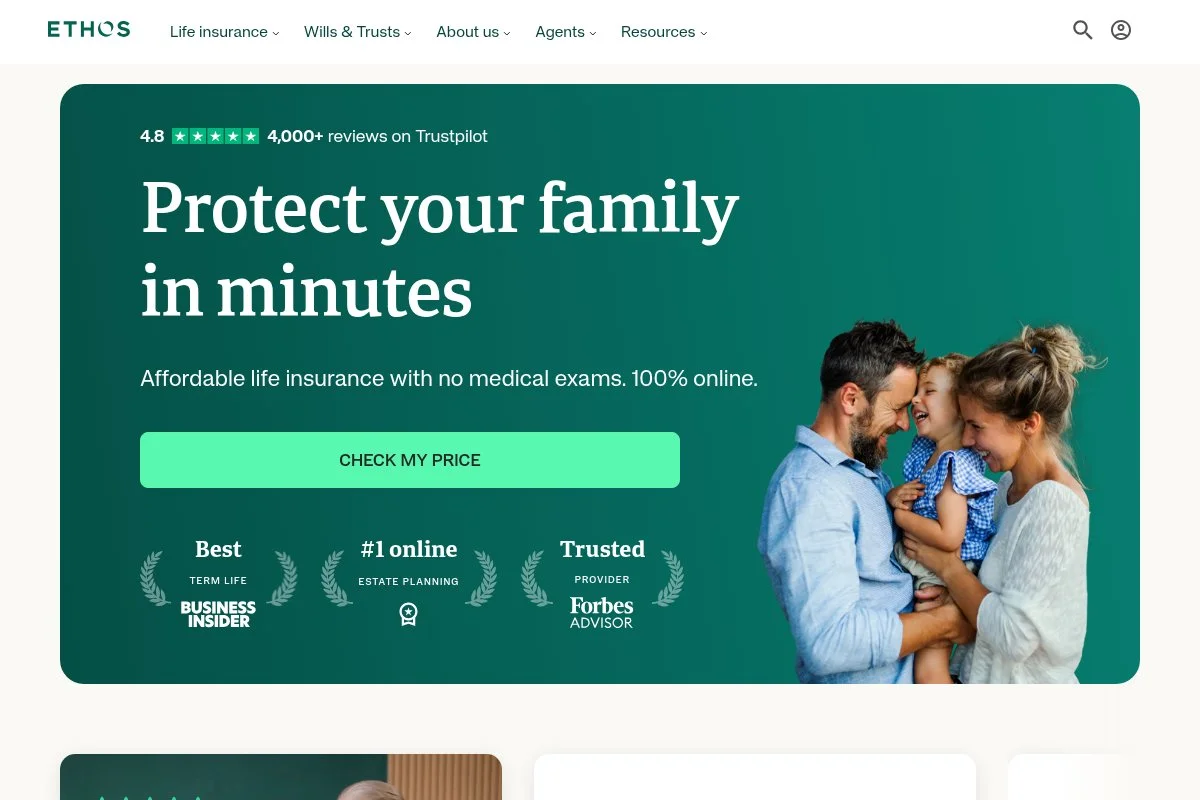
Ethos is focused on quick, no-medical-exam options for many applicants, with policies issued by established insurers. It built a reputation for speed and straightforward online forms, which busy founders tend to love.
You can get a quote in minutes and submit an application without scheduling an exam in many cases. The dashboard keeps everything digital, including documents and beneficiary updates. It’s a strong “get it done today” experience.
In recent years, Ethos has expanded eligibility and further streamlined underwriting for qualifying profiles. That makes it more accessible for a wider range of ages and health histories, though final eligibility varies by insurer and state.
Premium features center on speed and simplicity. While riders are more limited than with some traditional policies, the appeal is clear pricing and fast decisions. For freelancers who hate appointments, that’s a win.
I didn’t switch to Ethos because I value on-demand coverage changes, but I recommend it to readers who want a no-fuss application and prefer to avoid a medical exam when possible.
Support has been responsive in my tests, and the site’s FAQs do a good job of explaining terms in plain English.
How Ethos works and key features
Ethos uses a clean online questionnaire. You pick your coverage and term, and Ethos routes the application through its partner carriers. For many, underwriting is instant and exam-free; others may need additional steps.
There isn’t a complex set of templates or custom code. The value is in speed and fewer hoops. Account tools cover beneficiaries, documents, and payment methods. You’ll get automated billing and reminders, with email and phone support available.
A recent buyer told me, “It took less time than booking a haircut. Approved the same day.” — Freelance developer, Texas
Overall, Ethos is very beginner-friendly and a good fit if you want to avoid an exam when eligible.
Who Ethos is for
Ideal for creators, gig workers, solo consultants, and time-strapped parents who want the fastest possible route to coverage. It excels for exam-averse shoppers and first-time buyers. If you need complex riders or permanent life, a traditional broker or marketplace may fit better.
Ethos pricing
Ethos prices vary by age, health, coverage amount, and term length. Many applicants can see instant quotes and, in qualifying cases, approval without a medical exam.
- Term Life: Advertised from $7/month for qualifying profiles, includes online application and digital policy management
- Other Products: Availability can include whole life options through partners; pricing depends on insurer and state
Ethos is competitively priced for the speed and convenience it offers. Always compare a few coverage amounts and terms to see how the premium scales. Paying annually can help with budgeting, but many self-employed folks prefer monthly cash flow.
Ethos pros and cons
Pros
- Fast, exam-free approvals for many applicants
- Straightforward online application and policy delivery
- Competitive entry pricing for qualifying profiles
Cons
- Fewer rider options than traditional carriers
- Less flexibility to adjust coverage post-issue compared to Ladder
- Availability varies by state and insurer
Ethos is great if you want a fast, no-exam path. If you expect your coverage needs to change often, consider Ladder.
Ethos reviews
Ethos has a presence on review sites such as Trustpilot. Because ratings and review counts shift, I recommend checking their latest Trustpilot page for up-to-date scores and feedback.
4. Policygenius

Policygenius is a free online marketplace that lets you compare quotes from multiple top insurers in one place. It’s not an insurer; it’s a broker that helps you shop the market without paying extra fees.
Getting started is easy: answer a few questions and see quotes side by side. A licensed expert can step in by phone or chat to explain terms, riders, or underwriting differences. For self-employed readers who want options, this saves a ton of time.
In recent years, Policygenius has expanded partner carriers and improved its quote workflows. You can compare different term lengths and coverage amounts, then apply through the platform with guidance.
Premium features include tailored advice and support during underwriting, which is helpful if your health history or business situation is nuanced. Some carriers still require medical exams; Policygenius helps schedule them.
I often start comparisons here before choosing a direct-to-consumer option. The ability to see multiple carriers keeps me honest on price and features.
Their educational content is strong. If you’re new to life insurance, the explainers and calculators are worth a look.
How Policygenius works and key features
Policygenius guides you through a simple questionnaire and presents quotes from various insurers. You can filter by coverage amount and term, then click into details like financial strength ratings and riders.
There’s no coding or advanced setup. The value is choice: compare, pick, and apply. Analytics come in the form of clear comparisons, not dashboards. Automation covers reminders and appointment scheduling for exams when needed.
Support is a highlight—licensed experts help you weigh options without pressure to choose a specific carrier. It strikes a good balance between DIY and guided help.
In short, it’s beginner-friendly and effective for anyone who wants the confidence of shopping the market.
Who Policygenius is for
Best for founders, freelancers with unique health or financial scenarios, and anyone who wants to compare multiple top carriers at once. It shines for complex cases that might not fit a single online insurer. If you already know you want a specific direct provider and value instant adjustments, go direct instead.
Policygenius pricing
Policygenius is free to use. You pay the same premium you’d pay buying directly from the insurer. Pricing depends on the carrier, your health, age, coverage amount, and term length.
- Marketplace Access: $0, includes side-by-side quotes and licensed expert support
- Term/Whole Life Options: Premiums vary by insurer and underwriting; medical exams may be required
As a broker, Policygenius often helps you find a lower price or a better rider bundle than a single-brand site can. It’s strong value if you want confidence you shopped around. I always compare at least two quotes before deciding.
Policygenius pros and cons
Pros
- Free marketplace with multiple top carriers
- Helpful licensed support without extra fees
- Useful education and calculators
Cons
- Some carriers still require medical exams
- Process can take longer than a direct instant-issue policy
- Interface varies once you move into a carrier’s workflow
If you want to compare options, start here. If you already know you want a fast, exam-free policy, Ethos or Bestow might be quicker.
Policygenius reviews
Policygenius is widely reviewed on platforms like Trustpilot. Because scores and volumes change, check their latest Trustpilot profile for current ratings and recent feedback.
5. Bestow
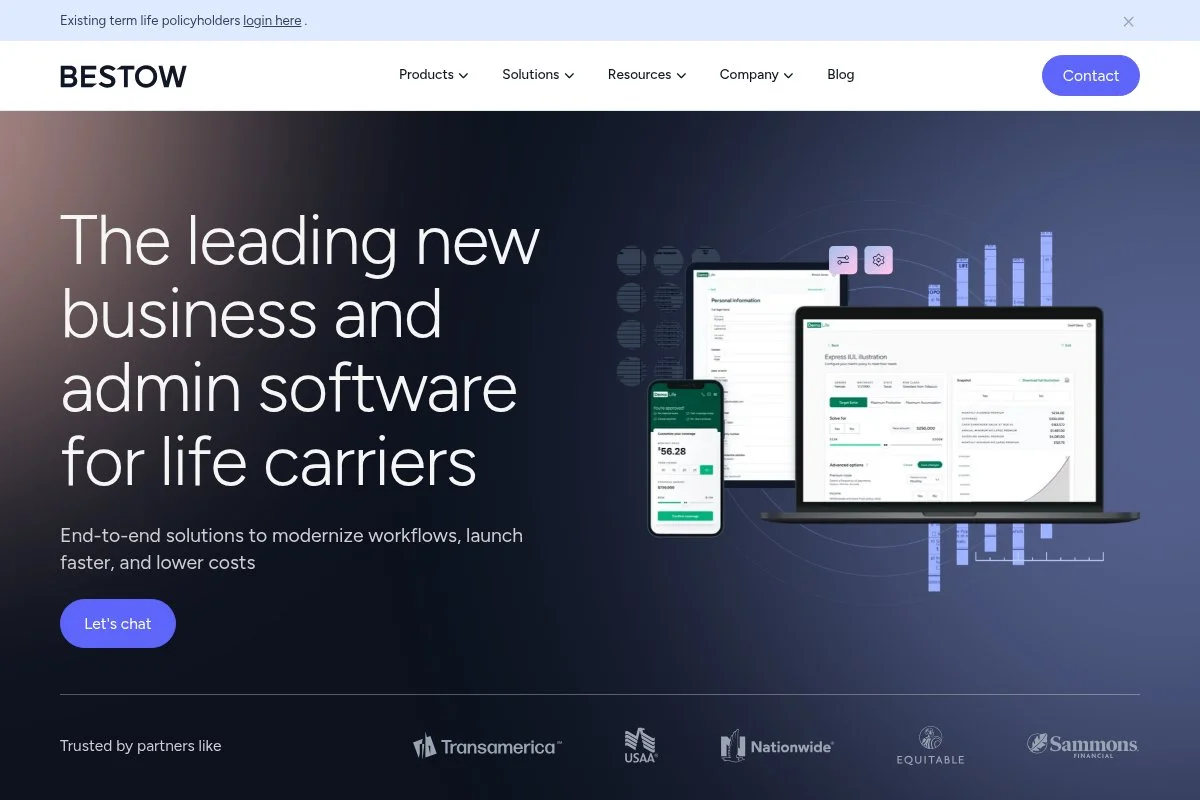
Bestow is an online term life provider known for quick applications and an exam-free process for many applicants. Policies are issued by partner insurers, and the experience is designed for speed and clarity.
You can get a quote quickly, answer a series of health questions, and submit online. Many decisions are instant. Managing your policy is straightforward from the dashboard, with digital documents and beneficiary tools.
Bestow has continued to refine its underwriting for faster decisions across more profiles, while keeping the interface simple. It’s a good pick if you’re shopping during a busy week and want a clear, quick decision.
Advanced riders and permanent options are more limited than with traditional carriers. But for straightforward term coverage, Bestow’s focus on speed is the big draw.
I didn’t choose Bestow only because I wanted ongoing coverage adjustments. Still, I often suggest it to readers who want a fast, exam-free route with transparent steps.
The site content is clear and avoids jargon, which lowers the anxiety that often stops people from applying.
How Bestow works and key features
Bestow’s process is a guided questionnaire with instant price updates as you choose coverage and term. There’s no template system or advanced configuration—just a clean path to a decision.
Account management covers payments, documents, and beneficiary changes. Automation handles billing and renewal reminders. Support is available online and by email, with clear help articles for common questions.
The overall experience is built for beginners who want speed. Power users who need complex riders may find it limited, but that’s by design.
Who Bestow is for
Great for gig workers, solo creators, and new business owners who want fast, exam-free term coverage. It excels for straightforward needs and first-time buyers. If you need conversion options or advanced riders, consider Haven Life or a broker.
Bestow pricing
Bestow prices depend on age, health, coverage amount, and term. Many applicants see instant, no-exam decisions; others may need more information depending on the underwriting rules.
- Term Life: Advertised from $10/month for qualifying profiles, includes digital policy and online account tools
Bestow is competitive at the entry level, especially for exam-averse shoppers. Always compare a couple of coverage amounts to see how pricing steps up. Monthly billing is standard and easy to budget for most freelancers.
Bestow pros and cons
Pros
- Fast, online application with many exam-free approvals
- Clear pricing and plain-language site content
- Good entry pricing for straightforward term needs
Cons
- Limited riders and fewer advanced options
- No flexible coverage adjustments post-issue like Ladder
- Less suitable for complex financial planning cases
If you want a quick, simple policy, Bestow fits well. If you expect needs to change, look at Ladder or compare through Policygenius.
Bestow reviews
Bestow has customer feedback on Trustpilot and similar platforms. Because star ratings and review counts update regularly, check those listings for the latest numbers and comments.
6. Sproutt
Sproutt is a broker that matches you with life insurance options based on lifestyle data, including activity and wellness habits. It emphasizes rewarding healthy behaviors when carriers consider your application.
You answer questions about sleep, nutrition, and activity along with standard health items, then see recommended paths. Sproutt helps coordinate quotes and applications with partner insurers, often finding favorable underwriting for health-focused applicants.
In recent years, Sproutt has sharpened its “Quality of Life Index” to guide recommendations. For certain profiles, that can surface better-priced options than a generic form might produce.
Premium features revolve around matching and support, not a proprietary policy. If your wellness habits are strong, this angle can help you get better offers from carriers.
I like Sproutt for health-savvy readers who track fitness and want that reflected in underwriting. It’s a niche angle, but it can pay off.
Support is hands-on when needed, which helps if you have a few moving parts in your application.
How Sproutt works and key features
Sproutt uses a guided lifestyle and health survey to assess your profile, then recommends carriers and policies that may price you more favorably. The interface is clean, and the questions feel more holistic than most forms.
There’s no coding or advanced setup—just data entry and comparisons. Automation handles reminders and scheduling for any required exams. Support can step in to help clarify underwriting terms and next steps.
This approach suits users who maintain healthy routines and want that effort reflected in their pricing. It’s beginner-friendly, with built-in broker guidance.
Who Sproutt is for
Best for health-focused freelancers, coaches, personal trainers, and creators who track fitness and want underwriting that reflects it. It excels when wellness habits could improve your offer. If you want instant, exam-free coverage, a direct provider like Ethos or Bestow may be a faster option.
Sproutt pricing
Sproutt is free to use as a broker. Premiums depend on the carrier you choose, your age, health, coverage amount, and term length. The value comes from potentially better underwriting thanks to lifestyle data.
- Marketplace Access: $0, includes lifestyle assessment and carrier matching
- Term/Whole Options: Pricing varies by insurer; exams may be required
If you maintain strong wellness habits, Sproutt can surface better-priced options compared to a generic application. I suggest comparing its results with at least one other marketplace to build confidence.
Sproutt pros and cons
Pros
- Wellness-based matching can improve offers
- Hands-on broker support when needed
- Free to use with multiple carrier options
Cons
- Not an instant-issue insurer
- Experience varies by partner carrier
- May require a medical exam depending on profile
Sproutt is a good fit if your healthy lifestyle is a strength you want recognized. If speed is the priority, pick a direct online insurer.
Sproutt reviews
Sproutt has public reviews on sites like Trustpilot. Because scores and review counts update, check their listings for current feedback before you apply.
What is the Top Affordable Life Insurance Right Now?
My top picks right now are Ladder, Haven Life, and Policygenius. Ladder is the best overall choice for most self-employed readers who want flexible term coverage. Haven Life is a close second if you prioritize MassMutual’s backing with a smooth online flow. Policygenius is the best marketplace if you want to compare multiple top insurers side by side.
Why Ladder is my number one: I use it personally. No sponsorship, just my honest take. I found Ladder through other founders who liked adjusting coverage as their income rose and fell. Once I tried it, the self-serve coverage changes and clear pricing sealed the deal.
From a value perspective, the ability to lower coverage—and instantly lower premiums—during slower seasons matters when you’re self-employed. Competing options might require reapplying or calling an agent to make similar changes. That time and friction equal money.
Haven Life is my second choice because it blends a modern application with MassMutual’s financial strength. If you want the comfort of a major legacy carrier standing behind your policy, Haven is hard to beat. They’ve refined their online experience over time, which makes first-time buying less stressful.
The unique strength of Haven is the combination of clarity and big-carrier backing. If I hadn’t prioritized dynamic coverage adjustments, I could have gone with Haven and felt great about it.
For a third option, Policygenius is perfect if you want to compare rates and riders across multiple top carriers. It’s free, and their licensed experts are helpful. If you don’t need instant issue and you want to be sure you shopped the market, start there.
I also test other platforms for specific needs—Ethos and Bestow for speed, Sproutt when wellness habits might help. Different tools serve different moments in a founder’s life.
Choosing between these top options can be tough. I stuck with Ladder because the control fits my work life, but I’d be comfortable with Haven or a Policygenius-picked carrier too.
I hope this helped you find the right fit. Protect the downside, then get back to building. You’ve got this.
Frequently Asked Questions
Q: How much life insurance should I get as a self-employed professional?
I like a simple rule of thumb: 10–15 times annual income, plus debts you want cleared, minus liquid savings. If you have kids, add projected childcare and college support. Then sanity-check the premium against your monthly budget.
Q: Do I need a medical exam to get term life?
Not always. Many applicants can get exam-free approval with Ladder, Ethos, Bestow, and sometimes Haven Life. Higher coverage amounts or certain health histories may still require an exam.
Q: Is term or whole life better for freelancers?
Most self-employed folks I advise choose term life for affordability and simplicity. Whole life insurance can make sense for specific estate or cash-value goals, but premiums are much higher. If you’re unsure, start with term.
Q: Can I write off life insurance on my business taxes?
Generally, personal life insurance premiums aren’t tax-deductible. There are narrow business cases, but they’re specific and complex. I always check with a CPA who understands self-employed tax rules before assuming any deduction.
Photo by Mohamed Nohassi: Unsplash


