

If you have ever looked at your backyard and wondered whether it could pay your bills, you are asking the right question. After helping dozens of first-time entrepreneurs turn small plots, basement corners, and rented warehouse space into cash-generating operations, I can tell you that learning how to start a gardening business is one of the most accessible paths into self-employment today. The barrier to entry is low, the demand for fresh local produce keeps climbing, and with sustainable growing systems, a single operator can clear five figures a month without ever owning farmland.
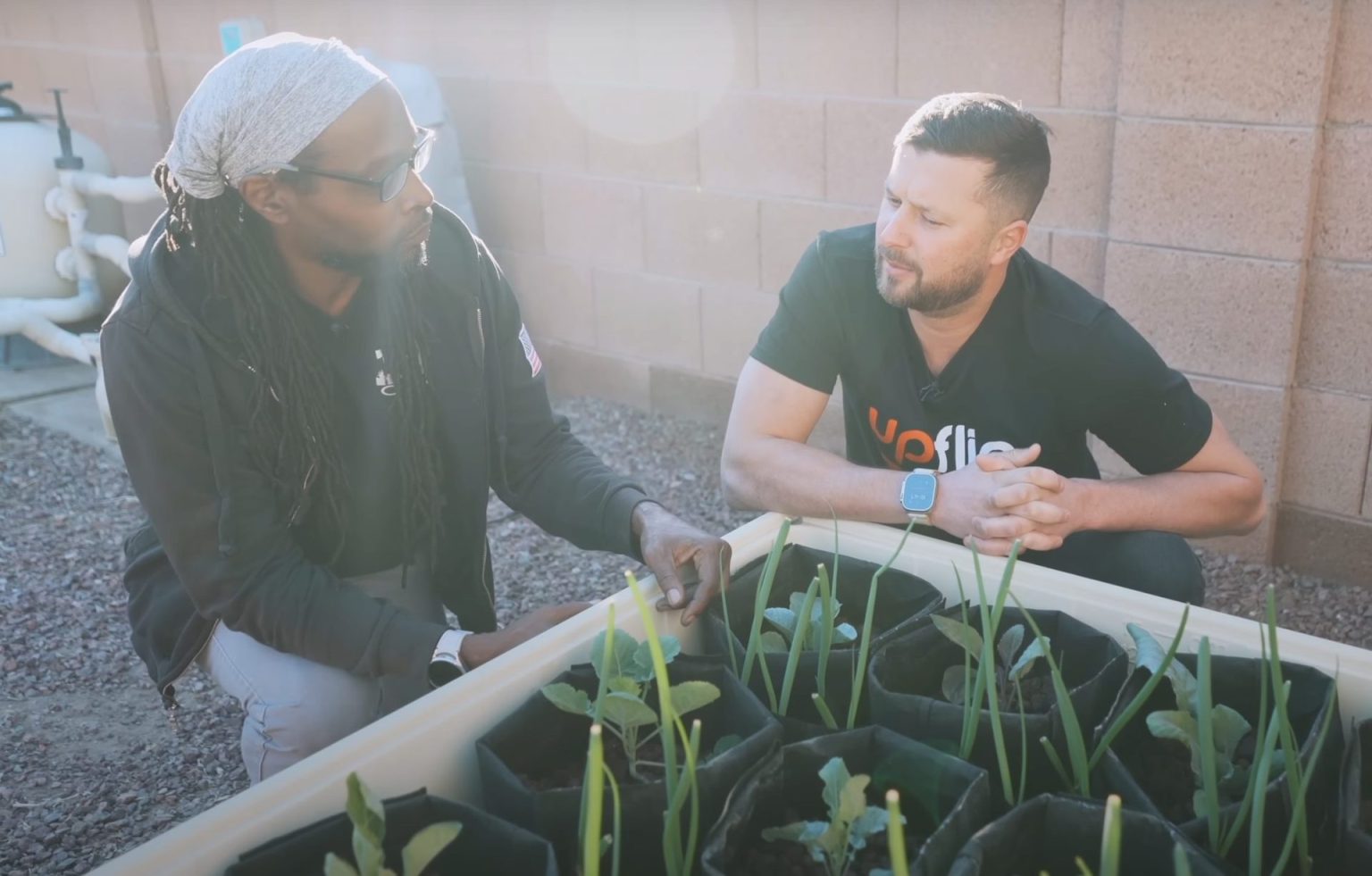
UpFlip recently interviewed a grower who built a sustainable gardening business pulling in $10,000 a month from a backyard setup. His story is not a fluke. It is a repeatable blueprint that any self-employed professional with a little space and a lot of consistency can follow. In this guide, I will walk you through exactly how to start a gardening business using the same sustainable systems, what to grow for the fastest return, how to price your produce, and the mistakes I see new growers make in their first 90 days.
Why learning how to start a gardening business makes sense right now
The market for locally grown, chemical-free produce is expanding faster than supply can keep up. Restaurants want herbs picked that morning. Grocery co-ops want microgreens with a shelf life that beats anything shipped from California. Consumers are willing to pay a premium for food that did not spend three days on a truck.
That gap is the opportunity. When I started coaching solo founders on small-scale growing, most of them were convinced they needed acreage or a greenhouse loan to compete. They did not. The modern sustainable gardening business runs on three compact systems that fit inside a garage, a spare room, or a backyard corner, and each one can be set up for less than the cost of a used car.
The three sustainable systems behind a profitable gardening business
Traditional soil gardening is slow, seasonal, and full of variables you cannot control. Sustainable systems remove most of those problems, which is why they dominate every high-margin gardening operation I have seen up close.
- Hydroponics. Plants grow in nutrient-rich water with no soil. Growth cycles run up to twice as fast as field farming, which means more harvests per year.
- Aquaponics. Fish and plants share a closed loop. Fish waste feeds the plants, plants filter the water. You get two revenue streams from one system.
- Aeroponics. Roots hang in the air and get misted with nutrient solution. This method uses the least water and produces the densest yields per square foot.
All three systems use UV filtration to keep water clean and block algae. Plants in these setups can absorb up to ten times more nutrients than they would in soil, which translates directly into faster growth, heavier yields, and a shorter timeline to your first paying customer.
How to start a gardening business with under $500
The UpFlip case study showed a living-wall system built for about $45 in hardware-store materials. That is not a typo. A single vertical unit can be assembled in 20 minutes, occupies roughly four square feet of wall space, and retails finished for around $800 if you decide to sell the systems themselves.
For your first build, I recommend starting with one or two systems and focusing on a narrow crop list. Do not try to grow 30 things in your first month. You will spread yourself thin, lose track of harvest cycles, and burn out before revenue arrives. Pick two or three high-demand crops and learn them cold.
Starter shopping list
- PVC piping or net cup towers for vertical growing
- A submersible pump and reservoir tank
- UV-safe tubing and fittings
- Grow lights (LED full spectrum)
- A basic pH and EC meter
- Hydroponic nutrient solution
- Seeds for your first two crops
Most new growers I work with reach their first revenue within eight weeks. That is faster than almost any other self-employed business model I can name, and it is one of the reasons I push so hard for people to consider this path before chasing something glossier.
Choosing crops that actually pay
Not every plant is worth your time when you are running a gardening business. After watching first-year growers sort this out the hard way, the rule I give them is simple: grow what restaurants reorder every week and what spoils fast in a grocery store.
Microgreens are the obvious first crop. They grow in 10 to 14 days, sell for $25 to $50 per pound wholesale, and one tray takes less than a square foot. Culinary herbs like basil, cilantro, and mint are close behind. Leafy greens such as butter lettuce and arugula round out a strong starter menu.
Skip tomatoes, squash, and anything that takes 90 days to fruit. Those crops are beautiful, but they do not produce the weekly cash flow that keeps a gardening business alive in its first year. Save them for season two, once your core revenue is stable.
How to price your produce
Pricing is where most new growers underestimate themselves. I have watched founders charge $3 for a clamshell of microgreens that restaurants would have paid $8 for without blinking. Do not do this. Your produce is fresher, travels shorter distances, and has a story the $3 supplier cannot tell.
Call three chefs in your area and ask what they currently pay for their microgreens and herbs. Price yourself within that range, then compete on freshness and reliability, not price. If you deliver on Tuesday and again on Friday like clockwork, you will keep those accounts for years.
A single living-wall system can produce up to 64 salad-sized harvests every few days. At $4 to $5 per salad retail, or roughly $1.50 wholesale per head of lettuce, you can see how a handful of systems stacks quickly into a five-figure monthly business.
Revenue streams beyond selling produce
Selling food is the starting point, not the ceiling. The growers I have seen scale past $10,000 a month all layered on additional income streams once their first systems were producing reliably.
- Selling finished systems. A kit that costs $45 in parts sells for $800 to hobbyists and small restaurants.
- Consulting. Once you have a working setup, other aspiring growers will pay for hourly guidance.
- Workshops and classes. Weekend intensives on hydroponics or microgreens can net $100 to $300 per attendee.
- Installation services. Designing and installing systems in restaurants, schools, and homes is high-margin work.
- Custom commercial builds. Larger facilities will pay you to scope, source, and commission full production rooms.
I recommend waiting until your produce revenue is steady before launching any of these add-ons. A consulting client who watches you scramble through a bad harvest will not refer you again. Build the foundation first.
The legal and tax side of starting a gardening business
Before your first sale, take an afternoon to handle the paperwork. You will need a business structure, a resale license in most states, and a plan for how you will track income and expenses. I have a detailed self-employed bookkeeping step-by-step guide that walks through exactly what a solo food business needs.
Check the SBA guide to choosing a business structure before you file. Most small growers start as sole proprietors or single-member LLCs, but the right answer depends on your state and your liability comfort level. If you plan to sell at farmers markets, also check with your state department of agriculture for cottage food rules and any produce-handling certifications required in your county.
On the tax side, the IRS Farmer’s Tax Guide (Publication 225) is required reading. It covers how to deduct equipment, seed, nutrient solution, and utilities, and it explains the special rules that apply to agricultural income. Pair that with the standard essential forms for self-employed professionals and you will have a tax setup that holds up at filing time.
Community impact and why customers keep coming back
A sustainable gardening business does more than generate income. The growers I work with who operate in food deserts, where fresh produce is hard to find, build brand loyalty that large supermarkets cannot touch. Customers are not just buying lettuce. They are supporting someone who is feeding their neighborhood.
Lean into that. Post your weekly harvest on social media. Let customers tour your setup. Donate what you cannot sell to a local pantry. The goodwill compounds, and it tends to unlock referrals that paid advertising never delivers.
Common mistakes in the first 90 days
After reviewing dozens of first-year financials, I see the same four mistakes on repeat. Avoid these and you will be ahead of most new growers in your region.
- Scaling too fast. Do not add a second system until the first one has two months of consistent yields.
- Ignoring water quality. A bad pH read can wipe out a full tray overnight. Test daily.
- Underpricing. You are not the bulk grocery channel. Price like a premium local supplier from day one.
- Skipping bookkeeping. Track every receipt from the first purchase. Tax season is merciless on growers who wait.
Scaling past the $10k month
Once your first three systems are running smoothly, the math shifts. A well-managed operation of ten to twelve living-wall units, combined with a few weekly wholesale accounts and one monthly workshop, puts you comfortably in five-figure-a-month territory. From there, the next move is usually leasing a small commercial space or expanding into value-added products like packaged salad kits or dried herb blends.
If you want broader ideas for how to layer multiple income streams once your garden business is humming, my overview of self-employment ideas maps out complementary paths that food-business owners often run in parallel.
Starting a gardening business is not glamorous. It is quiet, consistent, repetitive work that rewards people who show up every morning. But the margins are real, the systems are forgiving once you learn them, and the demand is only going in one direction. If you are ready to trade a commute for a watering can, this is one of the most honest paths to self-employment I know of.
Frequently asked questions
How much space do I need to start a gardening business?
You can start a gardening business with as little as four to eight square feet of wall or floor space. Vertical hydroponic systems, living walls, and countertop microgreen trays are all designed for small footprints and can even be run indoors year round.
How long does it take to see a return on investment?
Most new growers reach their first paying customer within eight weeks of setting up their first system. Consistent monthly income usually arrives by month three, once harvest cycles and wholesale accounts stabilize.
Do I need prior gardening experience to start?
No. Modern hydroponic and aquaponic systems are built to be beginner friendly, with clear setup instructions and stable nutrient formulas. The learning curve is short, and most of the skill comes from daily observation rather than agricultural training.
What are the main revenue streams in a sustainable gardening business?
The core revenue comes from selling produce to restaurants, markets, and direct-to-consumer customers. Higher-margin streams include selling finished systems, consulting, paid workshops, and custom installation services for commercial clients.
Is a gardening business recession resistant?
Yes. Food production remains essential across economic cycles, and locally grown produce tends to hold pricing better than commodity crops. Most sustainable gardening operations serve restaurants and direct customers who prioritize freshness over the lowest shelf price.
What licenses or permits do I need?
Requirements vary by state and county, but most growers need a basic business license, a resale permit, and in some areas a cottage food or produce-handling certification. Check with your state department of agriculture and local health department before your first sale.
Can I run a gardening business as a side hustle while working full time?
Yes. A single system typically needs about two hours of attention per week once it is established, which is easy to fit around a day job. Many of the growers I coach start on weekends and transition to full time once monthly revenue matches their salary.


