

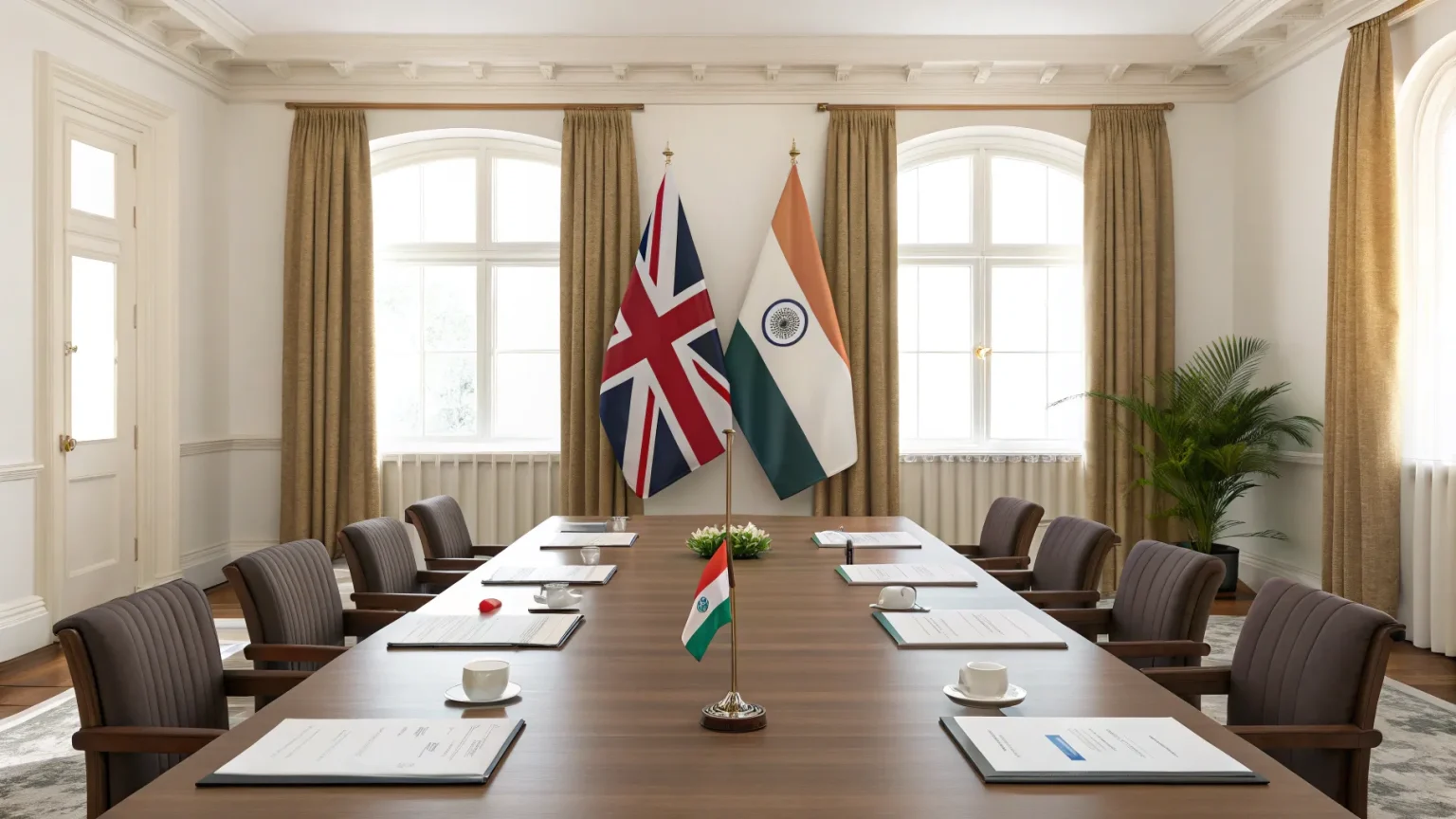
A new UK parliamentary report has formally endorsed the UK India trade deal as a significant step for both economies, citing benefits for businesses and stability in uncertain global markets. For self-employed exporters, freelancers serving cross-border clients, and one-person businesses watching tariff swings, the report is more than a diplomatic milestone. It signals what the next few years of two-way trade will actually look like.
I have written about cross-border self-employment for years. Solo founders ask me the same question every time a major trade pact moves forward: does this actually change anything for me, or is it only for big exporters? With the UK India trade deal, the answer is leaning toward yes, especially for small services firms, designers, and consultants who already work across the two markets.
Background and context for the UK India trade deal
The United Kingdom and India have worked for years to deepen trade ties. Negotiations have focused on lowering barriers, smoothing customs processes, and giving companies clearer rules. The latest parliamentary report positions the agreement as a practical response to global supply shocks and shifting trade patterns.
Lawmakers frame the pact as a strategic tool. It aims to reduce friction for exporters and provide more predictable access to each other’s markets. The U.S. International Trade Administration has tracked similar bilateral deals and consistently finds that small and medium-sized businesses gain disproportionately when customs friction comes down.
What is at stake for self-employed business owners
Business groups have sought more certainty as shipping routes, input costs, and demand have fluctuated. The agreement promises steady rules that can support planning and investment. Companies in goods and services may see faster clearances and fewer administrative hurdles.
For self-employed professionals, three concrete benefits stand out:
- Clearer market access: Predictable rules reduce the legal cost of taking on a UK or Indian client.
- Stability in pricing: Less tariff volatility means tighter margins on physical goods you ship across borders.
- Growth potential for services: The pact is expected to boost annual bilateral trade considerably, including in digital and consulting services where solo professionals compete.
Areas the UK India trade deal still needs to improve
While positive on the whole, the report flags issues that would benefit from continued work. It urges both governments to keep refining the pact to ensure real-world gains for smaller firms and sectors facing compliance costs.
From the perspective of a one-person export business, the most important fixes are around documentation, electronic filings, and dispute resolution. After helping freelancers navigate cross-border invoicing, I can confirm that a confusing customs form is enough to push most solo founders away from international clients altogether.
Ratification and implementation timeline
Parliamentary ratification is underway, marking the final step before the pact can take effect. After approval, agencies will begin implementing tariff schedules and procedures. Early coordination will matter for a smooth start.
Officials are expected to track uptake, identify bottlenecks, and publish progress updates. This approach can help resolve issues before they affect trade volumes or delivery timelines. Self-employed exporters should bookmark official guidance pages from both governments to stay current as new schedules are released.
How self-employed people in the U.S. should read this
Even if you are based in the U.S., the UK India trade deal still affects you. If you sell digital products, run an Etsy shop with international shipping, or consult for clients in either market, you are operating in the same global trade environment that this deal reshapes. Lower friction between the UK and India often pulls down friction more broadly because precedent matters in trade policy.
If you are setting up cross-border invoicing for the first time, our self-employed bookkeeping guide walks through tracking foreign currency receipts cleanly. For tax compliance, our essential forms guide covers the U.S. forms you still need even when most of your income comes from abroad.
Outlook and industry impact
The report frames the agreement as a stabilizing force at a time of uncertainty. That message reflects a wider trend of governments using trade policy to shore up growth. If implementation goes as planned, businesses could gain faster access to customers and partners across both markets.
Analysts will watch a few signals in the coming months. First, trade volumes in key sectors once the pact takes effect. Second, speed of customs clearance and dispute resolution. Third, adoption by small and mid-sized firms, which is the hardest test of any trade pact.
The report’s message is clear. The UK India trade deal is a strong starting point, but continued attention will determine its long-term value. With ratification advancing, both sides now face the test of converting the framework into tangible results for the businesses that will actually use it. If you want broader context on how policy shifts shape independent work, our self-employment ideas guide has more on emerging cross-border opportunities.
Frequently asked questions
What is the UK India trade deal?
It is a free trade agreement between the United Kingdom and India that lowers tariffs on goods, simplifies customs procedures, and improves market access for services. The pact is expected to lift annual bilateral trade considerably once fully implemented.
When does the UK India trade deal take effect?
Parliamentary ratification is underway. After approval, agencies in both countries will roll out tariff schedules and procedures. Self-employed exporters should monitor official government channels for the exact timeline as it is finalized.
Does the UK India trade deal affect self-employed people in the U.S.?
Indirectly, yes. Lower friction between the UK and India often pulls down friction more broadly. If you sell to clients in either market or rely on global supply chains, easier trade between major economies tends to reduce your costs over time.
What sectors gain most from the deal?
Manufacturers, exporters of consumer goods, and services firms in tech, design, and consulting are expected to benefit most. Digital services that can be delivered remotely also stand to gain from clearer rules around cross-border data and contracts.
What risks remain in the agreement?
The report flags compliance costs for smaller firms, gaps in dispute resolution, and uneven implementation across sectors. Both governments are encouraged to keep refining the pact based on real-world performance.
How can a small business prepare to use the UK India trade deal?
Start with clean cross-border bookkeeping, identify whether your products or services qualify under the new tariff schedules, and consult a trade attorney or accountant familiar with both markets before signing major contracts.
Photo by Yogendra Singh on Unsplash


