

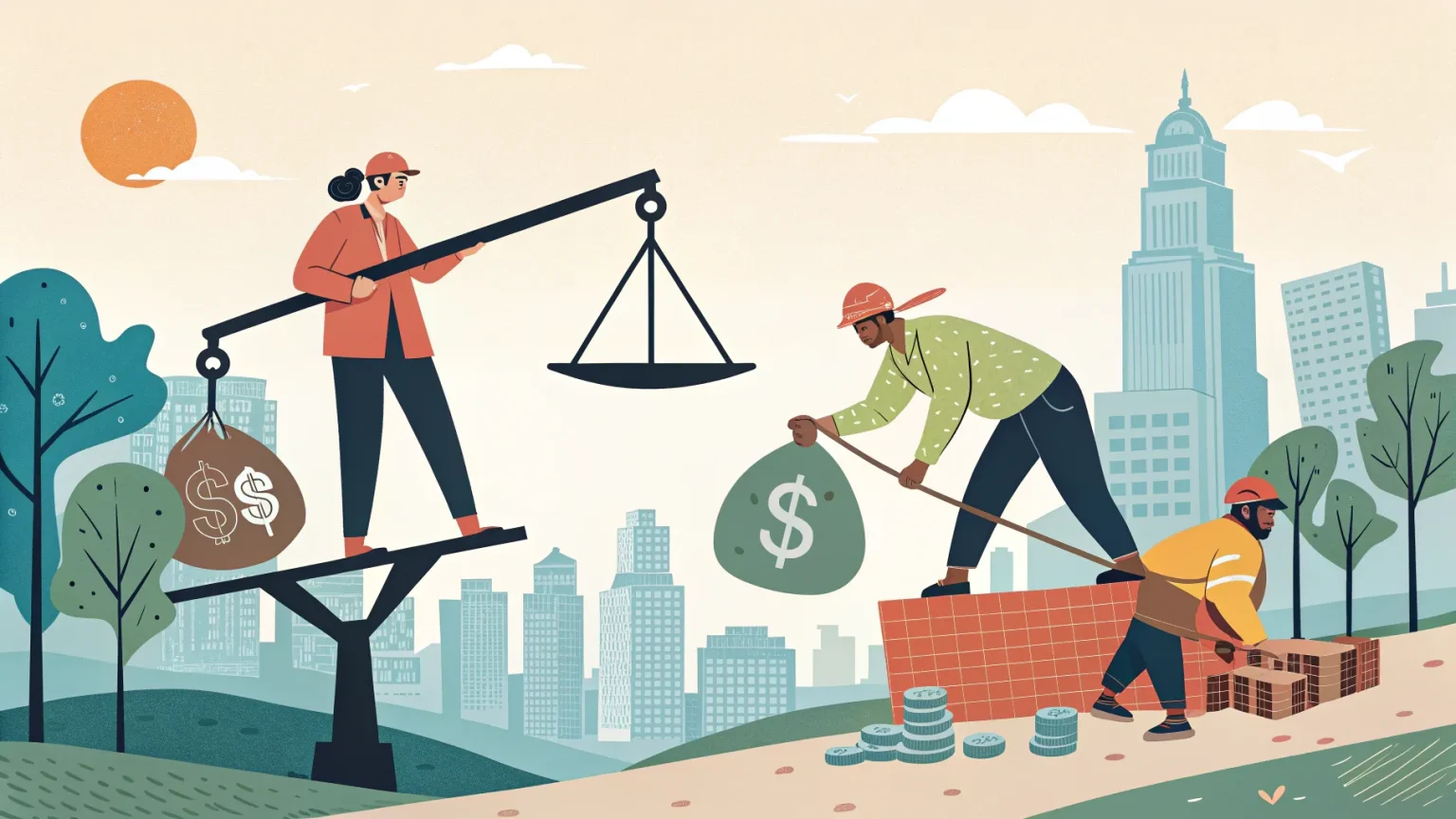
The buy borrow die strategy is one of the clearest reasons the tax system rewards capital and punishes labor. That is not a conspiracy. It is design. My stance, after years of coaching high earners, is simple: if you work for money, you usually pay more tax than if money works for you. This is not about envy. It is about incentives that shape behavior and outcomes.
Warren Buffett is the example people love to repeat. They say he pays a lower tax rate than his secretary, and they say it with a shrug, as if it is a fun fact. It is more than that. It reveals exactly how the game is played, and the buy borrow die approach sits at the center of it.
How buy borrow die actually works
Here is the mechanism. W-2 income gets hit with the highest ordinary rates, making it the least efficient way to earn. Long-term capital gains are taxed lower, and borrowing against appreciated assets can be done without triggering income tax at all.
So the wealthy buy assets that appreciate, borrow against them to fund their lifestyle, and pass those assets to heirs at death. Because a loan is not income, there is no tax when they borrow. The Internal Revenue Service explains the basic difference between capital gains and ordinary income at IRS.gov. The result is that someone living on credit lines backed by stock can pay far less than a high-earning employee on a paycheck.
Why ownership beats a paycheck
I was raised to think hard work was the answer. Work is noble, but the tax code does not reward labor the way it rewards ownership. Cash flow from assets is rewarded. Strategic, well-managed debt is rewarded. The system favors patient capital and planning, not punching a clock.
That calls for a mindset shift. The question is not only how much do I make. It is how is my income taxed. Change that, and the result changes. You simply cannot out-hustle a bad structure, which is why so many high earners still feel broke.
The pushback on buy borrow die
Some point out that Buffett has publicly called for higher taxes on the wealthy. He has, and that does not change what the law allows him to do. The code treats gains from assets more favorably than wages, and following the law is not the same as endorsing it.
Others note that borrowing against stock carries real risk. It can, if done carelessly, because a sharp drop in asset values can trigger margin calls. The wealthy manage that risk with strong collateral, conservative loan-to-value ratios, and access to low rates that ordinary borrowers do not get. The strategy is legal and common, but it is not free of danger.
How to play smarter, starting now
You do not need billions to shift your approach from labor toward ownership over time. These are the moves I walk clients through.
- Build a business or side venture that qualifies for legitimate tax deductions.
- Acquire assets that produce cash flow and can grow in value.
- Use long-term capital gains rates when possible instead of wage income.
- Reinvest profits instead of inflating your lifestyle.
- Build access to capital through credit lines backed by assets, carefully.
These steps are about alignment, not tricks. They match your effort with the rules as written. Getting there starts with clean records, so keep your bookkeeping tight and your business forms in order. If you are also planning around self-employment taxes, our self-employment tax guide is a useful starting point.
Incentives create outcomes
We get what we design for. Reward ownership, and you get more owners. Punish wages, and you trap workers. The buy borrow die strategy is not a secret loophole so much as a predictable response to how the rules are written.
My view is direct: I would rather see policy that helps average earners become owners faster, with simpler rules for first-time investors and small business owners. Until that happens, the smartest move is to learn the rules and build ownership on purpose. The Securities and Exchange Commission offers free investor education to start at Investor.gov. Honor work, but structure your life so value flows through assets and strategy, not just your timesheet.
Frequently asked questions
What does buy borrow die mean?
It describes a strategy where the wealthy buy appreciating assets, borrow against them tax-free to fund spending, and pass the assets to heirs at death, minimizing income and capital gains tax along the way.
Is buy borrow die legal?
Yes. It relies on existing rules: loans are not taxable income, capital gains are taxed lower than wages, and inherited assets often receive a stepped-up cost basis. It is legal and widely used.
Why does Warren Buffett pay a lower tax rate than his secretary?
His income comes mostly from appreciating assets taxed at capital gains rates or accessed through borrowing, while a salaried employee pays higher ordinary income tax on wages.
Can ordinary people use a buy borrow die approach?
On a smaller scale, yes. Building cash-flowing assets, using capital gains rates, and borrowing carefully against equity are accessible steps, though the full strategy favors those with substantial assets.
What are the risks of borrowing against assets?
A drop in asset values can trigger margin calls or force sales at a bad time. Conservative loan-to-value ratios and strong collateral reduce, but do not eliminate, that risk.
How is this not just a tax loophole?
It is a predictable response to how the tax code treats capital versus labor. Changing the outcome would require changing the underlying incentives, not just individual behavior.


