


A few years ago, I hit a wall trying to buy liability insurance for a tiny freelance project. I wanted protection without a bloated premium or a week of back-and-forth. I oversee editorial for a team that serves self‑employed readers, so I see the same question every week: “What’s the cheapest liability policy that actually pays claims?” I felt that one in my bones. My goal was simple: get general liability fast, keep proof of insurance on my phone, and avoid paying for bells I did not need. A studio owner needed a COI by Friday. No COI, no gig.
I assumed it would be easy. It was not. Quotes jumped around based on my state, business class code, and even where I worked. Some sites hid fees until checkout. What I learned from talking with successful solo owners: they buy right‑sized coverage, keep certificates handy, and update limits only when a contract requires it. They do not chase the fanciest policy, just the one that fits.
You do not need the most complex package to be protected. You need clear limits, fast COIs, and a carrier that actually answers the phone after a mishap.
Comparison of 7 Top low-cost liability insurance for self-employed in 2026 with pricing and recommended use cases
Scroll for my detailed take on each option, including which one I chose and where beginners can start with the lowest cost.
What is a low-cost liability insurance for self-employed?
Liability insurance for the self‑employed is a service that protects you if your work causes injury, property damage, or financial loss. Its primary purpose is to pay covered claims and legal costs. I like the saying, “Protect the downside so the upside can grow.” For solo operators, that means keeping your personal savings safe as you confidently take on clients and gigs.
Think of it this way: one slip‑and‑fall at a client site can run thousands in medical bills and legal fees. A modest monthly premium can offset risks that would take months, or years, of income to replace. In short: freelancers, consultants, creators, trades, and micro‑shops use these policies to show proof of insurance, meet contract terms, and transfer covered risks, so client work stays on track.
People often pair liability with professional liability (errors and omissions), a business owner’s policy (BOP) that bundles property, cyber coverage for data risks, and workers’ comp if hiring help. Not all providers offer the same speed, clarity, or price, so choosing carefully matters.
How to choose the top low-cost liability insurance
Picking insurance can feel overwhelming. Industry terms, class codes, and hidden fees make it hard to compare apples to apples. I wrote this guide to help you match coverage and price to your real risk, no upsells, just the parts that matter for landing clients and sleeping at night.
Most guides you find are written by carriers or by media sites selling placements. I am not sponsored by any platform on this list. What follows is my honest view based on research, hands‑on buying, and reader feedback.
Here are some questions you should ask when looking for a policy:
- How easy is it to get a free quote and instant COI for a client?
- Can I adjust limits and add additional insureds without extra hoops?
- Will the policy scale if my revenue, staff, or job size grows?
- How do premiums change by class code, location, and claims history?
- Does it include the endorsements my contracts ask for?
- What loss runs, claims updates, and basic analytics can I access?
- How hard is it to switch carriers and keep proof of coverage?
- What is the carrier’s claims reputation and support hours?
- Any special requirements for high‑risk work sites or certificates?
7 top low-cost liability insurance in 2026
Here are my top picks for the best low-cost liability insurance:
- Next Insurance
- Thimble
- biBERK
- Hiscox
- The Hartford
- Simply Business
- CoverWallet
Let’s see which one is right for you.
1. Next Insurance
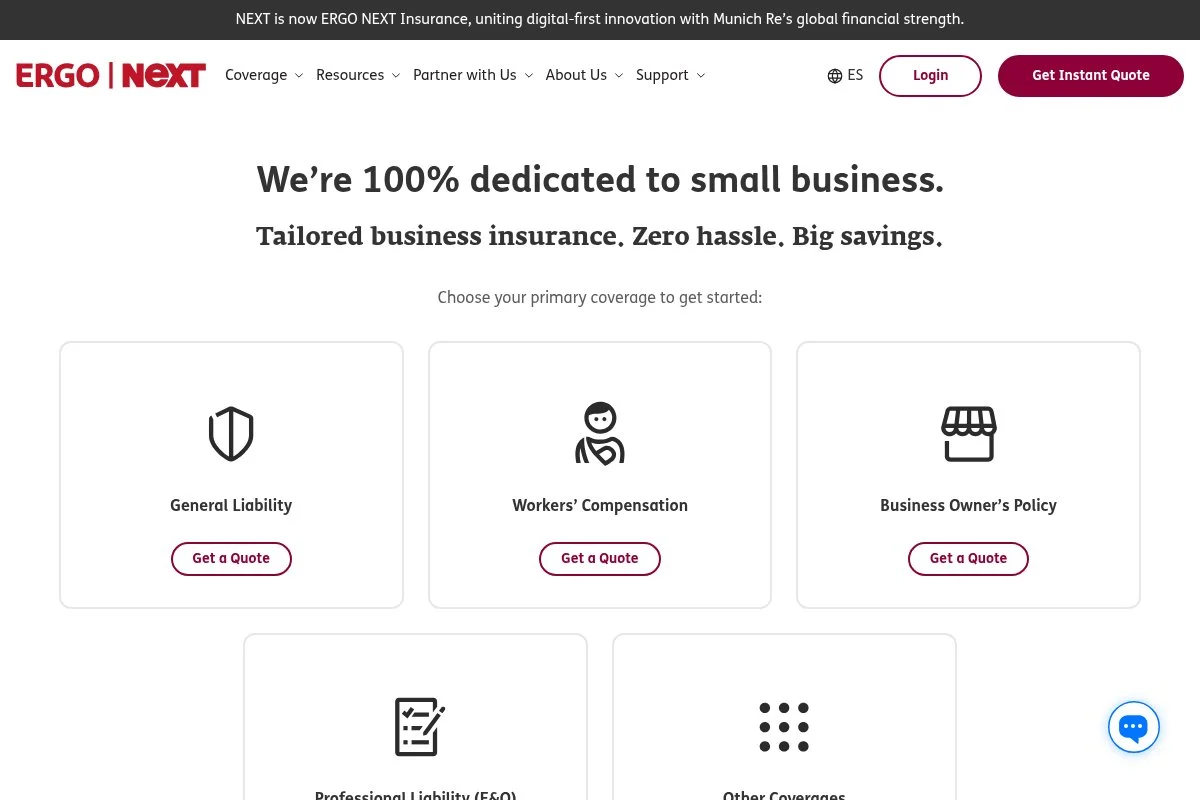
Next Insurance is a direct‑to‑consumer insurer built for small businesses and freelancers. It is known for fast online quotes, instant COIs, and clear policy options by industry. You can start a quote in a few minutes and buy online. The dashboard makes it easy to download COIs, add additional insureds, and tweak limits. Core offerings include general liability, professional liability, and BOP bundles.
In the last few years, Next expanded instant COI features and broadened class eligibility across more states. That means more self‑employed roles can bind coverage online without phone calls. In higher-coverage setups, you can package GL with E&O or cyber, set higher aggregate limits, and add waiver-of-subrogation endorsements. Having those online is a time saver compared to many traditional carriers.
I have used Next personally to issue a same‑day COI for a studio contract. It took under ten minutes and avoided a weekend delay. That speed alone won me over for small gigs. Support chat and email are responsive, and the app is clean. I also appreciate the plain language in policy summaries, great for sending to clients who ask, “What does this cover?”
How it works and features
The quote flow is simple: select your trade, describe your work, pick limits, and review exclusions. Templates for common industries help you land on a fit quickly. Advanced users can add endorsements and adjust deductibles where available. The dashboard stores multiple COIs, so you can name different clients as additional insureds. You can track policy dates, limits, and download documents anytime. Claims can be started online with guided forms.
Automation shows up in instant COI generation and renewals. You can bundle GL with professional liability or a BOP to simplify billing. Support is available by chat and email, with self‑serve help docs that are actually useful. Overall, it is beginner‑friendly but still flexible enough for growing solo businesses.
Who it’s for
Best for freelancers, consultants, content creators, fitness instructors, handypeople, and photographers who need proof of insurance fast. It shines when you need additional insureds or a waiver for a contract. If your work is highly specialized or very high‑risk, a broker with niche carriers might suit you better. No deep technical skill required.
Next Insurance pricing
Pricing is quote‑based and varies by business class, state, limits, and claims history. Next often advertises low entry monthly premiums for general liability when the risk is light.
- General Liability: Quote-based, monthly or annual; instant COI included
- Professional Liability (E&O): Quote-based; can bundle with GL
- Business Owner’s Policy: Quote-based; combines GL + property
- Optional add‑ons: Cyber, hired/non‑owned auto (where available)
Compared with others, I find Next competitively priced for many low‑risk self‑employed roles, especially with bundle discounts. Annual billing can lower the effective monthly cost. As always, your rate depends on class and limits.
Pros and cons
- Pros: Very fast COIs; clean app; competitive for many classes; easy endorsements.
- Pros: Bundles reduce total cost; transparent documents.
- Cons: Not every high‑risk class is eligible online; rates vary by state.
- Cons: Some endorsements still require support if unusual.
If speed and budget matter, this is my top pick. If you work in a niche or high‑hazard trade, check a marketplace too.
Next Insurance reviews
Third‑party ratings vary by site and change over time. Next has ample public feedback across major review platforms; I recommend checking recent reviews for your state and trade.
2. Thimble
Thimble is built for flexible, on‑demand insurance. It is popular with freelancers who need coverage for a single day, weekend, or short project, and it also offers monthly policies. You can get a quote fast, choose by the hour, day, or month, and generate a COI in minutes. The interface is simple, and you can add additional insureds for client requirements. Core products include general liability, professional liability, and event coverage.
Thimble has expanded classes and refined its app for mobile COIs. I have seen more contractors and creators using it to meet venue or client requirements without locking into a full year. Premium features include endorsements for venues, optional equipment coverage, and easy toggling between short‑term and monthly plans. That flexibility is rare with traditional carriers.
I like Thimble for pop‑up markets and one‑off shoots. It saved a weekend gig for one of our readers by issuing a same‑day certificate. The mobile app is a highlight, and support articles are straightforward. If your work is sporadic, paying only when you work can keep costs low.
How it works and features
Choose your activity, pick time‑bound coverage, set limits, and add additional insureds. Templates cover common roles like photographers, DJs, handypeople, and marketers. Advanced users can customize limits and endorsements. You can download COIs instantly and store multiple client versions. Claims can be filed online with guided steps. Thimble also offers event policies and, where available, some equipment coverage.
Support is email‑first with clear help docs. The overall experience is built for speed and flexibility, not deep complexity.
Who it’s for
Best for gig workers, creators, photographers, event vendors, part‑time consultants, and seasonal workers. It excels for one‑day venue requirements and short contracts. If you work year‑round at a steady volume, a traditional annual policy may be priced better. No special technical skill needed.
Thimble pricing
Thimble’s pricing is quote‑based and tied to your activity, location, time window, and limits. You can choose hourly, daily, monthly, or annual options.
- General Liability: On‑demand (hour/day) or monthly; quote-based
- Professional Liability: Monthly or annual; quote-based
- Event Liability: Short‑term; quote-based
- Optional add‑ons: Tools/equipment coverage where available
For intermittent work, paying only when you work can be cost‑effective. For continuous work, monthly or annual plans may be a better value.
Pros and cons
- Pros: True short‑term coverage; instant COIs; flexible options.
- Pros: Simple app; good for venues and pop‑ups.
- Cons: Not always the cheapest for steady, full‑year needs.
- Cons: Some classes or endorsements may be limited by the state.
Choose Thimble if you work in bursts or need on-demand weekend coverage. If you are full‑time, compare with a direct carrier too.
Thimble reviews
Public ratings are available on major platforms, but they vary by time and product. Check recent Thimble reviews for your state and trade before buying.
3. biBERK
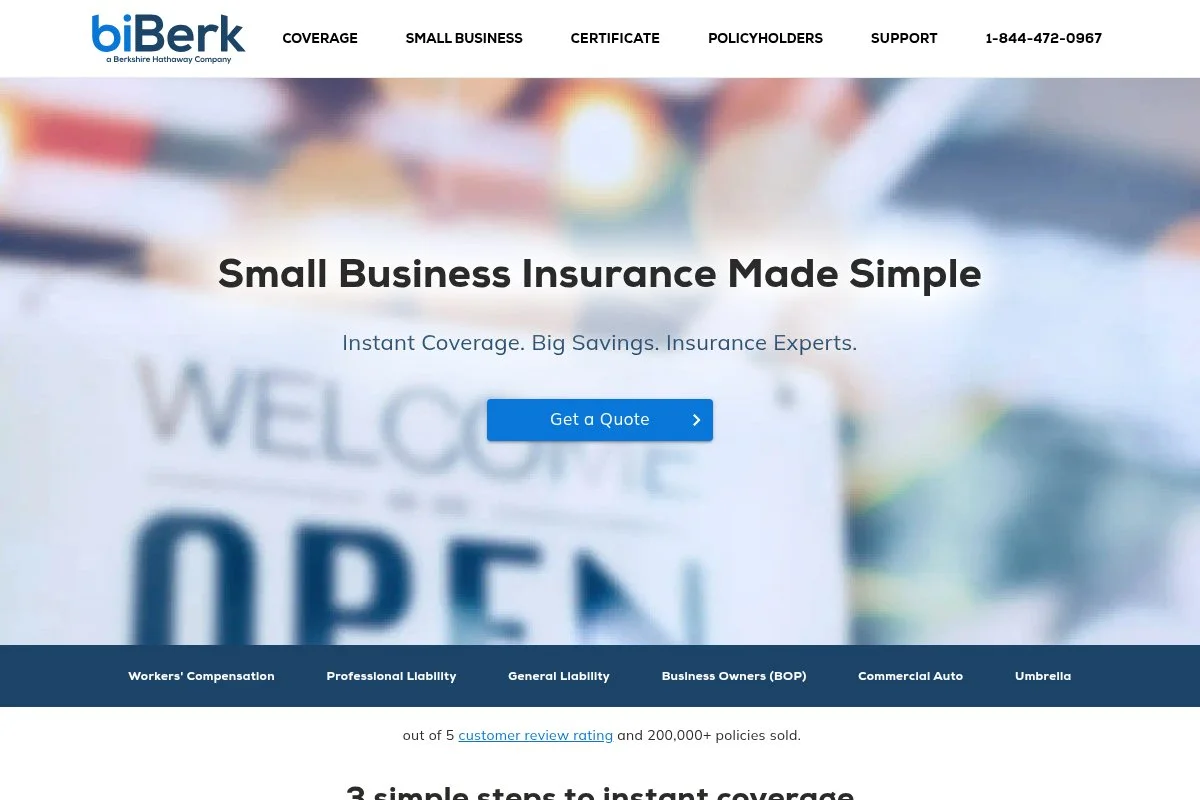
biBERK is a Berkshire Hathaway company focused on small businesses. It sells policies directly online, which can keep costs competitive, and offers fast quotes across many classes. Getting started is quick: enter your trade, revenue, and location, then pick limits. The portal provides documents and COIs and allows you to manage renewals. You can package GL, professional liability, BOP, and more.
biBERK has grown its direct online footprint and continues to push quick binding where eligible. That has opened access for more self‑employed trades that used to require a broker call. Higher‑limit and add‑on options include cyber, commercial auto, and workers’ comp (if you expand). That range is helpful for solo owners planning to hire.
Readers tell me biBERK is steady on pricing and clear on documents. I also like the brand’s financial backing, which many clients recognize.
Claims resources and FAQs are easy to find, and support hours are posted clearly. That matters when a client requests a change under a tight deadline.
How it works and features
biBERK’s interface is straightforward. Choose coverage types, select limits and deductibles, and preview policy forms before checkout. COIs and policy docs are downloadable from the portal. You can track renewals and endorsements online. Cyber and professional liability can be added where eligible. Claims filing is available through guided online forms with follow‑up by adjusters.
Support is by phone and email. Overall, it balances beginner ease with enough options for growth.
Who it’s for
Ideal for consultants, small trades, fitness pros, and micro‑retailers who want direct carrier pricing and a recognizable parent company. If your risk is unusual or very high‑hazard, a marketplace may surface more niche carriers. No technical skills needed.
biBERK pricing
Pricing is quote‑driven and varies by industry, state, limits, and claims history. You can pay monthly or annually.
- General Liability: Quote-based; instant COI and portal access
- Professional Liability: Quote-based; pair with GL or standalone
- Business Owner’s Policy: Quote-based; property + GL bundle
- Add‑ons: Cyber, commercial auto, workers’ comp (eligibility varies)
biBERK often prices well for low‑risk classes. Annual pay may lower the total cost compared to monthly. Get a side‑by‑side with at least one marketplace to confirm.
Pros and cons
- Pros: Direct pricing; fast quotes; strong financial backing.
- Pros: Clear documents; broad add‑on menu.
- Cons: Some classes require underwriting review; state limits vary.
- Cons: Portal is practical, not flashy—fine by me.
If you value stable backing and clean pricing, biBERK is a strong contender. If you need exotic endorsements, compare through a marketplace too.
biBERK reviews
Public ratings exist across consumer and business review sites, but they vary. I recommend scanning recent reviews specific to your state and line of coverage.
4. Hiscox
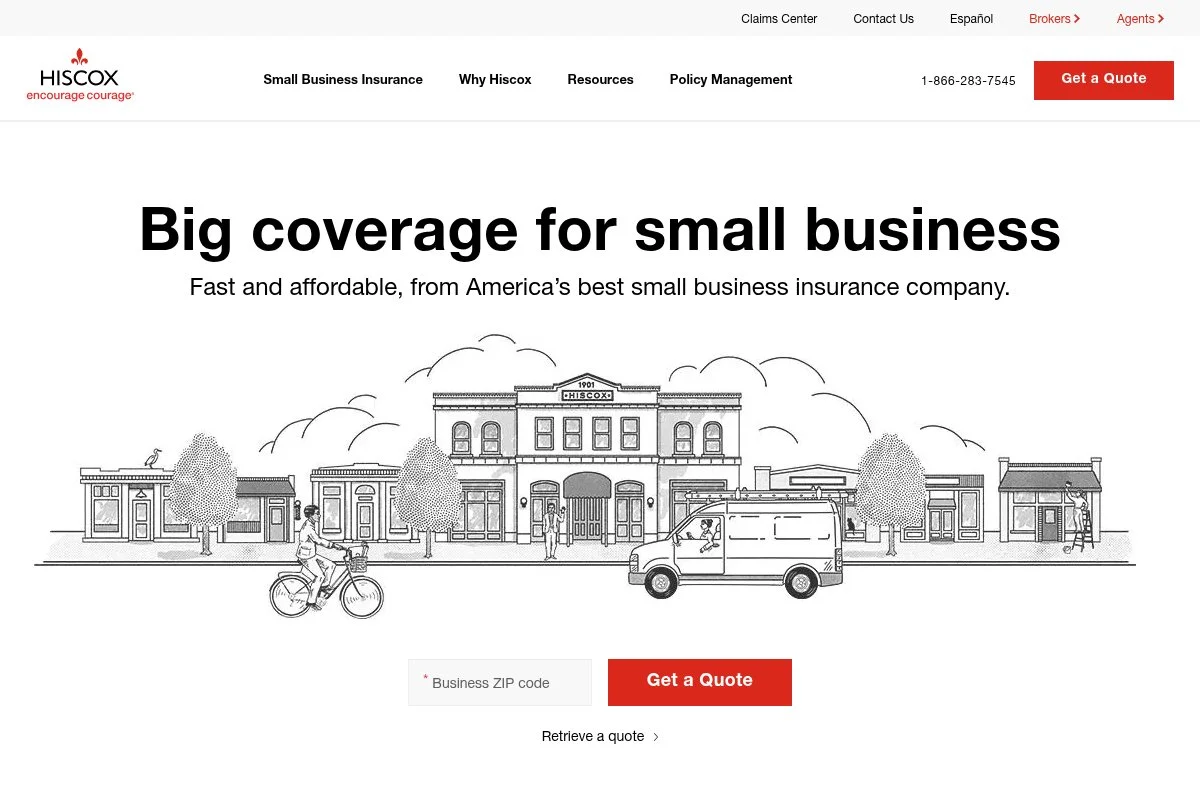
Hiscox is a long‑established insurer with a strong focus on small businesses and professionals. It offers online quotes and a wide set of professions, including many white‑collar roles. The quote experience is straightforward: pick your profession, outline services, and choose limits. The portal gives access to COIs, policy forms, and renewals. Coverage options include general liability, professional liability, BOP, and cyber.
Hiscox has continued to refine online availability and documentation clarity. That helps when a client needs exact wording on a certificate or endorsement. Upper‑end options include higher limits, specialized professional liability coverage, and international coverage for certain professions. Those features are helpful when consulting across borders.
I like Hiscox for consultants and agencies that need professional liability alongside GL. Policy wording is detailed, which clients appreciate during vendor onboarding. Support is phone and email, with a solid knowledge base. If you need a nuanced E&O quote, this is one of the first quotes I would pull.
How it works and features
Hiscox guides you through role‑specific questions to tailor coverage. You can adjust limits and retroactive dates for E&O where relevant. The portal stores COIs and allows quick updates. Analytics are basic, but documentation and policy details are strong. Automation appears in renewal and certificate tools. Add‑ons like Cyber are available for many classes. Support is reliable, and documentation quality stands out. For professional services, it hits the mark.
Who it’s for
Great for consultants, designers, marketers, IT pros, therapists, and small agencies. It excels in professional liability paired with GL. If you are a high‑hazard trade, consider a marketplace for more carrier options. User‑friendly for beginners.
Hiscox pricing
Pricing is quote‑based, varying by profession, state, and limits. Monthly and annual options are available.
- General Liability: Quote-based; COI and portal access
- Professional Liability (E&O): Quote-based; rich profession list
- BOP: Quote-based; combines GL + property
- Cyber: Quote-based; add to protect data exposure
Hiscox is often competitive for white‑collar professions, especially E&O. Annual pay may reduce total premiums compared with monthly.
Pros and cons
- Pros: Strong for E&O, broad profession support; good documents.
- Pros: Easy COIs; dependable support.
- Cons: Some trades are priced higher than direct competitors.
- Cons: Portal is utilitarian; analytics are limited.
Pick Hiscox if you need tight professional liability language. If you are in a low‑risk trade, compare prices with Next or biBERK.
Hiscox reviews
Hiscox has a large review footprint across multiple platforms, but ratings vary by product and region. Check the latest reviews that match your profession and state.
5. The Hartford
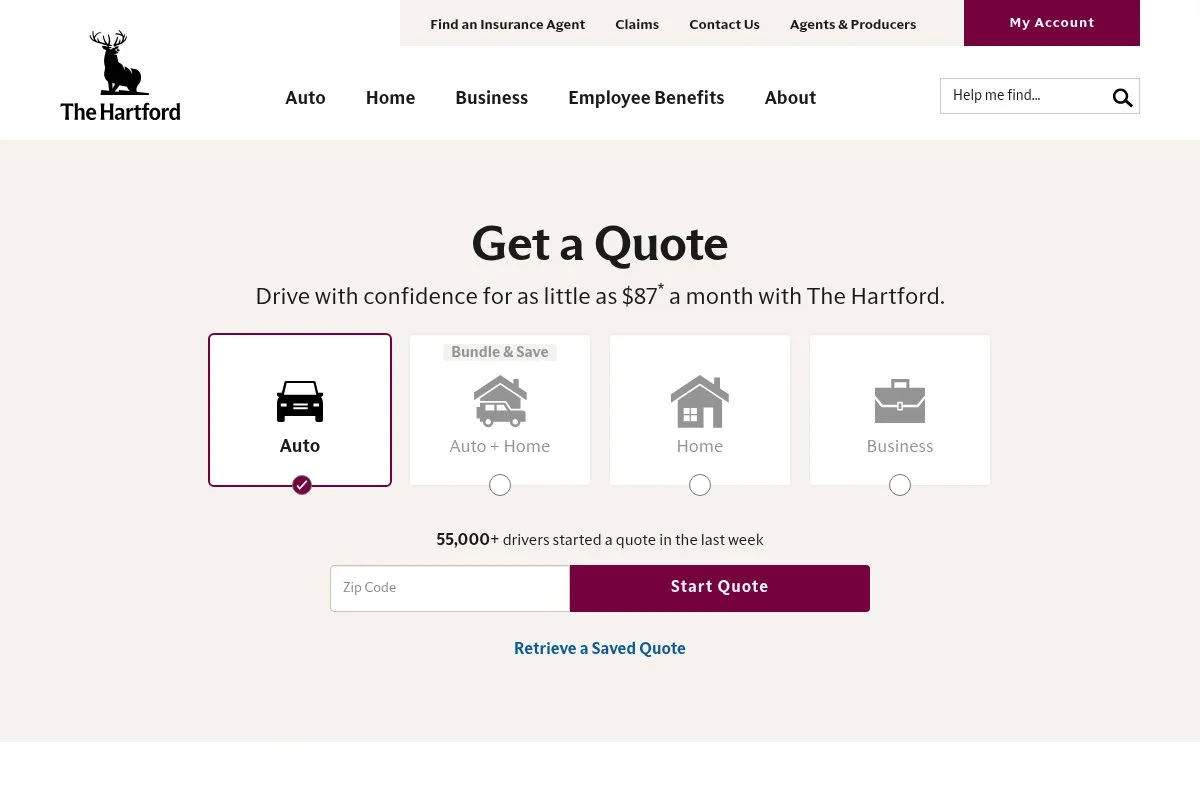
The Hartford is a well‑known small business carrier with a strong claims reputation. It serves many self‑employed trades and professional services with online quotes and agent support. Starting a quote is simple, and you can often bind online or finish with an agent if your class needs review. The portal supports document access, COIs, and renewals. Coverage includes GL, BOP, professional liability (via partners in some cases), and more.
The Hartford continues to enhance digital quoting and policy management. That has reduced the time to bind for many standard classes. Higher‑tier options include tailored endorsements for contractors, pro services, and retail, as well as solid property coverage in BOPs. Package discounts help keep the total cost down.
I like The Hartford for growing solo LLCs that want room to scale and a carrier that enterprise clients recognize. Support is strong by phone and via agents. If you value claims handling and name recognition, put it on your list.
How it works and features
Enter your business details, select coverages, and review limit options. The portal provides COIs and policy documents. Contractors can add endorsements common in bids, and retailers can tailor property limits. Automation shows in renewals and document delivery. If your class is complex, an agent steps in without having to start from scratch. Support quality is a highlight here. Overall, it is beginner-friendly and sturdy for scaling.
Who it’s for
Best for contractors, trade pros, retailers, health/wellness, and consultants who want strong claims support and room to grow. If you need one‑day coverage, go with Thimble. Technical skill not required.
The Hartford pricing
Pricing is quote‑based and depends on your class, state, payroll/revenue, and limits. You can often save by bundling GL with property in a BOP.
- General Liability: Quote-based; COI tools included
- BOP (GL + Property): Quote-based; package discount potential
- Professional Liability/E&O: Quote-based; availability varies
- Add‑ons: Cyber, hired/non‑owned auto, and more (eligibility varies)
The Hartford can be price‑competitive in many classes, especially with BOP bundles. Annual billing and risk controls may help with pricing over time.
Pros and cons
- Pros: Strong claims reputation; broad coverage options; scalable.
- Pros: Good for contractor endorsements and retail needs.
- Cons: May require agent help for some classes.
- Cons: Not designed for one‑off, one‑day gigs.
Choose The Hartford if you want name recognition and depth of support. If you only need occasional coverage, compare with Thimble.
The Hartford reviews
The Hartford has extensive reviews and industry recognition. Ratings vary by product, so check current feedback for your specific coverage and state.
6. Simply Business
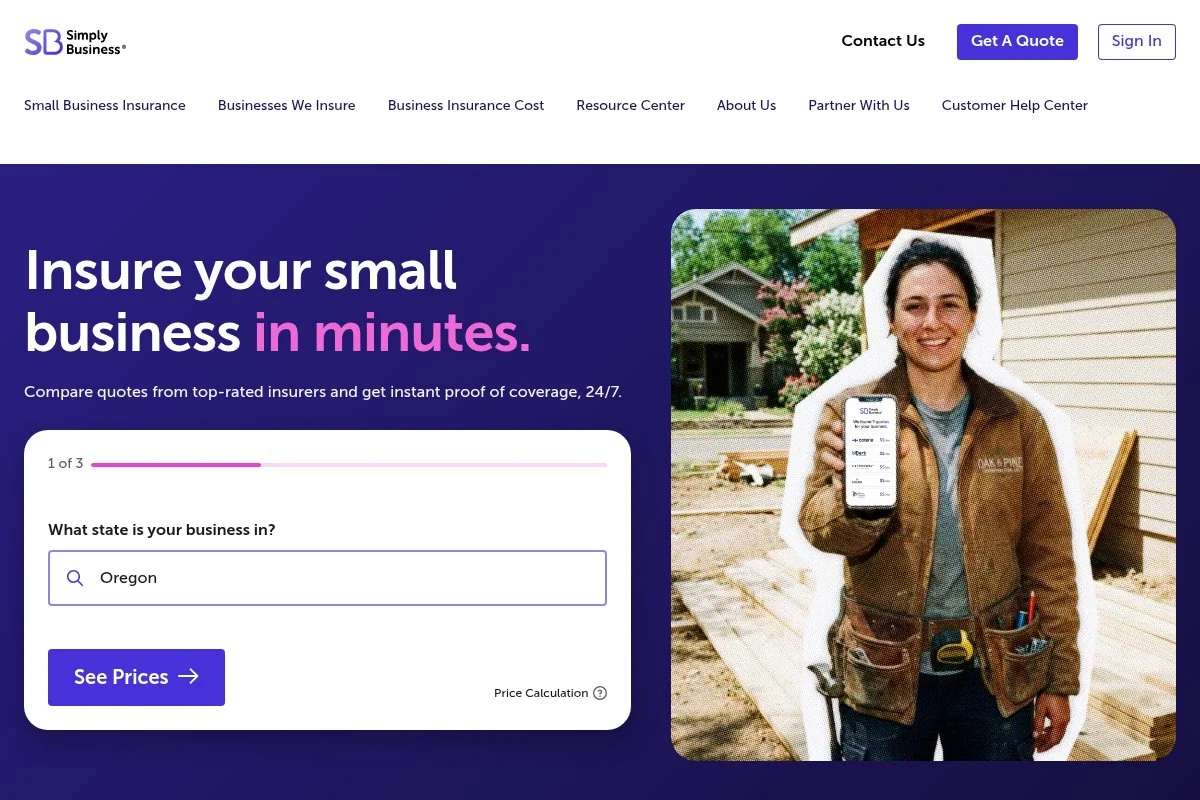
Simply Business is a marketplace that lets you compare quotes from multiple carriers. It is handy if your class is tricky or you want to price‑shop with one form. You fill out a short questionnaire, and the platform returns quotes from partner carriers. You can sort by price, limits, and coverage types. The process is quick and keeps documents organized.
Over time, Simply Business has expanded the number of carriers and classes available online. That widened access for roles that used to require phone‑only brokers. Premium options depend on the carrier you pick. You can often add endorsements, raise limits, and bundle GL with E&O or a BOP.
I recommend running a marketplace check even if you favor a direct carrier. It gives price context and sometimes surfaces a lower premium for the same limits. Support helps guide you if quotes conflict or a client asks for odd wording. It is a smart second stop after one direct quote.
How it works and features
Complete a single intake form, get multiple quotes, and compare coverage details side‑by‑side. You can adjust limits and endorsements to match contract needs. COIs and policy docs live in your account after purchase. Automation lives in saved profiles and renewal reminders. Since carriers differ, features like analytics depend on the policy you choose. Support is available by phone and email to decode differences. The experience is built around comparison. It is beginner‑friendly and efficient for price checks.
Who it’s for
Good for solo owners, consultants, trades, and event vendors who want multiple quotes fast. It excels for unusual classes or borderline risks. If you already love a direct carrier’s price and portal, you might not need a marketplace. No special skills required.
Simply Business pricing
Pricing is entirely quote‑based from partner carriers. You can pay monthly or annually, depending on the carrier.
- General Liability: Multiple carriers; quote-based
- Professional Liability: Multiple carriers; quote-based
- BOP and other lines: Multiple carriers; quote-based
Value swings by carrier and class. The upside is choice: one intake, several prices. Always compare limits, deductibles, and endorsements—not just the premium.
Pros and cons
- Pros: Multiple quotes in minutes; helpful for tricky classes.
- Pros: Keeps documents organized; guidance available.
- Cons: Experience varies by carrier.
- Cons: Portal features depend on the underlying insurer.
Use Simply Business to quickly check the market. If your favorite carrier is the cheapest, great, you have peace of mind.
Simply Business reviews
As a marketplace, ratings reflect service and partner carriers. Reviews vary; scan current feedback tied to your state and policy type.
7. CoverWallet
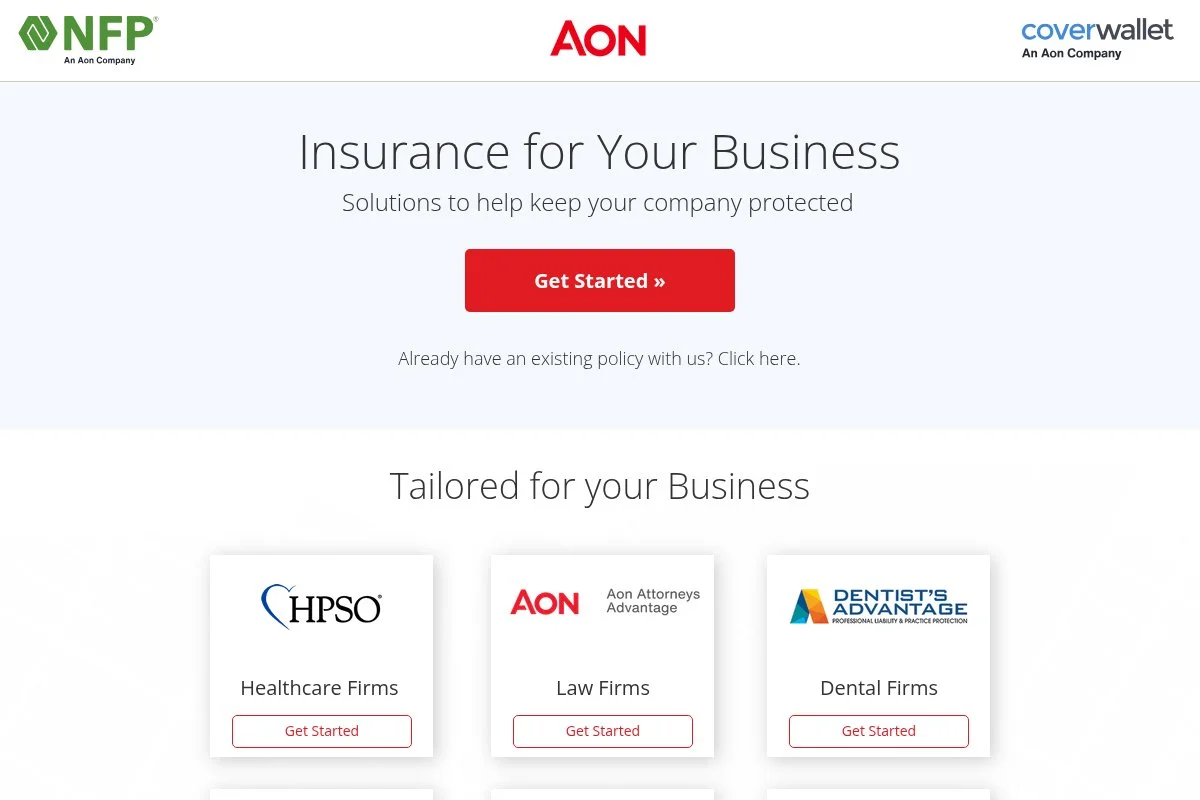
CoverWallet, part of Aon, is another marketplace with a polished quote experience. It works well if you need to bundle lines or want add‑ons that a direct carrier does not show online. You submit one intake and receive quotes from multiple insurers. The portal organizes policies, COIs, and renewals. It is convenient for keeping everything in one place.
CoverWallet has broadened carrier access and improved certificate tools. That helps when clients ask for specific language or additional insureds mid‑project. Depending on the carrier, you can select higher limits, add endorsements, and bundle GL with property or E&O. The variety is the selling point.
I like CoverWallet for users who want an Aon‑backed broker with digital tools. It is also a solid option if you plan to add more lines later. Support is available by phone and email, and agents can step in for complex requests. Good balance of digital and human help.
How it works and features
Fill a unified form, compare quotes, and purchase online. The dashboard stores multiple COIs and policy documents. You can request endorsements and manage renewals without juggling email threads. Automation includes reminders and certificate tools. Analytics depend on the issuing carrier. Integration with Aon resources helps with unusual requests. For day‑to‑day use, it is simple enough for beginners yet capable of more complex setups.
Who it’s for
Great for contractors, mobile retailers, wellness pros, and consultants who want side‑by‑side quotes and easy COIs. It excels when you need bundled lines. If you prefer one direct portal and already have a great rate, you may not need it. Beginner‑friendly.
CoverWallet pricing
Pricing is quote‑based from multiple carriers. Monthly and annual options depend on the insurer you choose.
- General Liability: Multiple carriers; quote-based
- Professional Liability: Multiple carriers; quote-based
- BOP and other lines: Multiple carriers; quote-based
The value comes from comparison and bundling. Always read forms and endorsements before you buy—the lowest price is not always the best fit.
Pros and cons
- Pros: Multi‑carrier quotes; strong COI tools; Aon backing.
- Pros: Useful when adding lines over time.
- Cons: Experience varies by insurer.
- Cons: Some endorsements require agent steps.
Choose CoverWallet if you want variety and broker support. If you are set on a single direct carrier, you might not need it.
CoverWallet reviews
As a broker platform, CoverWallet reflects both its reviews and those of its partner carriers. Results vary—check current feedback for your policy type and state.
What is the best low-cost liability insurance right now?
My top three picks are Next Insurance, Thimble, and biBERK. For most self‑employed folks who want low cost and speed, Next is my first stop. If you work sporadically, Thimble’s on‑demand setup can save you money. For direct rates with big‑name backing, biBERK is excellent. I use Next for my own small projects. This is not sponsored. I found it while helping a reader who needed a COI within hours. What impressed me was the fast quote, clear limits, and instant certificate download. The clincher was being able to add an additional insured without having to call support.
On value, Next often competes head‑to‑head with bigger carriers at entry limits, especially for low‑risk classes. Bundling GL with E&O or a BOP can bring the total below what I have seen from some marketplaces for the same limits. If your gigs are steady all year, a monthly or annual Next policy is usually a better deal than piecing together many short‑term policies. Thimble is a very close second for me because it solves a different problem: intermittent work. If you only need coverage for a weekend market, a day‑rate policy keeps costs tight without paying for idle months. Thimble’s class coverage and mobile COIs have improved, making it more practical for creators and event vendors.
Its unique strength is true flexibility, hourly, daily, or monthly, and simple client endorsements. If I only worked sporadically, I would likely choose Thimble first. biBERK is my third recommendation, especially if you prefer a direct carrier under a household name. The online bind, steady documentation, and broad add‑ons make it strong for solo owners who plan to add lines later. If your class fits and you want that big‑company stability, it is a smart move.
I sometimes pair a direct carrier with a marketplace check. I will price Next or biBERK, then run a quick comparison on Simply Business or CoverWallet. It takes a few extra minutes and has saved readers real money. Choosing among these is not easy. I stuck with Next because my work is steady enough to justify monthly coverage, and I value instant COIs and easy endorsements. If my projects were sporadic, I would switch to Thimble tomorrow.
I hope this helped you cut through the noise and pick a policy that protects your work without draining your budget. Stay covered, land the gig, and keep building.
Frequently Asked Questions
Q: What type of liability insurance do I need as a freelancer?
Most freelancers start with general liability to cover third‑party injury or property damage. Many also add professional liability (E&O) if they give advice or create work that could cause financial loss.
Q: How much coverage should I buy?
Common starting limits are $1M per occurrence and $2M aggregate for GL. I match limits to contract requirements and client size. If you work with big venues or brands, higher limits may be required.
Q: Can I get a certificate of insurance (COI) the same day?
Yes, with most options here, you can generate a COI instantly after purchase. I keep mine saved in the portal and on my phone so I can forward it fast.
Q: How do I lower my premium without losing protection?
Right‑size your limits, remove coverages you do not need, and bundle GL with a BOP if you need property. Compare quotes yearly and keep claims clean; both help over time.
Photo by Vitaly Gariev: Unsplash


