


I’ve helped hundreds of self-employed readers sort out funding when cash flow gets lumpy. I also know the sting of a slow quarter and a surprise tax bill. A few years back, I needed a small personal loan to bridge a three-month dip in retainers. I didn’t want a credit card balance snowballing or a HELOC on my home. What pushed me to research hard was simple: I wanted predictable payments, no junk fees, and a lender that understands 1099 income. Easier said than done. I learned the hard way that many lenders still expect W‑2s or years of tax transcripts. The good news: you can still qualify with bank statements, contracts, and a clean payment history.
The most successful freelancers I know treat financing like a tool, not a crutch. They pick clear terms, avoid prepayment penalties, and refinance if rates fall. You don’t need the fanciest offer or a huge loan. You need a fair APR, a realistic payment, and a lender that won’t nickel-and-dime you.
Comparison of 7 best personal loans in 2026 with pricing and recommended use cases
What is a personal loan?
A personal loan is an installment loan from a bank, credit union, or online lender. You borrow a fixed amount, then repay it in equal monthly payments over a set term.
There’s a saying I live by: cash flow is oxygen. A personal loan can stabilize your monthly outlay so you can plan work, taxes, and savings without guesswork.
Think of it like this: carrying $8,000 on a typical credit card can cost far more in interest than the same $8,000 on a fixed‑rate personal loan with a shorter term. Predictability matters.
The core purpose: individuals—especially freelancers and small business owners—use personal loans to consolidate debt, bridge uneven income, or fund a project, using bank data and credit to qualify, and gain steady, predictable payments as the outcome.
Many pair a personal loan with a separate tax-savings account, an invoicing tool, and a zero‑based budget so payments fit neatly into monthly plans.
Not every lender treats self‑employed income the same, though, which is why picking the right partner matters.
How to choose the best personal loan
With so many lenders online, picking a loan can feel overwhelming. Terms, fees, and eligibility rules vary more than most people expect.
I wrote this to help you match a lender to your situation, not force your finances into a lender’s mold. Your income pattern and goals come first.
Most guides you’ll find are written by lenders or by media with sponsored lists. I am not sponsored by any platform on this list. What follows is my honest view based on policy details and reader feedback.
Here are some questions you should ask when looking for a loan:
- Does the lender allow a soft credit check for prequalification without affecting your credit?
- How easy is it to verify 1099 income using bank statements or contracts?
- Can the loan amount and term scale with your needs later?
- How do fees and APR change as your credit or amount increases?
- Are features like direct payoff to creditors or joint applications available?
- What account tools and alerts help you track payments and autopay?
- How hard is it to change your due date or pay off early without fees?
- What is funding speed, and are there cut‑off times for same‑day?
- Any state restrictions or income documentation rules for the self‑employed?
7 best personal loans in 2026
Here are my top picks for the best personal loans:
- SoFi Personal Loans
- LightStream
- Upgrade
- LendingClub
- Discover Personal Loans
- Upstart
- Avant
Let’s see which one is right for you.
1. SoFi Personal Loans
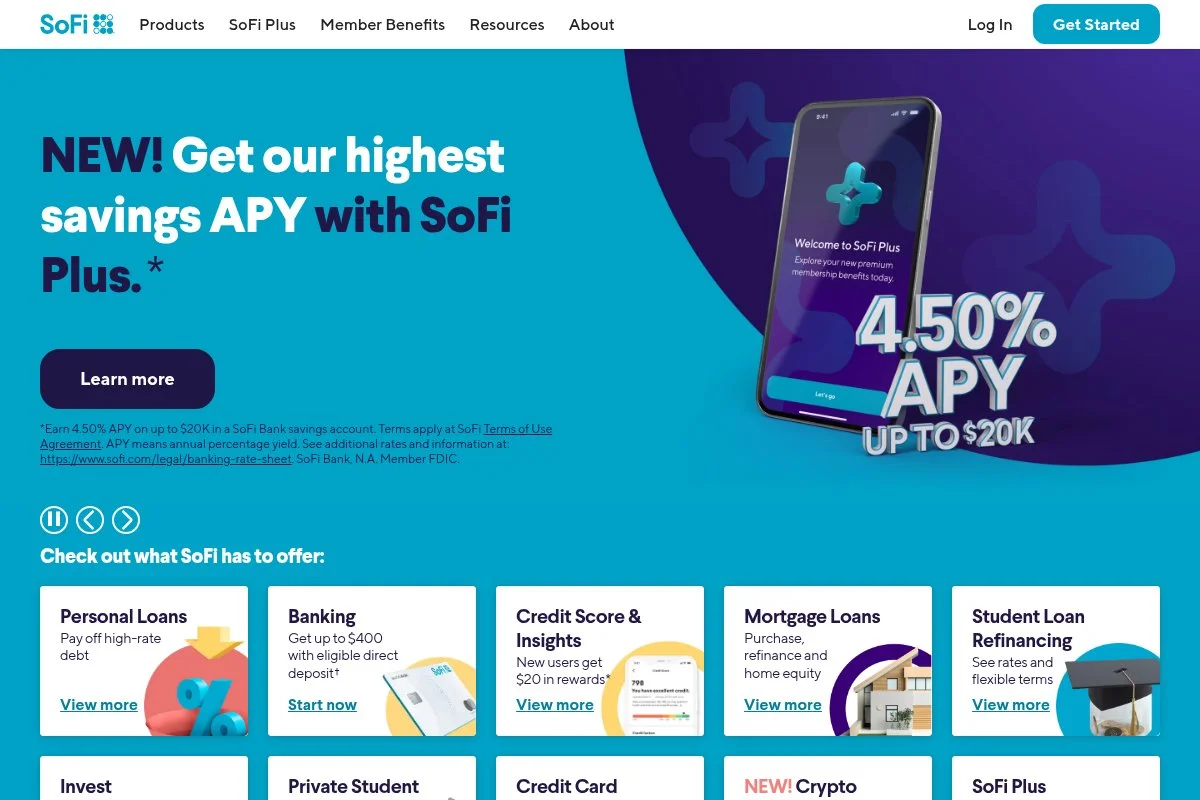
SoFi offers unsecured personal loans designed for borrowers who want clear pricing and fast funding. The company began in student lending and grew into a full suite of consumer finance products, including banking and investing.
You can prequalify with a soft credit check and see your rate without affecting your credit. Application is straightforward, and self‑employed borrowers can verify income with bank statements, tax returns, or contract history. The daily experience is clean: autopay setup, due‑date options, and mobile account controls.
Over the last couple of years, SoFi expanded its banking services and streamlined funding timelines, which helps when you need money quickly. The app also improved notifications and payoff history, making tracking simpler.
Higher‑tier borrowers may see rate discounts for autopay. SoFi also avoids common junk fees like origination and prepayment charges, which is rare among major online lenders.
I’ve used SoFi myself for a small bridge loan during a slow season. It was straightforward to manage, and paying off early cost me nothing.
One more thing I like: SoFi’s joint application option and unemployment protection programs on some products show the company thinks about real‑life bumps.
How SoFi works and key features
You start with a soft‑pull prequalification and customize the amount and term in a simple, mobile‑first interface. The design is minimal, with clear sliders and payment previews. Self‑employed applicants can upload bank statements and tax documents, and support is available by chat or phone.
The dashboard shows payment amount, due date, accrued interest, and payoff amount. You can turn on autopay, change dates within policy windows, and make extra principal payments. SoFi’s account ties neatly into its bank and invest products if you already use them.
“The process was quick and transparent,” a reader told me after consolidating two cards into one loan. That has been my experience too—no surprises at payoff.
Overall, SoFi feels beginner‑friendly while still giving enough control for planners who like to tweak payment timing and track progress closely.
Who SoFi is for
Great for freelancers, consultants, solo agency owners, creators with 1099 income, and side‑hustlers seeking a fee‑light option. It’s strong for debt consolidation, bridging seasonal gaps, or funding a small project. Joint applications help couples combine incomes. If your credit is on the lower side, you may find approval tougher than with subprime‑friendly lenders. No heavy technical skill needed—just your docs and a plan.
SoFi pricing
SoFi uses risk‑based pricing with fixed APRs that vary by credit, income, and amount. You can preview offers with a soft check. There’s no origination fee and no prepayment penalty.
- Personal Loan: Fixed APR varies; terms typically 2–7 years; includes an autopay option, mobile app controls, and $0 origination fee.
- Joint Application: Same structure; allows two borrowers to qualify together.
Compared with competitors, the lack of origination fees can lower total cost, especially on shorter terms. Annual autopay discounts may apply to rates. If you borrow larger amounts with strong credit, SoFi often prices competitively versus fee‑heavy lenders.
SoFi pros and cons
Pros
- $0 origination and $0 prepayment save money.
- Soft‑pull prequalification and fast funding.
- Joint applications and clear mobile controls.
- Good experience for organized self‑employed borrowers.
Cons
- May be harder to qualify with weaker credit.
- Rates still vary widely; not always the lowest.
- Best terms favor higher credit profiles.
If you want clean terms with fewer fees, SoFi is a top pick. If your credit needs rebuilding, look at Upgrade or Avant.
SoFi reviews
You’ll find extensive customer feedback on sites like Trustpilot and ConsumerAffairs. Ratings and counts change often; check both to see recent experiences and funding timelines.
2. LightStream
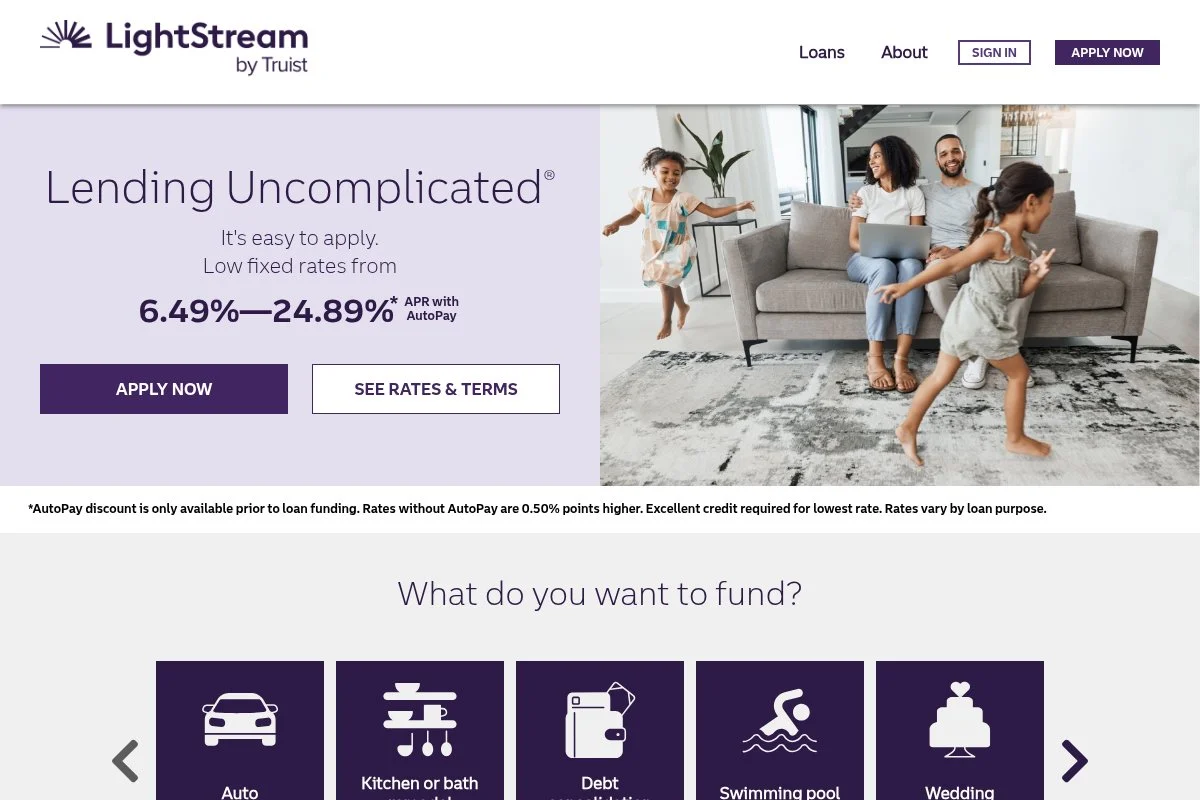
LightStream, a division of Truist Bank, focuses on unsecured loans for customers with strong credit. It’s known for no fees and a Rate Beat Program on certain loans when conditions are met.
The process begins with an online application and quick decisioning. Documentation can include bank statements and tax returns for self‑employed income. The interface is straightforward, and funding can be very fast once approved.
Recent updates have centered on application clarity and e‑signature flow, which speed things up. I’ve heard from readers that LightStream’s communication is plain and to the point, which reduces stress.
Premium perks show up as no origination fee, no late payment penalties listed in marketing materials, and an autopay rate discount. That fee structure is rare among bank‑backed online offerings.
I don’t currently use LightStream, but several readers with excellent credit report smooth experiences and quick funding for vehicle and improvement loans.
What stands out is policy consistency. If you qualify, terms are transparent and easy to manage without hidden add‑ons.
How LightStream works and key features
LightStream’s interface is clean with a simple application, document upload, and funding selection. You choose amount and term and see payment estimates before finalizing. Templates don’t apply here, but customization shows up in choosing disbursement date and repayment options.
Advanced users appreciate that there are no origination fees and that autopay reduces the APR. The portal tracks payment history, next due date, and payoff numbers. Alerts help you avoid missed payments.
Support is available online and by phone during business hours. One reader told me, “Approval was quick, and the no‑fee structure made the math easy.” Overall, it’s best for borrowers who already have strong credit and want speed plus simple terms.
Who LightStream is for
Ideal for consultants with high credit scores, established freelancers, and self‑employed pros with stable cash flow. Strong for large purchases, debt consolidation with fast payoff, or improvement projects. If your credit is mid‑tier or you need more flexible underwriting, try Upgrade or Upstart. Beginner‑friendly if you qualify; otherwise, approval may be tight.
LightStream pricing
LightStream uses risk‑based fixed APRs that vary by credit, term, and amount. There are no origination fees and no prepayment penalties. An autopay discount can reduce the APR.
- Unsecured Personal Loans: Fixed APR varies; terms often 2–12 years, depending on purpose; includes a $0 origination fee and an autopay discount.
Value is strong for high‑credit borrowers because fees are eliminated. Compared with lenders that charge several percent in origination fees, the total cost can be lower even if the rate is similar. Check offers with and without autopay to see savings.
LightStream pros and cons
Pros
- No origination fees and no prepayment penalties.
- Autopay rate discount and quick funding.
- Clear terms from a bank division (Truist).
Cons
- Approval favors excellent credit.
- Fewer options if your profile is non‑prime.
- Limited flexibility for unusual income documents.
If you have strong credit and want a fee‑light loan, it’s hard to beat. If your profile is mid‑tier, compare it with Upgrade.
LightStream reviews
Check Trustpilot and ConsumerAffairs for current ratings. Feedback trends point to fast funding and clear terms for qualified borrowers; always scan recent reviews for nuance.
3. Upgrade
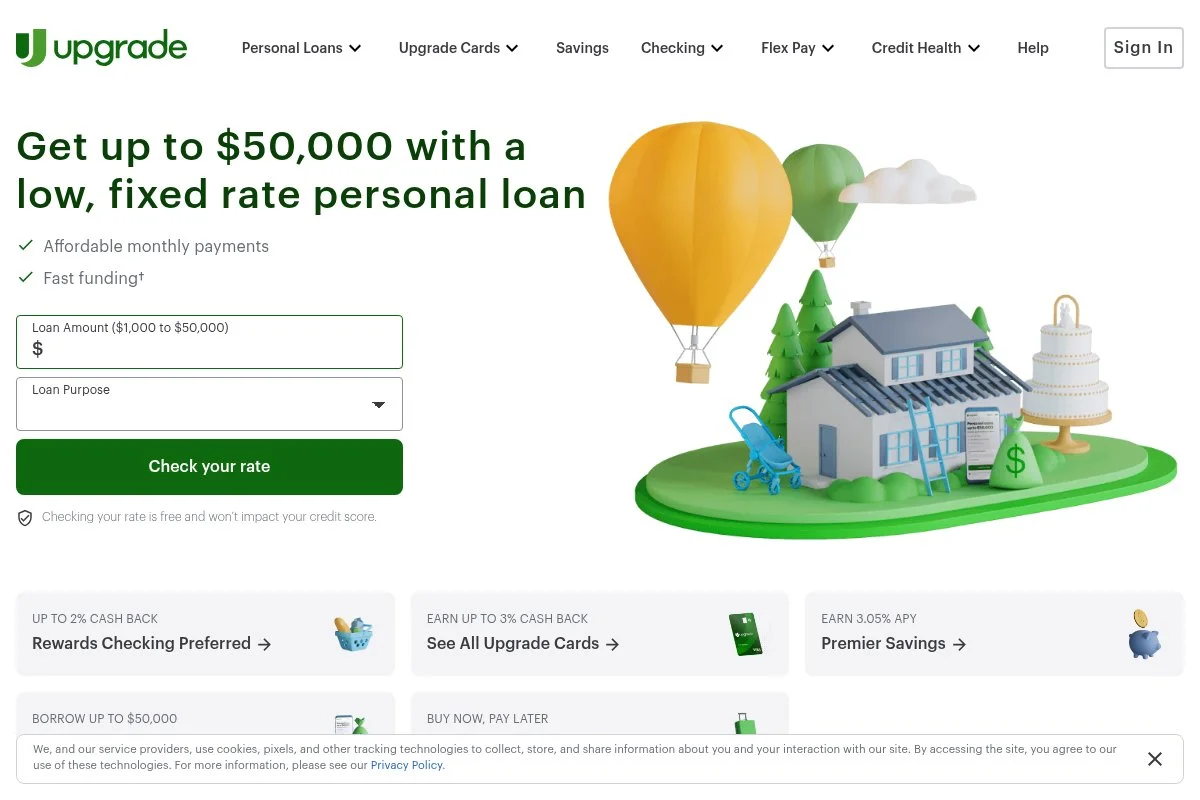
Upgrade offers personal loans with a friendly mobile app and quick decisions. The company also provides cards and banking services, which integrate neatly for budgeting.
Prequalification is a soft pull. Self‑employed applicants can verify income with bank statements and tax records. The app makes payment setup and extra principal payments easy. Direct payoff to creditors is available on some consolidation loans.
Recent improvements include smoother account setup, better alerts, and faster disbursement windows. That matters if you’re covering a short‑term cash dip.
Upgrade typically charges an origination fee, which is common for fintech lenders. In return, underwriting can be more flexible for mid‑tier credit than bank‑only options.
I’ve recommended Upgrade to readers who needed fast approvals with fair credit. The balance of speed, app quality, and predictable terms is solid for day‑to‑day cash flow needs.
Customer service responses have been timely in my readers’ reports, which helps if you need to change a due date or request payoff details.
How Upgrade works and key features
The interface is modern and simple. You see payment estimates, choose term options, and upload documents from your phone. Consolidation loans can send funds directly to creditors, which helps stop interest on higher‑rate cards.
You’ll track payment history, payoff amount, and interest saved in the app. Alerts help you avoid missed payments. Support is available by phone and online, and documentation for self‑employed income is clear.
Overall, Upgrade suits borrowers who value speed and a clear app, even if an origination fee applies.
Who Upgrade is for
Good for freelancers with fair to good credit, gig workers with steady deposits, agency owners consolidating cards, and side‑hustlers needing quick decisions. Direct payoff and a clean app are key wins. If you have excellent credit and want zero fees, LightStream or SoFi may be cheaper overall.
Upgrade pricing
Upgrade uses risk‑based fixed APRs with terms commonly 2–7 years. Most loans include an origination fee deducted from proceeds. There’s no prepayment penalty.
- Personal Loans: Fixed APR varies; includes mobile app, autopay, and optional direct payoff to creditors; origination fee applies.
Against competitors, Upgrade’s value comes from flexible approvals and quick funding. Even with an origination fee, total cost can be reasonable if you qualify for a competitive rate and pay off faster than planned.
Upgrade pros and cons
Pros
- Soft‑pull prequalification and fast decisions.
- Direct payoff for consolidations.
- Helpful mobile app and alerts.
Cons
- Origination fee increases upfront cost.
- Rates can be higher for weaker credit.
- Best pricing reserved for stronger profiles.
Choose Upgrade if you value speed and app quality. If fees are a dealbreaker, consider SoFi or Discover.
Upgrade reviews
Upgrade has active feedback on Trustpilot and ConsumerAffairs. Check recent comments about funding speed and customer service before you decide.
4. LendingClub
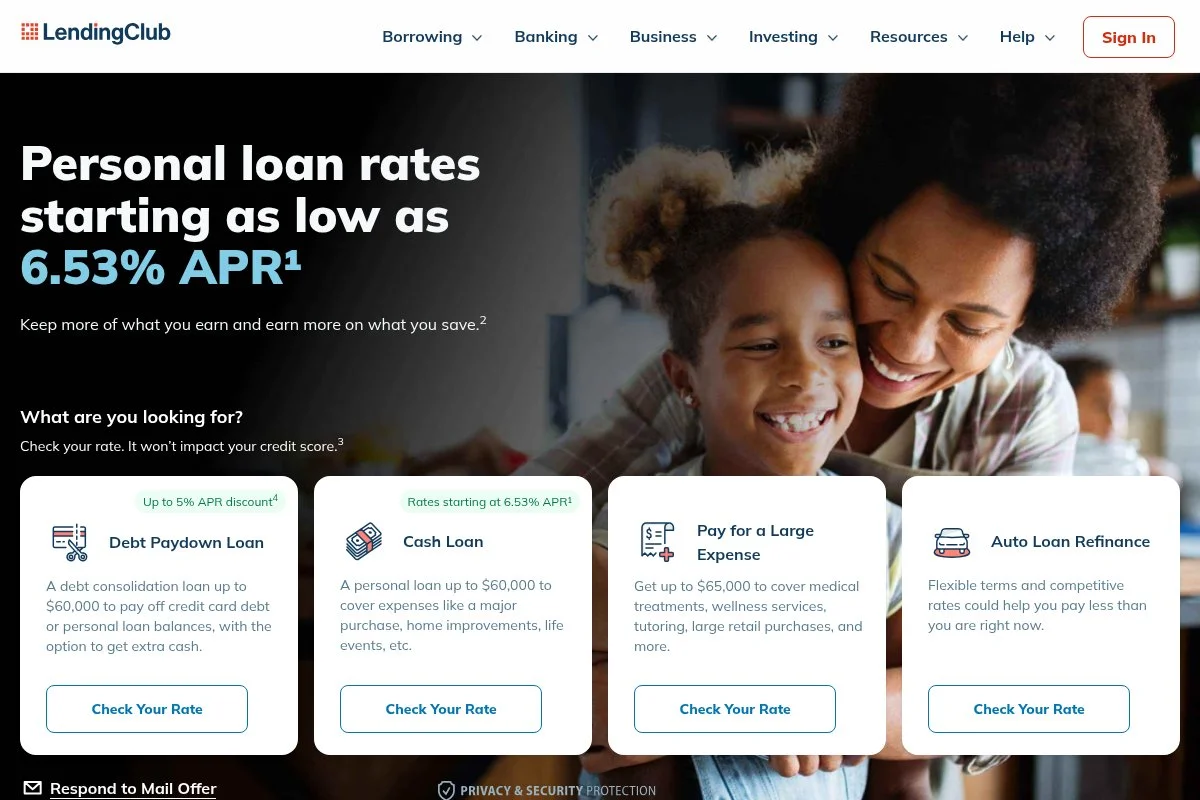
LendingClub offers personal loans with the option to apply with a co‑borrower, which can help self‑employed applicants qualify or secure better terms. It’s a bank now, and underwriting has matured over time.
You can check your rate with a soft pull. The application supports income verification through bank statements and tax documents. Direct payoff to creditors is often available for consolidations, which simplifies cleanup.
Recent years brought a tighter focus on banking services and responsible lending. The experience feels steadier, and communication is clearer about fees and payments.
LendingClub usually charges an origination fee. In return, approvals can be more accessible for mid‑tier credit than some bank‑only lenders.
I like LendingClub for partners or spouses who want to combine incomes on one application. That can lower the total cost and expand options.
The dashboard is simple, and customer service has been described by readers as helpful when changing due dates or making extra payments.
How LendingClub works and key features
The interface lets you compare terms before accepting an offer. Once approved, you can set autopay, view payoff amount, and track payment history. Consolidation users can send funds to creditors directly to reduce card balances.
Support is available by phone and online. Self‑employed borrowers can submit bank statements and tax records to document income. Overall, it’s a steady option for borrowers who may benefit from a co‑borrower.
Who LendingClub is for
Best for freelancers who can add a co‑borrower, small teams with combined income, or self‑employed borrowers with fair to good credit consolidating debt. If fees are your top concern, SoFi or Discover may cost less. If your credit is very thin, Upstart might provide more flexible underwriting.
LendingClub pricing
Risk‑based fixed APRs vary by credit, income, and amount. LendingClub loans generally include an origination fee and no prepayment penalty. Terms often range a few years.
- Personal Loans: Fixed APR varies; origination fee applies; direct payoff to creditors available; soft‑pull prequalification.
Compared with others, value depends on whether a co‑borrower improves your rate enough to offset the origination fee. If you qualify solo with a no‑fee lender, that may be cheaper overall.
LendingClub pros and cons
Pros
- Joint applications can improve approval odds.
- Soft‑pull prequalification and direct payoff options.
- Clear online dashboard and payment tools.
Cons
- Origination fee raises upfront cost.
- Rates can be higher without strong credit.
- Funding timelines vary with documentation.
If a co‑borrower helps your profile, LendingClub is worth a look. If you can qualify solo with no fees, compare SoFi or LightStream first.
LendingClub reviews
LendingClub has many reviews on Trustpilot and ConsumerAffairs. Scan the latest feedback for notes on fees and funding speed before you commit.
5. Discover Personal Loans
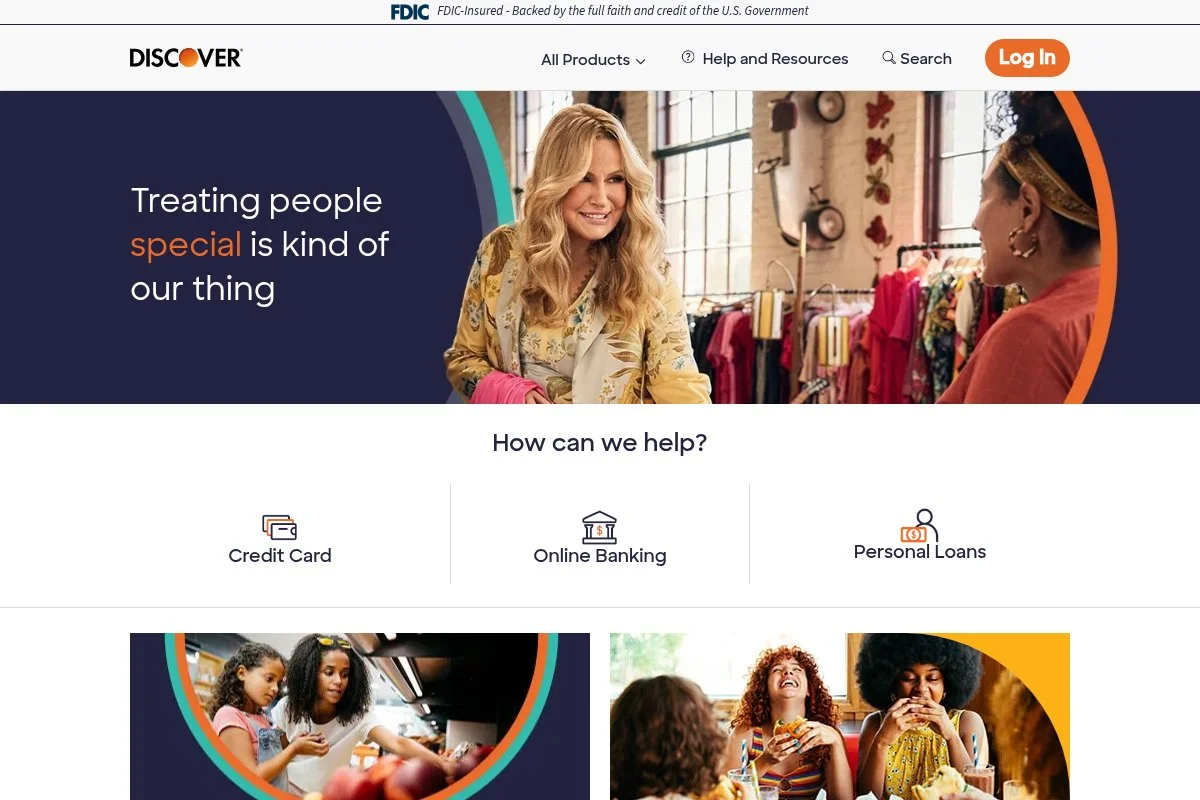
Discover offers personal loans with no origination fees and a 30‑day return guarantee, which lets you cancel and return funds with no interest if plans change quickly.
You can check your rate with a soft pull. The application supports income verification for self‑employed borrowers with tax documents and bank statements. The interface is clean and backed by strong customer service hours.
Discover has focused on clarity and customer‑friendly policies. The 30‑day return option is a safety net if your project falls through or you find a better path.
There’s no prepayment penalty, and terms are fixed. Discover is widely recognized for simple terms and helpful support.
I like Discover for budget‑minded borrowers who hate surprise fees. Predictability is the main draw.
Support quality has been a bright spot in reader feedback, especially for payoff letters and due‑date help.
How Discover works and key features
Discover’s process includes prequalification, document upload, and a clear dashboard with payment tracking. You can set autopay, view payoff amount, and make extra principal payments. The 30‑day return guarantee (from disbursement) adds flexibility if your plans change fast.
Phone support hours are extensive. For consolidations, you can often send funds directly to creditors to knock down credit card balances. Overall, the day‑to‑day is simple and predictable for busy freelancers.
Who Discover is for
Great for sole proprietors who hate fees, debt consolidators who want direct payoff, and planners who value the 30‑day return safety net. If you need very flexible underwriting with thin credit, Upgrade or Upstart could be easier to qualify for. Beginner‑friendly with clear steps.
Discover pricing
Discover uses fixed APRs that vary by credit, income, and term. There’s no origination fee and no prepayment penalty. Terms are set at approval with clear monthly payments.
- Personal Loans: Fixed APR varies; $0 origination; 30‑day return guarantee; direct payoff to creditors available on consolidations.
Compared with fee‑based lenders, Discover can be cheaper at the same rate due to $0 origination. If you’re rate‑shopping, weigh the guarantee and support quality as part of total value.
Discover pros and cons
Pros
- $0 origination and $0 prepayment.
- 30‑day return guarantee for flexibility.
- Direct payoff to creditors and strong support.
Cons
- Requires solid credit to unlock best rates.
- Loan sizes and terms are limited to program rules.
If you want predictable, fee‑light terms, Discover fits well. If your credit is thin, compare Upstart or Avant.
Discover reviews
Look at Trustpilot and ConsumerAffairs for current Discover loan feedback. Reviews often mention clear terms and support; always confirm with the latest posts.
6. Upstart
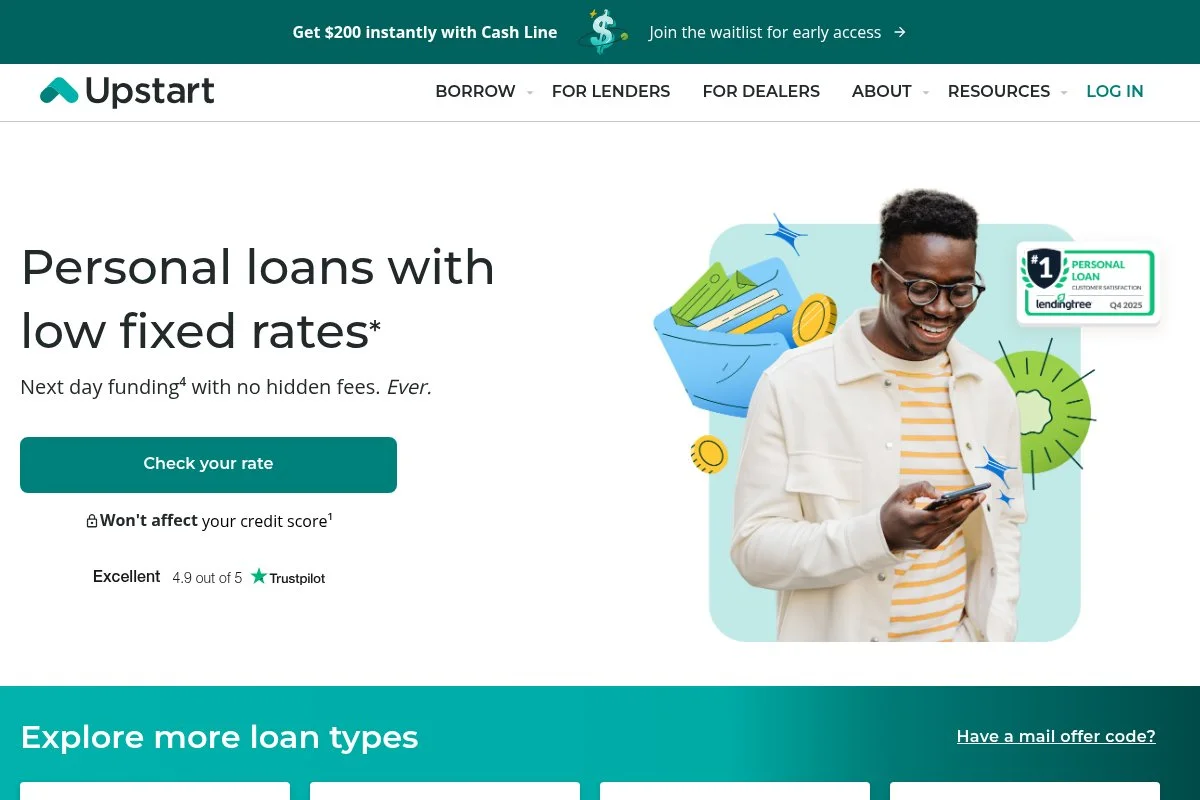
Upstart partners with banks to offer personal loans using underwriting that considers education, work history, and other data points in addition to credit. That can help some self‑employed borrowers with thinner files.
You can prequalify with a soft check. The application allows document uploads for income and identity. Funding can be quick after final approval.
Upstart’s model has evolved, and the application flow is cleaner than it used to be. It’s a useful option if your credit history is short but your income is steady.
Origination fees are common with Upstart offers. There’s no prepayment penalty, so paying off early can lower interest costs.
I’ve seen readers use Upstart to consolidate small balances and then refinance later with a lower‑rate lender as their credit improved.
Communication during underwriting is typically clear, which helps keep things on track when documents are requested.
How Upstart works and key features
The interface is simple and walkthrough‑driven. You’ll see estimated payments and terms before accepting an offer. Direct payoff to creditors can be available on consolidations. The dashboard shows payment status, payoff, and due dates, and autopay is easy to set up.
Support is handled online and by phone. For self‑employed borrowers, bank statements and tax documents help verify income. Upstart’s alternative underwriting can widen access compared to lenders that look only at credit score.
Overall, it’s a practical choice if you’re building credit history and want quick decisions.
Who Upstart is for
Designed for new freelancers with thin credit, recent grads turned contractors, and side‑hustlers with steady deposits. Great for smaller consolidations and cash‑flow bridges. If you have excellent credit and want no fees, SoFi or LightStream likely cost less. Beginner‑friendly with clear steps.
Upstart pricing
Risk‑based APRs vary by credit, education, income, and amount. Origination fees are common and deducted from proceeds. There’s no prepayment penalty.
- Personal Loans: Fixed APR varies; origination fee applies; soft‑pull prequalification; terms commonly a few years.
Value depends on your approval tier. If Upstart is your best offer today, consider paying extra each month to cut interest, then refinance later if your credit strengthens.
Upstart pros and cons
Pros
- Alternative underwriting may help thin files.
- Soft‑pull prequalification and quick decisions.
- No prepayment penalty for early payoff.
Cons
- Origination fees add to the cost.
- Rates can be higher at lower tiers.
- Smaller maximum amounts than some banks.
Pick Upstart if you need access now and plan to improve terms later. If you already have strong credit, compare fee‑free lenders first.
Upstart reviews
Upstart has widespread coverage on Trustpilot and ConsumerAffairs. As always, rely on the newest reviews to gauge current funding speed and support.
7. Avant
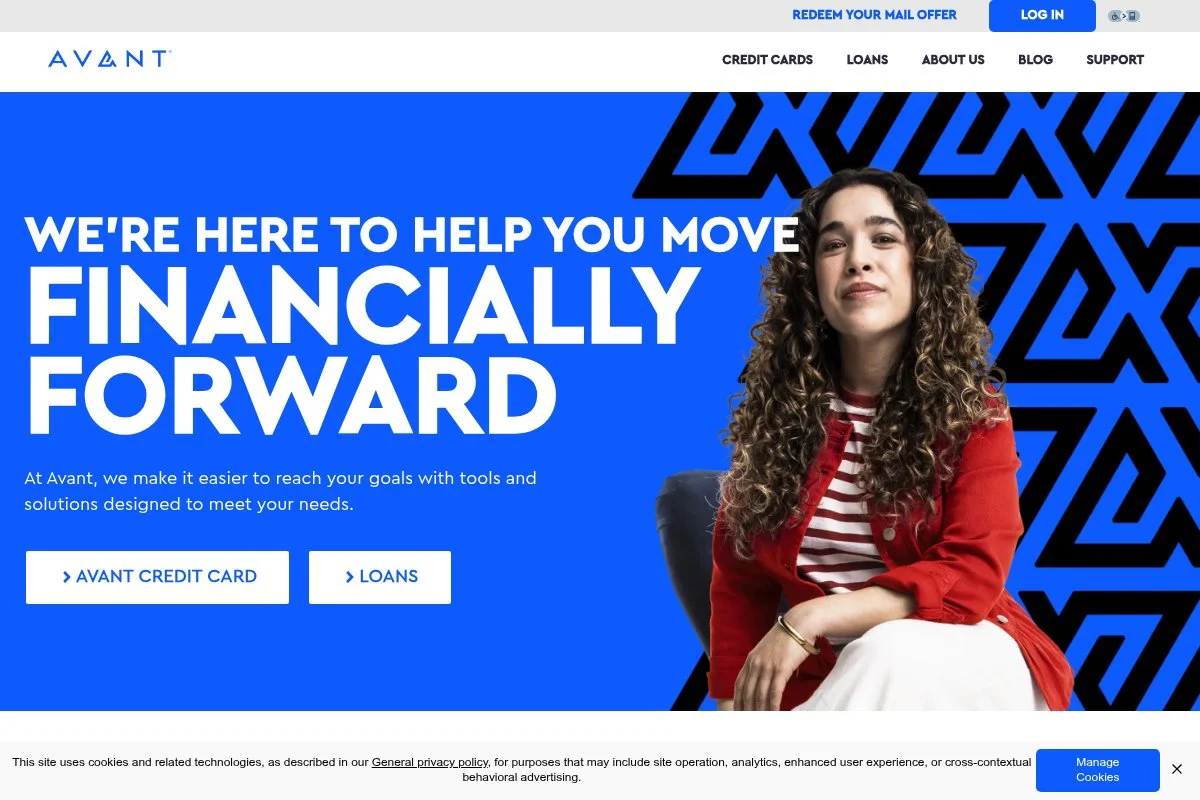
Avant provides personal loans geared toward borrowers with fair or rebuilding credit. It’s often more flexible on approvals than prime‑only banks, with clear online tools.
You can check your rate with a soft pull. Self‑employed borrowers verify income with bank statements and tax returns. Funding can be fast once verified.
Avant’s product lineup includes a credit card, which can help you build credit while managing a loan. The app and website keep payment info, and payoff amounts are easy to find.
Expect administrative or origination fees on many offers. There’s no prepayment penalty, so extra payments can shorten your term.
I suggest Avant for borrowers who need access now and a clear plan to pay down aggressively. It’s a stepping stone toward better rates later.
Support has been responsive in my readers’ notes, especially on due‑date adjustments and payoff letters.
How Avant works and key features
Avant’s application guides you through prequalification, document upload, and offer selection. The dashboard shows payment due dates, payoff amount, and lets you set autopay. Alerts help you stay on track during busy months.
While there isn’t “advanced tech” to customize, the practical tools matter: clear payoff numbers, easy extra payments, and steady communication. It’s straightforward and focused on access.
For support, you can reach out by phone and online. Documentation for self‑employed income is standard and manageable.
Who Avant is for
Best for freelancers rebuilding credit, gig workers with consistent deposits, and side‑hustlers who need a smaller, fast loan. It works for consolidations or emergency cash gaps. If you qualify for fee‑free lenders, those may be cheaper. Beginner‑friendly with clear steps.
Avant pricing
Avant uses risk‑based fixed APRs, commonly with administrative or origination fees. There’s no prepayment penalty. Terms are fixed, and payments are predictable month to month.
- Personal Loans: Fixed APR varies; admin/origination fee often applies; soft‑pull prequalification; mobile account management.
Compared with prime lenders, costs can be higher. The tradeoff is access. If Avant is your best offer, pay more than the minimum to cut interest, and refinance later when possible.
Avant pros and cons
Pros
- Flexible approvals for fair credit.
- Soft‑pull prequalification and quick funding.
- Simple tools for tracking and extra payments.
Cons
- Origination/administrative fees raise cost.
- Rates trend higher than prime lenders.
- Lower maximum amounts than some banks.
Choose Avant if you need access now and a clear payoff plan. If you’re already in good shape credit‑wise, compare fee‑free options first.
Avant reviews
Avant has active reviews on Trustpilot and ConsumerAffairs. Read the latest posts to confirm current service levels and funding timelines.
What is the best personal loan right now?
My top picks today are SoFi, LightStream, and Upgrade. For most self‑employed borrowers watching costs, SoFi is my default recommendation. LightStream is excellent if you have top‑tier credit and want no fees. Upgrade is a strong choice for quick approvals with fair credit.
SoFi is my number one because I use it and because it keeps fees out of the equation. This is not sponsored. I found it through reader referrals and kept seeing the same strengths: soft‑pull prequal, clean app, and $0 origination. The big sell for me was total cost and the ability to pay off early without penalties.
From a value standpoint, no origination fee matters. If a fee‑based offer charges a few percent upfront, that can equal months of interest. With SoFi, my math was simple: lower upfront cost, and every extra payment went straight at principal.
LightStream is a close second if your credit profile is excellent. The no‑fee structure plus autopay discount can be hard to match. If I had a larger project and a spotless file, I’d likely lean LightStream for sheer simplicity.
Its strength is policy clarity and speed. For borrowers who meet their credit bar, everything lines up: fast decisions, no fees, and predictable payments. In a different season, I might have chosen it first.
Upgrade is my third pick for those who want quick access and a friendly app. Yes, there’s often an origination fee, but approvals can be more flexible for fair credit. If you don’t need the absolute lowest fee load and time is critical, Upgrade fits.
I also mix tools. I’ve used SoFi for a bridge, and I’ve coached readers through Upgrade when their files were still developing. Different needs call for different lenders.
Choosing among these is tough because all three solve slightly different problems. I stuck with SoFi because $0 origination plus clean controls fit my budget mindset and let me pay off early without friction.
I hope this helped you narrow the field. Pick clear terms, set autopay, and give yourself room in the budget. You’ve got this.
Frequently Asked Questions
Q: Can I qualify for a personal loan if most of my income is 1099?
Yes. Lenders like SoFi, Upgrade, and LendingClub accept self‑employed income. Expect to share bank statements, tax returns, and sometimes contracts. Prequalify with a soft check to see offers first.
Q: Which fees should I watch for as a self‑employed borrower?
Origination fees and late fees are the big ones. SoFi, LightStream, and Discover avoid origination fees. Many fintech lenders charge one. There’s rarely a prepayment penalty these days.
Q: How fast can I get funded after approval?
Many lenders fund within a day or two after final approval, sometimes same‑day. Speed depends on document review, bank cut‑offs, and whether you choose direct payoff to creditors.
Q: Is a personal loan better than using a credit card for a shortfall?
Often, yes. A fixed‑rate loan gives a clear payoff plan and can cost less than carrying a variable card balance. I still compare total cost and choose the option with the fastest clear path to zero.
Photo by Sasun Bughdaryan: Unsplash


