


I’ve spent years helping independent workers make money decisions that don’t punish them for being their own boss. Auto financing is one of the trickiest.
I needed a dependable vehicle for client visits and shoots, but lenders kept asking for “standard” W‑2 documents. My income was seasonal, and my write-offs made it look tiny on paper.
What pushed me to research deeply was a reader who lost a great car because underwriting didn’t understand 1099 income. That stung. I wanted a better path.
I learned that the best results come from two moves: document your income like a CFO and shop with lenders that welcome complex files. The rate matters, but so does how fast you can verify income.
You don’t need the flashiest lender or a luxury bank badge. You need clear terms, flexible documentation, and a rate that won’t choke your cash flow during slow months.
This guide shares lenders and platforms that treated my team and readers fairly. We reviewed terms, documentation needs, and digital tools that speed up approvals.
Below is a quick comparison to help you shortlist quickly, then I’ll break down which option each person fits and what to watch out for.
Comparison of 6 Popular low-rate auto loan options in 2026 with pricing and recommended use cases
Scroll for my full notes on each lender, which one I chose, and a few picks that work well if you want to start with a soft credit check.
What is an auto loan?
An auto loan is a financing service that lets you buy a vehicle and pay it off over time, with interest, instead of paying the full price up front.
There’s a saying I use with founders: cash is oxygen. Good financing protects your working capital so you can handle taxes, slow months, and surprise repairs without panic.
If a car costs $30,000, a well-priced loan spreads that over years. Compare that to putting it on a high-interest card, where interest can double the costs fast. The right loan keeps the total cost far lower than revolving credit.
In plain terms, self-employed drivers, freelancers, and small business owners use auto loans to acquire vehicles; lenders review credit and income records; funds go to the dealer or seller; the buyer repays on a set schedule.
Many of us pair auto loans with tools like mileage-tracking apps, bookkeeping software, and separate business checking to keep records clean for taxes and underwriting.
Not every lender treats independent income the same way, so choosing carefully can save time and money during the documentation process.
How to choose the best auto loan
Picking a loan can feel overwhelming. Rates shift, terms vary, and documentation requirements differ across banks, credit unions, and marketplaces.
I wrote this to help you find a lender that respects 1099 income and gives you a fair rate without endless back-and-forth.
Most guides are written by lenders or by ad-driven sites with sponsored lists. I am not sponsored by any platform on this list. This is my straight take based on research, reader feedback, and my own applications.
Here are some questions you should ask when looking for an auto loan:
- How flexible is the lender on proof of income for 1099 workers?
- Can I prequalify with a soft credit check to shop rates?
- How do rates and terms scale with credit score and vehicle age?
- What happens to the payment if I choose 36, 60, or 72 months?
- Are there fees for origination, prepayment, or late payments?
- Does the lender support co-signers or co-borrowers to lower rates?
- How fast is funding once I sign—same day, or several days?
- Can I refinance later without penalties if rates improve?
- Are there membership rules (credit unions) that I can meet easily?
It’s a lot, I know. My ranked picks below reflect these questions so you can match your situation to a lender fast.
Okay, enough of me rambling, let’s get into the list.
6 best auto loan options in 2026
Here are my top picks for the best auto loan options:
- LightStream (Truist)
- PenFed Credit Union
- Capital One Auto Navigator
- Bank of America Auto Loans
- Navy Federal Credit Union
- AUTOPAY
Let’s see which one is right for you.
1. LightStream (Truist)
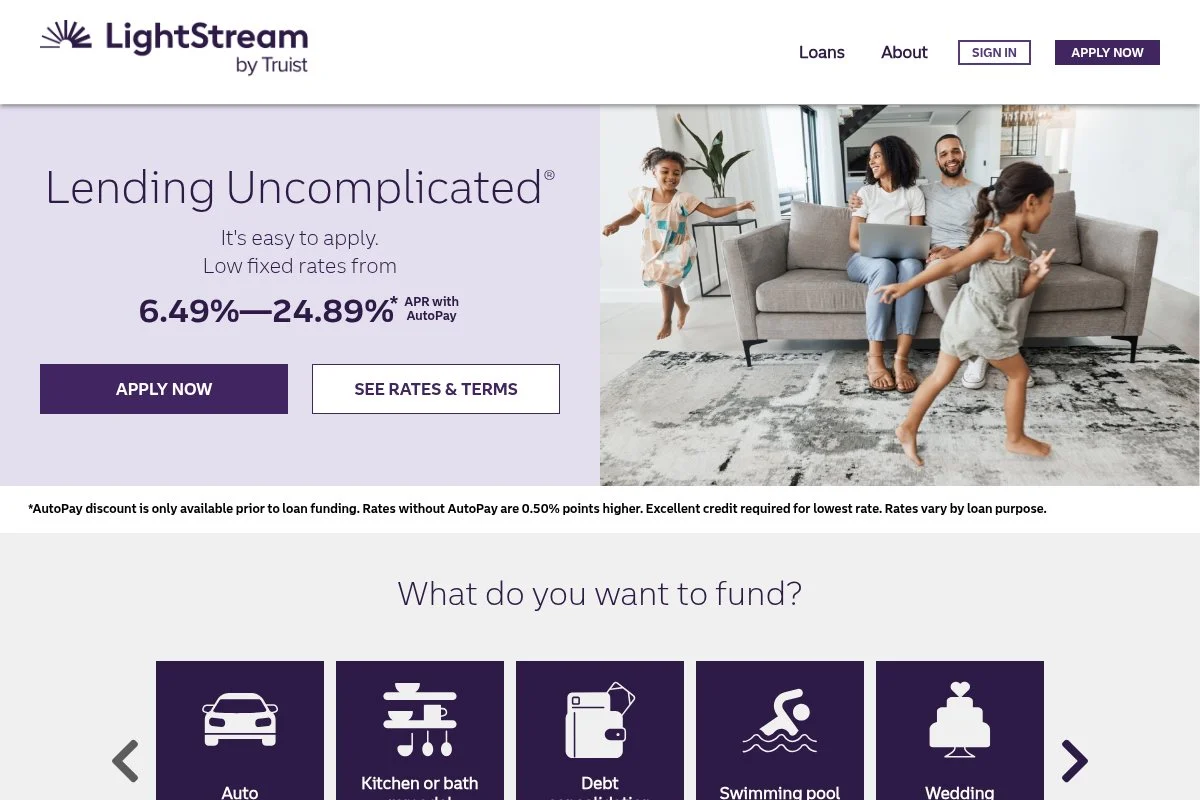
LightStream is Truist’s online lending arm built for fast, unsecured loans, including auto purchase and refinance. Truist is a large U.S. bank formed by the BB&T and SunTrust merger, which gives LightStream scale and experience.
You apply online, and strong-credit applicants can get same‑day funding into a bank account. The interface is clean, and the process moves step by step with clear document requests. Daily tasks are simple: upload docs, review your terms, and e-sign.
LightStream’s Rate Beat Program (on eligible loans) and a streamlined underwriting approach have kept it competitive. It also offers flexible terms and no required collateral inspections for many vehicles, which speeds things up.
Higher tiers don’t mean “plans” here; the appeal lies in flexible repayment terms, autopay discounts when offered, and no fees. For self-employed buyers, that mix can keep total cost predictable without junk fees.
I’ve used LightStream for a refinance before, and I liked how fast it was. No branches, no haggling—just clear next steps and fast decisions.
One small detail I appreciate: the communication cadence. You get timely emails and a simple dashboard that always shows what happens next—great when you’re juggling client work.
How LightStream works and key features
LightStream runs fully online. The application walks you through identity, income, and vehicle details in a minimal, mobile-friendly flow. You can tailor term length to fit a target payment. There’s no upsell maze or dealer calls in the background.
The platform supports direct deposit for many loans, allowing you to pay a private seller or dealership quickly. You can adjust terms in the offer screen to see how the monthly payment changes. Advanced users can easily lock in autopay and schedule extra principal payments.
There’s basic account history and payoff info in the portal. You won’t see fancy analytics, but you will see clear balances, payment dates, and payoff amounts. Customer support runs through online channels and phone, with straightforward reps who explain underwriting asks.
Overall, the experience is beginner-friendly yet fast enough for seasoned buyers who value time over branch visits.
Who LightStream is for
Best for: self-employed pros with strong credit, freelancers with clean bank records, consultants buying newer vehicles, and buyers who value speed. It shines for private-party sales and quick refinances. If your credit is thin or you need a co-signer, a credit union may be kinder.
LightStream (Truist) pricing
LightStream uses risk-based pricing. Rates and terms vary by credit profile, loan purpose, vehicle type, and repayment length. There’s no origination fee and no prepayment penalty. You can apply online without visiting a branch.
- Auto Purchase Loans: APR varies by credit/term; flexible repayment options; no fees listed for origination.
- Auto Refinance Loans: APR varies; choose new term lengths; no prepayment penalty.
Compared with banks that add fees, the value here is in speed and simple costs. If you qualify for top-tier rates, LightStream is hard to beat. Check the site for current APRs and any autopay discounts.
Pros and cons
- Pros: Fast approvals and funding; no origination fees; flexible terms; solid experience for private-party purchases.
- Cons: Built for strong credit; limited branch support; no dealer “relationship” perks if you like in-person help.
If you have solid credit and want a clean online process, pick LightStream. If your file is bumpy, a credit union may offer you better pricing.
LightStream reviews
LightStream does not have a unified profile on software review sites like G2 or Capterra. Public feedback is spread across banking forums and general consumer sites, and sentiment varies from case to case.
2. PenFed Credit Union
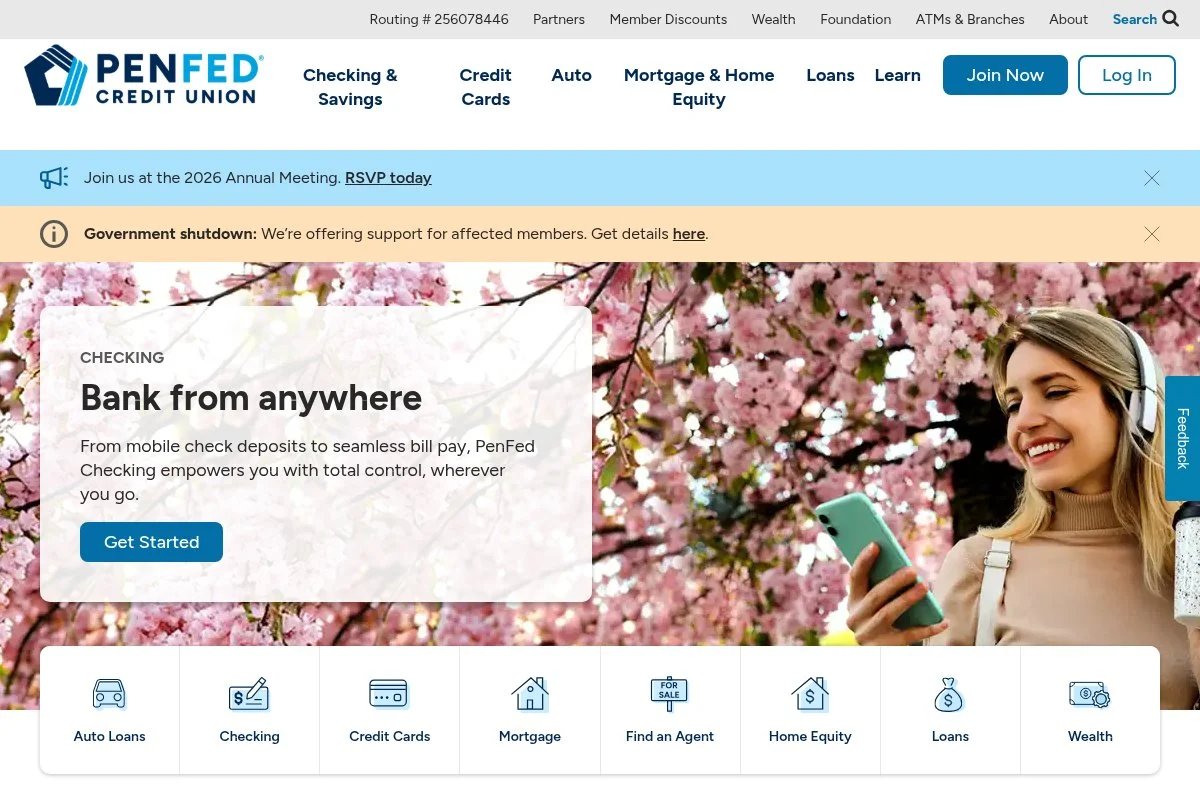
PenFed is a large national credit union with competitive auto purchase and refinance programs. Membership is broad; you can qualify through various paths, including a small donation to an eligible partner organization.
Getting started is simple: join online, open a savings account, and apply. The portal is clear about vehicle year, mileage caps, and documentation. Expect requests for tax returns, bank statements, and proof of insurance.
PenFed often updates rate sheets for new and used terms, and it supports private-party loans and lease buyouts. It’s a strong pick if you want credit union service with national reach.
The credit union model can mean lower rates and a member-first approach. PenFed’s calculators and preapproval letters make dealer visits easier.
I’ve heard consistent feedback from readers that PenFed underwriters understand 1099 income when documents are organized. That matters if your Schedule C or K‑1s are complex.
PenFed’s call center is patient. If you need help with DTI math or title steps, they walk you through it without rushing.
How PenFed works and key features
PenFed’s online application handles new, used, refinance, private-party, and lease buyout cases. The interface is simple, and you can securely upload tax returns, 1099s, and bank statements. Preapproval letters help with dealer shopping.
There are calculators for payment estimates and term comparisons. Advanced members can add GAP coverage or extended warranties if desired. Integration with your PenFed accounts makes payments easy, and autopay helps keep costs predictable.
Support is via phone and secure messages. You’ll see status updates in your account, including title processing and funding. The experience is steady, not flashy, which I prefer for loans.
Overall, it balances friendly service with competitive pricing, especially for members with mid-to-strong credit.
Who PenFed is for
Best for: freelancers with steady deposits, contractors with solid tax returns, buyers wanting private-party financing, and anyone who likes credit union support. If your credit is very thin or you need instant, no-questions funding, an online lender may be faster.
PenFed Credit Union pricing
PenFed uses risk-based pricing that varies by vehicle type, model year, term, and credit profile. Membership is required, and there’s no prepayment penalty. Rate sheets are published on penfed.org and updated regularly.
- New/Used Auto Loans: APR varies by model year and term; member discounts may apply.
- Refinance: APR varies; options for cash flow relief with longer terms.
- Private-Party and Lease Buyout: APR varies; clear title and inspection steps required.
PenFed often prices well against big banks, especially for shorter terms. Annual savings may be available on select protections when bundled with your loan. Check the current posted rates before applying.
Pros and cons
- Pros: Competitive credit union pricing; broad membership paths; patient underwriting for 1099 files; useful preapproval letters.
- Cons: Funding can be slower than pure online lenders; membership steps add time; stricter rules for older/high‑mileage vehicles.
If you like support and strong pricing, PenFed is a top pick. If you need a same-day purchase with minimal docs, consider an online-first option.
PenFed reviews
PenFed’s reviews appear on general consumer sites and forums rather than software platforms. Feedback highlights competitive rates and member service, with mixed comments on processing speed during peak times.
3. Capital One Auto Navigator
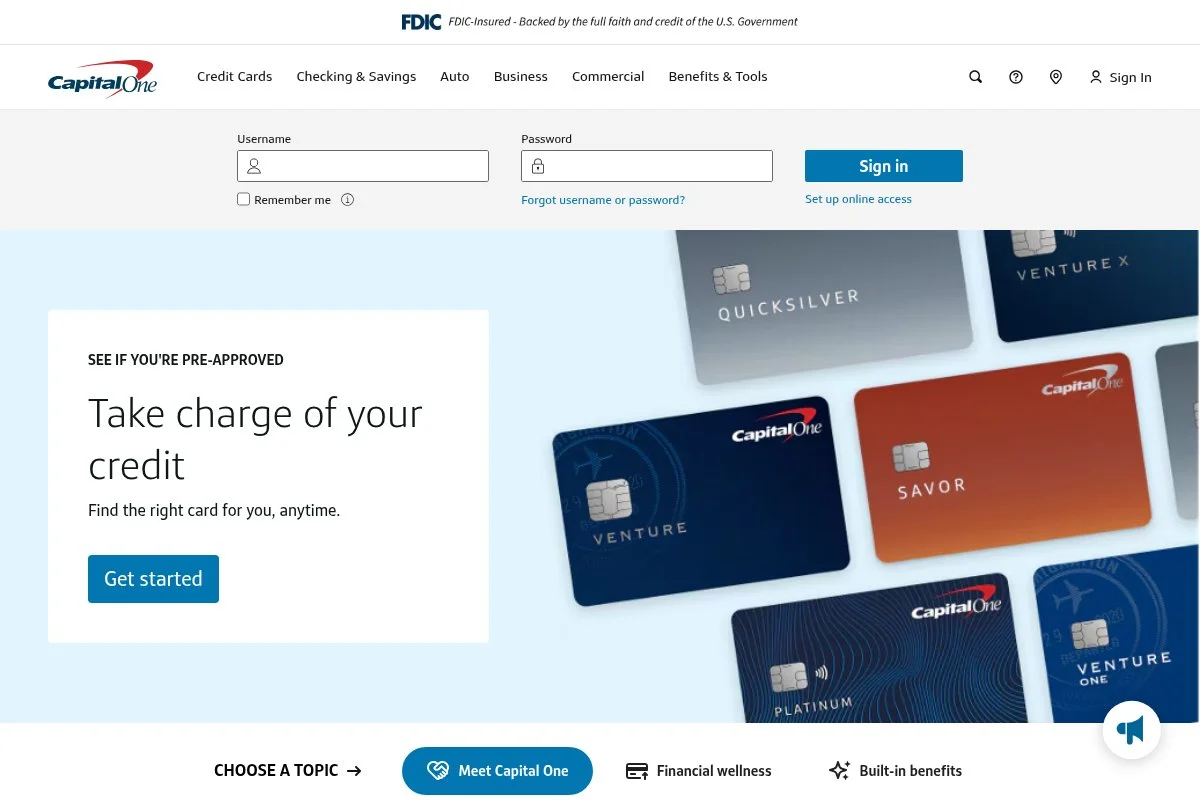
Capital One Auto Navigator is a shopping and prequalification tool that lets you check potential offers with a soft credit pull, then buy through participating dealers. Capital One is a major U.S. bank known for digital tools and wide dealer networks.
You start online, get prequalified ranges, and browse dealer inventory with estimated payments. The interface is clear, with filters for price, mileage, and distance. You can save time and bring your prequalification to the dealership.
Recent updates have focused on expanding the number of participating dealers and improving the shopping flow. That means less guesswork before you step on a lot and fewer surprises on payment estimates.
The strength here is convenience: prequalification without a hard pull, plus direct integration with dealer pricing. For self-employed buyers, that head start can save hours and negotiation fatigue.
I’ve used Auto Navigator to compare vehicles in my area. The soft-pull preview made it easy to set a budget before talking numbers.
Capital One’s mobile experience is polished. If you like doing everything from your phone, it feels modern and quick.
How Capital One Auto Navigator works and key features
Enter your basic info for a soft credit check, then view estimated offers tied to actual cars at partner dealers. You can adjust down payments and terms to see how monthly payments change. The interface is visual and search-driven.
There’s no heavy analytics here, but you get clear breakdowns of price, taxes, fees, and estimated APR ranges. You can upload documents later in the flow and finalize at the dealership.
Support is available online and through dealer finance managers familiar with the tool. This setup is ideal if you want to compare multiple cars and keep your credit inquiry light until you’re ready.
Overall, it’s beginner-friendly and ideal for shoppers who want options before committing.
Who Capital One Auto Navigator is for
Best for: independent contractors who want soft-pull prequalification, buyers who want to compare dealer inventory quickly, and anyone who hates surprises at signing. If you’re buying from a private seller or need niche vehicles, consider a direct lender or credit union.
Capital One Auto Navigator pricing
Capital One sets final APR and terms at funding through participating dealers. There’s no fee to prequalify; the hard inquiry happens later in the process when you finalize. Pricing is risk-based and varies by vehicle and term.
- Prequalification: Free soft credit check; see estimated offers.
- Dealer Purchase: APR set at funding; terms vary by vehicle and credit.
The upside is transparency early in the process. Compared to banks without soft-pull tools, this helps you shop within your likely approval range, saving time and credit ding.
Pros and cons
- Pros: Soft-pull prequalification; wide dealer network; strong mobile experience; clear payment estimates.
- Cons: Dealer-only flow; private-party purchases not supported; final terms can shift at signing.
If you’re shopping for dealer cars and want clarity upfront, Auto Navigator is great. If you’re set on a private sale, look elsewhere.
Capital One Auto Navigator reviews
There isn’t a single review page for Auto Navigator on software sites. Consumer feedback appears across banking reviews and dealer forums, generally praising the ease of soft pulls and inventory browsing.
4. Bank of America Auto Loans
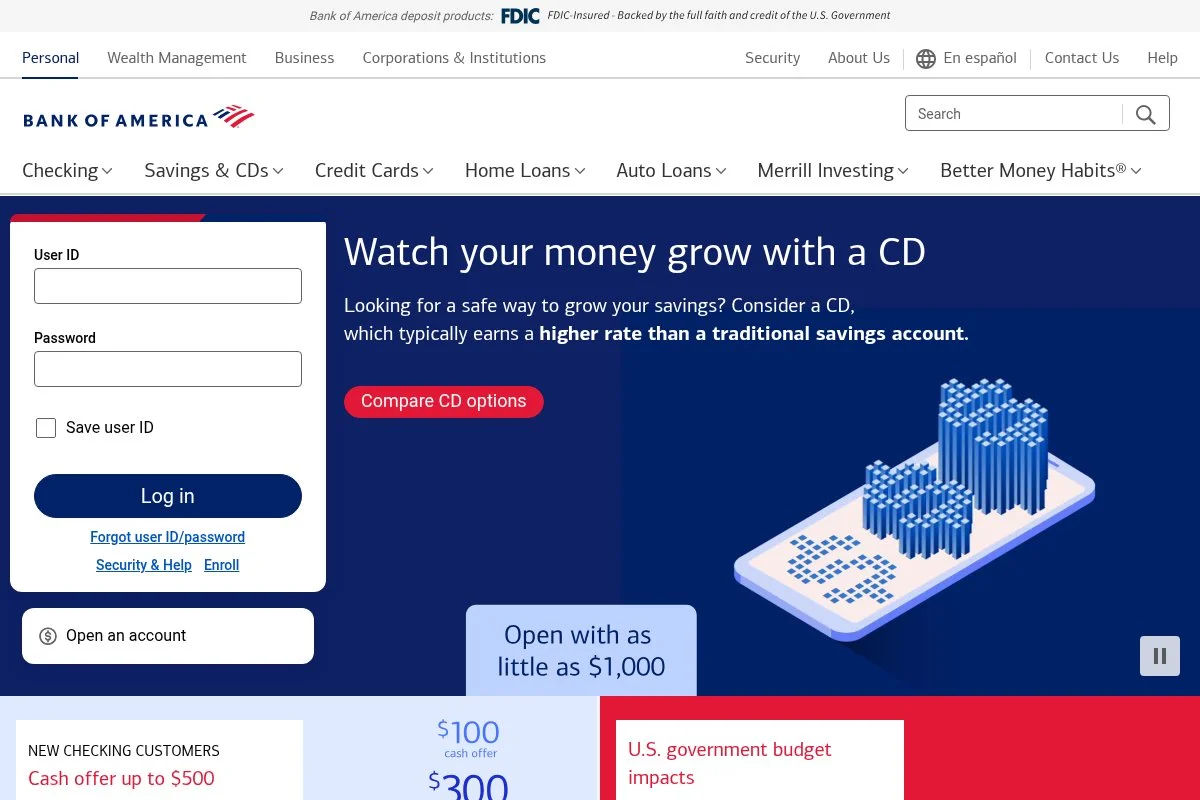
Bank of America offers direct auto purchase and refinance loans with online applications and nationwide coverage. If you bank with BoA, you may qualify for Preferred Rewards interest rate discounts based on your relationship tier.
The online process is straightforward. You can check estimated payments, upload documents, and track title work. BoA handles private-party, dealer, and lease buyout loans, which cover most use cases.
Bank of America updates its program details frequently and provides calculators to help you compare terms. Relationship pricing can be helpful if you keep balances with them.
For self-employed buyers, BoA expects thorough documentation, but the portal makes it clear what to upload. If you already bank there, payments and autopay are simple.
Readers in our community like BoA for predictable processing times and clear closing steps. It’s not the flashiest, but it gets the job done with national reach.
How Bank of America Auto Loans work and key features
You can apply online for a new, used, refinance, private-party, or lease buyout. The interface provides payment estimates and document checklists. Terms can be adjusted to compare monthly payments and total cost.
There’s account integration for existing customers, making autopay easy. Support is available by phone and at branches for those who prefer in-person help. Title and funding timelines are tracked in your account.
It’s a balanced experience with enough guidance for first-timers and the coverage that national banks provide.
Who Bank of America is for
Best for: existing BoA customers, sole proprietors with tidy bookkeeping, and buyers who want private-party or lease buyout options. If you need the lowest possible rate and have top credit, compare BoA with a credit union before you sign.
Bank of America Auto Loans pricing
BoA uses risk-based pricing with APRs that vary by credit, term, and vehicle. There’s no prepayment penalty. Preferred Rewards members may receive interest rate discounts depending on their tier.
- Dealer and Private-Party Purchase: APR varies; relationship discounts may apply.
- Refinance and Lease Buyout: APR varies; standard title and payoff steps apply.
Value-wise, BoA is competitive for customers who qualify for Preferred Rewards discounts. Always check posted rates and compare with at least one credit union before committing.
Pros and cons
- Pros: National coverage; private-party and lease buyout options; relationship discounts; branch support.
- Cons: May not undercut top credit union rates; documentation can feel strict for complex 1099 income.
If you bank with BoA and want a smooth setup, it’s a strong pick. Rate hunters should cross-shop with a credit union.
Bank of America Auto Loans reviews
Reviews are spread across consumer finance sites and forums rather than software platforms. Users often mention predictable processing, with mixed views on the strictness of underwriting for edge cases.
5. Navy Federal Credit Union
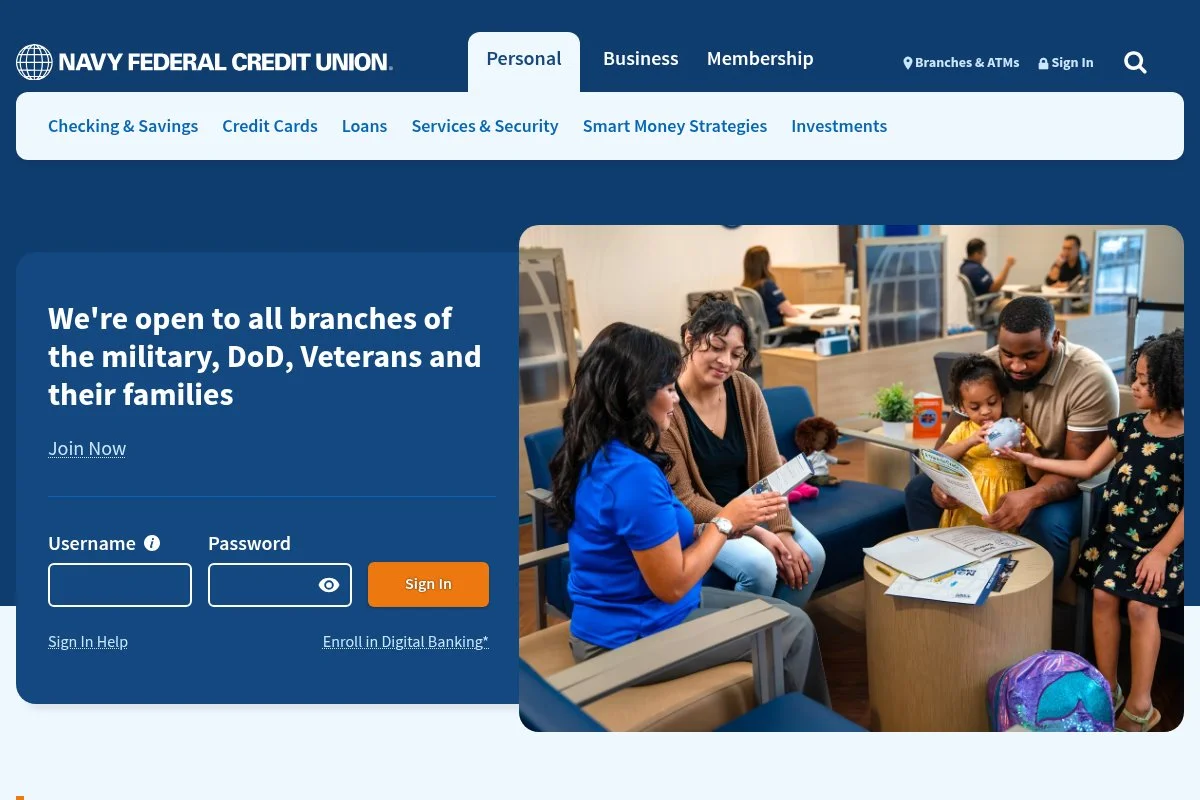
Navy Federal is the largest credit union in the U.S., serving active-duty service members, veterans, and their families. It’s known for competitive auto financing and member support.
You can apply online or in-branch. The portal is clear on documentation, and member reps are used to answering detailed income questions. Preapprovals help you shop with confidence.
Navy Federal updates rate sheets and offers refinancing and lease buyouts. If you qualify for membership, it’s worth a look, especially for newer vehicles.
Underwriting tends to be relationship-driven. If you have deposits and a history with them, that can help.
I’ve had several readers secure better terms here than at their local banks. The tradeoff is stricter eligibility: you need military ties or household eligibility.
Support is responsive, and the mobile app makes payments and statements easy to manage.
How Navy Federal works and key features
Apply for new, used, refinance, and lease buyout loans with online document upload. The portal shows your status and next steps. You can adjust terms to hit a target payment and add protections if you choose.
Member services are a strong point. You can talk through income documentation and DTI questions. Account integration supports autopay from Navy Federal accounts.
If you need private-party financing, they provide check handling and title support. It’s a full-service experience for eligible members.
Who Navy Federal is for
Best for: military members, veterans, and eligible family members seeking competitive pricing and personal support. Great for buyers who prefer credit union service. If you’re not eligible for membership, consider PenFed for a similar feel.
Navy Federal Credit Union pricing
Navy Federal uses risk-based pricing with posted rate ranges that vary by term and vehicle age. There’s no prepayment penalty. Membership eligibility is required and drives access to the products.
- New/Used Purchase: APR varies by term and model year; member protections available.
- Refinance and Lease Buyout: APR varies; title handling supported.
Historically, Navy Federal has been competitive, especially for short- to mid-term terms on newer vehicles. Always compare with at least one other lender on the same day to get an apples-to-apples view.
Pros and cons
- Pros: Competitive member pricing; strong support; clear preapprovals; good mobile app.
- Cons: Eligibility limits access; processing can slow down during peak periods; strict rules on older/high‑mileage vehicles.
If you’re eligible, it’s a top-tier choice. If not, PenFed is the closest match.
Navy Federal reviews
Navy Federal’s reviews live on consumer finance sites and app stores, not software review hubs. Members often cite strong service, with some variability across branches and seasons.
6. AUTOPAY

AUTOPAY is a marketplace that connects you with multiple lenders for auto purchase and refinance. Think of it as rate shopping under one roof with a digital application and a finance concierge approach.
You submit one application and see potential matches from partner lenders. The dashboard shows offers, and you can upload documents once. It’s efficient for comparing options without starting from scratch each time.
Marketplaces have leaned into self-employed borrowers by providing upfront guidance on documentation. That can smooth underwriting and improve offers when your income is complex.
Value comes from choice and convenience rather than a single house rate. For many, that mix beats calling five banks.
Readers tell me AUTOPAY helped them drop payments when refinancing high-rate dealer loans. The team explains payoff letters and title steps clearly.
I also like that you can time your refinance to provide cash-flow relief during slower seasons—very helpful if your income fluctuates.
How AUTOPAY works and key features
Complete one application; AUTOPAY matches you with partner lenders. You’ll see offers with terms you can compare side by side. Upload tax returns, bank statements, and any business docs once for reuse across offers.
The portal tracks status, payoff requests (for refi), and title work. Support agents guide you through each step, including scheduling your first payment date. While analytics are basic, the clear breakdowns of APR, term, and total cost help you decide quickly.
It’s a practical way to shop for multiple quotes without having to manage 10 separate logins.
Who AUTOPAY is for
Best for: gig workers with limited time, buyers aiming to refinance a high dealer rate, and anyone who prefers a concierge marketplace. If you already have a relationship with a top credit union, you might be able to secure a lower rate directly.
AUTOPAY pricing
AUTOPAY itself doesn’t set APRs; partner lenders do. There’s no platform fee to check offers. Terms and rates vary by lender, vehicle, and credit profile, and most partners have no prepayment penalty.
- Purchase Loans via Partners: APR varies; compare offers in one place.
- Refinance: APR varies; payoff and title support included.
The value is in rate shopping. Even a small APR drop can mean big savings over a 60‑month term. Compare at least two offers before you sign.
Pros and cons
- Pros: One application, many offers; helpful support; strong for refinancing; time saver for busy owners.
- Cons: Final terms depend on the partner; occasional additional documents required; not a direct lender.
If you want options fast, AUTOPAY shines. If you prefer a single-bank relationship, try a credit union or a national bank.
AUTOPAY reviews
Public reviews are spread across consumer sites and vary depending on which partner lender funds the loan. Most praise the convenience of comparing multiple offers in a single application.
What is the best auto loan option right now?
My top picks today: LightStream for strong-credit speed and no-fee simplicity, PenFed for member-friendly pricing and private-party flexibility, and Capital One Auto Navigator if you want soft-pull prequalification while you shop dealer inventory.
LightStream is my personal go-to. I’ve used it for a refinance, and this isn’t sponsored. I found it years ago while comparing options for a private-party purchase. What impressed me was the clear online flow, fast funding, and no origination fees. The main factor that sold me was the mix of speed and clean terms.
On value, LightStream scales well if you qualify for the top tiers. Competitors may add fees or require dealer-only purchases. With LightStream, I adjusted the term to hit my monthly target without worrying about hidden charges. That flexibility saved time and total dollars over the life of the loan.
PenFed is a close second. It stands out for members who want private-party financing, lease buyouts, and steady support. Recent improvements to online applications and calculators make it easier to model payments before you commit.
What I like most about PenFed is the credit-union feel with a national reach. If I were starting from scratch and wanted a service-driven option with strong rates, I’d be happy to finance through PenFed.
Capital One Auto Navigator earns a spot because prequalification with a soft pull helps you set a realistic budget and compare actual cars before a hard inquiry. If you plan to buy at a participating dealer, that’s powerful and low-stress.
I often combine tools. I’ll prequalify with Auto Navigator to set expectations, price-check with a credit union, and keep LightStream in my back pocket for private-party or quick-close cases.
Choosing between these is tough because each serves a different moment: planning, shopping, or closing. I stick with LightStream for speed and clean costs, but PenFed and Capital One are excellent depending on the vehicle source and your timeline.
I hope this helped you cut through the noise. Drive safe, keep your docs tidy, and may your next payment be smaller than you expected.
Frequently Asked Questions
Q: What documents do I need as a self-employed borrower?
I bring two years of tax returns, recent bank statements, a year-to-date profit and loss (if available), 1099s, and proof of business insurance. The cleaner your records, the smoother the underwriting goes.
Q: Can I get prequalified without hurting my credit?
Yes, some platforms, like Capital One Auto Navigator, offer soft-pull prequalification. I use that to set a budget, then move to full applications once I’ve picked a car.
Q: Is it better to finance through a dealer or a bank/credit union?
I get quotes from both. Dealers can be fast and sometimes competitive, but credit unions often offer better pricing and explain terms clearly. I sign with whoever offers the best total cost that day.
Q: Should I choose a longer term to lower my payment?
I only stretch the term if cash flow is tight. Longer terms lower payments but raise total interest. I aim for the shortest term that comfortably fits my monthly budget.
Photo by Mehdi Mirzaie: Unsplash


