


I’ve sat on both sides of the loan desk—negotiating for my own projects and helping our readers prepare strong applications. The hardest part isn’t paperwork. It’s figuring out which loan won’t drain your cash flow six months from now. When I first went hunting for low-cost financing, my goal was simple: predictable payments that let me invest in growth without gambling rent money. I kept hearing success stories from solo founders who timed funding carefully and chose lenders that worked with their uneven income.
I learned quickly that “cheap” on a website can hide fees, factor rates, or short terms that hike the real cost. What helped most was studying how top freelancers and micro-business owners borrow: they match loan type to the job, keep terms long enough to breathe, and avoid daily or weekly payback unless returns are immediate. You don’t need the biggest line or the fanciest fintech app. You need a lender that prices fairly, funds on a timeline that fits your work, and won’t punish uneven months.
This guide pulls together what our team sees working for self-employed readers right now—SBA-backed options, mission-driven lenders, and one flexible line of credit for quick turns. No hype, just clear tradeoffs and plain-English pricing signals.
Here’s the quick summary before we dive deeper.
Comparison of the 6 best low-cost business loans in 2026 with pricing and recommended use cases
Scroll for my full take on each option, including which one I chose and a couple of free or near-free paths for beginners.
What is a business loan for the self-employed?
A self-employed business loan is a financing service that gives solo owners and freelancers access to capital for inventory, equipment, hiring, or cash-flow gaps at set terms and costs.
As my old finance mentor said, “Cash is oxygen.” The right loan doesn’t just plug a hole; it buys time and control. That matters when your income swings and you want to keep ownership and set your own pace.
Think of it like this: turning a $10,000 camera upgrade into $230 monthly over four years can free you to book higher-paying shoots right away. Paying cash up front might stall growth for months and cost missed gigs.
At their core, these loans let independent workers borrow money from banks, nonprofits, or online lenders, using tax returns, bank data, or sales history, to fund work needs and repay over time with interest.
Many pair loans with tools like bookkeeping apps, invoicing platforms, and tax planning to track ROI, lower risk, and time draws against real receivables.
Not every loan is priced the same or fits every timeline, which is why picking matters carefully.
How to choose the best business loan
Picking a loan can feel overwhelming. There are banks, CDFIs, marketplaces, and slick apps—each with different terms, fees, and repayment schedules. It’s a lot to compare.
I wrote this to help you match your real-world needs—seasonal work, uneven months, big equipment buys—to a lender that won’t strain your budget later.
Most guides you’ll find are written by lenders or by media running sponsored lists. I don’t take sponsorships from any platform in this roundup. This is an honest overview based on research and lived experience with self-employed cash flow.
Here are some questions you should ask when looking for a loan:
- How low can the rate go, and what fees stack on top?
- Is the application simple, and what documents do I need?
- Can I grow the line or refinance without new junk fees?
- What happens to the monthly payment if I borrow more?
- Does the loan type fit the job (short projects vs. long ROI)?
- What reporting do I get to track costs and progress on payoff?
- How hard is it to switch lenders or prepay without penalties?
- How reliable is funding speed, and is support responsive?
- Any industry rules (owner-occupied for 504, use-of-funds limits) I should know?
6 best business loans in 2026
Here are my top picks for the best business loan options:
- SBA 7(a) Loan
- SBA Microloan
- Kiva U.S.
- Accion Opportunity Fund
- CDC Small Business Finance
- Bluevine Line of Credit
Let’s see which one is right for you.
1. SBA 7(a) Loan
The SBA 7(a) program is the gold standard for affordable small business financing. It’s designed for working capital, equipment, and even real estate, with loans issued by banks and credit unions and guaranteed by the SBA. Because of the guarantee, lenders can offer lower rates and longer terms than most online products.
Entry costs are defined by SBA rules, not splashy promos. Getting started means applying through an SBA-approved lender. Expect to share tax returns, bank statements, a debt schedule, and a simple plan for how funds drive revenue. Daily life with a 7(a) is calm: monthly payments, predictable terms, and no surprise daily debits.
Over the last couple of years, the SBA simplified some underwriting for smaller loans and expanded who can participate as lenders. For borrowers, that has meant more access and, in many markets, faster decisions.
On larger loans, standout perks include repayment terms up to 25 years for real estate and 10 years for working capital. Those longer amortizations are rare outside SBA-backed programs and keep payments friendly for solo operators.
I favor 7(a) for stable, planned investments—like equipment that pays back over several years. It’s not a “fast cash” option, but it’s often the cheapest source of money many self-employed owners can qualify for.
One extra plus: most lenders pair the loan with a dedicated banker who actually returns calls. That relationship matters when you want to refinance or expand your line later.
How it works and key features
You apply through an SBA Preferred Lender or another approved bank. The interface is old-school: document uploads, e-signs, and back-and-forth with a loan officer. It isn’t flashy, but it’s thorough. You can use the funds for working capital, equipment, partner buyouts, or real estate, subject to clear use-of-funds rules.
Customization comes through structure: fixed or variable rates, and terms matched to asset life. Advanced users might layer in a business line of credit alongside a term loan. Reporting is handled by your bank portal; you’ll see amortization, payoff amounts, and escrow details when real estate is involved.
There’s no automation wizardry, but payments are drafted monthly, and many banks let you schedule extra principal payments. Support quality varies by lender; SBA Preferred Lenders usually have faster underwriting and smoother closings.
Bottom line: beginner-friendly if you can gather documents, and powerful for bigger plans thanks to longer terms and rate caps.
Who it’s for
Best for consultants, contractors, studio owners, and eCommerce sellers planning multi-year investments. Great for refinancing high-cost debt, buying equipment, or purchasing an office condo. If you need same-day funding, this isn’t it. Moderate paperwork skills help, but you don’t need to be a finance pro.
SBA 7(a) Loan pricing
Pricing follows SBA rules. Rates are tied to the prime rate plus a capped spread, which varies by loan size and term. Most borrowers see variable rates. There may be SBA guarantee fees and standard closing costs.
- Working Capital Term Loan: Up to $5,000,000; typical term up to 10 years; variable rate (prime + capped spread)
- Equipment Financing (7(a)): Up to $5,000,000; term up to useful life; variable rate (prime + capped spread)
- Owner-Occupied Real Estate (7(a)): Up to $5,000,000; terms up to 25 years; variable rate (prime + capped spread)
Compared to online lenders, total cost is usually lower thanks to capped rates and longer terms. Many banks offer rate discounts for auto-pay or existing customers. Annual billing choices don’t apply, but you can often save interest by prepaying—ask about any prepayment windows on fixed-rate portions.
Pros and cons
- Pros: Typically, the lowest total cost; long-term reduces payments; flexible uses; relationship banking.
- Pros: Caps on rates; widely available through banks and credit unions.
- Cons: Slower approvals; more documents; may require collateral or a guarantee.
- Cons: Variable rates can rise with the prime.
If you can wait a bit and qualify, 7(a) is my top pick for affordability. If you need funds this week, look at a line of credit instead.
SBA 7(a) Loan reviews
There’s no single review page for the SBA 7(a) itself, since banks issue the loans. Check reviews for your specific lender and ask for recent 7(a) closing references.
2. SBA Microloan
The SBA Microloan program funds up to $50,000 through local nonprofit intermediaries. It’s designed for younger businesses and self-employed owners who need smaller amounts at fair rates, plus coaching.
Getting started is straightforward: find your local intermediary on SBA’s site, complete a short application, and share basic financials. The experience is hands-on. Many intermediaries will review your plan and help with projections before funding.
In recent years, more intermediaries have digitized applications and added multilingual support, making the process less intimidating for first-time borrowers.
Perks at higher amounts include flexible collateral and mentoring—help that most online lenders don’t offer. Some offer paired products, such as credit-builder loans or small lines, once you establish a repayment history.
I’ve recommended microloans to freelancers who outgrew personal credit cards and wanted a fair on-ramp. Many told me the coaching was as valuable as the cash.
Extra point: intermediaries are mission-driven. Their goal is healthy repayment and business stability, not squeezing fees.
How it works and key features
You’ll work with a local nonprofit lender. Expect a simple portal or email-driven process with document uploads. Funds can be used for working capital, inventory, or equipment, but not for buying real estate or paying existing debt.
Rates are set by the intermediary in accordance with SBA guidelines. Terms go up to six years. Reporting is basic—monthly statements and payoff details. Automation is light, though most offer auto-draft payments. Support is strong; advisors often check in and offer workshops.
Overall: very beginner-friendly with personal guidance. If you need advanced banking tools, you’ll pair this with your business checking account.
Who it’s for
Great for new consultants, food trucks, makers, photographers, and home-service pros needing $5k–$50k. Works well for inventory turns and starter equipment. If you need real estate financing or six figures fast, look elsewhere. No advanced finance skills required.
SBA Microloan pricing
Pricing is set by local intermediaries in accordance with SBA rules. Rates are typically fair for unsecured small-dollar loans, and terms can stretch to six years to keep payments manageable.
- Microloan: $1,000–$50,000; typical 8%–13% APR; up to 6-year term; coaching included
Compared to most online microloans, the total borrowing cost is usually lower, and support is stronger. Fees are straightforward, and prepayment is generally allowed without penalty.
Pros and cons
- Pros: Fair rates for small amounts; hands-on coaching; flexible underwriting.
- Pros: Terms up to six years help cash flow.
- Cons: Funding can take longer; caps at $50k; usage limits apply.
- Cons: Availability and rates vary by location.
If you’re early and need a fair, guided start, microloans are hard to beat. If you need more than $50k, consider 7(a).
SBA Microloan reviews
No unified reviews exist. Check ratings for your specific local intermediary on Google or Guidestar, and ask for recent borrower references.
3. Kiva U.S.
Kiva is a nonprofit that offers 0% interest, fee-free microloans to U.S. small businesses through crowdfunding. It’s designed for community-backed funding, which makes it uniquely affordable if you can rally supporters.
Getting started is simple: apply online, share your story, and complete a short “social underwriting” step where a few people in your network lend small amounts. After that, your loan goes public on Kiva for global funding.
Kiva has steadily improved its U.S. tools, adding clearer timelines and templates for your story page. This helps first-time borrowers present a solid case without hiring help.
The standout feature is the cost—0% interest, no fees. Terms are fixed, and payments are monthly. No business loan beats that pricing if you qualify and can fundraise successfully.
I’ve used Kiva with readers who had loyal customers but thin credit. They loved turning community support into real working capital while building a repayment track record.
A bonus: the storytelling exercise doubles as marketing. Many borrowers acquire new customers through their Kiva page.
How it works and key features
The interface is clean and web-based. You’ll draft a profile, upload photos, and set a funding target up to Kiva’s limit. There are no contract templates because Kiva handles that. Technical users can embed their Kiva link on a website or in a newsletter to drive support.
Analytics are basic—funding progress and repayment schedule. Automation is minimal by design. The real “extra tool” is Kiva’s community reach and partner hubs. Support is responsive through email, and local Kiva partners often provide guidance.
Overall: extremely beginner-friendly if you can tell your story and activate your network.
Who it’s for
Best for makers, food entrepreneurs, artists, micro-retailers, and service pros with active communities. Great for product launches, small equipment, or marketing pushes under $15k. If you need six figures or fast closings, this isn’t the path. No technical skill required.
Kiva U.S. pricing
Kiva’s model is simple and fair. There are no interest charges or platform fees. Loans are crowdfunded and repaid monthly over a set term.
- Microloan: $1,000–$15,000; 0% interest; no fees; fixed monthly payments
Compared to the other options here, Kiva is the lowest-cost by far. The tradeoff is time to fund and the need to rally early supporters during the private fundraising stage.
Pros and cons
- Pros: 0% interest; no fees; accessible to thin-credit founders.
- Pros: Doubles as marketing; clear, simple process.
- Cons: Funding depends on your network and Kiva’s community.
- Cons: Lower limits; not built for urgent, large needs.
If you can mobilize supporters, Kiva is an easy yes. If you need speed or size, consider an SBA loan or a line of credit.
Kiva U.S. reviews
Public third-party ratings for Kiva’s U.S. loan program are limited. Read borrower stories on kiva.org and look for local Kiva Hub references in your city.
4. Accion Opportunity Fund

Accion Opportunity Fund (AOF) is a national nonprofit small business lender focused on underserved entrepreneurs. They combine fair-cost loans with coaching, making them a strong option for self-employed owners who don’t yet fit into bank boxes.
Applications start online, with a soft credit pull and income review. AOF looks at business cash flow and story, not just a score. You’ll get clear term options and monthly payments—no daily debit drama.
AOF has expanded programs in recent years, including tailored products for restaurants, salons, and gig-economy businesses. That specialization helps self-employed folks present realistic budgets and win approvals.
On larger loans, perks include longer terms and personalized support. They’re transparent about fees and allow prepayment without penalty in many cases, which online lenders often don’t match.
I’ve heard consistent feedback from readers: AOF is patient and human. They explain decisions and suggest next steps, even when declining.
Another plus: AOF partners with community groups to offer grants and webinars. Free education adds real value alongside capital.
How it works and key features
The online portal is straightforward. Upload bank statements, IDs, and basic financials. There’s no complex tech stack—just clear choices on term and payment. Advanced users can integrate cash-flow exports from bookkeeping tools to speed review.
Analytics focus on amortization and total cost views so you can plan payoff. Payments are monthly by ACH with auto-pay options. AOF also provides workshops, coaching, and language support. Email and phone support are responsive and practical.
Overall: balanced for beginners and growing solos who want fairness and guidance.
Who it’s for
Ideal for food businesses, salons, rideshare fleet owners, consultants, and contractors needing $5k–$100k+. Strong fit for fair credit or thin credit files. If you need ultra-fast same-day funds, a fintech line may be a better option. No advanced technical skill required.
Accion Opportunity Fund pricing
AOF uses transparent, term-based pricing with fixed monthly payments. Rates and amounts vary by state and underwriting, and there are no daily payment structures.
- Small Business Loan: Typically $5,000–$250,000; fixed terms around 12–60 months; APR varies by state and credit profile
Compared to many online lenders, AOF’s total cost tends to be more affordable, especially given its longer terms and coaching. Prepayment is often allowed without penalty; confirm in your offer. Value is strongest for fair-credit borrowers who want monthly payments rather than daily drafts.
Pros and cons
- Pros: Mission-driven; monthly payments; fair for thin or fair credit.
- Pros: Coaching and education add real support.
- Cons: Funding speed varies; availability depends on state and program.
- Cons: Not the absolute lowest cost like SBA for top-tier credit.
Choose AOF if you value fair terms and guidance. If you qualify easily at a bank, compare SBA offers too.
Accion Opportunity Fund reviews
Third-party reviews are scattered across Google and nonprofit directories. Expect a mix, with many borrowers praising support and clear terms. Check local partner feedback in your region.
5. CDC Small Business Finance
CDC Small Business Finance is a leading SBA 504 lender, now part of the Momentus Capital family. The SBA 504 program is built for owner-occupied real estate and large equipment, with long, fixed rates and low down payments.
The process starts with a quick fit call, followed by underwriting using tax returns, financials, and a property package. It’s more involved than a line of credit, but for a studio, warehouse, or office condo, the economics can be excellent.
In recent years, the CDC expanded advisory services and streamlined parts of the 504 process with digital document tools. That has made timelines clearer for solo owners juggling work and a purchase.
Strengths include fixed-rate 10-, 20-, or 25-year terms on the SBA portion and down payments often around 10%. That’s rare outside 504 and keeps cash available for build-outs and gear.
I’ve seen photographers and tradespeople lock in spaces with 504 loans and cut their monthly outlay versus renting. Ownership also builds equity over time.
Service is personal. You’ll work with a loan officer who knows the 504 playbook and coordinates with your bank and the SBA.
How it works and key features
A 504 deal has three parts: your down payment, a first mortgage from a bank, and a second mortgage from the CDC/SBA. You’ll use shared portals for uploads and e-signs. Payments are monthly and fixed on the SBA portion, giving predictable long-term costs.
Templates include checklists for property appraisals and environmental reports. Advanced borrowers can coordinate build-out draws. Reporting includes amortization tables and escrow tracking. Support is high-touch by phone and email.
Overall: built for serious, long-term moves with stable, fixed payments.
Who it’s for
Best for studio owners, contractors, therapists, and clinics wanting to buy or build an owner-occupied space. Great when rent is rising, and you want fixed payments. Not for investment property or non-owner-occupied deals. Moderate paperwork tolerance required.
CDC Small Business Finance pricing
The SBA 504 structure includes a bank-first mortgage at market rates and an SBA-backed second mortgage with fixed rates and long terms. Closing costs and appraisal fees apply.
- SBA 504 Loan: Typically 10% down; fixed 10-, 20-, or 25-year SBA portion; competitive market rates; owner-occupied requirement
Relative to conventional commercial loans, the total cost is often lower due to the long fixed term and lower down payment. If you plan to hold the space, 504 can be a standout value versus renting.
Pros and cons
- Pros: Long fixed rates; low down; stable payments.
- Pros: Designed for owner-occupied purchases and big equipment.
- Cons: More paperwork; longer timelines; usage restrictions.
- Cons: Not for non-owner-occupied or quick flips.
If real estate is part of your plan, 504 through CDC is a strong, affordable path. If you just need working capital, pick 7(a) or a microloan instead.
CDC Small Business Finance reviews
Public ratings appear across Google and nonprofit listings by region. Look for recent 504 borrower stories and ask the team for references in your industry.
6. Bluevine Line of Credit
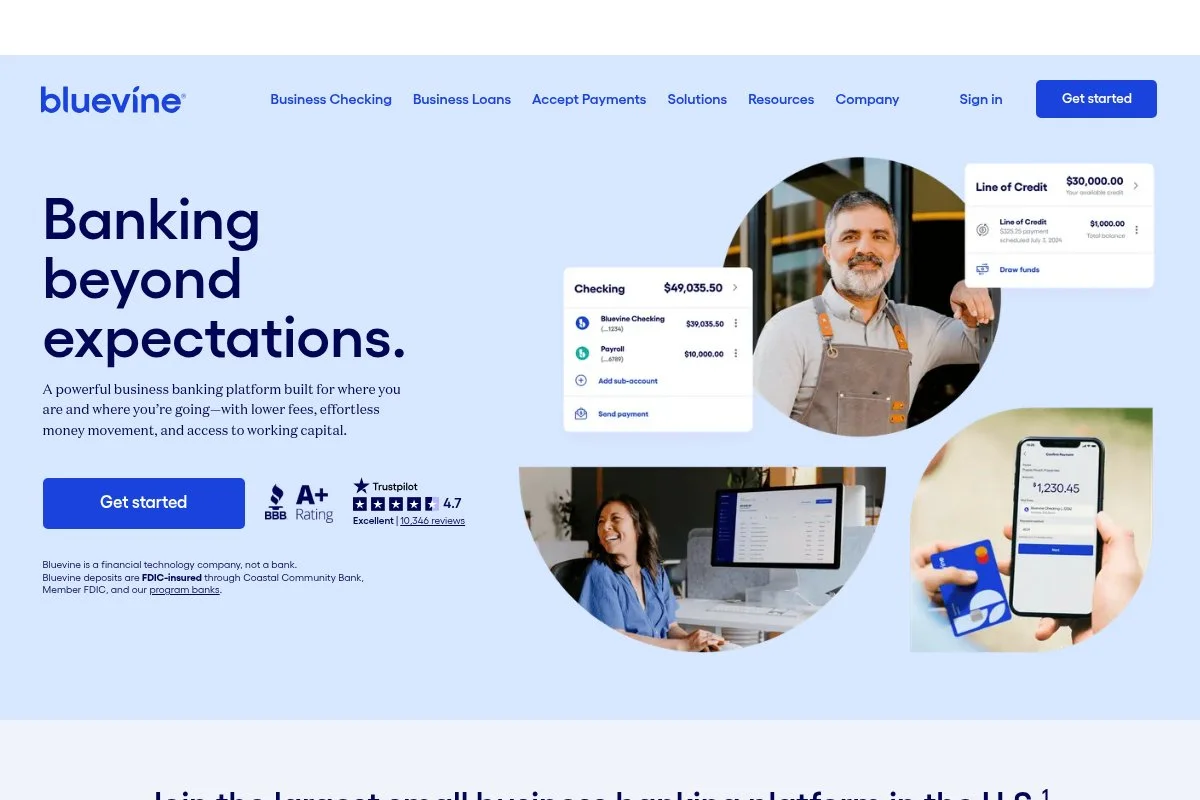
Bluevine offers a flexible business line of credit that’s useful when projects pop up, and you need fast cash for a short time. It’s an online lender with years in the small-business space and a focus on speed and simplicity.
You can check your eligibility online with a soft pull and connect your bank account to verify your income. Approvals and first draws can happen quickly. The line works like a credit card you repay in fixed installments, with weekly or monthly options depending on your offer.
Bluevine added a monthly payment option to some lines and has expanded the maximum credit limits, which helps self-employed owners smooth cash flow without penalizing daily debits.
Higher credit tiers may include larger limits and longer repayment plans. While not as cheap as SBA, strategic short-term draws used for quick-turn work can be cost-effective.
I like Bluevine for bridge needs—buying inventory for a confirmed order or fronting costs for a rush job. Used that way, total fees stay reasonable.
Support is solid via chat and phone, and the dashboard is clean. You always see your payoff and remaining credit before drawing.
How it works and key features
The web dashboard is minimal and clear. Link your bank, see your eligible line, and draw what you need. Templates aren’t a thing here; the “customization” is choosing term length for each draw when available. Advanced users can connect accounting tools to track interest as a job cost.
You get real-time views of principal, fees, and payoff dates. Automatic payments run weekly or monthly. There’s no heavy automation, but you can schedule extra payments if cash comes in faster. Beyond the line, Bluevine also offers business checking, which some like for cash management.
Overall: very easy to use, with enough transparency to avoid surprises if you read your offer details.
Who it’s for
Good for eCommerce sellers, contractors, designers, and agencies that need short bursts of capital against near-term revenue. Ideal when you can repay quickly. If you need the absolute lowest rate and long terms, SBA is better. Beginner-friendly interface.
Bluevine Line of Credit pricing
Bluevine prices by draw and term. You’ll see a clear fee schedule before you accept. Lines scale with revenue and credit profile; payments are fixed over the chosen term.
- Business Line of Credit: Up to $250,000; repayment on weekly or monthly schedules; fees vary by draw and term
Value is strongest when you borrow for short periods with a clear payback plan. Always compare the total dollar cost of a draw to the expected project profit. There’s no annual billing here; costs track with usage.
Pros and cons
- Pros: Fast approvals and funding; flexible draws; clear dashboard.
- Pros: Monthly payment option on some lines eases cash flow.
- Cons: Not the cheapest for long-term needs; fees vary.
- Cons: Weekly repayment on some offers can strain slow months.
Pick Bluevine if speed and flexibility matter. If you plan to carry a balance long-term, pursue SBA-backed options first.
Bluevine reviews
Independent reviews appear on sites like Trustpilot and Google with a wide range of borrower experiences. Read recent comments about funding speed and repayment terms to gauge fit.
What is the best business loan right now?
My top picks: SBA 7(a) for the overall lowest long-term cost, SBA Microloan for newer businesses needing up to $50k with guidance, and Bluevine for fast, short-term working capital when you have a clear payback.
I put SBA 7(a) first because I use SBA-backed financing for planned investments, and it has treated me well. This opinion isn’t sponsored. I found 7(a) through peers who were paying half what online loans quoted. What sold me was the combination of fair, capped rates and long terms that kept monthly payments sane while revenue ramped.
In terms of value, 7(a) wins as your needs grow. A $150,000 working-capital loan over 10 years with a bank-style rate usually runs far cheaper per month than a short-term online loan you’d need to roll repeatedly. The longer the amortization spreads, the costlier it is, so you can invest and breathe.
My second choice, the SBA Microloan, is closed for new or smaller operations. The rates are fair, terms up to six years are helpful, and the coaching can prevent costly mistakes. Recent digitization by many intermediaries also lowers the friction for first-time borrowers.
Its unique strength is the human support. If I were starting from scratch with a $20k need and thin credit, I’d go with a microloan first, build history, then graduate to 7(a) when the business demands more capital.
Third, I like Bluevine for quick-turn needs. If a $25,000 draw lets you capture a $60,000 project that pays in 45 days, the math often works. The key is discipline—borrow for short periods tied to reliable receivables.
I sometimes mix tools: SBA for long-term bets, a microloan early on, and a small line for seasonality. That blend keeps total cost low while staying agile.
Choosing between these is tough because your timeline and risk tolerance drive the answer. I stick with 7(a) as my anchor because payments are predictable and the rate structure is fair through cycles. When work is steady and you can wait a few weeks, it’s hard to beat.
I hope this walk-through helps you move forward with confidence. Borrow smart, keep payments realistic, and let the money fuel your best work.
Frequently Asked Questions
Q: How much do I need to make to qualify for a low-cost business loan?
Lenders look at steady deposits, not just tax-year profit. If your bank statements show reliable revenue and you can afford the payment, you’re in the conversation. For SBA, two years in business helps, but strong recent cash flow can offset gaps.
Q: Are 0% loans like Kiva worth the effort?
Yes, if your need is under $15,000 and you can rally friends, customers, or local supporters. The cost is unbeatable. The tradeoff is time to fund and the effort to share your story.
Q: What’s the cheapest option for buying equipment?
If timing allows, SBA 7(a) or SBA 504 usually gives the lowest total cost. For smaller purchases under $50k, an SBA Microloan can be a good fit. For fast-turn jobs, a short draw from a line of credit can be fine if you repay quickly.
Q: How can I improve my chances of approval as a freelancer?
Keep clean bank statements, separate business and personal accounts, and prepare a simple one-page plan showing how funds generate revenue. Save recent invoices and contracts. That clarity makes underwriters comfortable and speeds up decisions.
Photo by Scott Graham: Unsplash


