

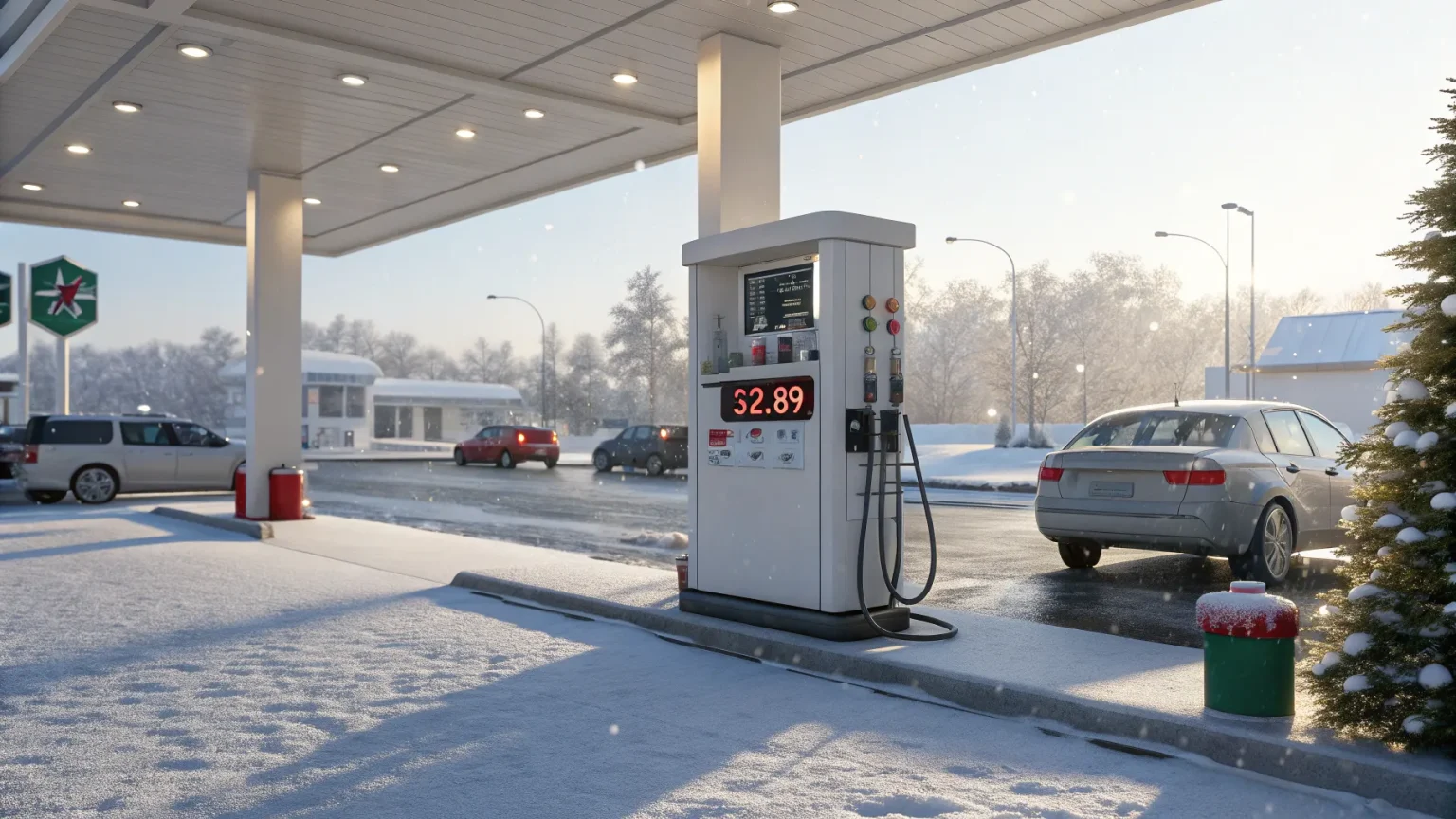
U.S. drivers are getting an unexpected break at the pump this holiday season, with the national average sliding to $2.89 per gallon—the lowest December level since 2020. The drop comes as holiday travel surges, a rare pairing of cheaper fuel and record demand that is reshaping road trip budgets across the country.
The price slide arrives at a peak moment for seasonal travel. Millions are set to drive to family gatherings and year-end getaways. The unusual combination of lower prices and higher consumption raises questions about supply strength, refinery output, and the direction of oil markets heading into the new year.
“Gas prices drop to cheapest December levels since 2020 as holiday travel surges. National average falls to $2.89 per gallon despite record demand.”
How Prices Fell During Peak Demand
Prices generally dip in winter as refineries switch to cheaper winter-grade gasoline and driving declines after summer. This year defies that pattern. Travel is strong, but prices are still easing.
Analysts point to steady refinery operations, adequate inventories, and softer crude oil benchmarks as key drivers. A calmer hurricane season and fewer refinery outages helped keep supplies stable. Global oil output has also stayed firm, easing pressure on crude prices that feed into retail costs.
The winter blend is less costly to produce, which adds to the decline. Retailers often pass through these savings when wholesale prices fall and competition intensifies near major travel corridors.
Holiday Travel Defies Pricing Trends
Historically, demand spikes push pump prices higher. This season is different. Road travel is rising, but pump prices are falling, suggesting supply is meeting demand without strain.
Consumer behavior is shifting too. Some drivers are extending trips or choosing to drive instead of fly. That would usually tighten gasoline supplies. Instead, the market appears well supplied, keeping the average under $3.
One fuel market watcher said the pairing reflects “resilient refining and cooling crude,” adding that retailers have room to discount as they compete for travelers.
What It Means For Households
Lower prices offer quick relief. A family filling a 15-gallon tank saves several dollars compared with prices seen earlier this fall. For frequent commuters, the savings add up over weeks.
- National average: $2.89 per gallon.
- Cheapest December since 2020.
- Record holiday travel alongside falling prices.
Logistics firms and small businesses that rely on delivery routes benefit as well. Lower fuel costs can trim operating expenses and help stabilize prices on goods for consumers.
Regional Differences And Volatility Risks
Not every region moves in unison. Prices in the Gulf Coast and Midwest often sit below the national average due to proximity to refineries and pipelines. Coastal states with stricter fuel standards can remain higher.
Market risks remain. A cold snap can disrupt refinery operations. Geopolitical tensions can jolt crude benchmarks. Any sudden outage along key pipelines can quickly translate into higher retail prices.
Drivers should expect local swings, especially in areas that rely on a small number of refineries or face seasonal supply constraints.
Signals From The Oil Market
Crude prices have eased amid questions about global growth and steady output from major producers. Even modest declines in crude can flow through to retail gasoline with a short lag.
Inventories appear adequate, easing fears of a squeeze during the travel rush. If crude holds near recent levels and refining remains steady, prices could stay tame into early January.
However, market sentiment can change fast. A shift in production policy, unexpected outages, or stronger-than-expected economic data can pull prices higher.
What To Watch In The Weeks Ahead
Analysts are tracking three signals: refinery utilization, crude price direction, and demand after the holidays. Utilization above seasonal norms suggests supply strength. Stable or lower crude prices support cheaper gasoline. Post-holiday demand will help determine whether sub-$3 averages persist.
Industry groups expect a gradual return to normal travel patterns by mid-January. That could reinforce the seasonal downtrend, unless a supply shock intervenes.
For now, drivers benefit from a rare year-end price dip. The combination of lower costs and heavy travel points to a market that is well balanced—at least for the moment.
As the new year approaches, watch refinery operations and crude benchmarks. If those remain stable, the relief at the pump could continue, offering households and businesses a helpful cushion into winter.


