


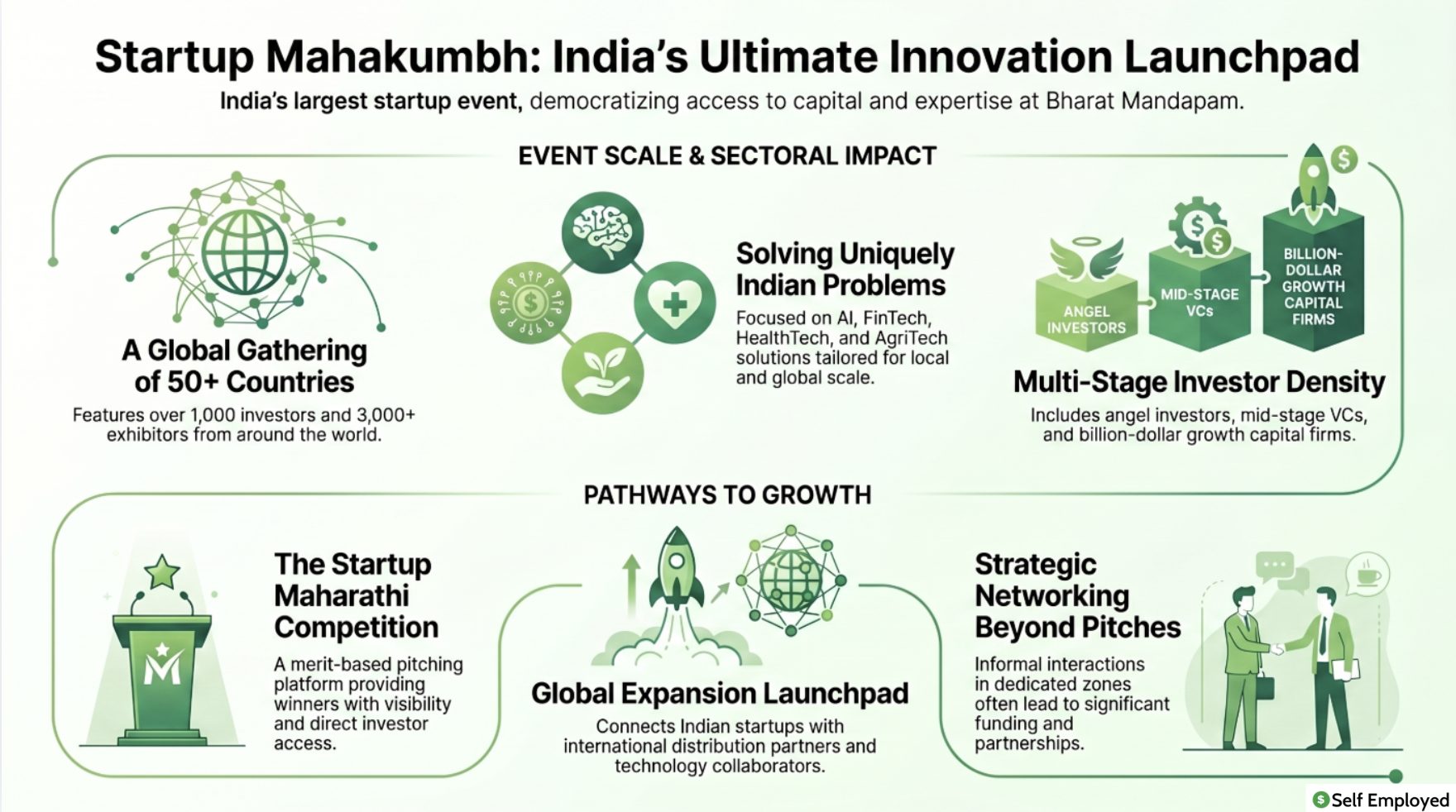
I’ve witnessed the entrepreneurial energy of India firsthand, and the startup mahakumbh represents the absolute peak of innovation and ambition in our country. Held at Bharat Mandapam in New Delhi, this startup mahakumbh event brings together over 1,000 investors, 3,000+ exhibitors, and thought leaders from more than 50 countries. Whether you’re a first-time founder or scaling your venture, understanding what happens at the startup mahakumbh can transform your entrepreneurial journey. In this guide, I’ll share everything I’ve learned about this game-changing event and how it impacts India’s startup ecosystem.
What is startup mahakumbh and why it matters for Indian entrepreneurs
The startup mahakumbh isn’t just another conference. It’s India’s largest startup event, a gathering that rivals international startup summits in scale and impact. The event is organized by a powerful coalition: FICCI (Federation of Indian Chambers of Commerce and Industry), NASSCOM (National Association of Software and Service Companies), TiE (The Indus Entrepreneurs), DPIIT (Department for Promotion of Industry and Internal Trade), and the Startup India initiative.
What makes this event exceptional is the diversity of stakeholders present. You’ll find venture capitalists actively seeking the next unicorn, corporate innovation teams looking for partnerships, government officials supporting startup initiatives, and thousands of entrepreneurs at various stages of their journey. The venue itself, Bharat Mandapam, provides a world-class setting that underscores the significance of this gathering.
I consider the startup mahakumbh crucial because it democratizes access to capital and expertise. Startups that might struggle to get meetings with investors otherwise can pitch directly to decision-makers. The energy is contagious, and the networking opportunities are unparalleled in the Indian startup ecosystem.
Key sectors and industries showcased at startup mahakumbh
The startup mahakumbh spans virtually every sector driving innovation in India today. FinTech startups demonstrate how they’re revolutionizing banking and payments for India’s underserved populations. AI and machine learning companies showcase cutting-edge applications in healthcare, agriculture, and logistics. HealthTech founders present solutions addressing India’s healthcare accessibility challenges.
Beyond these, you’ll encounter startups in EdTech, AgriTech, CleanTech, and SaaS. What I find remarkable is how the event celebrates startups solving uniquely Indian problems while pursuing global scale. This isn’t just about replicating Silicon Valley; it’s about building solutions that leverage India’s strengths and address local pain points.
The diversity ensures that whether you’re raising capital, seeking customers, or looking for partnerships, you’ll find relevant opportunities. If you’re exploring self-employment ideas, attending startup mahakumbh exposes you to viable business models that are already gaining traction in the market.
The startup maharathi competition and recognition
One of my favorite aspects of startup mahakumbh is the Startup Maharathi competition. This platform celebrates exceptional startups and gives them unparalleled visibility. Winners receive not just recognition but also direct access to investors, corporate partnerships, and media coverage.
The competition is merit-based and transparent, which I appreciate. Teams pitch their innovative solutions, and a panel of seasoned judges evaluates them across multiple criteria: market opportunity, team capability, technology innovation, and scalability potential. For emerging startups, winning or even participating in Startup Maharathi can be a turning point.
I’ve seen startups that pitched at Startup Maharathi close significant funding rounds within months. The credibility boost alone is invaluable in an ecosystem where investor confidence heavily influences deal flow.
Investor participation and networking opportunities
The startup mahakumbh attracts over 1,000 investors, ranging from angel investors to venture capital firms managing billion-dollar funds. This investor density is remarkable. You have early-stage investors interested in pre-seed and seed companies, mid-stage VCs focused on Series A and B rounds, and growth capital firms looking at later-stage opportunities.
What makes this environment special is the structured yet casual approach to networking. There are dedicated pitch sessions, but much of the magic happens in informal conversations. I’ve seen founders get meetings with their dream investors simply by striking up conversations in hallways or designated networking zones.
If you’re managing finances carefully as a new entrepreneur, understanding the self-employed bookkeeping step-by-step becomes crucial when you’re about to pitch to these investors. Clean financial records and clear metrics impress institutional investors considerably.
Global representation and international expansion opportunities
The presence of representatives from 50+ countries transforms startup mahakumbh into a global platform. Entrepreneurs aren’t just networking with Indian investors; they’re meeting international partners, potential customers, and expansion advisors.
I’ve observed Indian startups that scaled globally after making key connections at startup mahakumbh. These could be distribution partnerships in Southeast Asia, technology partnerships in developed markets, or customer acquisition in new geographies. For globally ambitious founders, this exposure is invaluable.
The event also attracts startup communities from other countries, creating peer-learning opportunities. Hearing how founders in different markets tackle similar problems enriches everyone’s perspective.
Key takeaways for entrepreneurs attending startup mahakumbh
Based on what I’ve learned, here are the essential strategies for maximizing your startup mahakumbh experience:
Prepare your pitch meticulously. You might get 60 seconds with an investor. Every word must count. Practice relentlessly and tailor your pitch to each investor’s focus areas.
Research attendees beforehand. The event organization provides attendee information. Identify the 20-30 investors, partners, or customers most relevant to your business and set up meetings in advance.
Bring marketing materials. Business cards, one-pagers, and product demos go a long way. These tangible touchpoints help people remember you after the event.
Network strategically. Don’t just try to meet everyone. Have meaningful conversations with people in your sector, adjacent sectors, and potential customer segments.
Follow up systematically. The event ends, but relationships are just beginning. Send personalized follow-ups within 48 hours, referencing specific conversation points.
If you’re also exploring alternative revenue streams, understanding high-ticket affiliate programs can complement your startup venture, especially during early bootstrap phases.
Impact on India’s startup ecosystem and government support
The startup mahakumbh represents the government’s commitment to fostering entrepreneurship. The DPIIT’s involvement signals that startup support is a national priority. This manifests in various ways: favorable regulatory frameworks, tax incentives for startups, and accelerator programs.
The event amplifies the impact of Startup India initiative, which has created a supportive ecosystem for entrepreneurs. I’ve seen how recognition from startup mahakumbh enhances a company’s credibility with banks, government bodies, and corporate partners.
For entrepreneurs seeking to understand the broader context, the event is an excellent barometer of which sectors the government is prioritizing and where future support might concentrate.
Connecting startup mahakumbh opportunities with your entrepreneurial goals
The true value of startup mahakumbh extends beyond the event itself. It’s a launchpad for relationships, visibility, and opportunities that unfold over months and years afterward. I’ve seen startups that barely gained traction pre-event suddenly attract customer interest, investment, and partnerships following their Startup Mahakumbh appearance.
Whether you’re presenting your own venture, exploring investment opportunities, or researching market trends, the startup mahakumbh provides unmatched insights into India’s entrepreneurial landscape. The key is approaching it with clear objectives and a commitment to follow through on connections made.
For comprehensive resources on starting your entrepreneurial journey, visit the official Startup India website. For information about the organizing bodies and their initiatives, check out FICCI’s official site.
Frequently asked questions about startup mahakumbh
What is the primary purpose of the startup mahakumbh?
The startup mahakumbh serves as India’s largest startup event, designed to connect entrepreneurs with investors, partners, and customers. It provides a platform for startups to pitch ideas, showcase innovations, and access the resources needed to scale their ventures. The event fosters collaboration across sectors and geographies, accelerating innovation and entrepreneurship in India.
How many investors typically attend the startup mahakumbh?
The startup mahakumbh attracts over 1,000 investors, including angel investors, venture capital firms, corporate investors, and institutional funds. This diverse investor base represents different stages of investment, from early-stage funding to growth capital, making it an exceptional opportunity for startups at any stage.
Which sectors are most prominent at the startup mahakumbh?
The startup mahakumbh showcases startups across multiple sectors including FinTech, AI and machine learning, HealthTech, EdTech, AgriTech, CleanTech, SaaS, and many others. The diversity reflects India’s broad entrepreneurial ecosystem and the government’s support for innovation across all industries.
Can early-stage startups benefit from attending the startup mahakumbh?
Absolutely. Early-stage startups benefit significantly from the startup mahakumbh. The event provides access to angel investors and early-stage VCs, networking opportunities with potential customers and partners, and exposure to successful founder stories. Many early-stage startups gain their first customers or initial funding through startup mahakumbh connections.
What is the Startup Maharathi competition at the event?
Startup Maharathi is a prestigious competition showcasing exceptional startups during the event. Participants pitch their innovations to a panel of judges, and winners gain visibility, credibility, and direct access to investors and corporate partners. Participation or success in this competition can significantly accelerate a startup’s growth trajectory.
How can I prepare effectively for presenting at the startup mahakumbh?
Preparation is crucial for success at startup mahakumbh. Develop a compelling 60-second pitch, research potential investors and partners beforehand, prepare marketing materials like one-pagers and business cards, and practice your presentation multiple times. Identify your target audience and tailor your messaging to address their specific interests and investment criteria.
What networking opportunities exist beyond formal pitch sessions?
The startup mahakumbh offers extensive informal networking opportunities through dedicated networking zones, hallway conversations, and sector-specific meetups. Many of the most valuable connections happen outside formal sessions. Plan to engage actively with investors, fellow entrepreneurs, and industry experts throughout the event.
How has the startup mahakumbh impacted India’s startup ecosystem?
The startup mahakumbh has significantly amplified India’s entrepreneurial ecosystem by providing a centralized platform for connecting all stakeholders. It demonstrates government commitment to supporting startups, accelerates funding and partnerships, and positions India as a global startup hub. The event directly contributes to the success of countless startups and strengthens India’s competitive position in global innovation.


