


I learned the hard way that a single client contract can hinge on one line: “Provide proof of insurance.” The first time I saw it, I had a deadline, a thin budget, and zero clue where to start. I wasn’t trying to build an enterprise. I wanted simple, affordable protection that satisfied clients and covered the real risks of freelance work—slips, data mistakes, gear damage, and a late‑night coffee spill near a laptop. Friends in design and consulting told me they won jobs more quickly by including a certificate of insurance with the proposal. That stuck with me. The pros didn’t wait; they made coverage part of their process.
Still, finding the right package was harder than I expected. Every site promised “low monthly cost,” but limits, deductibles, and endorsements changed the math fast. It’s not just the price; it’s the fit. What I’ve seen across successful solo businesses is simple: match coverage to how you actually work, keep certificates handy, and avoid paying for extras you’ll never use. You don’t need the most complex policy. You need the right mix, usually general liability, maybe professional liability, and workers’ comp if you have help.
Comparison of 7 Best Business Insurance Packages in 2026 with Pricing and Recommended Use Cases
What is a Business Insurance Package?
A business insurance package is a set of policies bundled for small businesses or solo workers. The goal is simple: protect you from common financial risks that could derail your work. There’s a saying I repeat to my team: hope for the best, plan for the worst. Insurance helps you keep control—over contracts, clients, and cash flow—when something goes sideways. Think of it like this: one client slip-and-fall can run into five figures. Paying a few hundred to a few thousand a year to transfer that risk is a trade most self‑employed folks are glad to make.
In practice, a package is used by freelancers, contractors, and micro-business owners. You answer a few work questions, pick coverage types and limits, upload details if needed, and end with proof of insurance to share with clients or landlords. People often pair a package with contract templates, invoicing software, password managers, cyber training, and tax prep tools to tighten daily operations. Not every option is equal in price, speed, or breadth of coverage, so it pays to compare carefully before you buy.
How to Choose the Best Business Insurance Package
Picking coverage can feel overwhelming. There are many carriers, policy types, and industry rules. The fine print matters, and prices shift with small changes.
Here are some questions you should ask when looking for a package:
- How generous are the base limits, and what’s the cost to increase them?
- Is it easy to issue and update a certificate of insurance on your phone?
- Can you scale from solo to small team without switching carriers?
- How does the price change if you add endorsements or higher limits?
- Does it offer all the policies you need (GL, professional, cyber, BOP, WC)?
- What claims tracking and loss‑run reports can you access?
- If you move later, can you get loss runs and cancel without headaches?
- What is the carrier’s AM Best rating and complaint record?
- Any trade‑specific options (tools coverage, inland marine, hired/non‑owned auto)?
1. Next Insurance
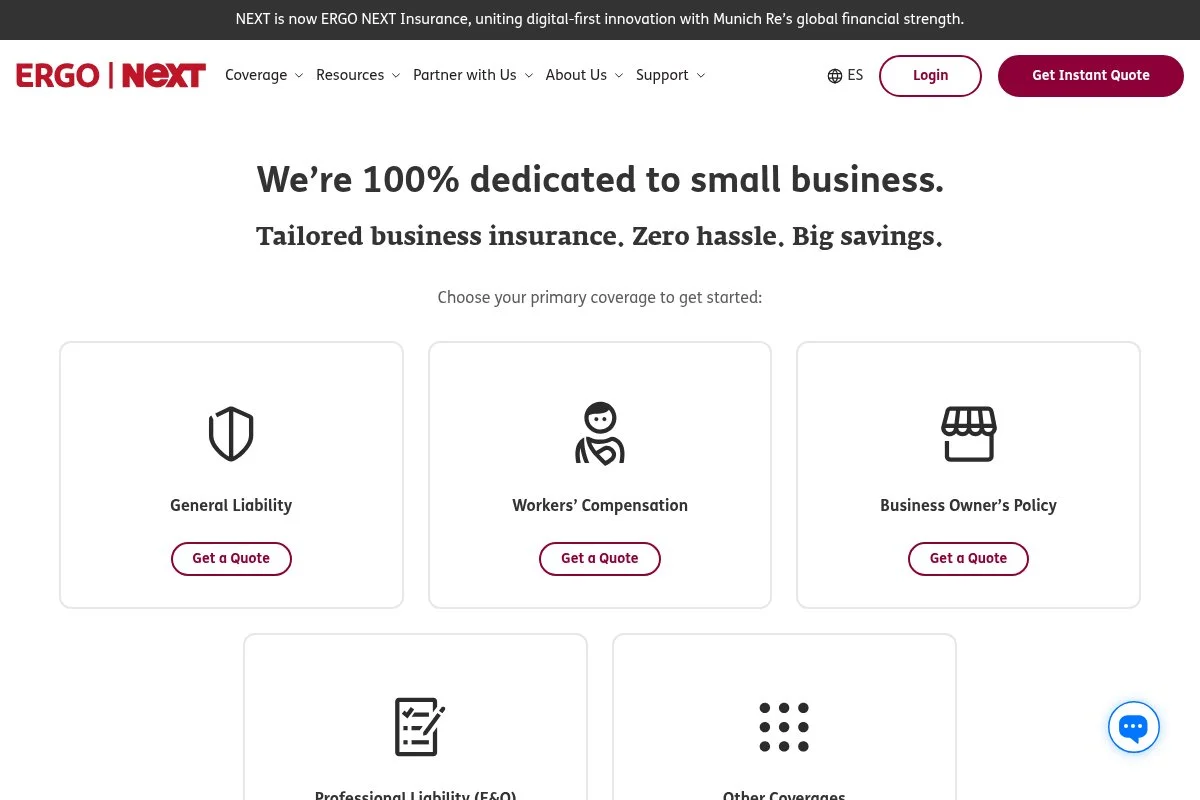
Next Insurance is a digital‑first carrier built for small businesses and solo workers. Founded in 2016, it focuses on fast online quotes and simple certificates. Next holds strong financial ratings and has grown quickly across trades and professional services. You can start with an instant quote in minutes. The mobile app lets you create and share a certificate of insurance anytime. Day-to-day, I like the clean dashboard, instant additional-insured updates, and the ability to bundle GL, professional liability, and workers’ comp.
In recent years, Next expanded into more classes and added tools that help you customize endorsements without a phone call. That means fewer back‑and‑forth emails and faster compliance for client contracts and venues. Higher‑tier options include business owner’s policies (BOP), commercial property, EPLI for some classes, and tools and equipment coverage. Cyber is available for select professions. Not every carrier pairs these in a single online flow, which makes Next appealing to time‑strapped solos.
I use Next for a consulting side project because I value speed and easy COIs. No sponsorship here—just a setup that saves me time every month. One more plus: the policy docs are written in plain language. I spend less time decoding jargon and more time working.
How Next Insurance works and key features
Next’s interface is straightforward. You answer a few job questions, pick coverage types, and adjust limits with sliders. Templates for COIs are built in, and you can customize additional insured wording. Advanced users can add endorsements, adjust deductibles, and request waivers of subrogation when needed. Integrations are light by design, but document storage and renewal reminders work well. You’ll see policy status, limits, endorsements, and billing in one place.
Analytics are focused on policy details and claims status rather than marketing metrics. Automation includes auto‑renewal and saved certificates. The app covers most daily needs: sharing proof, updating holders, and downloading documents. Support is available via chat, phone, and email during business hours. My tickets have been handled quickly and clearly. Overall, it’s beginner‑friendly while offering enough control for pros who juggle multiple clients and venues.
Who Next Insurance is for
Best for freelancers, consultants, fitness instructors, photographers, handypeople, and small agencies that need fast proof of insurance. It shines for contract work, events, and landlord requirements. If you need highly specialized coverage or heavy-fleet auto coverage, a legacy carrier or broker may be a better fit. No advanced technical skill is required.
Next Insurance pricing
Next uses a quote‑based model with monthly or annual billing. Pricing depends on your industry, claims history, location, limits, and endorsements. You can mix policies like GL, professional liability, BOP, workers’ comp, and tools coverage in one checkout.
- General Liability: quote-based, includes COI access, additional insured
- Professional Liability (E&O): quote-based, claims‑made coverage
- Business Owner’s Policy (BOP): quote-based, bundles GL + property
- Workers’ Compensation: quote-based, payroll‑driven
- Tools & Equipment/Inland Marine: quote-based, scheduled/unscheduled options
Value feels strong for solos who need quick certificates and simple bundles. Annual billing can lower the total compared to monthly billing. As limits rise and endorsements stack up, costs increase. This is typical across carriers.
Pros and cons of Next Insurance
Pros
- Fast, mobile COIs and easy additional insured updates
- Simple bundling of core policies for solos and micro‑teams
- Clear documents and straightforward endorsements
- Strong value for common freelance use cases
Cons
- Not ideal for complex, specialized risks
- Limited deep integrations with back‑office tools
- Costs rise with higher limits and specialty endorsements
If you want speed and clarity, start here. If your work is highly specialized or regulated, consider a broker with niche carriers.
Next Insurance reviews
Insurers often lack profiles on software review sites. I look at financial strength, complaint histories, and customer feedback on major consumer platforms before making a decision.
2. biBERK (Berkshire Hathaway)
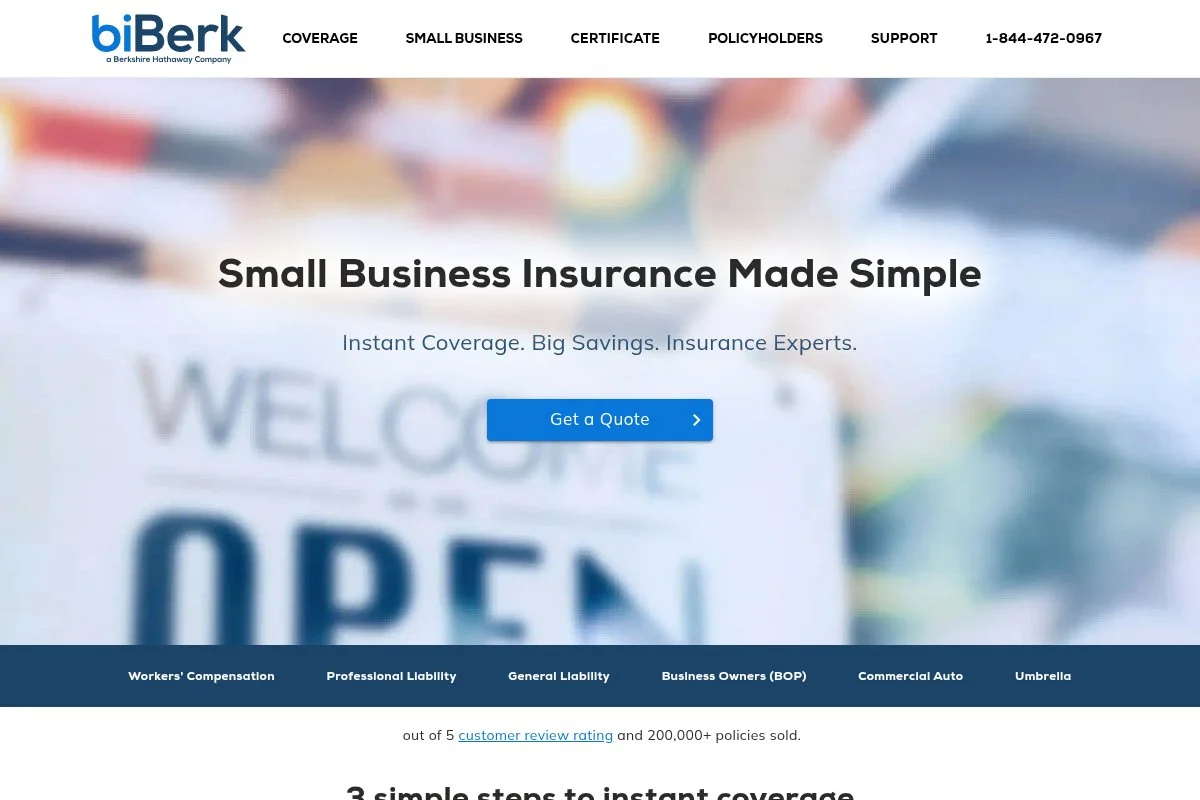
biBERK is a direct‑to‑business insurer that’s part of Berkshire Hathaway. That backing matters: Berkshire’s carriers hold very strong financial ratings and deep claims experience across many sectors. Getting started is straightforward with a short online application. The quote engine is efficient, and documents are available quickly. Daily use centers on policy management, certificates, and claims reporting in a clean portal.
Recent product growth has expanded eligibility to more professions and streamlined workers’ comp for tiny teams. I’ve seen smoother experiences for owners who add a part‑timer midyear and need payroll updated fast. biBERK’s edge shows in breadth: GL, professional liability, BOP, commercial auto, and workers’ comp. For some classes, umbrella options and inland marine are available. Many solo owners stick with biBERK as they add a second or third employee.
I don’t currently carry a biBERK policy, but a colleague running a small landscaping crew praised the claims communication during a minor equipment loss. Another plus: documents and loss‑run reports are easy to request, which is helpful if you ever need to move carriers.
How biBERK works and key features
The interface is minimal and focused. You’ll adjust limits, select endorsements, and generate certificates from a single dashboard. Policy changes and payroll updates (for workers’ comp) are handled online. Templates are fixed to carrier standards, but additional insured language and waiver requests are supported. Advanced users can tailor property schedules and equipment lists. Reporting covers policy details, billing, and claims status.
Automation includes renewals and notices. There’s no fancy integration layer, but the essentials are reliable. Support is responsive by phone and email. Overall, biBERK is a strong fit for owners who value a direct, no‑nonsense approach backed by deep financial strength.
Who biBERK is for
Great for contractors, trades, landscapers, consultants, and retail owners who want direct pricing and stable claims handling. Works well if you plan to add employees. If you need heavy customization or niche coverage, a brokered approach may be better. User‑friendly with a minimal learning curve.
biBERK pricing
biBERK uses a quote‑based model with online bind and monthly or annual billing. Pricing reflects location, revenue, payroll, limits, and class‑specific risk. You can bundle core policies for better overall value.
- General Liability: quote-based, broad class eligibility
- Professional Liability: quote-based, common for consultants
- Business Owner’s Policy: quote-based, GL + property bundle
- Workers’ Compensation: quote-based, payroll‑driven
- Commercial Auto: quote-based, business‑use vehicles
Compared with many carriers, biBERK often feels cost‑effective for straightforward risks, especially with annual pay. As with all carriers, higher limits and specific endorsements raise the price.
Pros and cons of biBERK
Pros
- Backed by Berkshire Hathaway companies
- Direct online quotes and fast bind
- Wide policy menu for growing teams
- Strong value for common trades and services
Cons
- Interface is utilitarian, not fancy
- Some niche classes may not be eligible
- Fewer “extras” compared to marketplaces
If you want direct, stable coverage from a financially strong group, biBERK belongs on your shortlist.
biBERK reviews
Insurance carriers are not consistently rated on software sites like G2 or Capterra. I focus on financial strength ratings and complaint data when evaluating biBERK.
3. Thimble
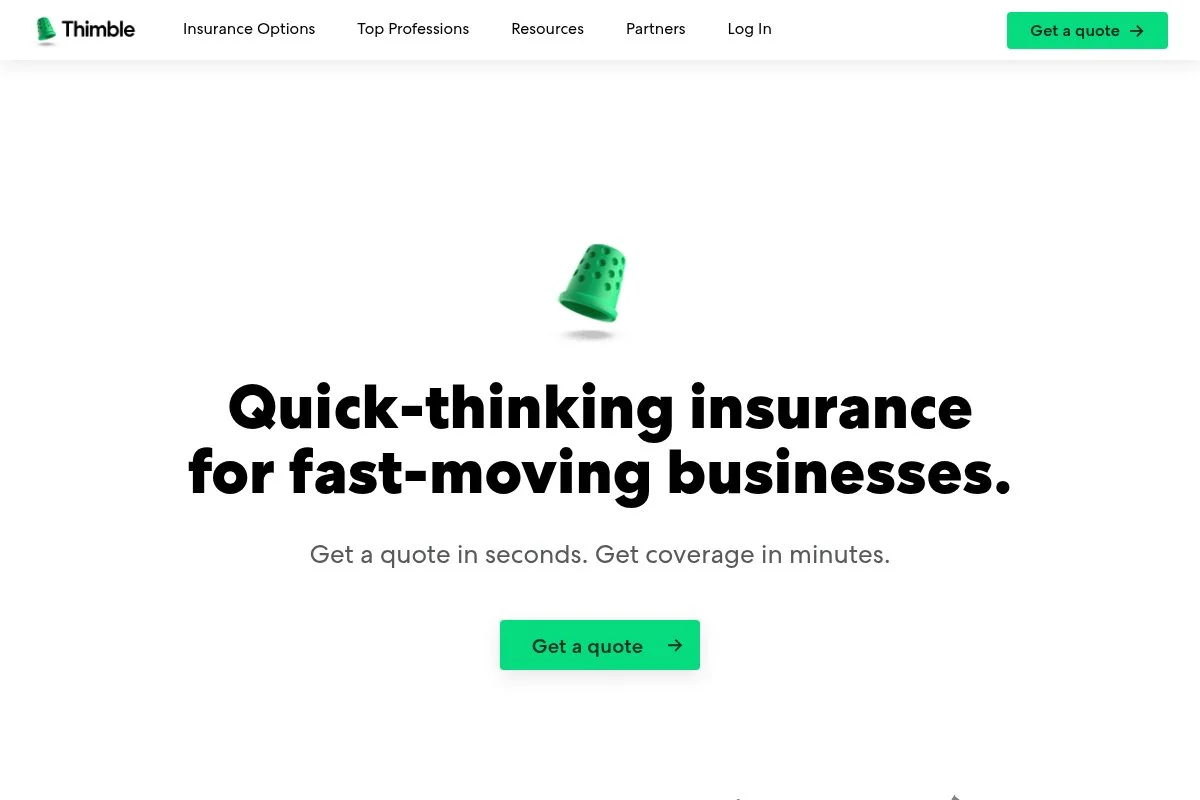
Thimble is built for flexibility. It started with on‑demand, short‑term policies and now offers monthly plans too. That’s ideal if your projects are part‑time, seasonal, or event‑driven. Setup is quick. You can get a quote for a day, a week, a month, or ongoing coverage. The app makes certificates easy to issue and update for each client or venue.
Thimble has expanded its policy menu and improved its onboarding flow, making it easier to find the right term for each job. I’ve seen creators and event pros use it to keep costs tight between gigs. At higher levels, Thimble offers GL and professional liability, with add‑ons such as equipment coverage and hired/non‑owned auto in some cases. The short‑term angle sets it apart when you do sporadic client work.
I don’t run Thimble full‑time, but I’ve used it for a weekend event that required specific wording on a certificate. It handled that need smoothly. The experience feels modern and quick. Great when a venue emails you the night before asking for additional insurance.
How Thimble works and key features
Thimble’s interface centers on picking a term and a limit. It’s simple: choose short‑term or monthly, set coverage, and get documents instantly. You can store multiple certificates and customize holders per job. Templates are straightforward. Advanced users can add endorsements and update additional insureds on the fly. Reporting covers active terms, upcoming renewals, and past certificates.
Automation includes monthly policy renewals and reminders before short-term policies expire. Support is responsive via chat and email, providing clear status updates. In short, it’s beginner‑friendly and uniquely strong for gig‑based schedules.
Who Thimble is for
Perfect for photographers, event vendors, fitness coaches, pop‑up retailers, and freelancers with irregular schedules. It excels for venues that require short‑term certificates. If you need complex commercial auto or heavy property coverage, another carrier may fit better. Very easy to use for first‑timers.
Thimble pricing
Thimble pricing is quote‑based and unique in its flexible terms. You can buy by the job, by the month, or set ongoing coverage. Cost depends on your class, location, limits, and endorsements.
- Short‑Term General Liability: quote-based, on‑demand terms
- Monthly General Liability: quote-based, auto-renewal options
- Professional Liability: quote-based, select professions
- Tools/Equipment and HNOA (where available): quote-based
If you only work a few paid gigs each month, Thimble can keep your spending low between projects. For steady, year‑round operations, a traditional annual policy may be more cost‑effective.
Pros and cons of Thimble
Pros
- Short‑term and monthly options
- Fast, job‑specific certificates
- Great fit for event and seasonal work
- Clear, modern interface
Cons
- Annual policies elsewhere may cost less for full‑time work
- Not ideal for complex property or fleet auto
- Coverage availability varies by state and class
Thimble shines when you need affordable, flexible coverage—especially if your calendar ebbs and flows.
Thimble reviews
As with many insurers, star‑rated software reviews are limited. I weigh customer feedback on major consumer sites and policy clarity when assessing Thimble.
4. Simply Business (Marketplace)
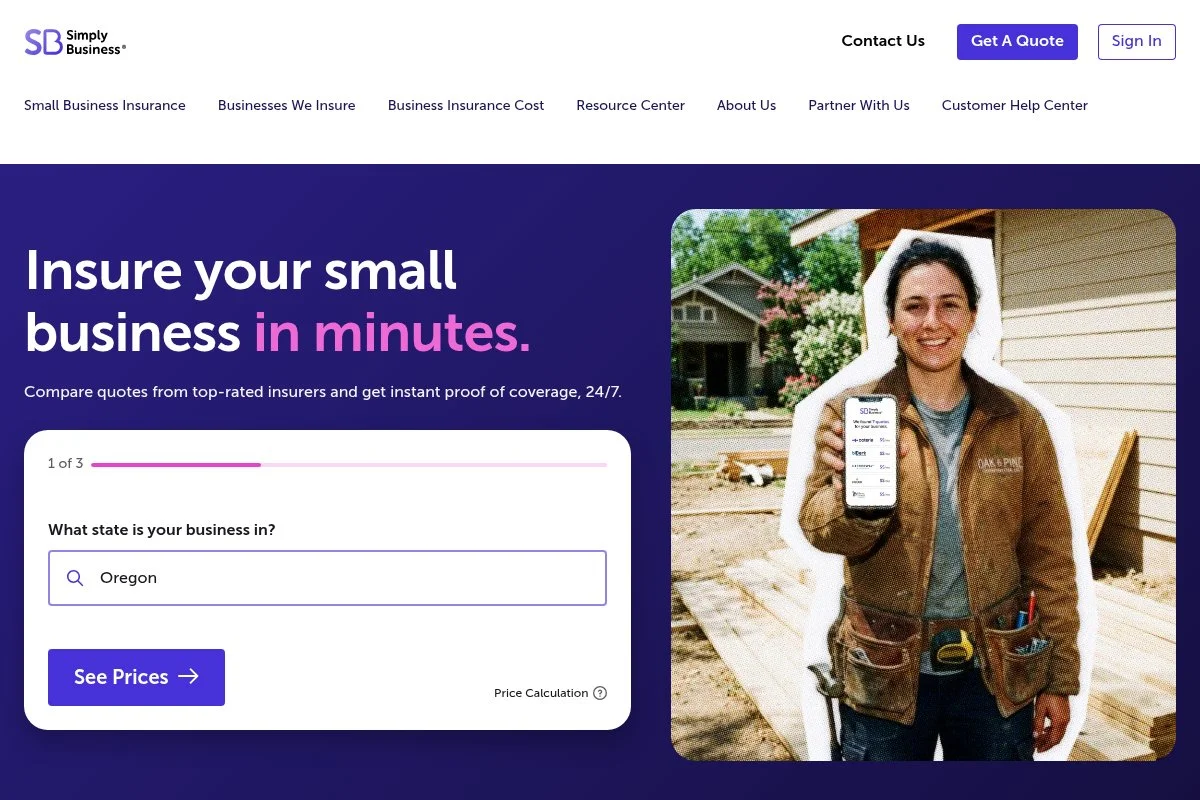
Simply Business is a marketplace that lets you compare quotes from multiple carriers in one place. It’s owned by The Travelers Companies, which gives it an established insurance DNA and access to strong carrier partners. You answer a few questions and see options side by side. The experience is guided and saves time, especially if you don’t know which carrier best fits your class.
In recent years, I’ve seen better quote matching for niche classes and improved clarity on endorsements. That helps when a venue or client asks for specific wording. Premium features come from the carriers you choose: BOPs, professional liability, cyber, workers’ comp, and more. The marketplace model is helpful if your risk profile doesn’t fit a single direct‑to‑consumer carrier.
I’ve used Simply Business when advising friends who wanted at least two comparable quotes before buying. Support has been helpful in explaining differences between similar‑looking policies, which cuts decision stress.
How Simply Business works and key features
The interface guides you through a short intake, then returns quotes from partner carriers. You can adjust limits and see pricing changes, then bind online or with an advisor. Templates and documents are provided by the selected carrier. You’ll manage certificates and endorsements through that carrier’s portal post‑bind. Analytics are minimal at the marketplace level.
Automation includes reminders and renewal notices. Phone support is a standout; reps explain exclusions and endorsements in plain terms. It’s beginner‑friendly and ideal for comparing options without having to call five agencies.
Who Simply Business is for
Great for freelancers, contractors, and shop owners who want multiple quotes quickly. Useful if you’ve been declined elsewhere or have unique needs. If you prefer one app for everything post‑bind, a single direct carrier may be simpler. No technical skill needed.
Simply Business pricing
Pricing is quote‑based from partner carriers. You’ll see ranges for GL, professional liability, BOP, and workers’ comp, then select the best fit. Billing and renewals follow the carrier’s terms.
- General Liability: quote-based via partner carriers
- Professional Liability: quote-based, class‑specific
- Business Owner’s Policy: quote-based, bundles available
- Workers’ Compensation: quote-based, payroll‑driven
Value depends on matching your risk class to the right carrier. Annual billing through the carrier can reduce costs. The benefit here is speed and choice.
Pros and cons of Simply Business
Pros
- Multiple quotes in minutes
- Helpful phone guidance on endorsements
- Good for tricky or niche classes
Cons
- Post‑bind management happens with the carrier, not the marketplace
- Interface varies by selected carrier
- No single unified app after purchase
If you want side‑by‑side options and advice, start here. If you value one app for everything, pick a direct carrier.
Simply Business reviews
Marketplace experiences vary by the carrier you choose. I review each carrier’s financial strength and consumer feedback rather than relying on software review sites.
5. Hiscox
Hiscox has insured small businesses for years and is well‑known among consultants and creative pros. It offers online quotes, clear policy language, and broad availability across the U.S. Starting is simple: enter your business details, select coverage, and bind online. Daily tasks like downloading COIs and updating holders are quick.
Hiscox has expanded its professional liability and cyber offerings for small firms, which helps service businesses meet stricter client requirements. Premium options include higher limits, worldwide coverage for some professions, and bundled BOPs. The professional liability depth is a strong point versus some newer carriers.
I used Hiscox earlier in my career when a client required specific E&O limits. It met the contract terms without a long back‑and‑forth. Support has been clear and timely, especially on claims‑made policy questions.
How Hiscox works and key features
Hiscox’s online portal is polished and easy to navigate. You can adjust limits, add endorsements, and generate COIs. Templates are standard, and additional insureds are simple to add. Advanced users can request waivers, schedule property, and tailor professional liability terms. Reporting includes policy summaries, billing, and renewal notices. Claims can be initiated online.
Automation covers renewals and reminders. Support is available by phone and chat, with knowledgeable reps for professional services. It’s a balanced choice for consultants and creative firms who want strong E&O options.
Who Hiscox is for
Ideal for consultants, designers, marketers, IT freelancers, and small agencies that need professional liability strength. Works well for remote or travel‑heavy work. If you run heavy equipment or a larger fleet, consider a carrier stronger in auto and inland marine. Beginner‑friendly with room to grow.
Hiscox pricing
Hiscox pricing is quote‑based with monthly or annual options. Costs vary by class, limits, deductibles, and endorsements. Bundling GL and professional liability can improve overall value.
- General Liability: quote-based, flexible limits
- Professional Liability (E&O): quote-based, broad pro classes
- Business Owner’s Policy: quote-based, GL + property
- Cyber (select classes): quote-based
For service businesses requiring higher E&O limits, Hiscox is often competitive. Annual payment typically reduces total cost versus monthly.
Pros and cons of Hiscox
Pros
- Strong professional liability options
- Polished portal and easy COI management
- Wide availability across states
Cons
- Can be pricier for some trades at higher limits
- Less focus on short‑term coverage
- Deeper customization may require an agent call
Choose Hiscox if E&O strength is a must. Otherwise, compare a quick quote with a direct carrier to check savings.
Hiscox reviews
As a long‑standing insurer, Hiscox is evaluated more on financial strength and complaint data than on software‑style star ratings. I find policy clarity to be a strong point.
6. Progressive Commercial
Progressive Commercial is a top name for business auto and also offers GL and other policies, often through partner carriers. If your work depends on vehicles, it’s a strong contender. Getting started is straightforward, with quotes online or by phone. The portal handles auto ID cards, driver updates, and policy documents, which helps busy contractors stay organized.
Recent updates have improved the online experience and broadened class availability through partners. For many, bundling auto with liability in one process saves time. Premium features shine in auto: coverage options for business‑use vehicles, hired/non‑owned, and additional endorsements. GL and BOP availability depend on your location and the matched partner carrier. I’ve seen solo contractors achieve faster compliance with clients when they can pull both auto and GL docs from a single, familiar brand. The auto claims process is well‑known and benefits from Progressive’s scale.
How Progressive Commercial works and key features
The interface is practical: manage vehicles, drivers, and coverages in one place. For non‑auto policies, Progressive often connects you to partner carriers to complete the purchase and servicing. Templates and documents are clean. Advanced users can adjust liability limits, add endorsements, and track claims. Reporting focuses on policy and billing details.
Automation includes renewals, ID card access, and reminders. Support is widely available by phone and online. For owners who rely on vehicles, it’s a practical choice with broad reach.
Who Progressive Commercial is for
Best for contractors, delivery services, mobile pros, and anyone with business‑use vehicles. Works well if you want a known brand and easy auto management. If you don’t need commercial auto, a direct small‑biz carrier may be simpler. Beginner‑friendly.
Progressive Commercial pricing
Pricing is quote‑based. Auto premiums depend on vehicle type, drivers, location, and limits. GL and BOP pricing vary by partner carrier. Monthly and annual billing are available.
- Commercial Auto: quote-based, vehicle and driver factors
- General Liability (via partners): quote-based
- Business Owner’s Policy (via partners): quote-based
- Hired/Non‑Owned Auto: quote-based (availability varies)
If auto is central to your work, Progressive often offers strong value. For non‑auto‑heavy businesses, compare with a direct small‑biz carrier to check potential savings.
Pros and cons of Progressive Commercial
Pros
- Industry‑leading commercial auto options
- Familiar brand with wide support
- Convenient if you need both auto and GL
Cons
- Non‑auto policies may route through partners
- Interface varies if partner carriers are involved
- May not be the cheapest for non‑auto risks
Choose Progressive Commercial if vehicles drive your business. Otherwise, compare quotes with carriers built for solos.
Progressive Commercial reviews
Large carriers often aren’t rated on software sites. For Progressive, I weigh auto claims experience, financial strength, and state complaint data.
7. The Hartford
The Hartford is one of the most established small business insurers in the U.S., known for broad coverage options and deep claims resources. It’s a solid pick if you want long‑term stability. You can start online or through an agent. The process is guided and works well for owners who prefer a human walk‑through for endorsements and limits. The Hartford continues to refine its small business offerings and digital tools, making it easier to manage certificates and renewals.
Premium options include BOPs with extensive endorsements, workers’ comp, commercial auto, umbrella, and industry‑specific coverage. If you grow from solo to a small team, it scales nicely. I recommend The Hartford to owners who want tailored packages and don’t mind a slightly more formal process. Support is experienced and thorough, which helps with more complex needs.
How The Hartford works and key features
The portal is professional and organized, with clear policy views and documents. You can request endorsements, add additional insureds, and download COIs. For more advanced needs, agents help fine‑tune coverage. Templates are carrier‑standard and widely accepted by venues and landlords. Reporting includes billing, policy summaries, and claims tracking. Automation covers renewals and notices. Overall, it’s a reliable choice for owners who want a well‑known carrier with strong experience serving small businesses.
Who The Hartford is for
Good for retailers, professional services, contractors, and owners planning to scale. Excels for BOPs and workers’ comp with tailored endorsements. If you need quick, ultra‑light onboarding, a digital‑only carrier may be faster. Beginner‑friendly with agent support as you grow.
The Hartford pricing
Pricing is quote‑based, with options to bundle GL and property in a BOP, add workers’ comp, and scale limits. Annual and monthly billing are common, and endorsements change the price.
- Business Owner’s Policy: quote-based, GL + property
- General Liability: quote-based, flexible limits
- Workers’ Compensation: quote-based, payroll‑driven
- Commercial Auto and Umbrella: quote-based
The Hartford isn’t always the cheapest, but it’s competitive for tailored packages. You pay for breadth and stability, which many owners value.
Pros and cons of The Hartford
Pros
- Established carrier with deep small‑biz focus
- Broad coverage and endorsements
- Scales well from solo to small team
Cons
- Onboarding can be more formal than app‑first carriers
- May cost more for simple, short‑term needs
- Fewer self‑serve bells and whistles
If you want stability and tailored coverage, The Hartford is a dependable choice. If you want instant, minimal setup, consider a digital‑first option.
The Hartford reviews
Large carriers like The Hartford are better judged by financial strength and complaint ratios than by app store‑style ratings. I find its documents widely accepted by clients and landlords.
What is the Best Business Insurance Package Right Now?
My top picks this year are Next Insurance for most solo professionals, biBERK if you want a direct, financially strong option with wide policy depth, and Thimble if your work is irregular or event‑based. I personally use Next for a consulting project. This is not sponsored. I found it through peers who were landing contracts faster by attaching COIs to proposals. What impressed me right away was the speed: instant certificates, easy additional insured, and clean policy docs. The deal‑maker was the overall ease of bundling what I needed without a phone call.
From a value standpoint, Next scales well for solos who need GL and, sometimes, professional liability. Alternatives can edge cheaper in narrow cases, but the time saved on certificates and endorsements has paid for itself in fewer delays and smoother client onboarding. biBERK is my close second. If I were hiring my first employee or adding vehicles, I might lean toward biBERK for its direct model and broad policy set. It’s backed by Berkshire Hathaway companies, which many owners find reassuring when claims happen.
The specific strength of biBERK is stability. It handles GL, BOP, comp, and auto under one roof, so the transition from solo to a small team feels less choppy. If I expected to add payroll quickly, I might have picked it first. Third, Thimble is excellent if you only work a few jobs each month. Short‑term coverage keeps costs tight between gigs. It’s also a lifesaver when a venue asks for a last‑minute certificate with special wording.
I’ll add this: I sometimes keep a policy with one carrier and buy a short‑term add‑on through Thimble for unique events. Mixing tools to fit real‑world work isn’t unusual, and it can be smart. Choosing between these is not easy because they all do the basics well. I stuck with Next because of its speed, app experience, and how often I send certificates. That convenience wins for my workflow. I hope this helped you narrow it down. If you’re unsure, grab two quotes and compare the limits, endorsements, and the speed at which you can issue COIs. Here’s to steady work and solid protection.
Frequently Asked Questions
Q: What insurance do I actually need as a self‑employed pro?
Most start with general liability. Many consultants add professional liability (E&O). If you rent space or have gear, consider a BOP or equipment coverage. If you pay wages, workers’ comp is usually required.
Q: How can I keep costs low without risking gaps?
Choose limits that meet contract and venue requirements, skip extras you don’t need, and pay annually if cash flow allows. Compare two quotes and review endorsements carefully.
Q: How fast can I get a certificate of insurance?
With digital‑first carriers like Next and Thimble, you can usually generate a COI in minutes. For complex endorsements or waivers, allow extra time or contact support.
Q: Do I need business insurance if I work from home?
Yes, in many cases. Home policies rarely cover business liability. Clients and landlords may require proof of insurance. A basic GL or BOP can protect against common risks and help win contracts.
Photo by Vlad Deep: Unsplash


