

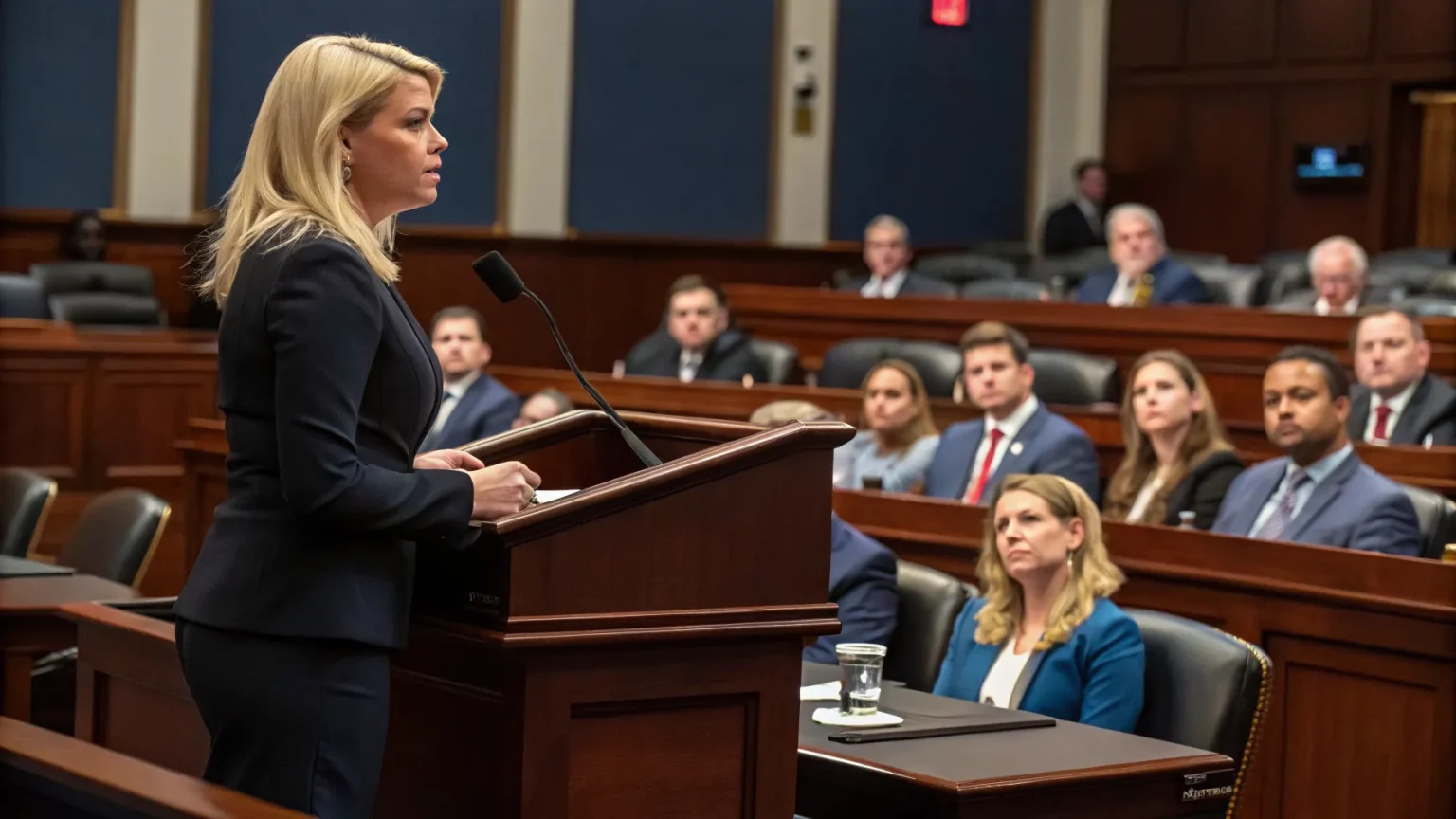
The latest Epstein files hearing turned combative on Wednesday when former Florida Attorney General Pam Bondi delivered a forceful defense of Donald Trump. Lawmakers pressed the Justice Department on what has been released, what remains sealed, and why the timeline keeps slipping. The clash surfaced the same questions that have dogged every Epstein files hearing since the case re-entered the news cycle.
Bondi, a prominent Trump ally, positioned herself as the former president’s most vocal guardian on the panel. She framed the inquiry as politically motivated while Democrats pressed their oversight case. The result was a hearing marked by raised voices, interruptions, and sharply different theories of what transparency should look like.
What sparked this Epstein files hearing
The Epstein case has lingered in public life for years, with victims and advocates calling for full transparency. Jeffrey Epstein died in federal custody in 2019 while awaiting trial on sex-trafficking charges. Since then, questions about past plea deals, charging decisions, and the release of related documents have driven bipartisan criticism of law enforcement.
Wednesday’s Epstein files hearing was triggered by delays in producing records that members of Congress had requested months earlier. Democrats on the panel focused on whether the Justice Department has moved fast enough to release records and answer victims’ questions. Republicans argued that the inquiry risks turning into a partisan spectacle that strays from legal standards and due process.
Bondi took the Republican view, tying the dispute to what she framed as ongoing efforts to damage Trump ahead of the next election cycle. She repeatedly pushed back on suggestions that the Justice Department had been slow-walking the release.
Bondi’s defense and the hearing’s flashpoints
Bondi’s argument centered on the idea that Trump is being unfairly linked to disputes over case records. She stressed that oversight should not become a proxy battle over personalities or campaign politics. Her approach energized Republicans on the panel, who echoed her warnings about overreach.
Democrats countered that the core issue is public trust. They argued that the Epstein case demands a full accounting, including detailed timelines of investigative steps and a clear plan for producing documents that can be lawfully released. Several members pointed to the concerns of survivors who have long sought answers.
Sharp exchanges dominated the second hour, with Bondi at one point raising her voice to cut through a line of questioning on grand jury material. The pattern echoed previous Epstein files hearing sessions, where procedural disputes often eclipse the substantive record.
The tension between transparency, privacy, and due process
At the center of the dispute lies a familiar tension. Lawmakers are weighing the public’s right to know against legal limits on releasing sensitive files, including grand jury material and records tied to ongoing investigations. That push and pull has stalled previous document requests and fueled speculation about undisclosed details.
Three camps typically emerge inside any Epstein files hearing. Transparency advocates want a schedule for document releases. Law enforcement officials cite privacy protections and legal constraints.
Victims’ groups urge clarity and consistency so survivors are not caught off guard by sudden disclosures. Bondi aligned with those urging caution, saying the committee should not pressure the Justice Department into premature disclosures. Democrats pressed for concrete steps and deadlines, warning that delays erode confidence in institutions.
How the Justice Department handles sensitive records
Federal records releases follow a layered process. Grand jury material is governed by Rule 6(e) of the Federal Rules of Criminal Procedure, which sharply restricts disclosure. The Department of Justice Criminal Division reviews records for ongoing investigative impact before any release can move forward.
Additional review layers include victim privacy protections under the Crime Victims’ Rights Act, FOIA exemptions for law enforcement records, and consultation with prosecutors on active matters. That review lattice is why the timeline on any Epstein files hearing tends to lag public expectations.
Committee staff briefed members before Wednesday’s session on which categories of records are likely to be producible in the near term. The briefing reportedly distinguished between records already in the public record, records held under protective order, and records that would require court intervention to unseal.
Implications for policy and politics
Wednesday’s Epstein files hearing may set the tone for a broader fight over access to sensitive records. If the committee issues new subpoenas or outlines a timetable for document production, the Justice Department could face renewed legal challenges and public scrutiny. That would also reset the deadlines that have shifted multiple times.
The political stakes are high. Republicans see an opportunity to frame the inquiry as partisan, while Democrats argue that careful oversight is necessary to serve victims and restore trust. Bondi’s prominence in the hearing suggests a continued effort by Trump’s allies to push back on investigations they view as politically charged.
Outside watchdog groups noted that cable coverage of the Epstein files hearing skewed toward the Bondi-Trump exchanges rather than the substantive document production plan. That narrative framing shapes how the broader public reads the oversight effort.
What the process looks like from here
Lawmakers signaled that follow-up actions are likely. Possible steps include closed-door briefings to protect sensitive information, public status reports on document processing, and consultations with victims’ counsel to ensure that disclosures do not retraumatize survivors.
Any resolution will depend on practical steps that balance openness with legal guardrails. That means clear criteria for release, a transparent appeals process for redactions, and ongoing communication with the public. Committee leadership hinted at a follow-up Epstein files hearing within 60 days if the Justice Department misses the next production window.
Watchers of past congressional oversight battles expect a familiar cadence. Initial document drops followed by partisan disputes over completeness, then court filings to resolve disputed redactions. The Congressional Research Service has published multiple explainers on exactly this sequence for anyone tracking the procedural terrain.
What this means for small business owners and solo professionals
Political oversight stories shape the regulatory climate that self-employed professionals work inside. A prolonged Epstein files hearing saga pulls congressional attention away from routine small-business legislation like tax deadline extensions and contractor classification updates. Knowing what bills are competing for floor time helps solo operators plan ahead.
If you work in legal services, investigative journalism, or compliance, the record produced by this hearing may eventually become a source document for client work. Archiving the official transcript and any released exhibits now is cheap insurance. For readers building media businesses, see how we think about coverage cadence in our guide to building a content marketing plan for your startup.
For broader financial implications of drawn-out political disputes, our rundown on 14 expenses solopreneurs forget to track can help you budget for the regulatory volatility that often follows high-profile hearings.
The takeaway from Wednesday’s Epstein files hearing
Wednesday’s showdown clarified the stakes but not the outcome. Bondi’s forceful defense rallied Republicans, while Democrats kept the focus on transparency and victim concerns. The next phase will test whether Congress and the Justice Department can craft a plan for disclosures that meets legal standards and public expectations.
The measure of success will be simple. Credible answers for victims and a record that the public can trust. Readers who want a structured way to follow ongoing oversight can sign up for congressional hearing alerts and pair them with our guide to why content creators need to embrace digital products so your coverage stays both timely and useful.
Frequently asked questions
What is an Epstein files hearing?
An Epstein files hearing is a congressional session focused on the Justice Department’s handling of records related to the Jeffrey Epstein case. Members question officials about document production timelines, redactions, and coordination with victims’ counsel.
Why does Pam Bondi play such a prominent role?
Bondi is a former Florida Attorney General and a longtime Trump ally, which positions her as a frequent defender of the former president in hearings that touch on investigations. Her combative style tends to anchor cable coverage of any Epstein files hearing.
Why are some Epstein files still sealed?
Grand jury material is protected under Rule 6(e), victim information is covered by the Crime Victims’ Rights Act, and records tied to active investigations are often withheld pending prosecutorial review. Any Epstein files hearing has to work within those legal guardrails.
What records have already been released?
Court filings, deposition excerpts, and settlement-related documents have been made public through litigation rather than the hearing process. Additional records are expected to be released in tranches as reviews conclude.
Does the hearing affect ongoing criminal investigations?
Congressional oversight runs parallel to any criminal matters and does not replace prosecutorial decisions. Releases are coordinated to avoid compromising active cases, which is why the pace of an Epstein files hearing can feel slower than public demand.
What happens if the Justice Department misses the next deadline?
The committee could issue follow-up subpoenas, escalate to a contempt referral, or ask a federal court to compel release of specific materials. Leadership hinted at another Epstein files hearing within 60 days if production stalls.
How can the public follow the hearing process?
Committee websites post official transcripts, exhibit lists, and member statements shortly after each session. The Congressional Research Service also publishes accessible explainers on oversight procedures relevant to any Epstein files hearing.


