

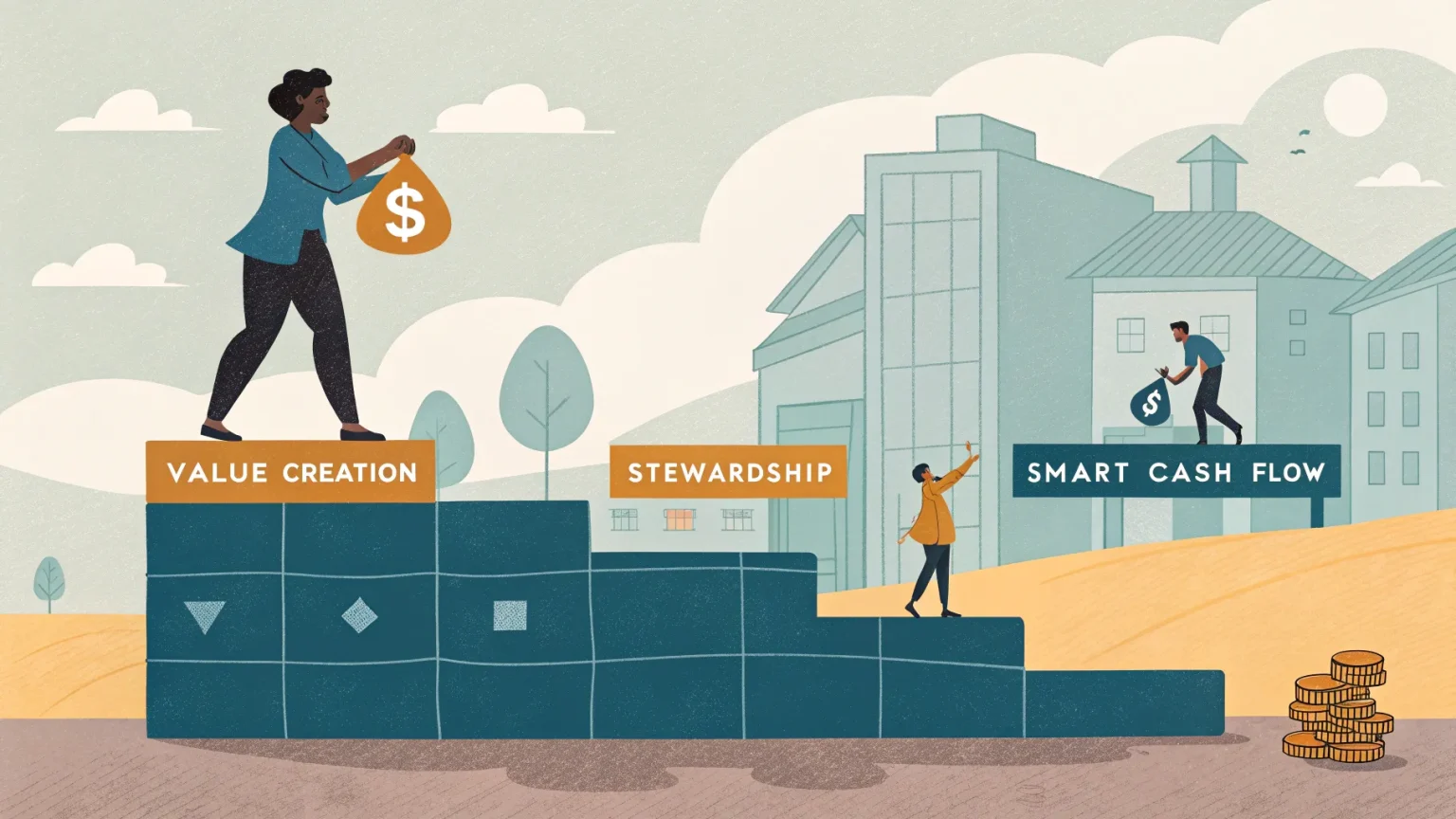
Wealth isn’t a reward for handing money to strangers and hoping time bails you out. It’s the result of value creation, stewardship, and smart cash flow decisions. That’s the point I keep making when people ask how to get rich: stop outsourcing your results and start building something real.
The Core Problem: Accumulation Worship
We’ve been sold the idea that wealth comes from parking dollars, waiting decades, and praying to the gods of compound returns. That story serves the institutions, not the investor. I’ve seen it up close coaching business owners and studying the advice of financial icons.
“Charles became wealthy creating the discount brokerage account not putting money in one.”
“He became wealthy because he popularized or created the index fund.”
That’s the part too few are willing to say out loud. The moguls didn’t get rich by doing what they tell the public. They got rich by building the platforms and products the public uses. Good for them. But let’s stop pretending it’s the same path for everyone else.

The Three Myths That Keep People Stuck
Accumulation thinking rests on three ideas. They sound wise. They aren’t.
- “It takes money to make money.” No. It takes your money for them to make money. Fees get paid whether you win or lose. “Wall Street gets paid on an ETF or a mutual fund whether it goes up or down because they always get their percentage.”
- “High risk equals high return.” They don’t take the risk. You do. They still get the fee. Risk without control is a gamble, not a strategy. Real investors improve cash flow and protect the downside.
- “Just let compound returns make you rich.” As I said, “this will trigger people, but no one that’s extraordinarily wealthy got there by compound…” waiting. Wealthy people compress time by creating value, not by hoping the market smiles for 40 years.
These ideas convince people to separate from their money and their responsibility. That separation is the costliest line item in a lifetime.
What Actually Builds Wealth
Creation beats accumulation. Charles Schwab didn’t open a discount brokerage account and chill. He built the brokerage. Jack Bogle didn’t simply buy an index fund; he created and popularized it. That is a vital distinction for anyone who wants real results.
Here’s what works in the real world:
- Increase cash flow today. Eliminate hidden fees, refinance bad debt, cut waste, and improve pricing or margins in your business.
- Protect the downside. Insure intelligently, build reserves, set rules for risk you can actually control.
- Create and capture value. Build offers, processes, and systems. Improve skills that command higher returns. Your human capital is the multiplier.
Notice the pattern. Each step gives you agency. Each step is measurable. None require handing your future to a prospectus you barely read.
But What About Index Funds And Patience?
I’m not saying long-term investing has no place. Low-cost funds can be a tool. The issue is worship, not usage. When passive investing becomes an excuse to delay life, ignore cash flow, and avoid responsibility, it turns into a tax on your potential.
Consider this: if your plan only works “if the market averages X for Y years,” that isn’t a plan. That’s a wish. Markets move. Fees don’t. As I put it, “they always get their percentage.” You deserve better than a strategy that pays others first, and you last.
A Better Question To Ask
How can I create value this month that improves my cash flow and reduces risk? That question changes your behavior. It leads to better decisions in business, taxes, debt, and insurance. It keeps your attention where your power lives—on what you can control.
“Instead of looking at what we could do to improve cash flow today, protect the downside,” we’re told to just “hand your money over.” That’s backwards.
The Call
I became wealthy by building, not by waiting. You can too. Start by taking inventory: where are you paying fees for no value, carrying risk you don’t understand, or delaying action because a chart told you to be patient?
Then make the shift:
- Audit every fee and reclaim cash flow.
- Cap losses before chasing gains.
- Invest first in skills, offers, and systems you control.
Stop worshiping accumulation myths. Build something. Protect it. Improve it. That’s the path to wealth you can live with—and live on—starting now.


