

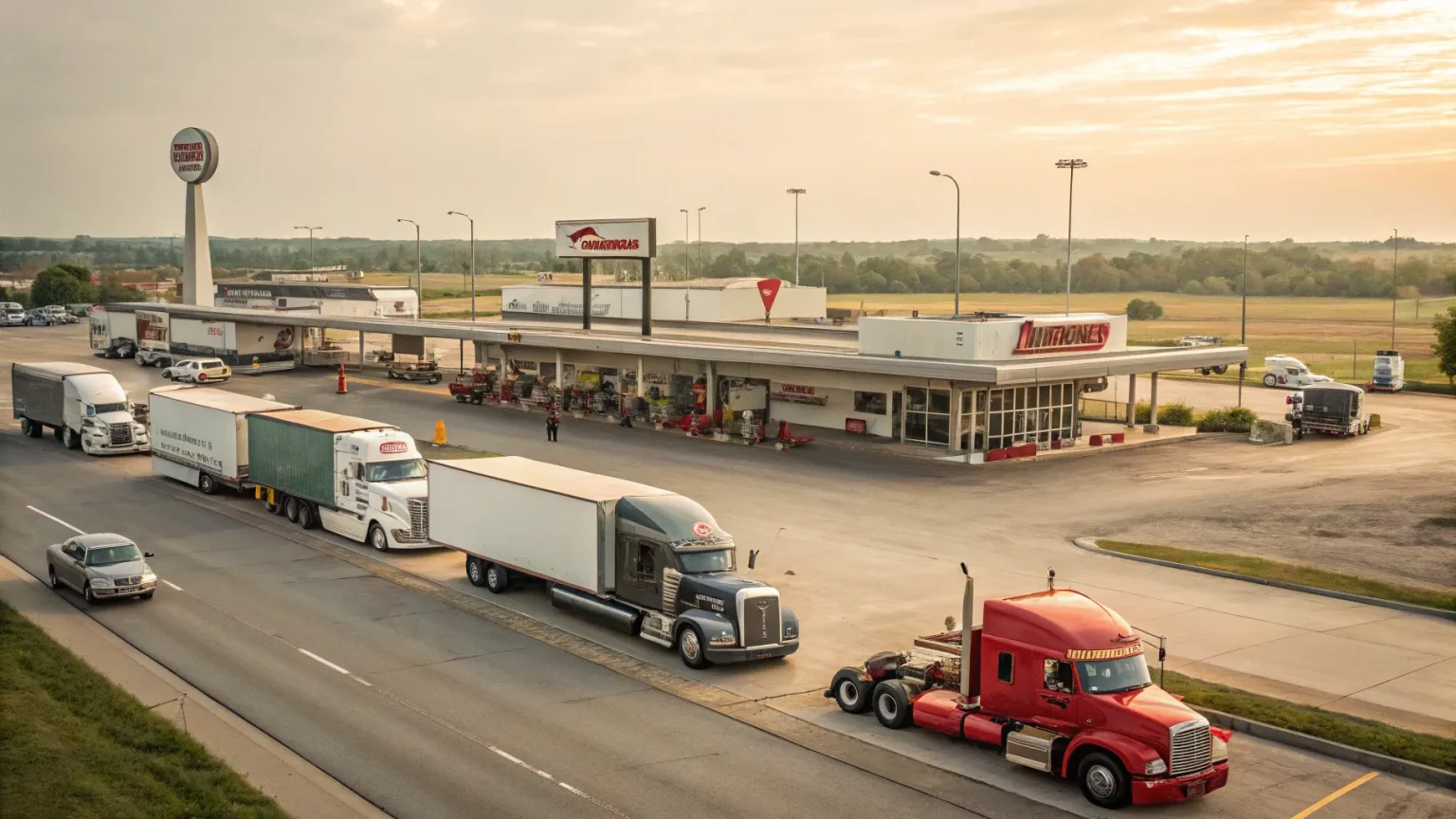
At the crossroads of Interstate 80 in Walcott, one roadside icon still pulls in crowds and semis by the hundreds. But as that giant complex thrives, family-owned truck stops across the country are fading fast. The shift, driven by corporate consolidation, tight fuel margins, and changing freight patterns, is reshaping how drivers rest, refuel, and find community on America’s highways.
The story centers on Iowa 80 in Walcott, Iowa, often called the world’s largest truck stop. It stands as proof that a single site can become a destination. Yet owners of smaller, independent stops say the math no longer works like it once did, especially after a wave of deals and rising costs.
An Icon That Still Draws Drivers
Iowa 80 opened in 1964 and remains family-owned. It has grown into a sprawling complex with fuel islands, multiple restaurants, a trucking museum, and rows of parking. Drivers plan routes to stop there, treating it as a safe haven and a small town under one roof.
“Iowa 80 in Walcott, Iowa, is the Disney World for truckers.”
That nickname reflects its pull on the road community. The site hosts large gatherings and offers services that most independents cannot match at scale, from showers and laundry to retail and on-site maintenance.
Why Independents Are Disappearing
Independent truck stops face intense pressure from national chains such as Pilot Flying J, Love’s, and TravelCenters of America. Chains can negotiate better fuel prices, run large loyalty programs, and invest in new facilities. The 2023 purchase of TravelCenters of America by BP highlighted how deep-pocketed buyers now dominate the market.
Owners of single-site stops say they cannot keep up with capital needs. Upgrades to pumps, payment systems, lighting, and parking lots now come on faster cycles. Financing those projects is hard when profit per gallon remains small and maintenance costs keep rising.
- Consolidation: National chains expand through acquisitions and new builds.
- Thin margins: Fuel sales yield pennies per gallon, while costs rise.
- Technology spend: Payment security and pump upgrades require constant investment.
- Labor pressures: Hiring and retention costs have climbed since the pandemic.
The Economics: Pennies Per Gallon
Fuel margins rarely cover the bills alone. Many stops rely on food, retail, showers, and parking to make the numbers work. But credit card fees eat into every fuel transaction. Compliance costs also surged after payment rules shifted liability for fraud at the pump. For single-location owners, spreading those costs is hard.
Parking tells a similar story. Demand for safe, legal truck parking has grown, but building and lighting large lots requires heavy capital. Some chains now charge for premium parking or tie access to loyalty programs, making it tougher for small operators without tech platforms.
Freight Shifts and Safety Concerns
Shipping patterns have changed with e-commerce and regional distribution hubs. Trucks may stop closer to warehouses rather than at traditional cross-country nodes. That can siphon traffic from rural exits where many family businesses sit.
Safety and security are ongoing challenges. Owners invest in cameras, better lighting, and staffing. Those steps are necessary but costly. Insurance and liability concerns add more expense, pushing some operators to consider a sale rather than another round of upgrades.
What the Road Ahead May Hold
Energy transitions present both risk and opportunity. Electric charging for heavy-duty trucks is still limited, but plans are advancing along major corridors. Hydrogen discussions continue in some regions. Chains with strong balance sheets are positioning for these changes. Independents that want to participate face large upfront costs in equipment and grid connections.
Some family-owned stops are adapting by specializing. They add unique restaurants, repair bays, or regional products. Others partner with buying groups to improve fuel and retail pricing. A few collaborate with state and local agencies on truck parking grants, seeking help to expand spaces and improve safety.
For drivers, the shift could reduce choice along certain routes, especially at rural exits. For communities, the loss of a local truck stop means fewer jobs and less tax revenue. It also removes a reliable service point for emergency needs, from winter storms to road closures.
Iowa 80 shows that a family-owned stop can still thrive with scale, strong branding, and reinvestment. Yet the broader trend points to more consolidation and new energy demands. The next phase will hinge on who can fund upgrades, secure reliable staffing, and serve drivers with speed and comfort. Watch for more deals among mid-sized operators, growth in paid parking, and early clusters of heavy-duty charging. The road is changing, and the business model with it.


