

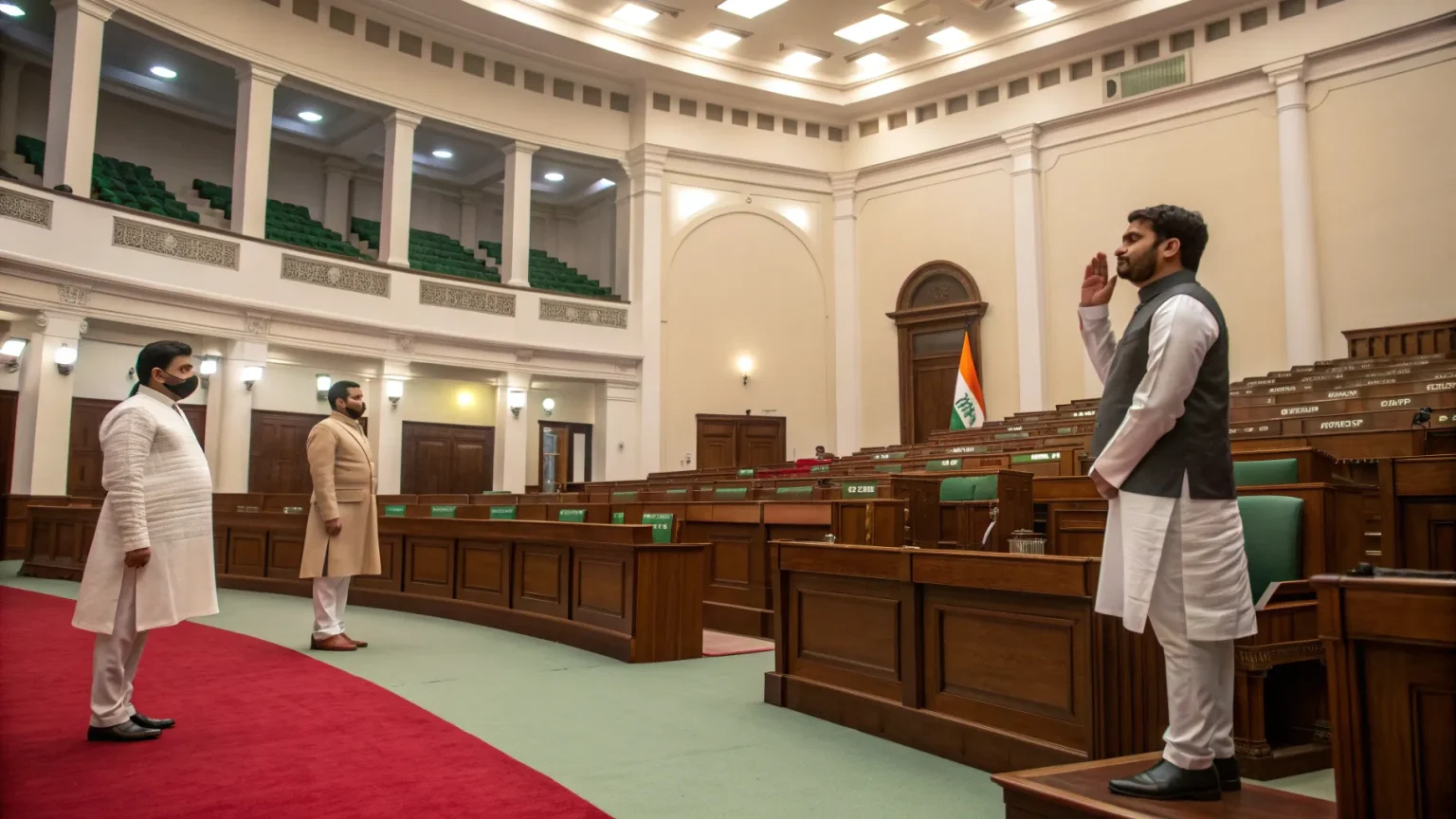
Newly elected legislators in Bihar were sworn in during the winter session, signaling the start of a fresh term in the 243-member Assembly. Leaders including Maithili, Samrat Choudhary, and Tejashwi Yadav took the oath on the House floor, setting the stage for legislative business and new power alignments in Patna.
The ceremony, held at the Bihar Legislative Assembly, marked a formal transition after state voters sent a new set of representatives. The oath-taking introduces the next phase in the House: selection of key posts, debate on policy priorities, and the calendar for government business.
“Bihar’s newly elected MLAs, including prominent leaders Maithili, Samrat Choudhary, and Tejashwi Yadav, took oath today in the Bihar Legislative Assembly during the winter session.”
Ceremony Marks Start of a New Term
The oath ceremony is procedural, yet it also sets the tone for cooperation and competition in the coming months. Members pledge to uphold the Constitution, a step required before they vote, introduce bills, or speak in debates.
With the winter session underway, committees will be staffed, and floor managers will map out the early agenda. The House typically focuses on pending bills, departmental grants, and urgent matters raised by constituents.
Key Figures and Party Dynamics
Samrat Choudhary has been a central figure for the Bharatiya Janata Party in the state. His presence at the ceremony underlined the party’s organizational push inside the House.
Tejashwi Yadav, a senior leader of the Rashtriya Janata Dal, returned to the floor with experience from earlier stints in government. His role will be watched closely by allies and critics alike.
Maithili, named among the day’s prominent oath-takers, adds to the list of figures who will shape debates on jobs, infrastructure, health services, and public safety.
Background and Context
Bihar’s Assembly has 243 seats, making coalition math central to governance. Shifts in alliances have defined recent sessions, with floor strength deciding who controls the Speaker’s chair and the flow of bills.
In recent years, the state has faced recurring debates over employment, rural development, and urban services. Flood management and migration patterns also influence policy choices, often sparking bipartisan demands for relief and investment.
What the Winter Session Could Address
Members are expected to press for immediate answers on public services. Early sessions often feature questions on law and order, department performance, and execution of welfare schemes.
- Jobs and skill programs for youth.
- Roads, bridges, and rural connectivity.
- Health system readiness and primary care.
- Flood control and disaster relief.
The government may table reports on spending and seek approvals for supplementary demands if required. Opposition benches usually test the ruling side with adjournment motions or short-duration discussions.
Procedures Ahead in the House
After oath-taking, attention turns to the election of the Speaker and Deputy Speaker, committee formation, and the session’s working days. These steps decide how quickly bills can move and how debates will be scheduled.
Parties also finalize floor leaders and whips to manage attendance and voting. With slim margins often deciding outcomes, coordination inside the House can shape the fate of proposed laws.
Implications for Governance and Policy
The composition of the Assembly will influence budget priorities and the pace of administrative reforms. If consensus holds on core services, the House could pass targeted measures on health infrastructure and schooling.
Sharp divides could slow proceedings, pushing key items to later sittings. Committee scrutiny may become the venue for building agreement on complex proposals.
With the formalities complete, Bihar’s lawmakers now face pressure to deliver quick results on public needs. The next steps—electing presiding officers, setting the calendar, and taking up early motions—will signal how the House plans to work. Voters will watch for plain outcomes: more jobs, safer roads, better clinics, and faster responses to disasters. The winter session will offer the first clues about whether this Assembly can convert campaign talk into action.


