

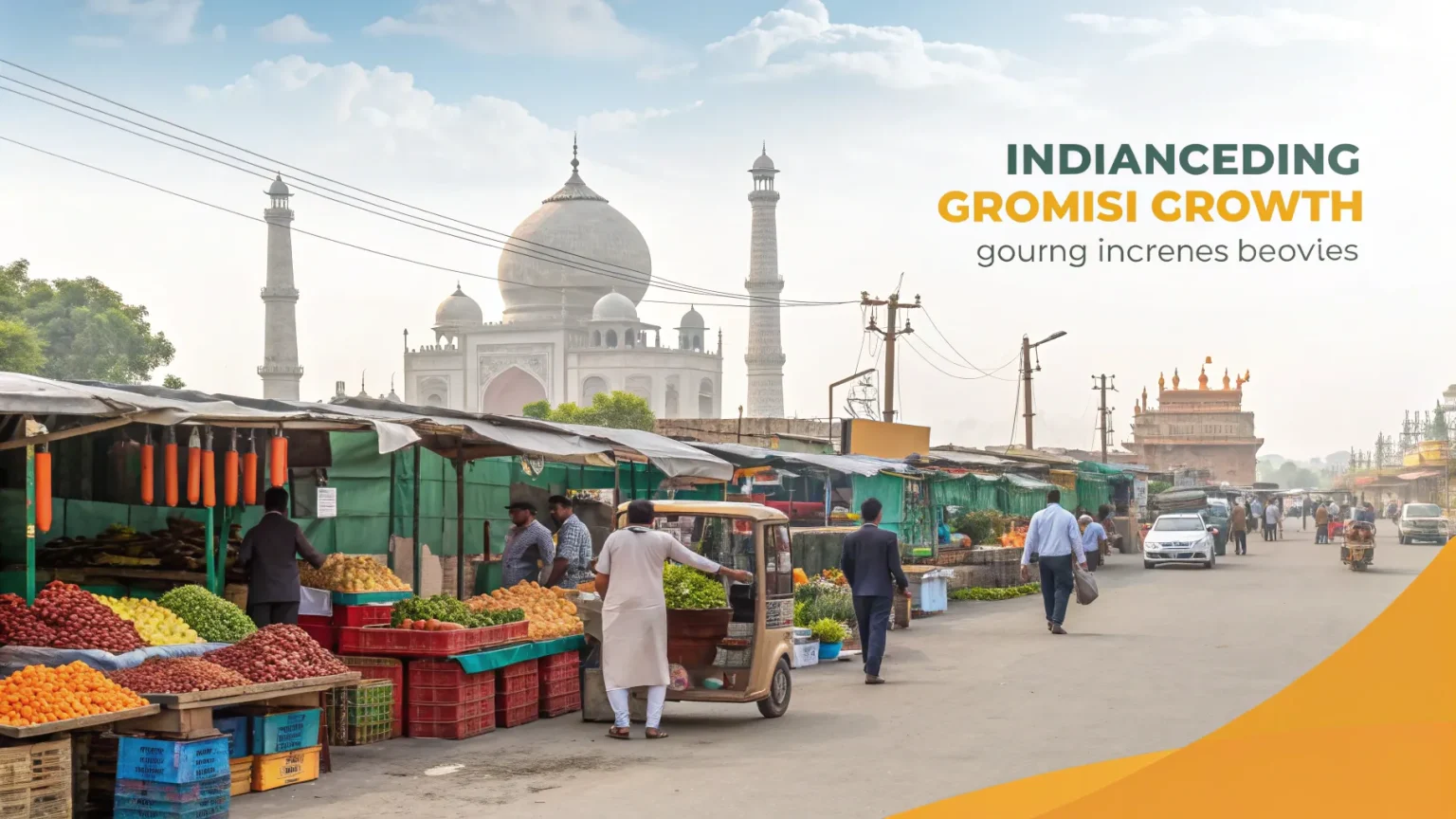
India is on track for fast growth in the first half of FY26, with gross domestic product projected at 7.6 percent. The outlook, lifted by manufacturing, services, and public spending, points to strong momentum even as the second half could cool slightly. ICICI expects growth of 7.0 percent for FY26 and 6.5 percent for FY27, signaling continued strength in Asia’s third-largest economy.
The projection suggests steady demand at home will carry the economy through global uncertainty. It also indicates that policy support and corporate investment will remain in focus over the next two years.
What Is Driving the Upswing
Manufacturing has gained traction as supply chains stabilize and firms add capacity. Companies have been investing in machinery and construction, helping output and jobs. Services continue to expand on the back of finance, logistics, travel, and technology exports.
Public investment is also a key engine. Central and state spending on roads, rail, and urban projects has been high in recent years. That push supports private contractors, steelmakers, cement producers, and a wide network of small firms.
“India’s economy is set for strong growth in the first half of FY26, with GDP expected at 7.6 percent,” the forecast notes. “This surge is fueled by manufacturing, services, and government spending.”
Household demand remains firm, helped by steady employment and city-led consumption. Discretionary spending on vehicles, housing, and electronics has held up, even as inflation has pressured budgets at times.
Why Growth May Moderate in the Second Half
The same outlook flags a mild slowdown in the latter part of FY26. Part of the shift could reflect a high base and a normal pace of activity after early-year strength. Companies may also pace investments if global demand stays soft.
“While the second half may see a slight moderation, domestic demand remains strong,” the assessment adds.
External risks linger. Oil price swings, shipping disruptions, or a slower rebound in key export markets could weigh on trade and margins. A cautious policy stance from the central bank to keep inflation in check may also cool credit growth later in the year.
ICICI’s Two-Year View
The projections lay out a stable path: 7.0 percent GDP growth in FY26 and 6.5 percent in FY27. That track suggests the economy could ease toward its medium-term trend without a sharp drop-off. It would also give policymakers room to balance inflation and growth.
“ICICI projects 7.0 percent growth for FY26 and 6.5 percent for FY27, indicating a positive economic outlook.”
If investment and job creation hold, services and construction could offset any export softness. Progress on large infrastructure pipelines and factory projects would be central to this outcome.
Signals to Watch
- Manufacturing orders and capacity use in key sectors such as autos, electronics, and chemicals.
- Trends in services exports, especially technology, design, and global capability centers.
- Government capital spending and the pace of project execution in roads, rail, and energy.
- Inflation, monsoon outcomes, and policy moves that influence borrowing costs and credit flow.
Industry and Policy Implications
For businesses, the near-term backdrop supports hiring, capital spending, and inventory build. Firms tied to infrastructure, housing, consumer durables, and logistics may see steady orders. Banks and non-bank lenders could benefit from healthy credit demand, provided asset quality stays stable.
For policymakers, the mix of growth and inflation will shape the timing of any rate moves. A clear path on fiscal consolidation, without cutting productive investment, can help anchor long-term borrowing costs. Continued reforms that speed up approvals and reduce logistics costs would support manufacturing gains.
Investors will watch corporate earnings and rural demand closely. A stable monsoon and easing food prices would help consumption in smaller towns. A rebound in global trade would add a lift to factories in the second half.
India enters FY26 with strong momentum, backed by investment and steady demand. A mild cooling later in the year would still leave growth at a high level by recent standards. If policy support continues and external shocks are limited, the economy could meet ICICI’s 7.0 percent call for FY26 and step down to 6.5 percent in FY27. The key markers ahead include project execution, inflation trends, and the pace of private investment. These will determine whether early gains can carry through to a stable, broad-based expansion.


