

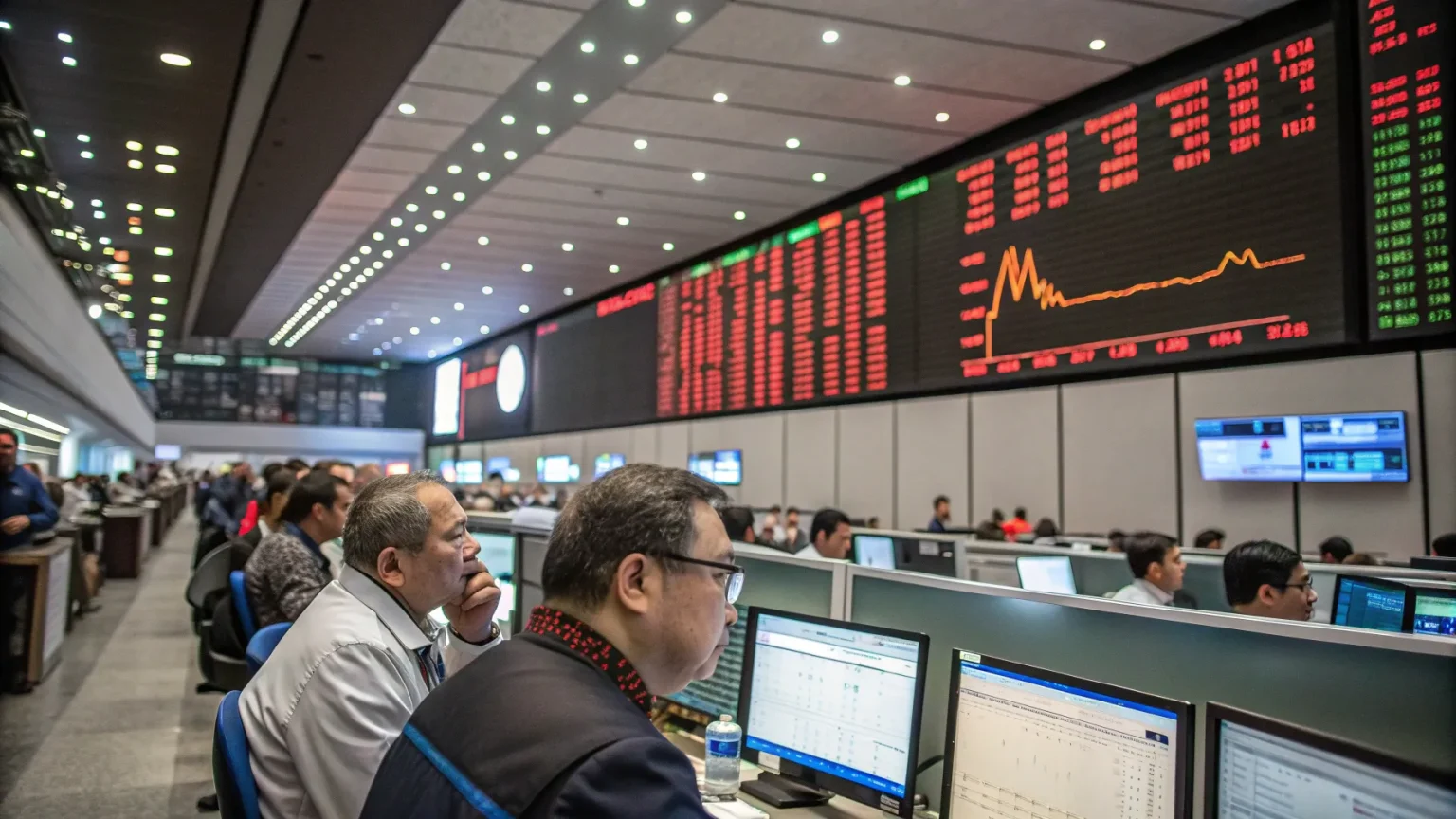
Talk of a stock market bubble tends to surface whenever prices climb fast and markets whipsaw on the worry that valuations have run too far. After years of helping independent professionals keep their heads through these cycles, I have found that bubble fears are less a signal to act than a reminder to check your plan. A stock market bubble is real risk worth respecting, but reacting to every scary headline usually does more damage than the bubble itself.
For self-employed people, whose income already rises and falls, the instinct to protect savings during bubble talk is strong. The goal of this guide is to help you respond to a possible stock market bubble with a clear head and a sound process rather than fear.
What a stock market bubble actually is
A stock market bubble forms when prices rise far above what the underlying earnings and fundamentals justify, driven more by excitement than by value. Bubbles inflate on optimism and cheap money, and they deflate when sentiment shifts. The hard truth is that bubbles are easy to name in hindsight and very difficult to time in the moment.
That difficulty is why chasing or fleeing a suspected bubble rarely works. Markets can stay elevated far longer than skeptics expect, and they can also fall before the warnings feel urgent. Recognizing a stock market bubble is useful for managing risk, not for predicting the exact top.
The signs that fuel bubble fears
Certain conditions tend to spark talk of a stock market bubble. Knowing them helps you interpret the headlines calmly.
- Stretched valuations: Prices high relative to earnings across many companies, not just a few.
- Narrow leadership: A handful of names driving most of the gains while the broader market lags.
- Euphoric sentiment: Widespread confidence that prices can only rise and that risk no longer matters.
- Easy speculation: Heavy borrowing to buy assets and a rush into the latest hot trade.
When several of these appear together, analysts start using the word bubble and markets grow jumpy. None of them tells you when a correction will come, but together they suggest a market with less margin for error, which is a reason to make sure your own plan is sound.
Why the self-employed feel bubble fears more
An employee with steady pay can ride out a market drop without much thought. As a self-employed person, a downturn can land in the same month as a slow client period, which doubles the stress. That overlap is what makes a stock market bubble feel especially threatening when you work for yourself.
The defense is structural rather than predictive. The financial clarity that comes from strong self-employed bookkeeping tells you exactly how much cash you hold and how long it would last. When you know that, a market wobble during bubble talk becomes far less frightening, because you are not forced to sell into a decline.
How to respond to a possible stock market bubble
The strongest responses are calm and structural. Rather than trying to time the top, focus on what you control.
Keep contributing on your normal schedule so you buy across high and low prices. Make sure your mix of assets still matches your timeline and your comfort with risk, and rebalance if a strong run has pushed your stock allocation above target. Hold an emergency cash reserve so you never have to sell investments to cover a slow business month. The U.S. Securities and Exchange Commission investor site reinforces these basics: diversify, keep a long horizon, and avoid market timing.
Do not let fear drive big moves
The biggest danger during a stock market bubble is not the bubble itself. It is the panic decision it provokes. Selling everything because a headline warns of a crash often means locking in losses and missing the recovery. The investors who do best treat bubble fears as a prompt to review, not to overhaul.
Rate expectations often sit behind these swings, since cheap money inflates valuations and tighter policy can deflate them. Watching the Federal Reserve rate path gives useful context, but it is still context, not a trading signal. Use it to understand the environment, not to gamble on the timing.
Build resilience instead of predictions
The best protection against any stock market bubble is a resilient financial life. Diversify your investments, keep a healthy cash cushion, and grow income you can control so a market drop never becomes a personal crisis. If you want to strengthen that income base, our self-employment ideas guide covers ways to diversify what you earn.
Keeping your essential tax forms and records in order completes that resilience, since organized finances let you act from strength. Respect the risk of a stock market bubble, prepare for it structurally, and let discipline rather than fear guide what you do.
Frequently asked questions about a stock market bubble
What is a stock market bubble?
A stock market bubble forms when prices rise far above what earnings and fundamentals justify, driven by optimism rather than value. Bubbles inflate on enthusiasm and cheap money, then deflate when sentiment shifts, often suddenly.
Can you predict when a bubble will burst?
Not reliably. Bubbles are easy to identify in hindsight but very hard to time. Markets can stay elevated far longer than skeptics expect and can also fall before warnings feel urgent, which is why timing the top rarely works.
What are the warning signs of a bubble?
Common signs include stretched valuations across many companies, gains driven by only a few names, euphoric sentiment that risk no longer matters, and heavy borrowing to speculate. Together they suggest a market with little margin for error.
Should I sell my investments when I hear bubble warnings?
Usually not. Selling everything on a scary headline often locks in losses and misses the recovery. A better response is to review your allocation, rebalance if needed, and keep contributing, while holding enough cash to avoid forced selling.
Why do bubble fears hit the self-employed harder?
Because a market downturn can coincide with a slow client period, doubling the financial stress. Knowing your cash position through good bookkeeping and holding an emergency reserve keeps a market wobble from forcing you to sell at a low point.
How should I prepare for a possible bubble?
Focus on resilience rather than prediction. Diversify your portfolio, keep a healthy cash cushion, contribute on a steady schedule, and grow income you control. These steps make any single market move far less threatening to your finances.


