

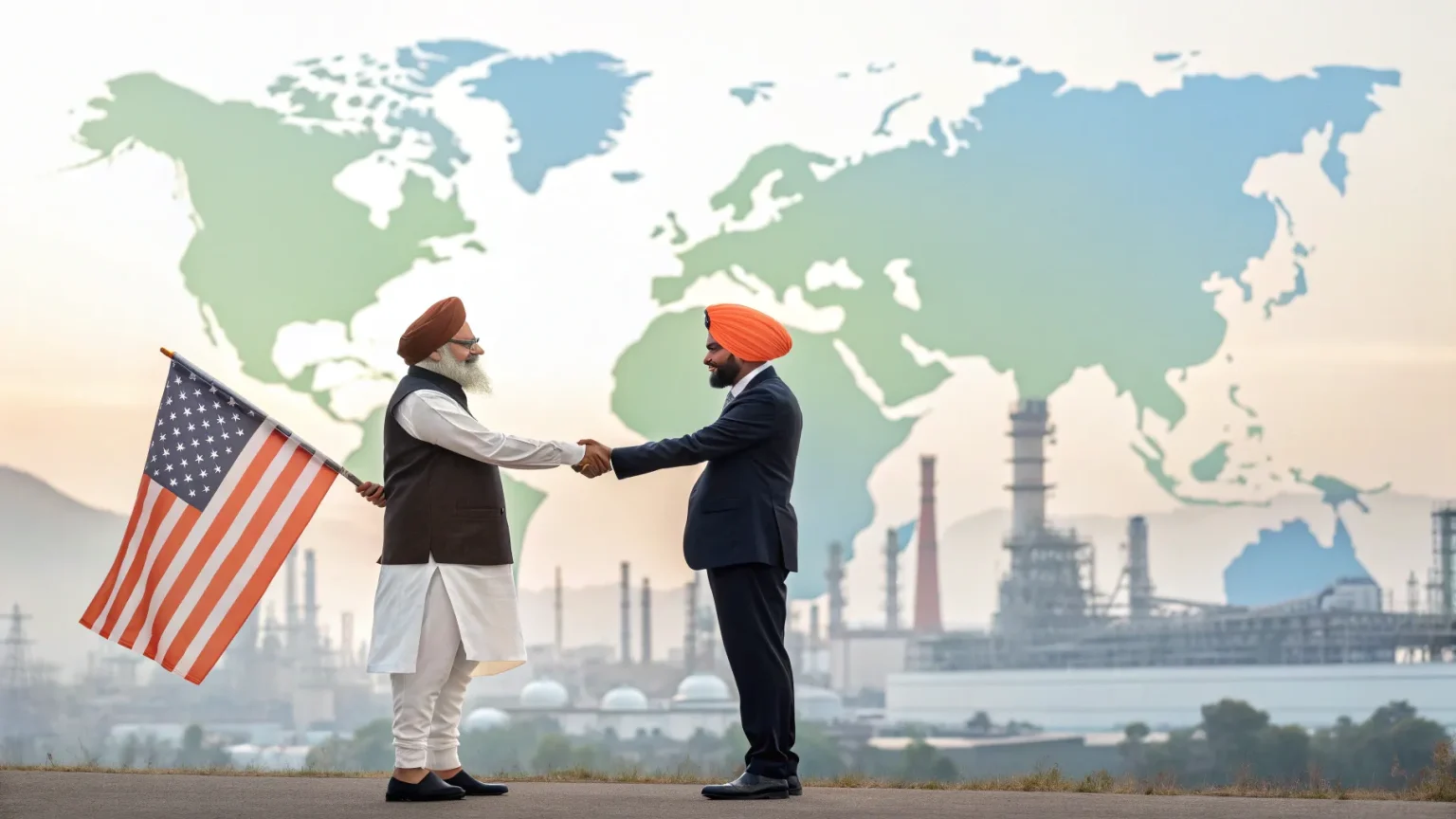
India and the United States are moving toward a trade agreement that could cut tariffs and reshape energy ties. Negotiators are working on a package that would drop duties on several Indian exports and adjust energy flows between the two countries. The talks come amid pressure over India’s purchases of Russian oil and ongoing debates about farm imports. The effort signals a push to stabilize a major economic relationship with global effects.
Background: Strained Ties, Room for a Reset
Trade relations have been uneven since 2018, when Washington imposed steel and aluminum tariffs under national security rules. India responded with duties on U.S. goods and later lost its duty-free access under the Generalized System of Preferences in 2019. Both sides have since sought targeted fixes rather than a sweeping free trade deal.
Energy and agriculture remain the most sensitive areas. India’s oil imports from Russia surged after 2022 as Moscow rerouted crude to Asia at discounts. The U.S. has pressed partners to reduce those flows, while also seeking openings for American farm exports. India, for its part, wants lower tariffs on goods like textiles, leather, and some engineered products to boost shipments to the U.S. market.
Tariffs and Market Access
A central piece of the talks is tariff relief for Indian exporters. One proposal under discussion would bring some duties down sharply.
“Tariffs on Indian exports could drop from 50% to 15-16%.”
Any cut of that scale would be phased and product-specific, according to people tracking the talks. Lower tariffs could shift orders back to Indian factories that lost ground due to earlier trade frictions. It could also help U.S. buyers facing higher input costs.
Market access is a two-way street. The U.S. side is pushing for expanded sales of farm goods into India, where import rules and biotech approvals often slow shipments. Negotiators are weighing a limited opening for feed grains.
“Both nations are also discussing increased imports of American corn and soymeal into India.”
Such imports could ease feed costs for India’s poultry and dairy sectors during price spikes or poor harvests. India has occasionally allowed duty concessions or quotas for these products in the past, often tied to supply shortages.
Energy and the Russia Factor
The talks link trade concessions with energy cooperation. Washington is seeking a dial-down in India’s purchases of Russian crude.
“This deal may involve India gradually reducing Russian oil imports.”
In exchange, the U.S. is expected to offer leeway in energy trade, including potential support for long-term LNG contracts or eased pathways for crude and refined product flows.
“In return, the US is expected to offer concessions on energy trade.”
For New Delhi, any change will depend on price and reliability. Officials have said India will buy from wherever it finds the best terms. A staged reduction, tied to alternative supplies, is more likely than a swift cut.
Stakeholders and Economic Impact
Lower tariffs could boost Indian small and medium manufacturers that rely on U.S. orders. Apparel, footwear, and light engineering firms could benefit first if product lists align. U.S. importers could see lower landed costs and faster turnaround if supply chains rebalance.
American farmers and grain traders are watching the feed market. Expanded access for corn and soymeal would support demand during a period of thin margins and shifting export patterns. Indian poultry producers could gain from cheaper feed when domestic prices rise.
Energy companies on both sides may find new contract opportunities. LNG developers in the U.S. and Indian utilities could lock in multi-year supply, improving planning for power and industrial users.
Key Figures Under Discussion
- Tariff cut on select Indian exports: from about 50% to roughly 15–16%.
- Staged reduction in India’s Russian oil purchases.
- Potential increases in U.S. corn and soymeal shipments to India.
What to Watch Next
Details will matter: product lists, timelines, and enforcement. Any tariff cut will likely be phased and contingent on parallel steps in energy and agriculture. Lawmakers and industry groups in both countries will press for carve-outs or safeguards.
If the package lands, it would mark a practical reset built around trade-offs, not a full-scale trade pact. Success could restore confidence after years of friction and set up follow-on talks on digital trade, medical devices, and standards.
The agreement’s durability will rest on oil markets and food prices. If energy costs spike or harvests fall, both sides may test the limits of what they signed. For now, negotiators see a narrow window to trade tariff relief for energy cooperation and farm access, with gains for factories, farmers, and consumers on both shores.


