

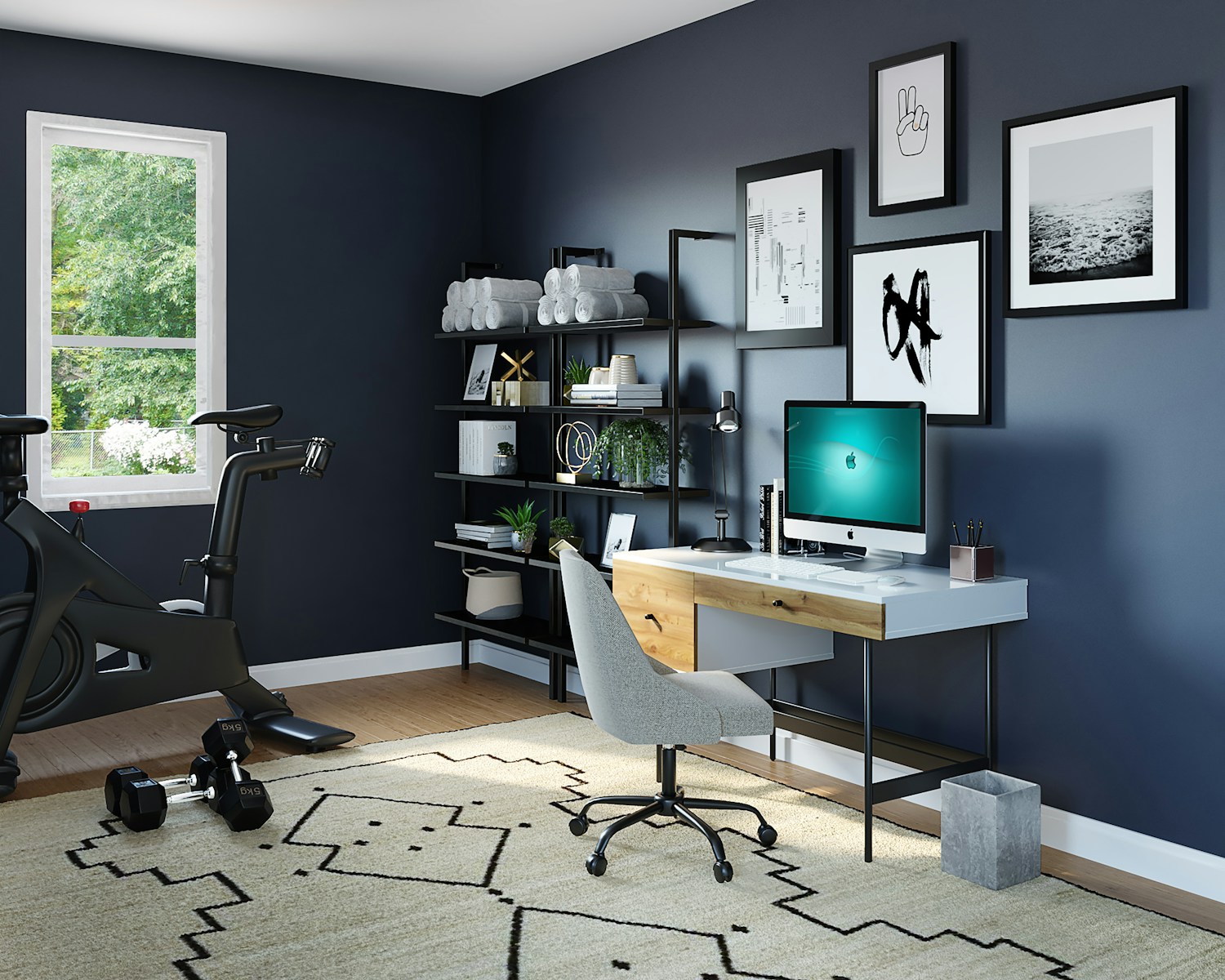
You have been working from your spare bedroom for two years. Tax season arrives, and your accountant asks whether you claimed the home office deduction. You hesitate because you have heard it triggers audits, or maybe you just were not sure if your setup qualifies. So you skip it and end up paying more than you need to. That hesitation cost the average qualifying self-employed professional between $1,500 and $3,000 in missed deductions last year alone.
We reviewed IRS Publication 587 (Business Use of Your Home), cross-referenced guidance from the National Association of Tax Professionals, and consulted published accounts from CPAs who specialize in self-employed tax preparation. Sources include the IRS simplified method worksheet, the Tax Foundation’s analysis of home office audit rates, and practitioner interviews published in the Journal of Accountancy.
In this article, we will explain who qualifies for the home office deduction, walk through both calculation methods, and help you decide which approach saves you the most money with the least paperwork.
What Is the Home Office Deduction?
The home office deduction allows self-employed professionals to deduct certain expenses related to the business use of their home. If you use part of your home regularly and exclusively for business, the IRS lets you write off a proportional share of your rent or mortgage interest, utilities, insurance, repairs, and depreciation. For many freelancers and independent contractors, this is one of the largest deductions available outside of self-employed health insurance premiums.
The deduction is available to sole proprietors, independent contractors, and single-member LLC owners who file a Schedule C with their independent contractor taxes. It is not available to W-2 employees who work from home, even if their employer requires remote work. This distinction trips up many people who transition from employment to self-employment and assume the rules are the same.
Who Qualifies for the Home Office Deduction?
The IRS requires two conditions to be met. First, the space must be used regularly for business. Occasional use does not qualify. Second, the space must be used exclusively for business. That means if your “office” doubles as a guest bedroom or your kids’ play area, it technically does not meet the IRS standard.
The “Regular and Exclusive Use” Test
Regular use means you work in the space consistently as part of your normal business routine. You do not need to work there every day, but the space should be a routine part of your business operations. Exclusive use means the area is dedicated to work. A desk in the corner of your living room can qualify if that corner is used only for business activities. However, a dining room table where you also eat meals does not qualify.
CPA and tax advisor Sarah Bronstein explained in her 2024 column for the Journal of Accountancy that the exclusive use test is the most commonly misunderstood requirement. Roughly 40% of her self-employed clients initially believe any space where they work qualifies. In reality, the IRS looks for a defined area with a clear business purpose. A separate room is the easiest to defend, but a partitioned section of a larger room works too, as long as it serves no personal function.
This worked for Sarah’s clients because most were consultants and writers with straightforward home setups. For self-employed professionals who work in shared spaces or small apartments, the exclusive use test requires more deliberate planning. The core principle applies across contexts: designate a specific area, use it only for work, and document that arrangement.
The “Principal Place of Business” Test
Your home office must also be your principal place of business, or a place where you regularly meet clients or customers. If you rent a separate office and only occasionally work from home, you likely do not qualify. In contrast, if your home is where you do most of your work, even if you occasionally meet clients at coffee shops or coworking spaces, you meet this requirement. Most freelancers and solopreneurs who work primarily from home pass this test without difficulty.
How to Calculate the Home Office Deduction: Two Methods
The IRS offers two methods for calculating your home office deduction. Each has distinct advantages depending on your situation, your recordkeeping habits, and the size of your workspace.
The Simplified Method
The simplified method lets you deduct $5 per square foot of your home office, up to a maximum of 300 square feet. That caps the deduction at $1,500 per year. You do not need to track individual expenses, calculate percentages, or keep utility bills. You simply measure your workspace and multiply.
For freelancers with small dedicated spaces and limited recordkeeping, this method saves significant time. Tax preparer and enrolled agent James Whitfield noted in his 2023 blog series on freelance taxes that approximately 60% of his sole proprietor clients choose the simplified method because the time savings outweigh the slightly lower deduction. The average difference between the two methods for his clients was about $400 per year.
This worked for James’s clients because most had modest home offices under 200 square feet. For self-employed professionals with larger dedicated spaces or high housing costs in expensive metro areas, the regular method almost always produces a bigger deduction. The core principle is straightforward: if your time is worth more than the extra deduction, the simplified method is the right choice.
The Regular Method
The regular method requires you to calculate the actual expenses of maintaining your home and then apply your business-use percentage to them. That percentage is determined by dividing the square footage of your office by the total square footage of your home. For example, if your office is 200 square feet and your home is 1,600 square feet, your business-use percentage is 12.5%.
You then apply that percentage to your deductible expenses, which include mortgage interest or rent, property taxes, homeowner’s or renter’s insurance, utilities (electricity, gas, water, internet), repairs and maintenance to the home, and depreciation of the home (for homeowners). If your total housing expenses are $24,000 per year and your business-use percentage is 12.5%, your home office deduction is $3,000. That is double the maximum deduction under the simplified method.
Which Method Should You Choose?
Run the numbers both ways before committing. The simplified method is faster and requires less documentation, but it caps at $1,500. The regular method takes more work but often yields a significantly larger deduction, especially if you live in a high-cost area or have a larger office space. You can switch between methods from year to year, so there is no permanent commitment.
Consider this comparison: a freelance consultant in Austin, Texas, with a 150-square-foot office in a $2,400-per-month apartment would get $750 from the simplified method (150 x $5) versus approximately $2,160 from the regular method (150/1,200 = 12.5% of $17,280 in annual expenses, assuming rent plus utilities). That is a $1,410 difference, which translates to roughly $350 to $500 in actual tax savings depending on the tax bracket.
Common Mistakes That Reduce or Eliminate Your Deduction
The biggest mistake is not claiming the deduction at all. The IRS audit rate for Schedule C filers is approximately 1.4%, and claiming a home office deduction does not meaningfully increase that rate. The audit myth has persisted for decades, but current IRS data does not support it. Skipping the deduction out of fear costs you real money every year.
Another frequent error is failing the exclusive use test by using the office space for personal activities. If you claim a bedroom as your home office but also sleep in it, the deduction is invalid. Similarly, claiming too high a percentage of your home as business space raises questions. Most home offices account for 10% to 20% of the total square footage. A claim of 50% or more without a very large dedicated space will likely draw scrutiny.
Recordkeeping Requirements
If you use the regular method, keep receipts and records for all housing expenses you plan to deduct. Maintain a simple log or spreadsheet as part of your bookkeeping for self-employed practice, showing which expenses you included and how you calculated your business-use percentage. Take a photo of your office setup at the beginning of each tax year. This documentation is not required to file, but it protects you if the IRS ever asks questions.
For the simplified method, your only documentation need is the measurement of your office space. Keep a record of the square footage and a brief note confirming the space is used exclusively for business. A measuring tape and a two-sentence note are sufficient.
Do This Week
- Measure your home office square footage and write it down
- Confirm your workspace meets the exclusive use test (no personal activities in the space)
- Gather your last 12 months of rent or mortgage statements
- Pull your utility bills (electric, gas, water, and internet) for the same period
- Calculate your business-use percentage (office square footage divided by total home square footage)
- Run the numbers using both the simplified and regular methods to see which is higher
- Take a photo of your home office setup for your records
- Create a folder (digital or physical) labeled “Home Office Deduction” for this year’s receipts
- Set a calendar reminder to update your expense tracking at the end of each quarter
- Review IRS Publication 587 for any edge cases that apply to your situation
Final Thoughts
The home office deduction is one of the most straightforward tax benefits available to self-employed professionals, yet one of the most frequently skipped. Whether you use the simplified method for a quick $1,500 or the regular method for a potentially larger write-off, the key is to actually claim it. Measure your space, confirm it meets the exclusive use test, and run both calculations before you file. The 30 minutes you spend on this could save you hundreds or thousands of dollars every year.
Photo by Spacejoy; Unsplash


