

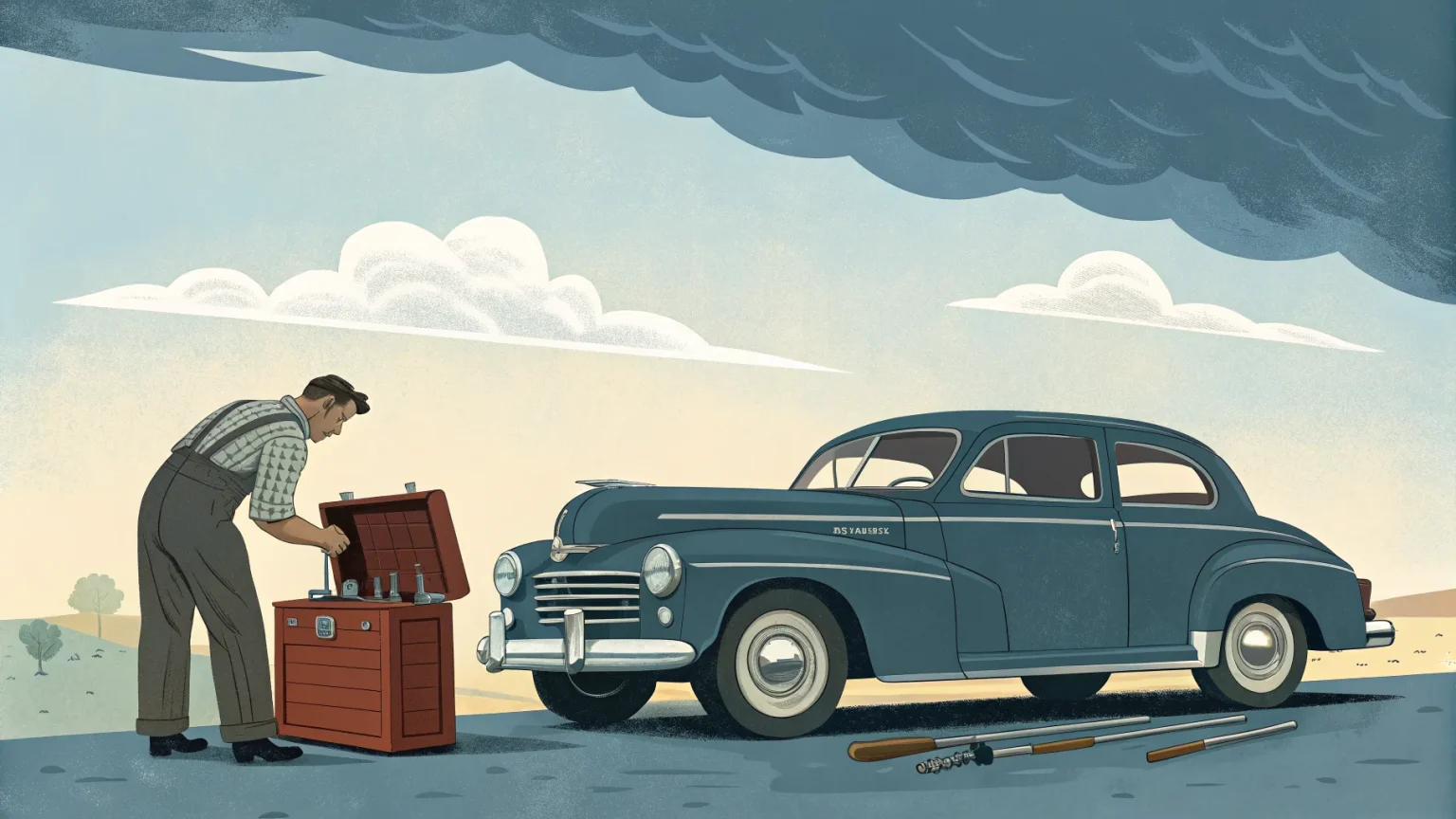
Friday always nudges me to step back and say thanks. Today, gratitude has a face and a story. It looks like a tool chest, a hacked Chrysler, and a man who refused to be labeled.
Here’s my stance: we measure success the wrong way. Titles and trophies are easy to count. Grit, humor, and love for the underdog are harder to tally, but they matter more. The person who taught me that was my father.
I’ve led turnarounds, run companies, coached CEOs, and co-host a podcast. That work sharpened my view. But the core lesson came from a man who dragged a leg through life and still beat most of us to the finish line.
The Man Who Refused the Box
“He was an entrepreneur and an inventor.”
He didn’t wait for perfect tools. He made them. He turned a Chrysler land yacht into a motor home using what he had at hand. That wasn’t about a vehicle. It was a worldview: problems are puzzles, not stop signs.
“He started the first GED program for over the road truckers without a high school diploma.”
He spotted a quiet group that few noticed. Long-haul drivers with grit, brains, and no diploma. He created a path for them. Education for people who were working the hardest hours. That’s leadership—seeing someone nobody else sees and betting on them.
“When he was 17, he lost a leg to polio.”
The loss could have broken him. It did not. From then on, he pulled a leg through every day. He refused pity. He rejected the script that said he should sit it out.
“While he physically limped, he ran circles around many able-bodied people.”
That line is the truth. He built, he taught, he laughed. He didn’t just get by. He set the pace.
What His Life Proves
Strength is not the absence of limits. Strength is what you do in spite of them. I’ve watched top performers in boardrooms and shop floors. The ones who rise are not the ones with the smoothest path. They are the ones who choose grit over excuses.
Real educators fight for the overlooked. My father didn’t wait for a policy memo. He saw drivers stuck on a rung and gave them a ladder. That’s what leadership looks like in practice. See the person. See the gap. Build the bridge.
Gratitude is not soft; it’s fuel. People say gratitude is nice but not practical. Wrong. Gratitude sharpens focus. It clarifies what matters. It turns hardship into training. It keeps you moving when ego would have you quit.
Lessons I Keep Close
These are rules that guide my work with CEOs and teams, shaped by the man I admired most.
- Constraints are signals, not dead ends. Start with what you have and move.
- Champion the underdog. Talent hides in plain sight.
- Laugh. Humor reduces fear and builds courage.
- Build something useful today. Momentum beats perfection.
- Let service set your standard. Your wins should lift others.
Put simply, do what helps people move forward. Then keep doing it.
The Counterargument—and Why It Fails
Some argue that grit is overhyped. They say access, systems, and luck decide outcomes. Those matter. I’ve seen it. But here’s the catch: without grit, access gets wasted. Without character, luck slips through your hands. My father proved it. So have thousands of leaders I’ve coached who turned setbacks into levers.
What You Can Do Now
Don’t wait for a perfect plan. Pick one act today that makes life better for someone who’s been ignored. A driver. A cashier. A junior teammate. Give them a path, not a pep talk. And if you carry a limp of your own, visible or not, stop hiding it. Use it. It might be the very thing that makes your work matter.
“I loved his can do attitude, his infectious sense of humor, and his zest for life.”
I carry that with me. It guides how I lead, coach, and show up. It’s also why I’m grateful right now.
Final Thought
Success is grit plus gratitude pointed at someone else’s good. Choose that math. Then act on it. Build the ladder you once needed. Or the one someone else needs today.
Who are you grateful for—and what will you build in their honor?


