

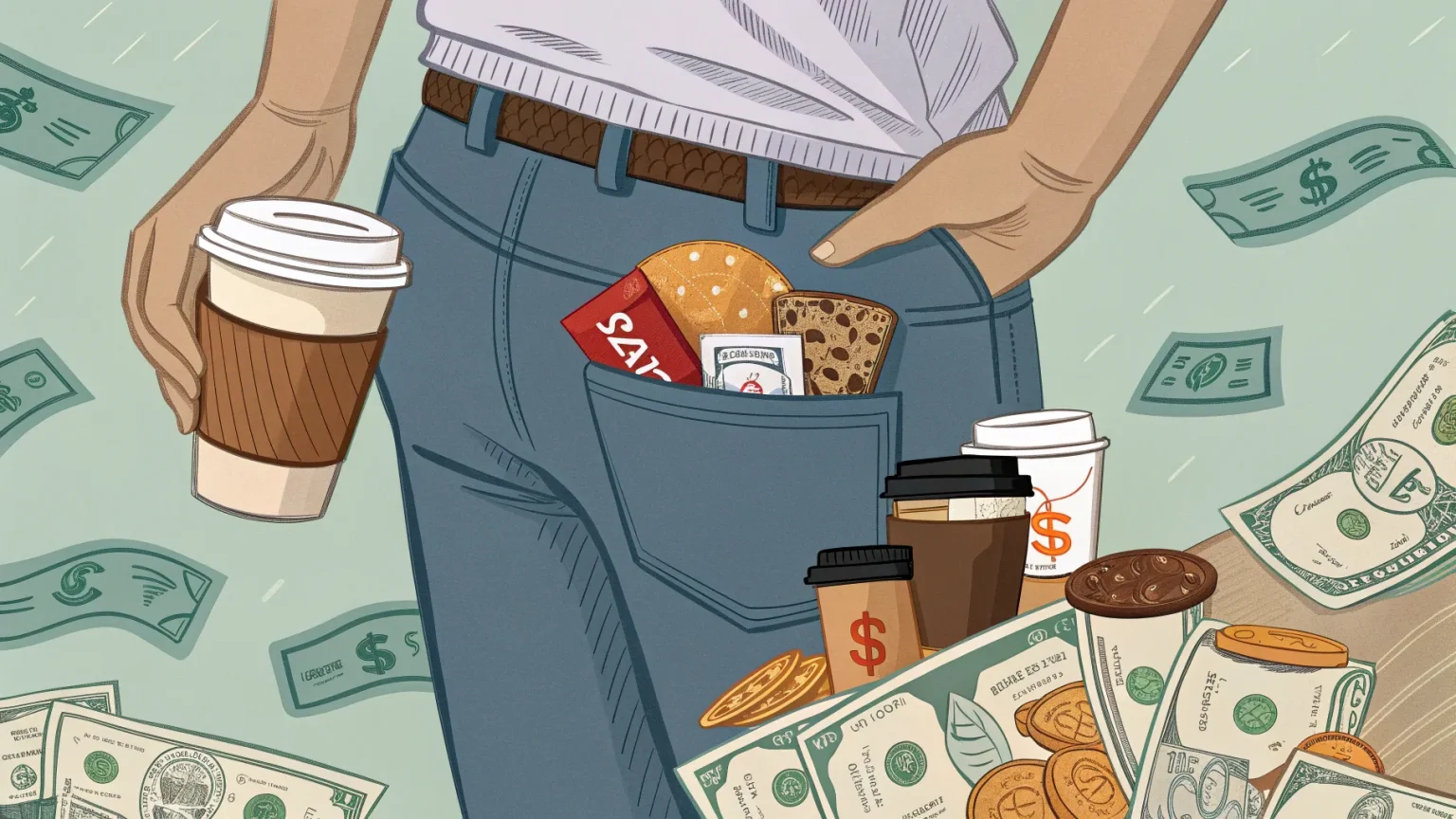
Bad money habits rarely announce themselves. They work quietly, a little at a time, until you wonder why a profitable year left you with nothing in the bank. After years of helping self-employed people untangle their finances, I have learned that the damage almost never comes from one dramatic mistake. It comes from small, repeated habits that drain money in the background. The good news is that the same habits that wreck your finances can be reversed once you can see them clearly.
For independent workers, the stakes are higher than for employees. No payroll department withholds your taxes, funds your benefits, or smooths your income. That means your bad money habits hit harder and compound faster, which is exactly why catching them early is so valuable.
Why small habits do the most damage
A single large expense is easy to notice and easy to question. A small leak repeated every week hides in plain sight. An unused subscription, a routine of paying yourself whatever is left, or a habit of ignoring your numbers each feels minor in the moment. Over a year, they quietly add up to real money and real stress.
The reason bad money habits are so destructive is that they run on autopilot. You do not decide to waste money. You simply repeat a pattern you set long ago without revisiting it. Seeing the pattern is most of the cure, because once a habit becomes visible, you can choose to change it.
The most common bad money habits I see
Across many self-employed clients, the same culprits show up again and again. Watch for these in your own finances.
- Not separating business and personal money: Mixed accounts hide how your business is really doing and make tax time a mess.
- Spending before setting aside taxes: Treating gross income as spendable leads to a painful bill you cannot cover.
- Ignoring your numbers: Avoiding your books means problems grow unseen until they are urgent.
- Lifestyle creep: Letting spending rise with every good month so nothing is left for the slow ones.
- Subscription drift: Paying for tools and services you no longer use because you never review them.
- Relying on credit for normal gaps: Using debt to cover routine slow periods instead of a savings buffer.
None of these feels catastrophic on any given day, which is precisely why they persist. The fix is to bring each one into the light and replace it with a deliberate habit.
How to spot your own bad money habits
You cannot fix what you cannot see, so the first step is visibility. Review your last three months of spending and look for patterns rather than one off purchases. The recurring leaks are where the real money goes. Strong self-employed bookkeeping turns this from a painful audit into a quick monthly check, because the patterns are right there in your records.
Free tools can help too. The Consumer Financial Protection Bureau offers budgeting worksheets that make spending patterns easy to see. Once the leaks are visible, prioritizing which to fix first becomes straightforward.
Replace bad habits with good systems
The most reliable way to break a bad money habit is to replace it with an automatic good one. Willpower fades, but systems run on their own. Set up automatic transfers so a percentage of every payment moves to a tax account and a savings buffer before you can spend it. Separate your business and personal accounts so your real position is always clear.
The flip side of bad money habits is a set of strong ones that protect you. Our guide to money habits for freelancers lays out the routines that steady irregular income, and adopting even a few of them directly counteracts the leaks above. Replace each bad habit with its positive opposite, and your finances stabilize fast.
Protect the income side too
Fixing bad money habits is only half the equation. The other half is building income resilient enough that small mistakes do not sink you. When all your income depends on one or two clients, any wobble feels like a crisis, which tempts you back into bad habits like leaning on credit.
Diversifying what you earn cushions those wobbles. Our self-employment ideas guide covers ways to add income streams so a slow period in one area does not derail your whole budget. The Small Business Administration also offers free resources on managing and growing business finances on a stable footing.
Small changes, compounding results
Just as bad money habits compound quietly against you, good ones compound quietly in your favor. You do not need a financial overhaul. You need to spot the handful of leaks draining you, replace each with an automatic system, and review your numbers on a regular schedule. Done consistently, those small changes rebuild your finances the same way the small leaks once eroded them.
Start with one habit this week. Separate your accounts, automate a tax transfer, or cancel the subscriptions you forgot you had. Then add the next. The quiet damage of bad money habits is reversible, and the turnaround often happens faster than the slide that caused it.
Frequently asked questions about bad money habits
What are the most common bad money habits for the self-employed?
The most common are mixing business and personal money, spending before setting aside taxes, ignoring your books, letting spending rise with income, paying for unused subscriptions, and relying on credit to cover routine slow periods.
Why are small money habits so damaging?
Small habits run on autopilot and hide in plain sight, so they repeat without scrutiny. A minor weekly leak feels harmless in the moment but compounds into real money over a year, which is why small habits often cause more damage than one big mistake.
How do I identify my own bad money habits?
Review your last three months of spending and look for recurring patterns rather than one off purchases. The repeated leaks are where the money goes. Good bookkeeping and free budgeting tools make these patterns quick to spot.
What is the best way to break a bad money habit?
Replace it with an automatic good habit. Set up automatic transfers for taxes and savings, separate your business and personal accounts, and schedule regular reviews. Systems work even when willpower fades, which makes the change stick.
How is fixing money habits different for self-employed people?
Self-employed people have no payroll department to withhold taxes or smooth income, so bad habits hit harder and faster. That makes separating accounts, setting aside taxes, and keeping a savings buffer especially important for staying financially stable.
How quickly can I improve my finances by fixing these habits?
Often faster than you expect. Good habits compound in your favor just as bad ones compounded against you. Fixing one or two leaks at a time and automating the replacements can stabilize your finances within a few months.


