

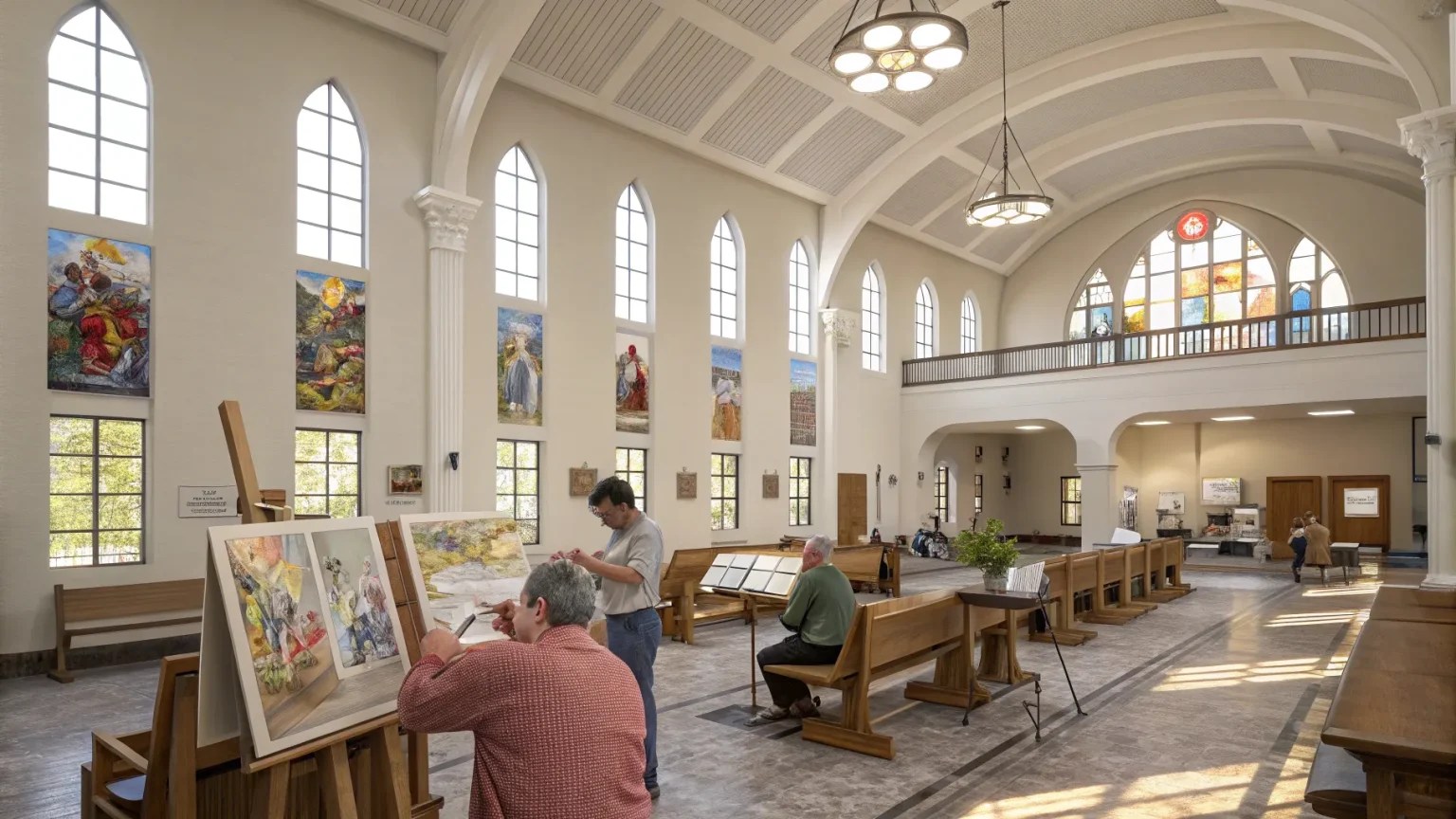
In Nashville, Marine veteran Richard Casper is preparing to turn a shuttered church into a 24-hour arts center designed for veterans seeking community and healing. The Purple Heart recipient walked through the building this week, surveying boarded windows and faded pews, as plans moved ahead for a space that blends creativity, peer support, and round-the-clock access. The project aims to offer veterans a safe place to write, paint, record music, and meet others with similar experiences.
A Vision Shaped by Service and Recovery
Casper’s path to this idea began with his own service and recovery. He served in the U.S. Marine Corps and was wounded in Iraq. He has spoken publicly about how music, painting, and storytelling helped him rebuild a sense of purpose after combat.
“He plans to transform [the church] into a new 24-hour arts center for veterans,” an observer noted, as Casper touched a boarded window and shook his head at the years of neglect.
He says the building will feature flexible workspaces and areas for small gatherings. The center is intended to be open at any hour, acknowledging that sleepless nights and restless weekends are common for many veterans. Casper wants a place where showing up at 2 a.m. is not unusual, but welcome.
Why Creative Spaces Matter for Veterans
Mental health challenges remain a pressing issue for former service members. The Department of Veterans Affairs reports that an estimated 11% to 20% of veterans from recent conflicts experience post-traumatic stress in a given year. VA data also show that about 17 veterans die by suicide each day.
Clinicians and peer leaders often recommend adding creative practices to traditional care. Art and music can reduce anxiety, support memory processing, and encourage social connection. Research funded through the National Endowment for the Arts has linked community arts programs to improved mood and reduced isolation for veterans.
- Creative activities can lower stress and help process traumatic memories.
- Group workshops build trust and reduce isolation.
- Flexible, drop-in models support veterans with irregular sleep and work schedules.
Repurposing Sacred Space for Community Use
Empty churches in U.S. cities are increasingly being repurposed for public uses. Community groups and nonprofits have turned sanctuaries into food hubs, housing, and arts venues. Casper’s plan follows that trend, keeping the building’s communal role while updating its purpose for a different kind of congregation.
Neighbors who support reuse projects often point to shared benefits. Buildings return to active use, foot traffic increases, and programming draws new partnerships. The Nashville site could host writing circles, music sessions, and small exhibits featuring veterans’ work, bringing visitors to a part of town that saw disinvestment.
Funding, Partnerships, and What Comes Next
Casper has described an approach that blends donations, grants, and volunteer support. Veteran-led nonprofits and local arts groups are likely partners. The model mirrors successful projects in other cities, where small recording studios and art classrooms share space with counseling rooms and coffee areas.
Sustaining a 24-hour site carries costs. Organizers must budget for staffing, security, utilities, and maintenance. Yet supporters argue that keeping doors open at any hour reflects how stress and insomnia work. The promise of a light on and a willing listener can make the difference in a hard night.
“I wanted a place where veterans could show up when they needed it most,” Casper has said in past talks about his work, emphasizing access over appointments.
Advocates also point to a pipeline effect. Veterans who start with a guitar lesson or sketch class may later connect to jobs, benefits, or therapy. A welcoming setting can be the first step to long-term stability.
Measuring Impact and Building Trust
Casper’s team plans to track attendance, peer referrals, and program outcomes. Arts instructors and clinicians may collaborate on surveys to measure changes in mood and social connection. The goal is clear, practical outcomes that veterans can feel.
Trust will be built slowly, supporters say, through consistent hours, veteran staff, and respect for privacy. Many veterans prefer peer-led spaces where they can speak openly without judgment.
As renovations progress, the Nashville church is set to become a lifeline for veterans who need a place to create, reflect, or simply sit with others who understand. The effort reflects a broader push to pair mental health resources with practical, welcoming spaces. If the center achieves steady participation and sustained funding, it could serve as a model for other cities. Observers will watch for early indicators: veteran turnout, nighttime use, and collaborations that extend help beyond the front door.


