

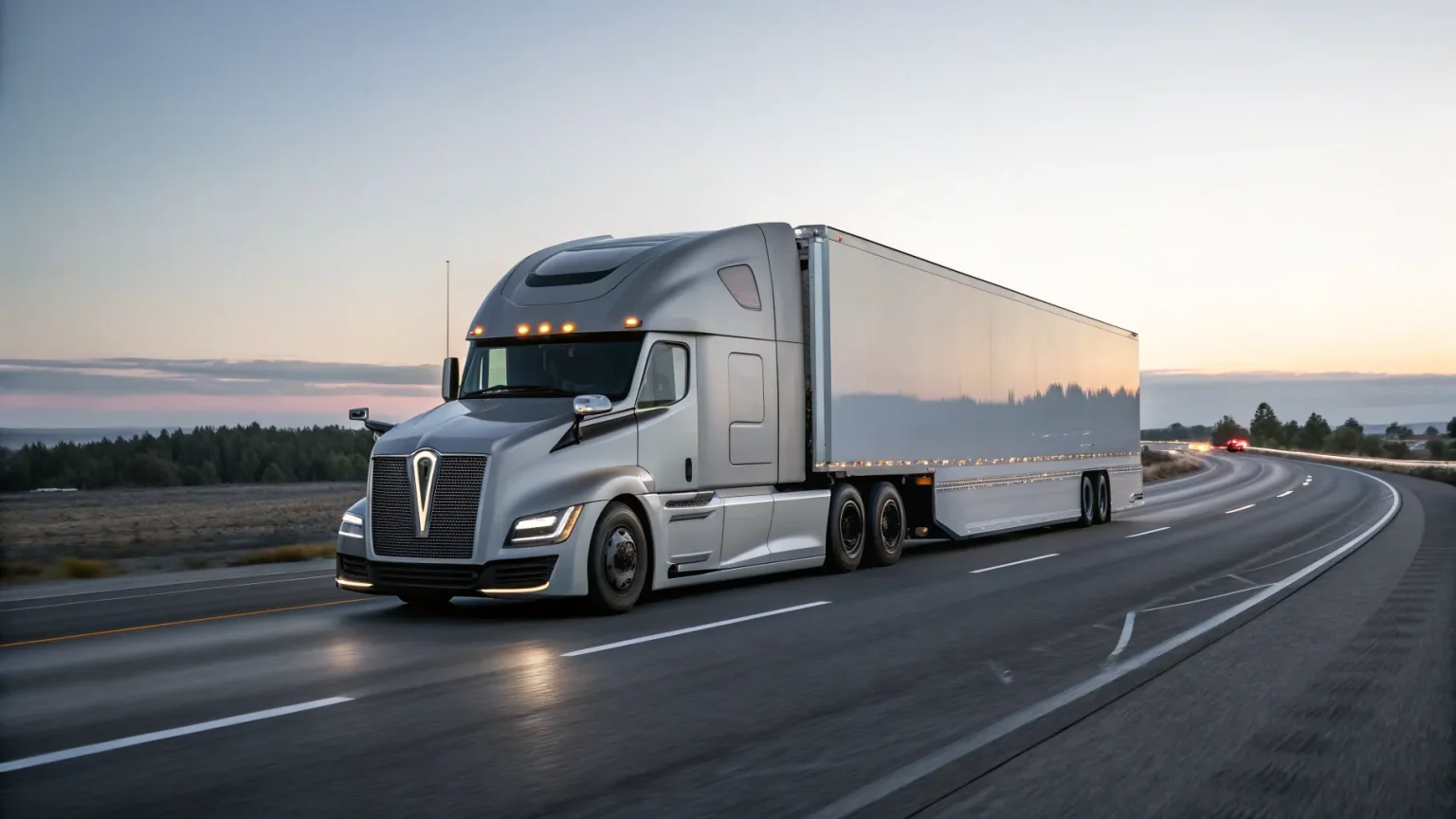
Kodiak AI is pushing ahead with driverless freight. In a televised interview this week, founder and CEO Don Burnette said the company’s tractor-trailers are designed to operate without a human in the cab. The comments came as the trucking industry looks for safer operations and lower costs on long-haul routes in states that allow autonomous driving.
Burnette described the company’s core pitch in plain terms. He said Kodiak’s trucks are intended to be fully capable on highways, with remote oversight and a focus on safety. He framed the approach as a practical way to move freight at scale.
“Completely autonomous”
The claim underscores a race among freight technology firms to deploy commercial driverless services. It also raises questions about regulation, jobs, and the pace of adoption.
Why Autonomy Is Back in Focus
Freight networks in the South and Southwest have become test beds for automation. States like Texas permit driverless trucks, and the long stretches of highway are well suited for predictable routes. Companies run freight between hubs, often handing off trailers near cities where human drivers handle the final miles.
A shortage of long-haul drivers and tight delivery windows make automation attractive to carriers. Trade groups have warned for years about staffing gaps and high turnover in long-distance routes. Fuel savings from steadier driving and fewer empty miles could also help large fleets.
How Kodiak Says It Works
Burnette signaled that Kodiak’s system aims to handle the full highway segment, including on-ramps and off-ramps. He emphasized redundancy in braking, steering, and compute, along with remote monitoring. He pointed to safety processes that prioritize cautious decisions when the system faces uncertainty.
Key focus areas highlighted in the interview included:
- Highway driving under defined operating rules.
- Redundant hardware and software for safety.
- Remote oversight for dispatch and incident response.
- A hub-to-hub freight model to limit urban complexity.
Burnette’s remarks suggest that Kodiak is preparing operations for routes where the technology can manage weather, traffic, and road work using a set of clear protocols.
Industry Setbacks Shape Expectations
The broader sector has seen uneven progress. Some firms scaled back freight pilots or shifted priorities in the past two years. Others pursued acquisitions or refocused on software and testing. That history tempers bold claims and puts more pressure on safety performance and transparent reporting.
Burnette’s comments reflect a tighter focus on freight instead of passenger rides. Freight offers simpler operating domains and fewer unpredictable stops. It is also less sensitive to rider comfort. That gives autonomy developers a clearer target.
Safety, Oversight, and Public Trust
Safety remains the gatekeeper for wide deployment. Burnette said Kodiak’s trucks are designed to default to conservative actions. He also stressed that remote staff support the trucks but do not joystick them. That aligns with current industry practice, where humans supervise fleets and step in through structured protocols when needed.
Regulators in states that allow driverless operations still expect incident reporting, maintenance logs, and cooperation with law enforcement. Federal regulators oversee vehicle standards and investigate crashes. Insurers and freight customers are asking for strong safety cases, including third-party reviews and clear data on disengagements and system performance.
Economic Stakes for Carriers and Drivers
For large carriers, automation could cut time spent waiting for drivers to rest, improving asset use. It may also help stabilize delivery schedules over long corridors. But labor groups warn that unchecked deployment could shift jobs without clear retraining paths. Many fleets are exploring hybrid models where human drivers handle terminals and city runs while autonomous trucks cover highway miles.
Kodiak’s positioning suggests a partnership approach with shippers and carriers. Contracts are likely to focus on service level, uptime, and lane reliability. Pricing will depend on fuel, maintenance, and how autonomy changes insurance costs.
What to Watch Next
The next steps involve proof at scale. That means more miles on select corridors, clear safety reporting, and a path from pilots to paid service. Fleet buyers will look for consistent performance across weather and construction zones, and for a strong maintenance plan as the trucks age.
Regulatory momentum in freight-heavy states will matter. So will cooperation with highway patrols and local agencies at freight hubs. Public acceptance may hinge on how companies handle incidents and share lessons from near-misses.
Burnette’s message was confident but leaves the same test facing every player in this space: show safe, repeatable operations and deliver freight on time. If Kodiak can do that, it could win lanes where highway driving dominates and reliability rules.
For now, the company’s promise of “completely autonomous” trucking sets a clear bar. The coming months will show whether the technology, rules, and market demand meet it on America’s long-haul routes.


