

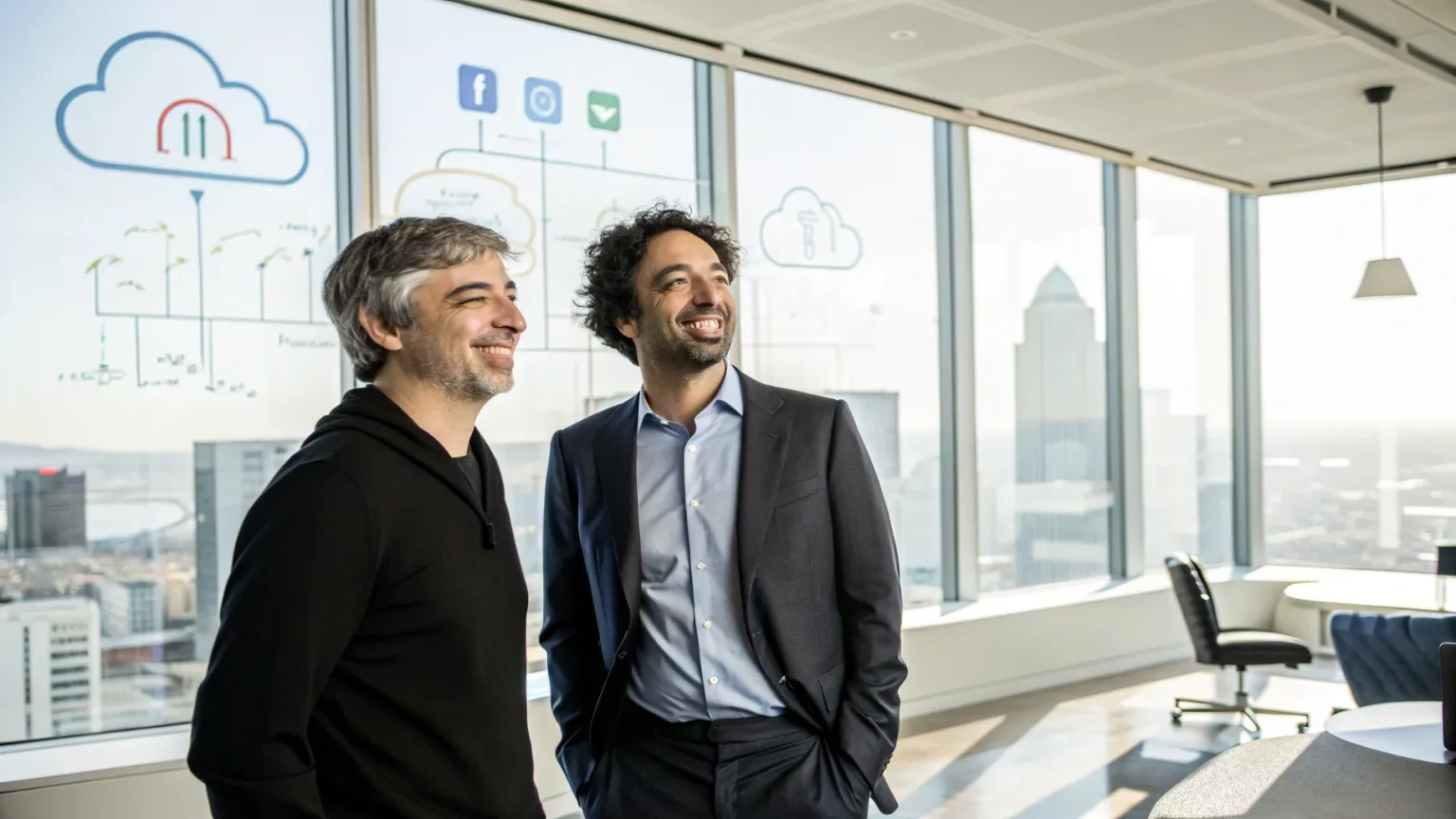
Alphabet’s market rally has turned its co-founders, Larry Page and Sergey Brin, into two of the year’s biggest wealth gainers, trailing only Oracle chair Larry Ellison. Their fortunes rose as investors poured back into mega-cap tech, betting on artificial intelligence, cloud demand, and steady digital advertising.
The shift comes as major tech stocks reclaimed leadership in recent months. The change reflects confidence that AI spending and data center buildouts will fuel earnings for years. It also shows how concentrated wealth has become at the top of the market.
Larry Page and Sergey Brin are this year’s biggest wealth gainers after Oracle’s Larry Ellison thanks to Alphabet’s stock surge.
Why Alphabet’s Rally Matters
Alphabet’s ascent has been driven by recovery in online ads and progress in AI. The company has rolled out new tools and models while weaving AI across Search, YouTube, and Workspace. Its cloud business remains a focus as enterprises test generative tools and commit to training and inference workloads.
Investors have also responded to heavy capital spending on data centers and specialized chips. Share buybacks and cost controls have reinforced earnings power. As a result, the founders’ Class B supervoting shares have increased sharply in value.
The Ellison Effect
Larry Ellison’s gains reflect a different but related trend. Oracle has benefited from demand for AI-ready databases and cloud capacity. Partnerships that route AI workloads to Oracle’s infrastructure have lifted sentiment. The company’s push to supply computing power and storage for model training has been a key narrative.
Ellison’s long tenure and concentrated holdings magnify any stock move. That leverage has put him ahead of most tech peers in year-to-date wealth gains.
How Wealth Tied to Tech Swings
Page and Brin’s net worth tracks Alphabet’s market value. Both stepped back from daily management in 2019, leaving Sundar Pichai as CEO, but they retain control through voting rights. Their fortunes shift with product momentum, ad trends, and AI execution.
Alphabet’s path shows how founders’ wealth can surge as strategic bets line up with market cycles. It also shows how quickly it can swing if sentiment changes.
- Ad revenue stability supports near-term cash flow.
- AI features in Search and YouTube aim to keep users engaged.
- Cloud growth depends on enterprises adopting AI at scale.
- Heavy spending on data centers may pressure margins if demand slows.
Industry Impact and Risks
The jump in founder wealth highlights the dominance of a handful of tech firms. Index funds and passive flows amplify moves in these names, while active investors seek exposure to AI winners. That concentration can increase market volatility and policy scrutiny.
Regulators in the U.S. and Europe continue to probe large platforms on competition and data use. Any new rules for search, app stores, or digital ads could affect growth. There is also intense competition as rivals race to ship new AI features and monetize them.
What to Watch Next
Earnings will test whether revenue tracks the enthusiasm. Key markers include Search and YouTube ad trends, cloud profit margins, and the pace of AI commercialization. Capital expenditure plans for data centers and custom chips will signal management’s confidence.
For Oracle, bookings tied to AI infrastructure are in focus. Supply constraints in high-end servers and GPUs may shape near-term growth. Long-term, customer retention and database workloads will matter as AI applications move from pilots to production.
The latest rally has vaulted Page, Brin, and Ellison to the front of this year’s wealth gains. It reflects investor faith in AI demand and the cash engines behind big tech. The next stage will depend on proving that AI products can scale profitably, while navigating tighter scrutiny and intense competition.


