

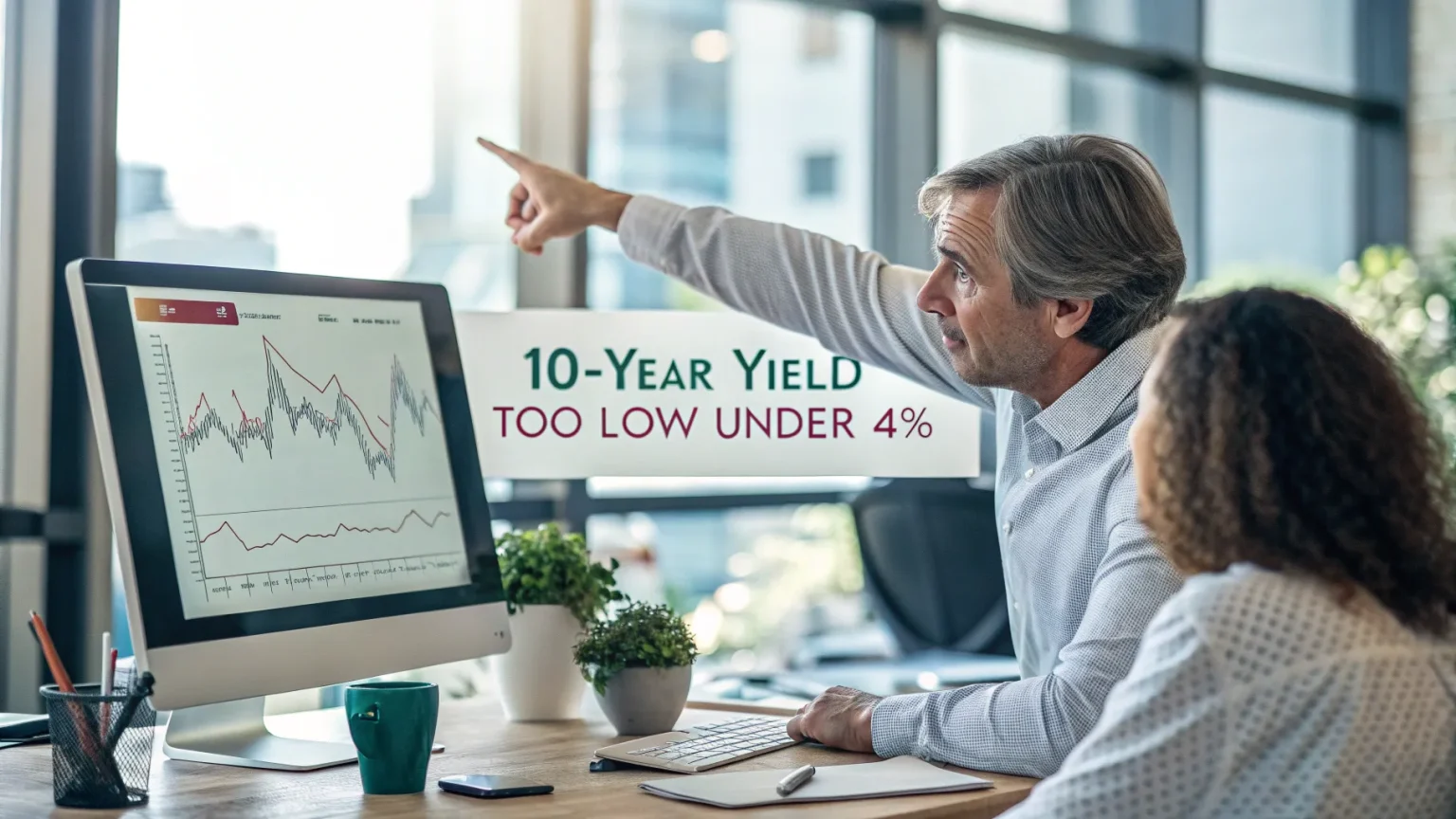
A sharp warning from a market observer is stirring debate over where long-term interest rates should sit as growth cools. The comment calls the 10‑year U.S. Treasury yield “too low” under 4%, arguing that heavy government borrowing points to a level closer to 4.5%, even with the economy slowing toward 1% growth.
“10 year Treasury has no business below 4% though 4.5% more like it — too much supply/deficits despite slowing, soon-to-be 1% growth economy.”
The statement cuts to the core of a long-running market puzzle. Investors have weighed falling inflation and slower output against rising federal deficits and a steady stream of new bond issuance. The outcome will shape mortgage rates, corporate borrowing costs, and valuations across stocks and real estate.
Why Supply and Deficits Matter
U.S. borrowing needs have swelled after years of pandemic aid, tax changes, and higher interest costs on existing debt. Larger deficits mean the Treasury must sell more notes and bonds. When supply rises, investors often demand higher yields to absorb the extra paper.
Market veterans point to the “term premium,” the extra compensation investors seek for holding long-dated bonds. That premium can rise when debt issuance is heavy or when uncertainty about inflation and policy grows. Auction results offer a window into demand. Weak bidding can push yields higher. Strong bidding can steady them.
The Federal Reserve has also reduced its holdings through balance-sheet runoff. Less central bank buying increases the amount the private market must absorb. That shift has kept attention on foreign demand, banks’ balance sheets, and the capacity of asset managers and pensions to step in.
Growth Is Slowing, But Is It Enough?
The comment also flags a slowdown toward 1% growth. Slower activity usually pulls long-term yields down as investors price in weaker profits and less need for rate hikes. If inflation keeps easing and the job market cools, many expect yields to drift lower over time.
Yet the speaker argues supply will outweigh growth. If deficits stay wide, the Treasury will keep issuing sizable amounts of longer-dated debt. In that case, a yield “below 4%” may not compensate for the risks, while “more like” 4.5% could reflect the new balance of forces.
That view highlights a clash between two anchors of bond pricing: macro fundamentals pointing to slower growth, and fiscal arithmetic pointing to higher yields to clear auctions.
Counterpoints From the Market
Other investors make a different case. They argue that inflation has cooled from its peak and that long-run inflation expectations remain contained. If the Fed holds rates steady or starts cutting in response to slower growth, policy support could bring down yields at the long end.
Global demand also matters. U.S. Treasuries remain a safe asset during stress. Pension funds and insurers often buy longer bonds to match liabilities. If these buyers step up, they can offset heavy issuance and keep yields near 4%.
Some point to productivity gains and easing supply chains as support for lower inflation without a deep downturn. That could allow yields to settle in a mid-4% range, rather than break decisively higher.
What Higher Yields Would Mean
A move toward 4.5% would ripple across the economy. Mortgage rates often track longer bond yields. A sustained increase would pressure home affordability and could cool housing activity. Companies would face higher interest costs, which can weigh on hiring and investment.
For Washington, higher yields raise debt service costs, widening deficits further. That feedback loop can keep pressure on the long end until fiscal dynamics improve or growth strengthens. For households, higher yields boost savings returns, but they also raise credit card and auto loan rates tied to funding markets.
Key Indicators To Watch
- Treasury auction demand and bid-to-cover ratios
- Inflation trends and wage growth
- Fed policy signals and balance-sheet plans
- Foreign and pension fund demand for long bonds
- GDP growth tracking and labor market data
The warning is clear: if deficits stay large, supply could cap any rally in long bonds, even as growth slows. But the counterview remains strong. Cooling inflation, possible policy easing, and stable long-run expectations might anchor the 10‑year near 4%.
Investors will watch auctions, inflation releases, and Fed meetings for direction. The next phase for the 10‑year likely hinges on which force proves stronger first: slower growth or the steady flow of new debt. For now, the market sits on a knife’s edge between those two stories.


