

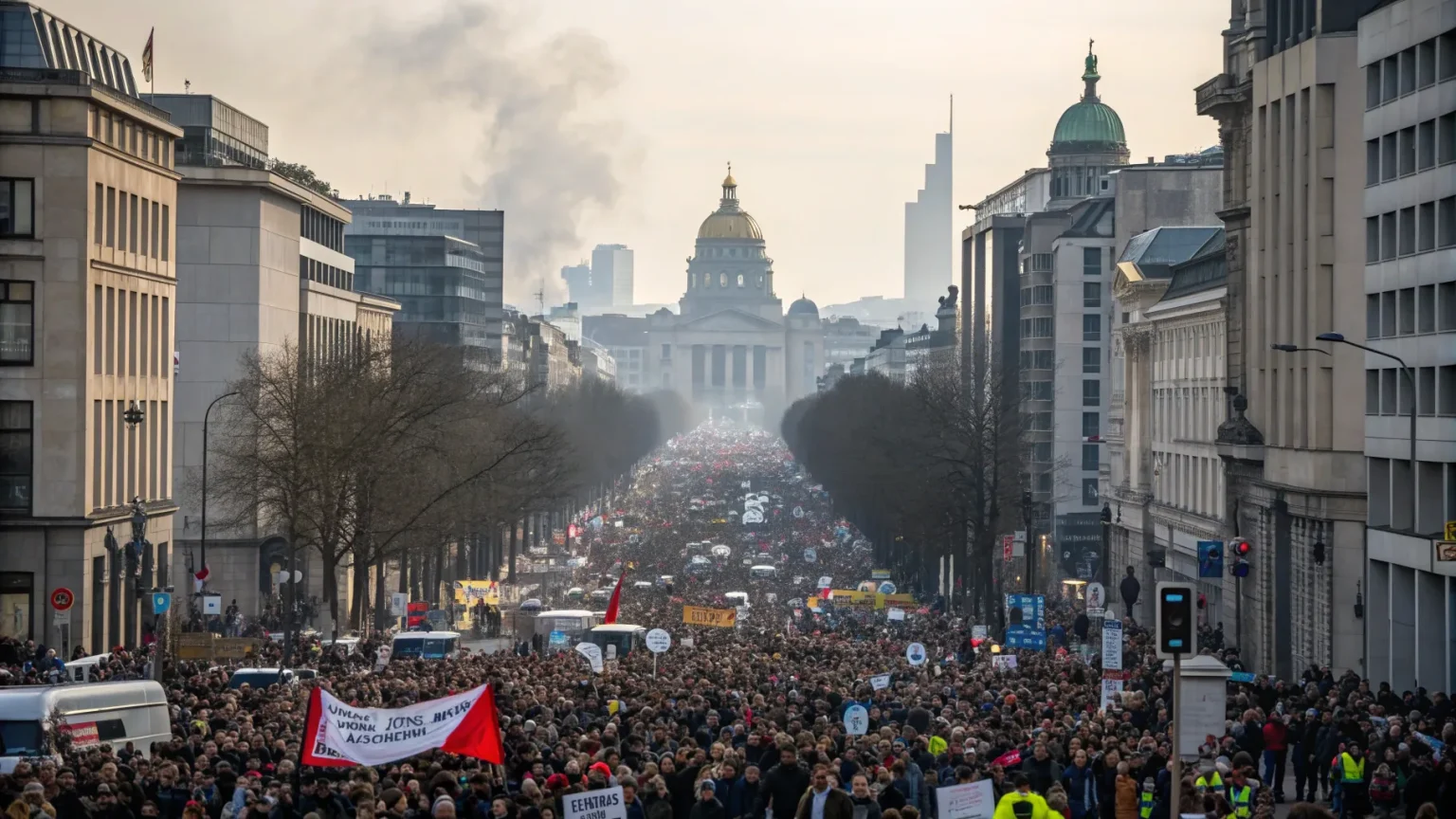
Brussels saw a sweeping show of dissent as large crowds marched against government reforms and spending cuts, marking one of the biggest street actions in the city this year. The protests drew tens of thousands of people into the capital, disrupting traffic and testing the government’s handling of its budget plans. Demonstrators rallied near key government buildings, accusing leaders of moving too fast on changes to public services and benefits.
Tens of thousands of people take to the streets in Brussels over government reforms and spending cuts.
Authorities deployed extra officers and set up barriers along the main routes. Unions, students, and public sector workers formed the bulk of the turnout. The march remained largely peaceful, with a few tense moments as groups tried to push closer to official offices.
What Is Driving the Unrest
The government is seeking to rein in spending and push through reforms aimed at improving long-term finances. Officials argue that changes are needed to keep the budget within European Union rules and to prepare for rising costs in pensions, health care, and energy support. Advocates of the plan say that without course corrections, deficits will swell and debt service will rise.
Belgium has faced repeated waves of labor action in recent years, often centered on wage indexation, retirement age proposals, and the cost of living. The country’s unions have a strong track record of organizing national marches in Brussels, a city that hosts EU institutions and often becomes a stage for continent-wide debates on fiscal policy.
Voices From the Streets
Marchers carried banners calling for protection of public services and social safety nets. Many said cuts would hit hospitals, schools, and transport while households are still dealing with higher bills. “We are here because the reforms go too far, too fast,” one protester said, echoing the broader mood in the crowd.
Others warned that austerity can slow growth and weaken communities outside major cities. Several public sector workers described staffing shortages and said further reductions would strain services. Student groups joined to show solidarity and to press for investment in education and jobs.
Government and Business Reaction
Government officials defended the reforms as careful steps to stabilize finances and improve efficiency. They stress that the plan is designed to protect the most vulnerable while aligning with EU deficit and debt limits. Ministers signaled willingness to meet with union leaders and social partners in the coming days.
Business associations backed the broad direction of fiscal restraint but urged predictability. They argue that credible budgets support investment and keep borrowing costs in check. Some warned that abrupt policy reversals could unsettle companies still recovering from recent shocks.
Economic Stakes and Possible Paths
Belgium’s challenge mirrors a wider European dilemma: balance social protections with tighter public finances as inflation cools and growth remains uneven. Economists say targeted savings, paired with reforms that raise productivity, could ease the pressure. At the same time, they caution that blunt cuts risk undercutting services that support long-term growth.
- Supporters of the reforms cite EU budget rules and debt concerns.
- Opponents warn of damage to public services and living standards.
- Both sides call for dialogue to avoid strikes and further disruption.
Past Belgian negotiations have produced phased plans that stretch changes over several years. Analysts expect a similar approach here, with adjustments to protect key services and the lowest-income households. Any agreement will likely hinge on transparent timelines and independent monitoring of savings and outcomes.
What to Watch Next
Union leaders have hinted at further actions if talks stall. Public transport and hospitals could face disruptions if strikes expand. The government is preparing revised budget documents and may pace reforms to calm tensions.
The size of the march will increase pressure on policymakers to show clear figures and evidence for the changes. Independent audits and impact studies could help build trust. Brussels, often a stage for protest, will remain in the spotlight as both sides test public opinion.
The day ended with a message that will shape the coming weeks: large numbers are prepared to mobilize against cuts they view as unfair. The government, facing fiscal limits and social demands, must now chart a path that keeps services viable while restoring confidence in its plans.


