

I have been watching a profound shift happen right in front of us, and too many self-employed people are missing it. AI for self-employed professionals is no longer a future trend. It is reshaping marketing, client service, and pricing today, and the window to get ahead of it is narrowing.
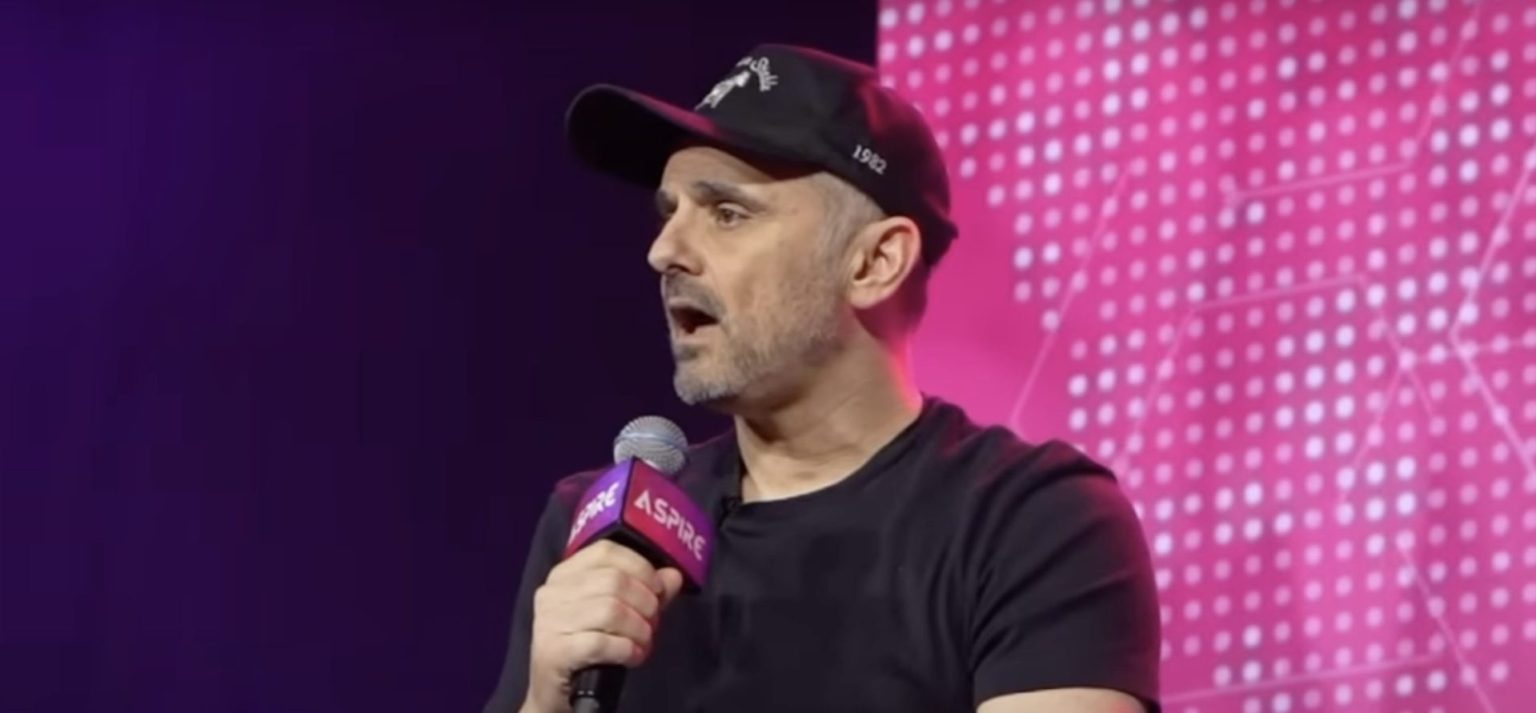
When I watched GaryVee’s recent talk on AI, his message landed hard. He argued that the next five years will separate operators who use AI as leverage from those who get flattened by it. After testing AI tools in my own consulting practice for the past year, I believe he is right and the runway is shorter than most people think.
In this article I break down what GaryVee actually said, what it means for self-employed people, and the concrete steps you can take this month to make AI work for your business instead of against it.
What GaryVee said about AI and small business
GaryVee’s core point is that AI is a platform shift on par with the arrival of the internet or mobile. He pointed out that every previous platform shift made the operators who adapted early dramatically richer and sent the stragglers into slow decline.
He also called out a specific risk for creators, consultants, and service businesses. AI is about to compress the cost of content, design, and basic client deliverables to near zero, which means the value of generic, commoditized work is falling fast.
Why AI for self-employed professionals is different this time
I have lived through three major tech shifts as a business owner. The web in the late 1990s, mobile in the late 2000s, and now AI. AI for self-employed professionals is different because the learning curve is unusually flat.
You do not need a developer to use AI. A solo consultant with a web browser can automate proposals, research, meeting notes, and repetitive email responses in one afternoon. That lowers the barrier to solo businesses scaling revenue without adding headcount.
The flip side is that your competitors can do the same thing from their kitchen table, which means differentiation no longer comes from doing the work. It comes from judgment, relationships, and the quality of the questions you ask.
How AI for self-employed professionals changes pricing
If the grunt work of your service is now commoditized by AI, pricing by the hour is a losing bet. Clients can see that a 10-hour task now takes two hours, and they will push you to cut your bill accordingly.
The fix is to shift to value-based or outcome-based pricing. I help clients move from a $100 per hour consulting rate to a $2,500 per engagement package that bundles AI-accelerated delivery with expert judgment. The price reflects the result, not the hours behind it.
For a deeper dive on pricing strategy, see our psychological pricing strategy guide.
Practical AI tools for self-employed professionals
After testing dozens of tools, here are the categories that deliver the biggest payoff for solo operators.
Large language models such as Claude and ChatGPT are the workhorse layer. Use them for drafting proposals, summarizing research, writing first-pass client deliverables, and brainstorming.
Meeting intelligence tools such as Fathom or Fireflies record, transcribe, and summarize every call. I send the summary to the client within 10 minutes of hanging up, which has become one of my top retention drivers.
Design AI such as Canva Magic Studio or Midjourney lets you produce professional visuals without a designer. That alone can save a solo business $500 to $1,500 a month.
The brand problem with AI content
GaryVee warned that AI-generated content is about to flood every feed, inbox, and marketplace. When everyone can publish 50 blog posts a day, the ones that stand out are the ones grounded in real experience, specific numbers, and a human point of view.
For self-employed professionals, that means personal brand is rising in importance, not falling. Your voice, story, and track record are the moat AI cannot replicate. See our high-ticket affiliate programs guide for how trusted personal brands monetize recommendations in ways AI bots cannot.
How to integrate AI into your workflow this month
Start by listing every task you do in a typical week. For each one, ask whether an AI tool can do 60 percent of the work in under five minutes.
Pick the three biggest time sinks and set up an AI workflow for each. Examples I use every week include proposal drafting, weekly client reports, and initial research for new industries. Each one takes about 30 minutes to set up and saves me three to five hours a week after that.
Document what worked and what did not in a simple playbook. The US Small Business Administration has practical guidance on technology adoption at sba.gov, including case studies worth reading.
The three mistakes self-employed people make with AI
First, they wait for the dust to settle. In my experience, every month you delay costs you compounding advantage. The operators who learn the tools now will have a 12-month head start on pricing, positioning, and operations.
Second, they use AI to write low-quality content and paste it unedited. Clients and algorithms can both spot it. The right use of AI is as a thinking partner, not a ghostwriter.
Third, they use AI to replace judgment. A model can draft 80 percent of a proposal, but the strategy, pricing, and scoping still need you. Treat AI as your junior analyst, not your senior advisor.
How AI for self-employed professionals fits into a five-year plan
GaryVee’s framing is that the next five years will be defined by AI fluency the way the last 15 were defined by social media fluency. If you were late to Instagram or TikTok, you know what that cost you.
The good news is that the playbook is simpler than it looks. Learn the tools, integrate them into your workflow, raise your prices on high-judgment work, and use the time savings to serve more clients, build an audience, or invest in your own marketing.
If you want a structured plan, our self-employment ideas guide covers modern service business models that pair well with AI leverage.
Frequently asked questions about AI for self-employed professionals
How can AI help self-employed professionals?
AI helps self-employed professionals by automating repetitive tasks like proposal writing, client reports, research, and scheduling. That time savings lets you take on more clients, raise prices on strategic work, or invest hours back into marketing and business development.
Which AI tools are best for freelancers and solo business owners?
The best AI tools for freelancers and solo business owners are large language models like Claude or ChatGPT for writing and research, meeting intelligence tools like Fathom for call notes, and design AI like Canva or Midjourney for visuals. Pick one from each category rather than trying every tool on the market.
Will AI replace self-employed professionals?
AI is unlikely to replace self-employed professionals who combine expertise, judgment, and relationships. It will replace or commoditize the routine parts of their work, which is why shifting to value-based pricing and specialized positioning is becoming essential.
How should I start using AI in my business?
Start by listing the three most repetitive or time-consuming tasks in your week, then find an AI workflow for each one. Give yourself 30 minutes per workflow to set up, test on real work, and document what produces usable output so you can reuse the system.
Is AI-generated content bad for SEO?
AI-generated content is not automatically bad for SEO, but generic AI content with no original research, examples, or point of view performs poorly. The best approach is to use AI for first drafts and structure, then add your own experience, specific data, and voice before publishing.
How much does it cost to use AI as a self-employed professional?
Most self-employed professionals can get meaningful AI leverage for under $100 per month by combining one large language model subscription, one meeting transcription tool, and one design AI tool. The return on that investment is typically three to five hours a week of reclaimed time.
What is the biggest risk of ignoring AI as a solo business owner?
The biggest risk of ignoring AI as a solo business owner is pricing and delivery pressure from competitors who are using AI to deliver faster or cheaper. Over 12 to 24 months, that pressure can force rate cuts, client losses, and a squeeze on margins.
How does AI affect personal branding for self-employed professionals?
AI increases the value of personal branding because authentic expertise, lived experience, and specific case studies are exactly what AI cannot fake. Self-employed professionals who document their work and point of view publicly tend to attract higher-quality clients in an AI-saturated market.


