

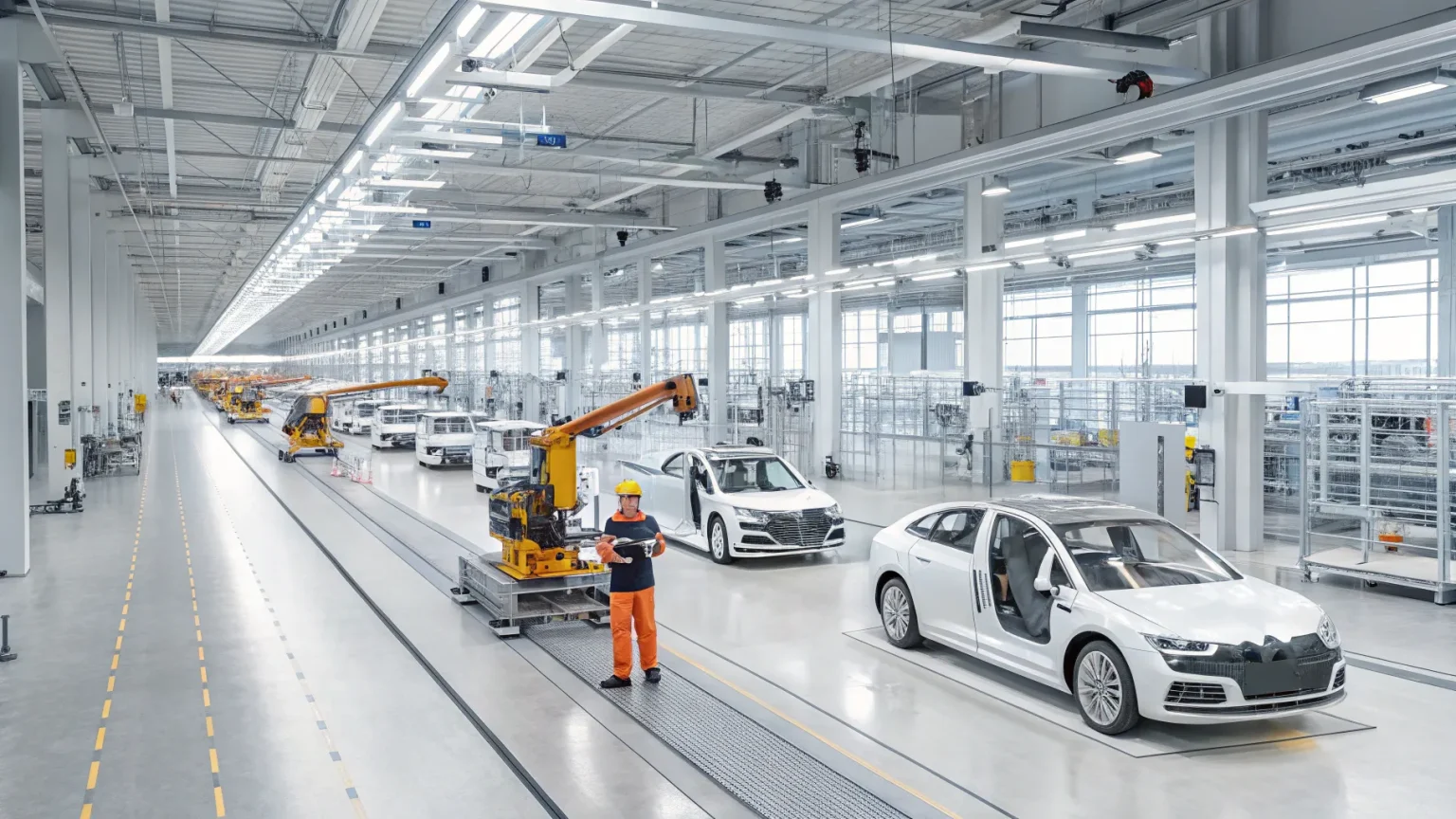
Slovakia has emerged as Europe’s top car producer per person, a status that shapes the country’s economy and its future. The Slovakia auto industry builds about a million cars a year despite a population of roughly 5.4 million. That scale, rare for a country of its size, helps explain its strong export profile and its exposure to global auto cycles.
The country’s rise rests on global brands that set up shop over the past two decades. Plants run by Volkswagen, Kia, Stellantis, and Jaguar Land Rover anchor production. Their presence has turned Slovakia into a major supplier for the continent. The question now is how the model holds as the industry shifts to electric vehicles and faces tougher trade and cost pressures.
“The European country is the biggest autos manufacturer relative to the size of its population.”
How the Slovakia auto industry was built
The Slovakia auto industry surge began after market reforms in the 1990s. The government courted foreign investors with tax incentives and a trained, affordable workforce. Proximity to Germany and strong road links made logistics easier. By the mid-2000s, the car sector had become the backbone of the national manufacturing base, a profile reinforced by data from the OECD’s Slovakia economic snapshot.
Factories now stretch from Bratislava to Zilina, Trnava, and Nitra. Volkswagen’s Bratislava plant produces SUVs and city cars. Kia’s site in Zilina builds compact models and engines. Stellantis in Trnava focuses on small cars, including electrified versions. Jaguar Land Rover’s plant in Nitra assembles premium SUVs.
The numbers behind per-capita leadership
Industry data show Slovakia producing roughly 1 million vehicles a year in recent years. Output dipped during the pandemic and chip shortages but recovered as supply chains improved. On a per-capita basis, no other European country matches that pace over a sustained period. The Czech Republic is close, yet Slovakia remains ahead.
- Population: about 5.4 million people
- Annual vehicle output: around 1 million units
- Auto share of GDP: about 13 percent
- Jobs linked to autos: well over 100,000 positions
Exports dominate. Cars and parts account for a large share of shipments, tying national growth to demand in Germany, France, and the wider EU.
Economic gains and trade-offs in the Slovakia auto industry
The car sector lifted wages in industrial regions and supported a wide network of suppliers. Tooling firms, plastics makers, and logistics companies benefit from steady contracts. Training programs with technical schools feed plants with skilled labor.
The model has limits. Heavy reliance on one industry makes the economy sensitive to shocks. A strike at a key plant, a slowdown in EU demand, or a parts shortage can hit output fast. Energy prices and tight labor markets add cost pressure. For a small country, those swings matter.
EV transition tests the model
The shift to electric vehicles is a major test for the Slovakia auto industry. Automakers are retooling lines and weighing where to place future EV programs. Some projects have advanced, while others face delays or revisions as demand and policy shift. Suppliers that make engines and transmissions must adapt or risk losing business.
Slovakia is working to attract battery and component plants. Officials highlight the country’s logistics links and talent base. Success would help secure new product cycles and protect jobs. Failure would leave factories exposed as combustion models fade.
What self-employed founders should watch
Self-employed exporters, parts suppliers, and consultants serving the European auto market should track Slovakia closely. Tier-2 and tier-3 supplier opportunities tend to open up when major plants retool, and small-business owners with niche expertise in software, tooling, or logistics often win contracts when speed matters more than scale. The U.S. International Trade Administration’s Slovakia automotive industry guide is a useful reference for U.S.-based founders considering market entry.
What to watch next
Policy in Brussels will shape the next chapter. Emissions rules, trade measures, and incentives can speed or slow investment. A weaker euro might help exports, while tariffs or supply risks could hurt. Domestic retraining programs will also matter as job needs change.
Company strategies bear close attention. If global brands assign more EV models to Slovak lines, the per-capita lead could hold. If plans move elsewhere, output could slide. For more on European policy that affects founders, see our coverage of the EU startup and scaleup strategy and our starting an online business guide.
Slovakia’s per-capita lead in auto production reflects years of consistent policy and investor confidence. The gains are clear in jobs, exports, and skills. The challenge now is to lock in the next wave of products and technology. The country’s position in Europe’s car map depends on decisions made in the coming two to three years.
Frequently asked questions
How big is the Slovakia auto industry?
Slovakia produces roughly 1 million vehicles a year and accounts for about 13 percent of national GDP through autos. Over 100,000 jobs are tied to the sector across plants and suppliers.
Which automakers operate in Slovakia?
The four largest are Volkswagen in Bratislava, Kia in Zilina, Stellantis in Trnava, and Jaguar Land Rover in Nitra. The plants build a mix of SUVs, compact cars, and electrified models.
Why does Slovakia lead Europe in per-capita car output?
Decades of foreign direct investment, tax incentives, a trained workforce, and proximity to major EU markets produced a high-output industry in a small country. The combination of one-million-unit production and a population of 5.4 million drives the per-capita lead.
How will the EV transition affect Slovakia?
The transition is reshaping product mixes and supplier networks. Slovakia is competing for battery plants and EV programs to replace combustion-era work. The outcome over the next two to three years will determine whether output holds steady or declines.
What risks face the Slovakia auto industry?
Concentration risk, energy costs, labor tightness, and policy shifts in Brussels are the main concerns. A slowdown in EU demand, a strike at a major plant, or supply-chain disruption can quickly affect national output.


