


Investor attention turned to earnings expectations after Adam Parker, founder and CEO of Trivariate, cautioned that Wall Street’s outlook for the S&P 500 may be too optimistic. His concern centers on technology and industrial companies, where estimates have climbed alongside rising share prices. The warning comes as investors parse guidance for the months ahead and weigh whether profits can keep pace with valuations.
Parker’s view adds a cautionary note to a market that has leaned on mega-cap technology gains and a rebound in industrial demand. It raises a key question for the next leg of the rally: can companies deliver the growth analysts now predict, or will expectations need to be reset?
Background: estimates have risen with markets
Earnings estimates often track market sentiment. When stocks rally, forecasts tend to rise as analysts factor in stronger demand and efficiency gains. The S&P 500 has benefited from enthusiasm around artificial intelligence, cloud spending, and automation, while industrials have seen support from supply chain normalization and capital spending plans.
Historically, analysts sometimes trim estimates as reporting season approaches, and many companies then beat the lowered bar. In recent quarters, however, consensus projections for several high-profile firms have stayed elevated. That sets a higher hurdle. Parker’s comment suggests he views that hurdle as unrealistic, at least for key parts of the index.
“S&P 500 earnings expectations appear too high, especially in technology and industrial stocks,” said Adam Parker, founder and CEO of Trivariate.
Technology: AI tailwinds meet cost discipline
Technology companies have been major drivers of index-level growth expectations. Bulls point to fresh demand for AI infrastructure, software licenses, and data services. They also cite margin support from cost reductions and automation. Revenue growth at chipmakers and cloud providers has been a bright spot, lifting full-year projections for the sector.
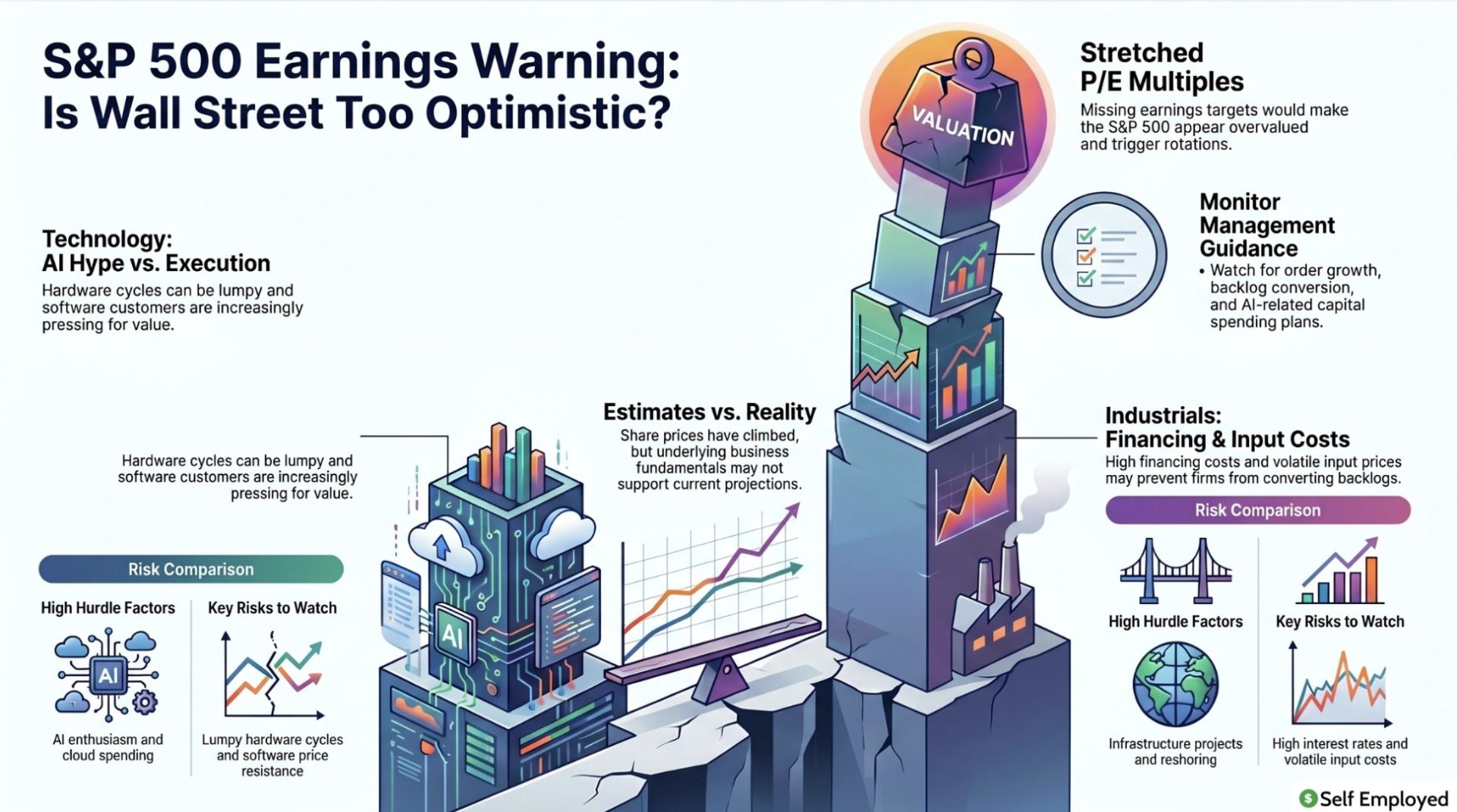
But there are risks. Hardware cycles can be lumpy, and customers may pause large purchases after initial build-outs. Software customers are pressing for value, which can slow price increases. If capital spending by large buyers moderates, growth rates could ease. In that case, valuations that assume steady acceleration would be hard to justify.
Parker’s warning hints at these pressures. Even strong businesses can disappoint when expectations run ahead of achievable delivery. Any guidance cuts in the next reporting rounds could ripple across the index given tech’s heavy weight.
Industrials: order books vs. execution
Industrial firms have benefited from healthy backlogs, infrastructure projects, and reshoring trends. Investors expect revenue conversion as supply chains improve and labor shortages ease. Margin expansion has been a key theme as companies pass along price increases and streamline operations.
Still, the sector faces late-cycle risks. Higher financing costs can delay projects. Input costs, while cooler than peak levels, remain volatile. If orders slow or pricing power fades, earnings could undershoot current targets. Parker’s focus on industrials suggests he sees a gap between optimistic forecasts and operational realities, especially if growth cools.
Market impact and scenarios
If earnings fall short, the index’s price-to-earnings multiple would look stretched. That could trigger rotations within sectors and a broader reset in risk appetite. Conversely, if companies defend margins and deliver on AI and infrastructure themes, sentiment could stabilize even with high expectations.
Investors often react more to guidance than to the most recent quarter. Management comments on order trends, pricing, and cost control will matter as much as reported results.
What to watch next
- Guidance for the next two quarters from large tech and industrial leaders.
- Order growth, backlog conversion, and cancellations in industrials.
- AI-related capital spending plans from cloud and enterprise buyers.
- Margin trends, including labor and component costs.
- Revisions to consensus estimates during and after earnings season.
Parker’s warning does not predict a downturn so much as it flags a mismatch between hopes and near-term delivery. Bulls will argue that AI demand and infrastructure projects can carry results. Skeptics will counter that high starting expectations leave little room for error. The next wave of guidance will help settle the debate.
For now, investors may want to stress-test portfolios against slower revenue growth and tighter margins in technology and industrials. Attention will focus on whether management teams confirm current targets or reset the path. The answer will shape index-level earnings, valuations, and the durability of the market’s latest advance.
Frequently asked questions
What did Trivariate warn about S&P 500 earnings?
Adam Parker, founder and CEO of Trivariate Research, warned that Wall Street’s earnings expectations for the S&P 500 may be overly optimistic. He specifically flagged technology and industrial sectors, where analyst estimates have climbed alongside rising share prices without proportional improvement in underlying business fundamentals.
Which sectors did Trivariate say have estimates that are too high?
Trivariate’s Adam Parker specifically called out technology and industrial stocks as having inflated earnings estimates. Technology companies face headwinds from lumpy hardware cycles and slowing software price increases, while industrials may be challenged by higher financing costs, volatile input prices, and the risk of order slowdowns.
What happens to S&P 500 valuations if earnings miss the forecast?
If S&P 500 earnings miss the consensus forecast, the index’s price-to-earnings multiple expands, making stocks appear more expensive relative to actual profits. This often triggers selling pressure and sector rotations as investors reprice holdings around lower earnings power, and can lead to a broader reset in risk appetite.
What is Trivariate Research?
Trivariate Research is an institutional equity research firm founded by Adam Parker, who previously served as chief U.S. equity strategist at Morgan Stanley. The firm focuses on equity strategy and stock selection using a combination of quantitative analysis and fundamental research.
How do earnings expectations affect the stock market?
Earnings expectations are a primary driver of stock valuations. When consensus estimates rise, stocks often trade at higher multiples in anticipation of greater profits. If companies miss elevated expectations, investors reassess valuations across the market, which can cause price declines, increased volatility, and sector rotations as markets reprice around revised earnings forecasts.


