

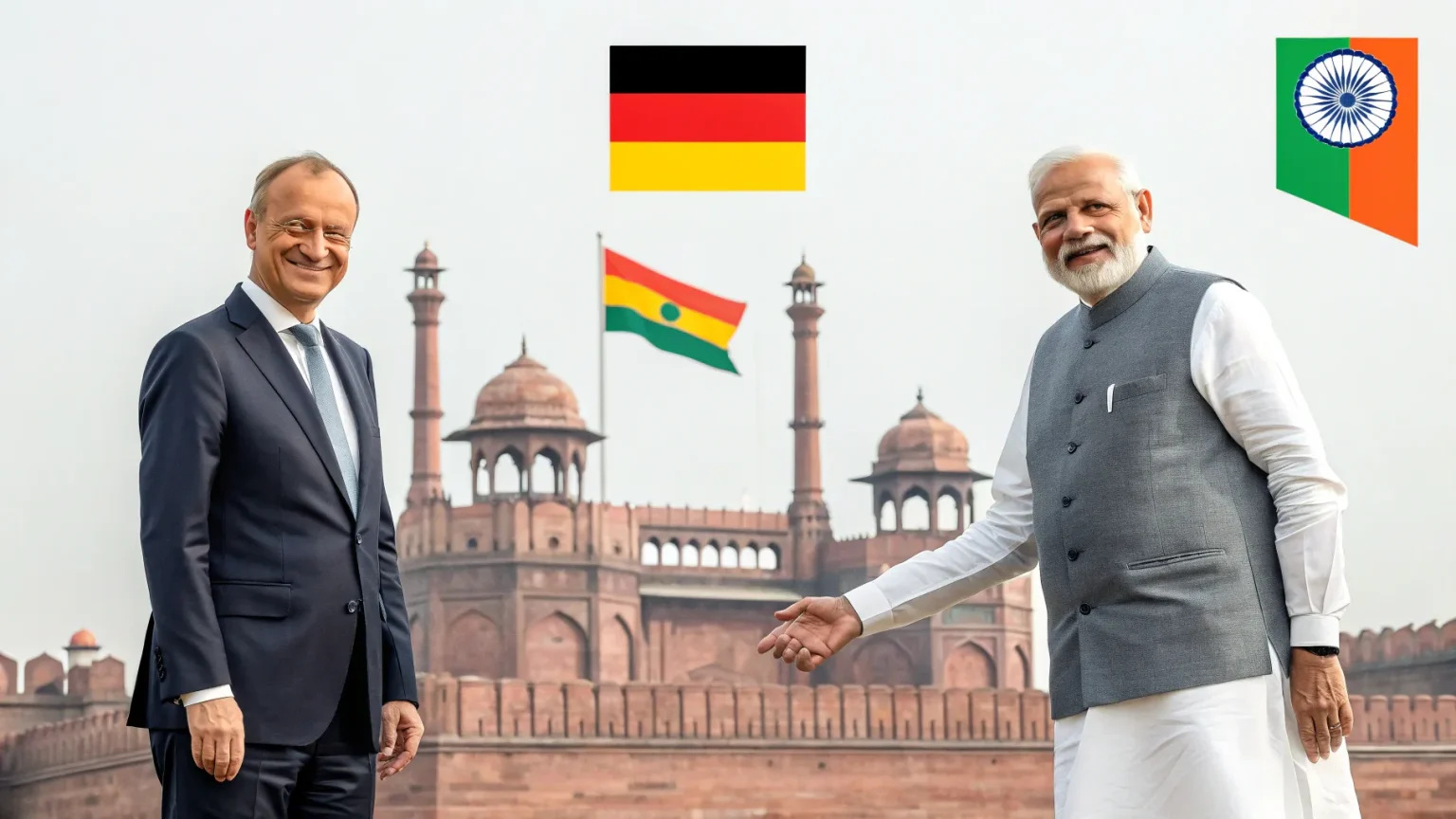
German Chancellor Friedrich Merz concluded a high-profile visit to New Delhi marked by new deals in technology, defense, and clean energy, underscoring a tightening partnership with Prime Minister Narendra Modi. The two leaders met in India as trade between their countries crossed the fifty-billion-dollar mark, and pledged closer security cooperation amid global uncertainty.
The visit produced a flurry of commitments aimed at boosting industry links, modernizing supply chains, and supporting energy transition goals. Officials on both sides framed the talks as a practical step to deepen cooperation while addressing shared risks from geopolitical tensions and climate pressures.
Background to a Deepening Partnership
Germany and India have expanded ties steadily over the past decade, driven by manufacturing links, engineering services, and shared interest in secure, open trade. Germany is among India’s leading partners in Europe, with collaborations in automotive, chemicals, and advanced machinery.
Both governments have also aligned on diversifying supply chains after recent shocks to global trade. Berlin has promoted stronger ties with the Indo-Pacific, while New Delhi has sought technology transfers and investment that support local production and job growth.
The energy transition has been central to the relationship. German firms have increased activity in solar, wind, and green hydrogen projects in India. The new agreements add momentum to that shift.
What Was Agreed
During his landmark trip to India, German Chancellor Friedrich Merz engaged in productive discussions with Prime Minister Narendra Modi.
The trade relationship has soared, surpassing fifty billion dollars, as both leaders sealed pivotal agreements focused on technology, defense, and renewable energy sources.
Officials highlighted three main areas:
- Technology partnerships to strengthen digital infrastructure and manufacturing.
- Defense collaboration, with an emphasis on joint production and interoperability.
- Renewable energy projects aimed at scaling capacity and lowering costs.
India’s push for domestic manufacturing could benefit from German engineering expertise and standards. German companies, in turn, gain access to a large and growing market seeking high-quality equipment and software.
Security and Geopolitical Signals
Together, they tackled pressing global challenges and emphasised the importance of fortifying their security collaboration.
The security language points to tighter coordination on maritime awareness, cyber risks, and defense supply chains. With wars straining European security and tensions in Asian waters affecting trade routes, both governments want better resilience and faster information sharing.
Analysts say closer defense ties with India help Germany diversify away from fragile supply chains and strengthen links with a key democracy in Asia. For India, it offers more choice in sourcing equipment and technology while reducing dependence on any single supplier.
Industry Impact and Energy Transition
The clean energy push is likely to shape the near-term agenda. German financial institutions and firms are active in India’s solar and wind buildout. New deals could expand grid upgrades, storage, and hydrogen pilots that cut industrial emissions.
For manufacturers, collaboration may support advanced materials, battery supply chains, and energy-efficient factory upgrades. Indian startups could gain from research partnerships and access to European markets, while German companies may speed up local production to serve Asia.
What to Watch Next
Key indicators over the next 12 to 18 months include project timelines, financing terms, and technology transfer details. Clear local procurement targets and training programs will shape how much work is done in India and how quickly projects scale.
Trade barriers and standards alignment remain practical hurdles. Progress on customs procedures, data rules, and certification could determine whether the new promises translate into higher exports and jobs.
The visit signals a more focused phase in Germany–India relations. With trade above fifty billion dollars and new accords in hand, both sides now face the task of turning plans into projects. The next test will be delivery: visible energy assets, co-produced equipment, and measurable gains in security cooperation. If those follow on schedule, this partnership could set a steady course for industry and clean power growth in both countries.


