

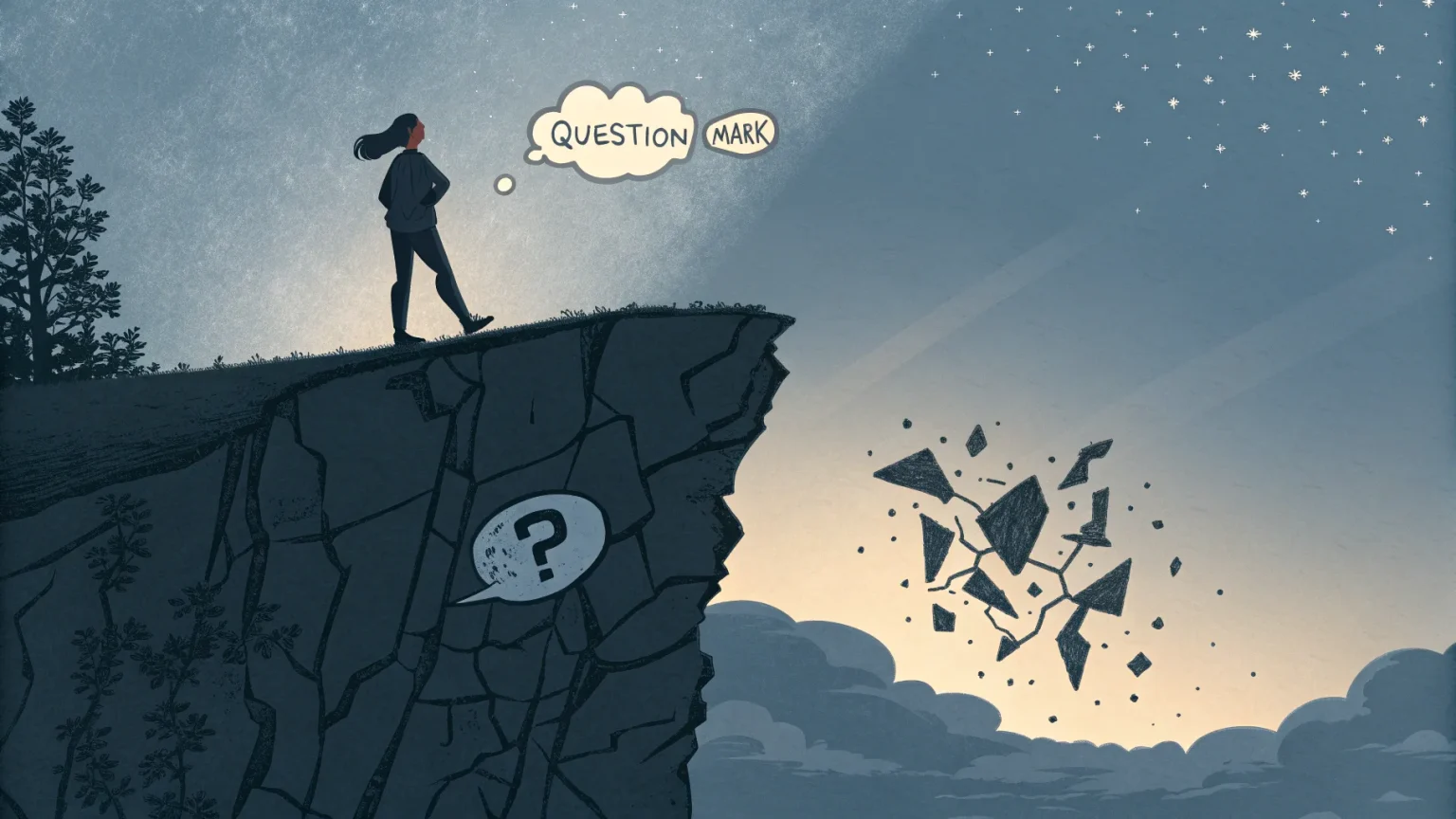
I lost everything because of one simple assumption. It wasn’t a bad decision that ruined me—it was the flawed premise behind all my decisions that brought my financial world crashing down.
When building my real estate portfolio, I operated under what seemed like a rock-solid belief: banks would always lend me money against the equity I had accumulated in my properties. This assumption formed the foundation of my entire investment strategy. I leveraged properties to buy more properties, confident in my ability to access that equity whenever needed.
What I failed to recognize was that banks have their own agendas. They might actually want—or need—my properties more than I did. When economic conditions shifted, the lending institutions that had been so eager to finance my growth suddenly changed their policies. The equity I had built up became inaccessible precisely when I needed it most.
The Assumption Trap
Without the ability to borrow against my properties, I found myself in serious trouble. Cash flow became a critical issue. Properties that had been performing well on paper suddenly became liabilities when I couldn’t access their equity. The house of cards I had built came tumbling down.
This painful experience taught me that we often focus on the wrong things when making important decisions. We debate the merits of Option A versus Option B, when we should be examining the assumptions that make us believe those are our only options in the first place.
My story isn’t unique. Many successful entrepreneurs and investors have been blindsided not by poor decision-making but by faulty assumptions:
- The assumption that market conditions will remain stable
- The assumption that relationships with financial institutions are partnerships rather than transactions
- The assumption that past performance guarantees future access to capital
- The assumption that equity equals liquidity
These beliefs operate below the surface of our conscious decision-making, making them particularly dangerous. We don’t question them because we don’t even realize they’re there.
A New Approach to Decision-Making
This painful lesson has transformed how I evaluate opportunities and risks. Now, before making any significant decision, I force myself to identify and challenge the underlying assumptions. I ask questions like:
- What am I taking for granted in this scenario?
- What conditions must remain true for this plan to succeed?
- Who else has power in this situation, and what are their incentives?
- What happens if access to resources suddenly changes?
- Am I confusing assets with liquidity?
This approach requires intellectual honesty and a willingness to be more interested than interesting. Many of us want to appear confident and decisive, but true wisdom comes from curiosity and humility about what we don’t know.
Look deeper, be more interested than interesting, look at the assumptions you’re making even more than the decision you’re about to make.
The most dangerous assumptions are often the ones that seem so obvious we don’t even recognize them as assumptions. They’re the water we swim in, invisible to us until something changes and suddenly we’re gasping for air.
Building Resilience Through Awareness
My financial recovery began when I started questioning everything I thought I knew about business and investing. This doesn’t mean becoming paralyzed by doubt—it means developing a more nuanced understanding of risk.
Today, I build contingency plans for my contingency plans. I stress-test my strategies against scenarios where my core assumptions fail. Most importantly, I’ve learned to diversify not just my investments but my access to capital.
The irony is that by acknowledging the fragility of my assumptions, I’ve built more robust strategies. By accepting uncertainty, I’ve created more certainty. By admitting what I don’t know, I’ve gained wisdom.
If you take one thing from my experience, let it be this: Don’t just evaluate your decisions—evaluate the assumptions behind them. The most significant risks often lie not in what you decide but in what you assume to be true without question.
Frequently Asked Questions
Q: How can I identify the hidden assumptions in my business decisions?
Start by asking yourself what conditions must remain constant for your plan to succeed. Then imagine scenarios where those conditions change dramatically. Pay special attention to assumptions about market stability, continued access to resources, and the motivations of other parties involved in your business dealings.
Q: What were the warning signs you missed before losing your properties?
In retrospect, there were subtle changes in lending policies and banker attitudes that I overlooked. The banks began asking for more documentation, processing times increased, and there were hints of tightening credit markets. I dismissed these as temporary inconveniences rather than recognizing them as signals of a fundamental shift in the lending landscape.
Q: How did you rebuild after losing everything?
My rebuilding process began with a complete reassessment of my business philosophy. I started with smaller investments that required less leverage, diversified my income streams beyond real estate, and established relationships with multiple funding sources. Most importantly, I built financial models that could withstand the failure of key assumptions.
Q: Is leveraging property always a bad strategy?
Leverage isn’t inherently good or bad—it’s a tool that amplifies both successes and failures. The problem arises when your entire strategy depends on continuous access to that tool. Responsible leverage includes having multiple exit strategies and maintaining sufficient liquidity to weather periods when lending markets tighten.
Q: What’s the difference between being “interested” versus “interesting” in business?
Being “interesting” means focusing on projecting confidence, expertise, and success to others. Being “interested” means approaching situations with curiosity, asking probing questions, and genuinely seeking to understand complex realities rather than confirming existing beliefs. The latter approach helps uncover faulty assumptions before they lead to catastrophic decisions.


