

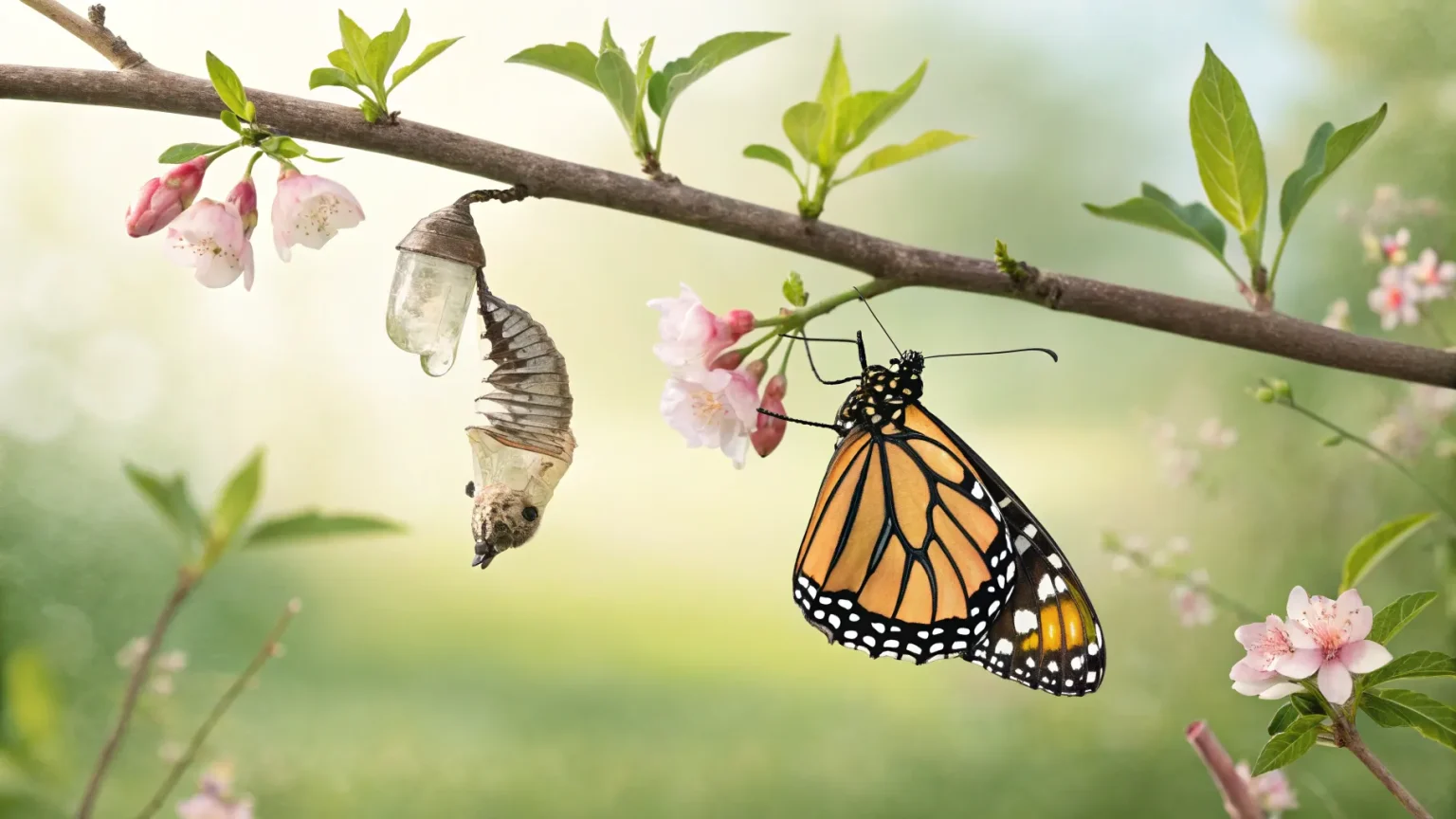
Have you ever wanted to help someone so badly that you ended up hurting them instead? I’ve seen this happen countless times in business, parenting, and leadership. Our instinct to remove obstacles for others can actually prevent their necessary growth.
This truth hit me when I first heard the story of the butterfly and the cocoon. A well-meaning farmer spots a butterfly struggling to emerge from its cocoon. Thinking he’s helping, he cuts open the cocoon with his knife. But instead of saving the butterfly, he inadvertently kills it.
Why? Because the struggle to break free from the cocoon is precisely what strengthens the butterfly’s wings enough for flight. Without that resistance, the butterfly never develops the strength it needs to survive.
The Perfect Design of Struggle
What fascinates me most about this story is the perfect design. The universe has calibrated the cocoon’s resistance to be exactly what the butterfly needs – not too much to make escape impossible, but enough to ensure the wings develop properly. This natural balance exists everywhere if we look for it.
In my years coaching entrepreneurs and athletes, I’ve witnessed this principle repeatedly. The most successful people aren’t those who had the easiest path – they’re the ones who faced significant challenges and grew stronger through overcoming them.
When we face resistance in our lives, we have two choices:
- Avoid the struggle and remain weak
- Push through the resistance and develop strength
Too often, we view obstacles as unfair burdens rather than necessary training grounds. We complain about the very things designed to make us stronger.

The Danger of Well-Intentioned Help
As leaders, parents, and friends, we must recognize when our help actually hinders. I’ve made this mistake myself, stepping in too quickly to solve problems for my team members instead of letting them work through challenges that would ultimately make them more capable.
The farmer’s mistake wasn’t his desire to help – it was his failure to understand the butterfly’s developmental process. Similarly, we often fail to recognize the developmental processes happening in our own lives and the lives of those we care about.
When things get tough, that’s the good stuff.
This simple truth has transformed my approach to difficulties. The resistance we face isn’t a bug in the system – it’s a feature. It’s how we grow strong enough to fly.
Embracing Necessary Struggles
So how do we apply this wisdom? First, we need to change our relationship with difficulty. Instead of asking “Why is this happening to me?” we should ask “How is this strengthening me?”
Second, we need to be more discerning about when to help others. Some struggles are truly destructive and require intervention. But many challenges are developmental – necessary for growth and strength.
The key differences between destructive and developmental struggles:
- Developmental struggles have purpose and proportion
- Developmental struggles build capacity rather than diminish it
- Developmental struggles lead to greater independence, not dependence
When we face our own cocoons – those tight, uncomfortable spaces of resistance – we should remember the butterfly. The struggle isn’t punishment; it’s preparation.
I’ve learned to welcome challenges that once would have frustrated me. Each obstacle is an opportunity to develop strength I’ll need for what lies ahead. The universe rarely gives us more than we can handle, but it regularly gives us exactly what we need to grow.
Next time you face resistance or watch someone you care about struggle, remember the butterfly. Sometimes the kindest thing we can do is allow the necessary struggle to unfold, knowing that on the other side of that difficulty lies the strength to soar.
Frequently Asked Questions
Q: How can I tell when to help someone versus when to let them struggle?
This requires discernment. Ask yourself: Is this struggle developmental or destructive? Will overcoming this challenge build capacity or break spirit? Is the person facing age-appropriate or skill-appropriate challenges? Help when the challenge exceeds their current capacity, but allow struggle when it’s within their growth zone.
Q: What if I’m facing a challenge that seems too difficult to overcome?
Break down the challenge into smaller parts. Just as the butterfly doesn’t break out all at once but works gradually, tackle your challenges incrementally. Seek guidance from mentors who won’t solve your problems but will help you develop the strength to solve them yourself.
Q: How does this butterfly principle apply to parenting?
As parents, we must resist the urge to remove all obstacles from our children’s paths. Allow age-appropriate struggles that build resilience, problem-solving skills, and confidence. When children overcome challenges themselves, they develop not just capability but also self-belief that serves them throughout life.
Q: Can some struggles be harmful rather than helpful?
Absolutely. Not all struggles are beneficial. Trauma, abuse, and challenges far beyond someone’s capacity can be damaging rather than developmental. The butterfly analogy works because the cocoon provides the exact right amount of resistance – not too much, not too little. Healthy struggles are proportional to current capacity while stretching us toward growth.
Q: How can businesses apply this principle to employee development?
Smart leaders create “developmental assignments” that stretch employees just beyond their comfort zones. Instead of rescuing employees at the first sign of difficulty, provide coaching and support while allowing them to work through challenges. This builds both capability and confidence. Remember that growth happens at the edge of comfort, not in its center.


