


Hiring your first employee is one of those milestones that looks deceptively simple from the outside. You tell yourself you are just getting some help, not building a company. But the moment you seriously consider payroll, benefits, and being responsible for someone else’s livelihood, the emotional weight hits. For many self-employed people, this decision comes after months of being stretched too thin, saying yes to too much work, and quietly wondering if they are bottlenecking their own growth.
This step is not just operational. It is psychological, financial, and identity-shifting. You are moving from being fully self-contained to being accountable for another human’s time, income, and experience. I have watched freelancers rush into this out of burnout, and others delay it out of fear, even when the math supported hiring. Both paths have consequences
. Before you post that job listing or ask your favorite contractor to go full-time, there are a few things you deserve to understand clearly.
1. You are no longer just managing your work
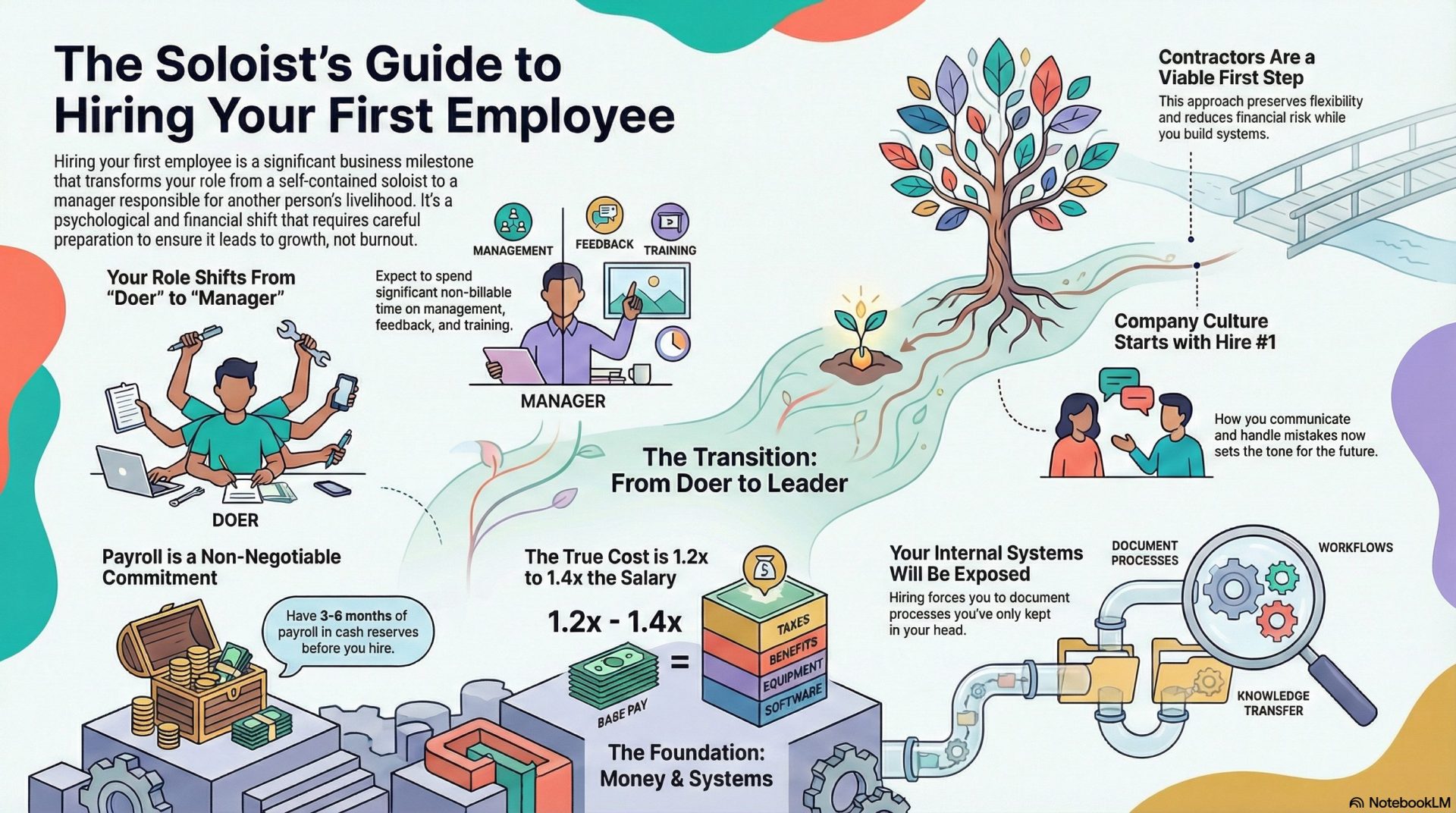
The biggest surprise new employers face is how much of their time shifts away from billable work. Once someone joins your business, you are managing context, priorities, feedback, and expectations. That management overhead does not disappear just because the team is small. It often shows up as daily interruptions, check-ins, and decisions that only you can make.
This matters because many self-employed people hire to reclaim time. If you do not plan for the non-billable work of managing a person, you can feel even more overwhelmed than before. The goal is leverage, not relief on day one.
2. Payroll is a commitment, not an experiment
Clients can pause projects. Leads can dry up. Payroll does not care. Once you hire an employee, you are committing to a regular cash outflow regardless of how your month looks. This is where many freelancers underestimate risk, especially if they are used to flexible contractor relationships.
A common rule of thumb among experienced solo founders is having at least three to six months of payroll set aside. This pattern shows up consistently among small service businesses that survive their first hire. It gives you room to breathe when a client pays late or a project ends unexpectedly.
3. Your systems will get exposed immediately
Employees shine a spotlight on every undocumented process you have been holding in your head. How do you onboard clients? How files are named. How decisions get made when something goes wrong. What feels intuitive to you can feel chaotic to someone new.
This is uncomfortable but valuable. If you cannot explain how work flows through your business, it is a signal that you are not ready yet. Hiring works best when you use it as a forcing function to clarify how things actually get done.
4. The legal side is not optional
Hiring an employee triggers legal and compliance responsibilities that do not apply to contractors. This includes payroll taxes, workers’ compensation insurance, labor law compliance, and proper classification. Missteps here can be expensive and stressful.
Many first-time employers rely on tools like Gusto or QuickBooks Payroll to simplify this, but tools do not replace understanding. You need to know your obligations at a basic level, even if software handles execution. Peace of mind is worth the setup effort.
5. Culture starts with hire number one
It is tempting to think culture is something you worry about later, when you have a real team. In reality, culture is set the moment someone else joins your business. How you communicate. How you handle mistakes. How transparent you are about money and priorities.
Experienced small business coaches often say your first hire sets the emotional tone for years. If you normalize urgency, overwork, or ambiguity now, you will likely reinforce it with every future hire. Be intentional early.
6. Training takes longer than you expect
Even great hires need time to ramp up. They are learning your clients, your standards, and your way of thinking. Productivity often dips before it improves, which can be frustrating when you are already overloaded.
This is where patience pays off. Short-term inefficiency is the price of long-term leverage. If you cannot afford a temporary slowdown, it may be better to wait or start with a contractor instead.
7. Your communication skills suddenly matter more
As a solo operator, you can get away with half-formed thoughts and last-minute changes. With an employee, unclear communication creates confusion, rework, and tension. You are now responsible for making expectations explicit.
This does not mean becoming corporate. It means being clear about priorities, deadlines, and what good work looks like. Many self-employed people discover that hiring forces them to mature as leaders faster than expected.
8. You need to decide what not to delegate
A common mistake is offloading everything you dislike. While delegation is powerful, some responsibilities should stay with you, especially early on. Client relationships, strategic decisions, and financial oversight often require founder context.
The best first hires usually take over repeatable, well-defined work. This frees your energy for higher-value activities instead of creating dependency or risk.
9. Compensation is more than salary
Salary is only part of the cost. Payroll taxes, benefits, software licenses, equipment, and sometimes office stipends add up quickly. It is not unusual for the true cost of an employee to be 1.2 to 1.4 times their base pay.
Being honest with yourself about this prevents resentment later. I have seen founders mentally blame employees for cash flow stress that was actually a planning issue. Clarity protects the relationship.
10. You are now part of someone else’s career story
This is one of the least discussed shifts. When you hire someone, your business becomes a chapter in their professional life. Your feedback, leadership, and decisions will influence their confidence and growth.
That responsibility can feel heavy, especially for people who left traditional jobs to avoid managing others. It is okay to acknowledge that weight. Good employers take it seriously without letting it paralyze them.
11. Firing is part of hiring
Not every hire works out. Skills may not match. Expectations may drift. Life circumstances can change. Avoiding this reality leads to prolonged misalignment that hurts both sides.
Clear roles, documented expectations, and regular check-ins make exits cleaner if they happen. Hiring responsibly includes being willing to end relationships that are not working.
12. Contractors are not a failure mode
There is no rule that says your first hire must be an employee. Many successful self-employed businesses have scaled with contractors for years. This approach preserves flexibility and reduces risk while you refine your systems.
Choosing contractors first is not playing small. It is choosing optionality. The right structure depends on your work, not someone else’s growth narrative.
13. Your identity as “self-employed” will shift
Bringing on an employee often triggers unexpected questions about identity. Are you still a freelancer? Are you a business owner now? Should you be thinking bigger? These questions can create pressure that has nothing to do with reality.
You do not need to outgrow your values to grow your business. Hiring help is a tool, not a declaration of ambition. Define success on your own terms.
14. You do not need to get it perfect
Finally, accept that your first hire will teach you things no article can. You will make mistakes. You will adjust processes. You will learn what kind of leader you want to be.
Progress matters more than perfection here. Thoughtful preparation combined with humility goes a long way. The goal is not to avoid all missteps, but to build something resilient enough to learn from them.
Closing
Hiring your first employee is less about scaling fast and more about scaling intentionally. It asks you to balance courage with caution, generosity with boundaries, and vision with math. If you feel both excited and terrified, you are probably taking it seriously enough. Take your time, run the numbers honestly, and remember that building a sustainable self-employed business is not about rushing milestones. It is about making decisions you can live with, month after month.


