

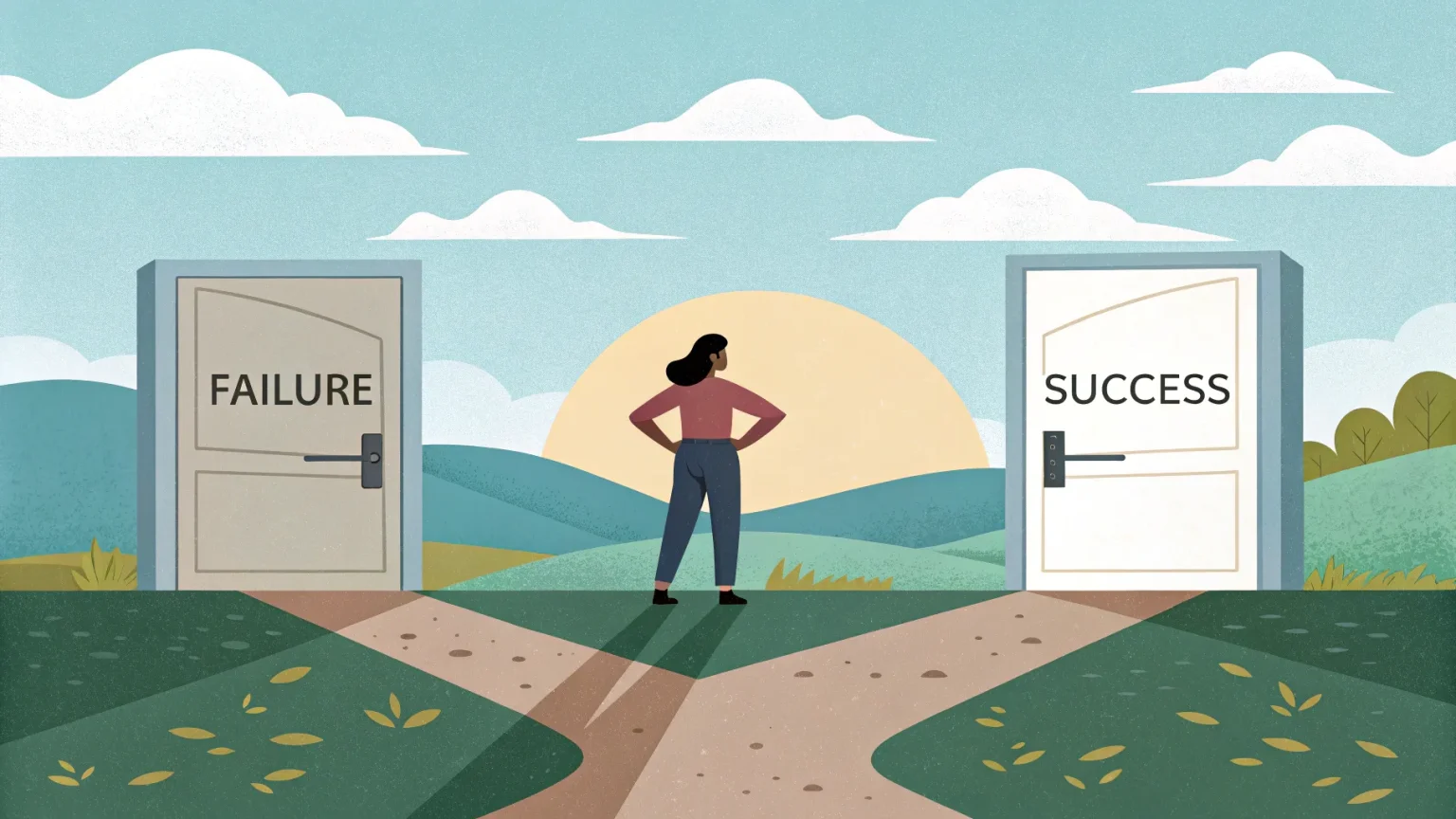
When contemplating starting a business or taking on a scary new venture, most of us immediately jump to the worst-case scenario. “What if it fails?” becomes our default question, casting a shadow over our dreams before we even begin. But I’ve learned through years of coaching executives and founders that we’re asking ourselves the wrong question entirely.
The question we should be asking is: “What if it succeeds?”
This simple shift in perspective changes everything. By reframing our internal dialogue from negative to positive, we open ourselves to possibilities rather than limitations. The quality of our questions directly impacts the quality of our lives and decisions.
The Power of Positive Framing
When we ask “What if it fails?” we’re immediately putting ourselves in a defensive position. We start looking for all the ways things could go wrong, all the reasons we shouldn’t try, and all the potential pain points. This negative framing activates our fear response and often paralyzes us from taking action.
But flip the question to “What if it succeeds?” and suddenly the entire mental landscape changes. Now we’re considering:
- How our lives might transform for the better
- The impact we could have on others
- The fulfillment we might experience
- The legacy we could build
This isn’t about blind optimism or ignoring risks. It’s about giving equal or greater mental space to the positive outcomes that could emerge from our courage.
Living Out Your Dream
When we focus on success rather than failure, we connect with our deeper motivations. “I get to live out my dream. I get to fulfill my life in a way that I want to fulfill it.” These aren’t just nice thoughts—they’re powerful drivers that can sustain us through the inevitable challenges of entrepreneurship.
Throughout my career coaching startup founders and executives, I’ve witnessed how this mental shift transforms not just outcomes but the entire journey. Those who focus primarily on avoiding failure tend to play small, make conservative choices, and often experience the very thing they feared—failure—because they never fully committed.
In contrast, entrepreneurs who orient themselves toward success tend to:
- Take calculated risks with greater confidence
- Bounce back faster from setbacks
- Attract more resources and supporters
- Find creative solutions to obstacles
- Experience more joy in the process
The path isn’t necessarily easier for these success-oriented founders, but their relationship with the challenges is fundamentally different. They see obstacles as part of the journey toward success rather than evidence that failure is imminent.
Retraining Your Brain
Shifting from “What if it fails?” to “What if it succeeds?” isn’t just a one-time decision. It’s a practice that requires consistent attention. Our brains have a natural negativity bias—an evolutionary adaptation that helped our ancestors survive by scanning for threats. In modern entrepreneurship, this bias often does more harm than good.
I’ve found that making this shift requires intentional effort. When I catch myself spiraling into failure scenarios, I consciously redirect my thoughts toward success possibilities. Over time, this becomes more natural, though I don’t think the tendency toward negative framing ever completely disappears.
The most successful entrepreneurs I’ve worked with aren’t fearless—they’ve just developed the habit of giving more mental real estate to success than to failure.
Fear will always be present when we’re doing something meaningful. The question is whether that fear will be in the driver’s seat or merely a passenger on your journey.
So the next time you find yourself hesitating at the edge of a new venture, pause and notice which question you’re asking yourself. Then deliberately shift to “What if it succeeds?” and notice how your energy, creativity, and courage expand in response. Your business deserves that question—and so do you.


