

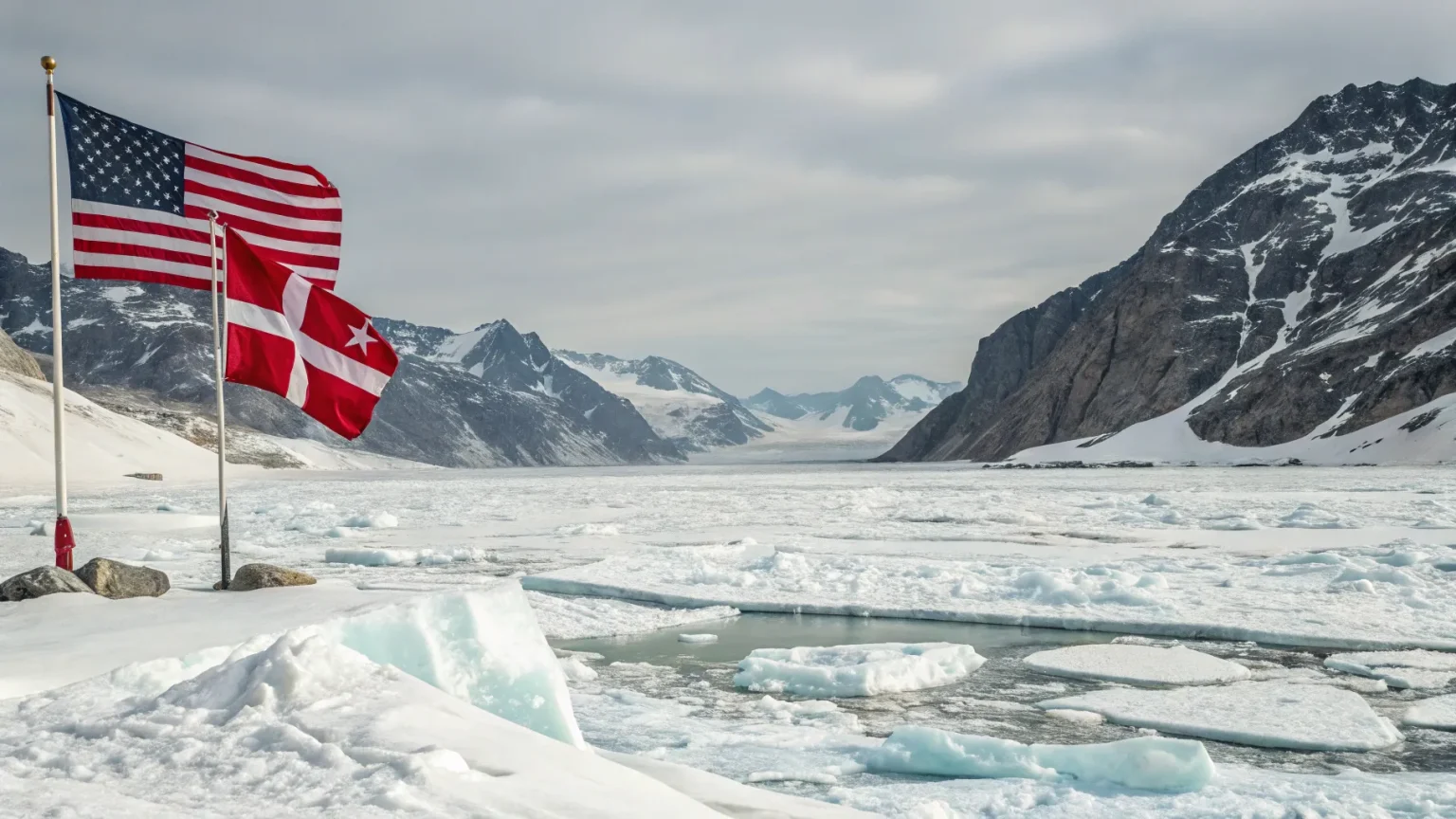
A fresh comment from Washington has revived a once-shelved idea: the United States buying Greenland. In an interview, U.S. Treasury Secretary Scott Bessent said President Donald Trump’s interest in acquiring the Arctic island is “not something new,” pointing to a history of American overtures for the territory controlled by Denmark. The remarks, made to CNBC, have stirred questions about strategy, economics, and diplomacy.
“President Donald Trump’s bid to acquire Greenland is ‘not something new,’” said U.S. Treasury Secretary Scott Bessent, speaking to CNBC.
The statement adds new heat to a plan that sparked global headlines in 2019. Back then, Danish leaders rejected the idea. The episode led to a canceled state visit and sharp exchanges between allies.
Historical Efforts To Buy The Island
U.S. interest in Greenland goes back more than a century. After purchasing Alaska in 1867, American officials studied whether to add Greenland to U.S. territory. In 1917, the United States bought the Danish West Indies, now the U.S. Virgin Islands, showing both countries had a record of territorial deals.
In 1946, after World War II, the United States again approached Denmark about purchasing Greenland. The request did not move forward. Instead, the island became central to U.S. defense operations in the Cold War.
Today, the U.S. Air Force operates Thule Air Base in northwest Greenland. It supports missile warning, space tracking, and Arctic operations. That presence reflects the island’s strategic value between North America and Europe.
Why Greenland Matters
Greenland, home to roughly 56,000 people, sits on shipping lanes that could grow as Arctic ice retreats. Its location provides early warning time in a conflict and supports North Atlantic security. The island’s ice sheet also makes it a focal point in climate research.
Economically, Greenland holds resources such as rare earth elements, zinc, and iron ore. Greenlandic and Danish authorities have debated how to develop these resources while protecting the environment. A major mining project targeting rare earths faced resistance over uranium byproducts, showing the trade-offs at stake.
- Strategic location for U.S. and NATO defense.
- Potential for minerals critical to modern technology.
- Arctic shipping routes may expand as ice coverage changes.
Diplomatic Reactions And Legal Realities
When President Trump floated the idea in 2019, Denmark’s prime minister called it “absurd.” Greenland’s government also said the island was not for sale. The exchange strained ties, but cooperation later resumed, including U.S. economic support.
Any transfer of Greenland would require consent from Denmark and Greenland’s own government. Greenland has broad self-rule under the Kingdom of Denmark. Its leaders have emphasized the right to decide their future.
Legal experts say a purchase would be complex. It would involve domestic approval in both countries and careful consideration of Greenlanders’ wishes. That makes a quick deal unlikely.
Security And Industry Implications
Bessent’s comment frames the idea as part of a longer history rather than a surprise. Supporters argue U.S. ownership could lock in defense access, secure minerals, and give Washington a stronger Arctic foothold. Critics warn it could sour relations with Denmark and ignore local autonomy.
Industry analysts note that securing rare earth supply is a U.S. goal. Greenland could help diversify away from dominant suppliers. But building mines in the Arctic is costly and faces strict permitting and community review.
Defense planners have also sharpened focus on the High North. Russia’s military activity and China’s interest in Arctic shipping have raised attention. Greenland’s position is central to radar, satellite tracking, and transatlantic logistics.
What To Watch
Washington and Copenhagen have recently emphasized cooperation rather than ownership. The United States opened a consulate in Nuuk in 2020 and introduced funding for local projects. Those steps suggest practical engagement is more likely than a sale.
Key signals to monitor include Greenland’s stance on resource development, U.S. investments in Arctic infrastructure, and NATO plans for the North Atlantic. Any shift from partnership to purchase would face strong political hurdles.
Bessent’s remarks remind observers that the idea of acquiring Greenland has roots in earlier U.S. policy. But interest and feasibility are different questions. For now, the path forward runs through tighter economic and security ties with Greenland and Denmark, rather than a change of sovereignty. If strategic pressures grow or resource needs intensify, the debate could resurface. The next chapter will depend on local consent, allied unity, and the costs of operating in the Arctic.


