

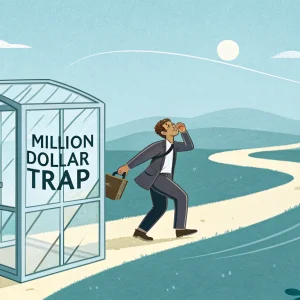
I’ve noticed a dangerous pattern in how many entrepreneurs approach their goals. When someone tells me they need to make a million dollars by July, they’ve already created their first obstacle. The moment you attach a future deadline to your emotional state, you begin manufacturing resistance in your life.
This resistance isn’t just psychological—it manifests as real barriers to your success. I’ve seen this countless times in my career working with athletes, entrepreneurs, and business leaders. The pattern is always the same: the more you fixate on future results rather than present actions, the more you sabotage your own progress.
The Time Paradox
Here’s what happens when you focus on future outcomes: you immediately create a time shortage in your mind. One week after setting that July goal, you feel even shorter on time. Three weeks later, the pressure intensifies further. This accelerating sense of scarcity creates anxiety, poor decision-making, and ultimately, failure.
The irony is that by fixating on the future, you’re actually wasting your most valuable resource: today. When I was building my career at Leigh Steinberg Sports & Entertainment, I learned that the most successful people aren’t those who obsess over future milestones but those who maximize their present moments.
View this post on Instagram
Breaking the Resistance Cycle
To overcome this self-created resistance, we need to shift our focus from outcomes to processes. Instead of thinking about making a million dollars by July, ask yourself:
- What specific value can I create today that moves me toward my goal?
- What relationships can I nurture today that will support my journey?
- What skills can I develop today that will increase my worth?
This shift isn’t just philosophical—it’s practical. When I coach business leaders, I emphasize that today’s actions compound over time. The million-dollar goal becomes the natural result of consistent daily value creation, not an arbitrary deadline that creates stress.
The Power of Present-Focused Goals
I’ve found that the most effective goals are process-oriented rather than outcome-oriented. Instead of “I need to make a million dollars by July,” try “I will make five valuable connections each day” or “I will solve one significant problem for my clients every week.
These present-focused goals accomplish two things: they keep you engaged in activities that actually create value, and they prevent the emotional resistance that comes from future-thinking.
The minute you attach your emotions to a future time, not today, you’re creating resistance.
This principle applies beyond business. In my personal life, I’ve seen how focusing on future outcomes creates unnecessary pressure in relationships, health goals, and personal development. The alternative—staying present and committed to daily excellence—produces better results with less stress.
Reframing Your Approach
If you’re currently chasing a deadline-driven goal, try this reframe: What can you do right now, today, that would make that future goal more likely? Then do that thing with full attention and commitment.
The path to extraordinary achievement isn’t paved with future-focused anxiety. It’s built through present-moment excellence, repeated consistently. When you master this approach, you’ll find that those million-dollar goals take care of themselves—often faster than you expected, and without the resistance you’ve been fighting.
Remember, the only moment you can actually control is this one. Make it count.
Frequently Asked Questions
Q: How can I balance long-term planning with staying present?
Long-term planning is valuable when it informs your present actions rather than creating emotional attachment to future outcomes. Set your direction with long-term goals, but focus your emotional energy on executing today’s tasks with excellence. Review your progress periodically without becoming emotionally invested in the timeline.
Q: Aren’t deadlines important for accountability?
Deadlines can be useful tools when they create structure rather than emotional pressure. The key difference is whether you’re using the deadline as a practical organizing principle or attaching your sense of worth and success to meeting it. Effective deadlines focus on completion of processes rather than achievement of outcomes.
Q: What if I’m in a situation where I genuinely need to achieve a financial goal by a certain date?
When facing true time constraints, break down what needs to happen between now and your deadline into daily actionable steps. Focus your emotional energy on completing those daily actions rather than worrying about the final outcome. This approach reduces resistance while still moving you toward your necessary goal.
Q: How do I know if I’m creating resistance in my goal-setting?
Watch for signs of increasing anxiety as your deadline approaches, feelings of time scarcity, or making decisions from a place of pressure rather than clarity. Physical symptoms like sleep disruption or constant worry about the future are also indicators. If you notice these patterns, refocus on what you can accomplish today.
Q: Can this present-focused approach work for team leadership?
Absolutely. When leading teams, establish clear directions and milestones, but emphasize daily excellence and process improvements. Celebrate present wins rather than just future achievements. Teams that focus on maximizing today’s opportunities consistently outperform those driven primarily by future-focused pressure.


