

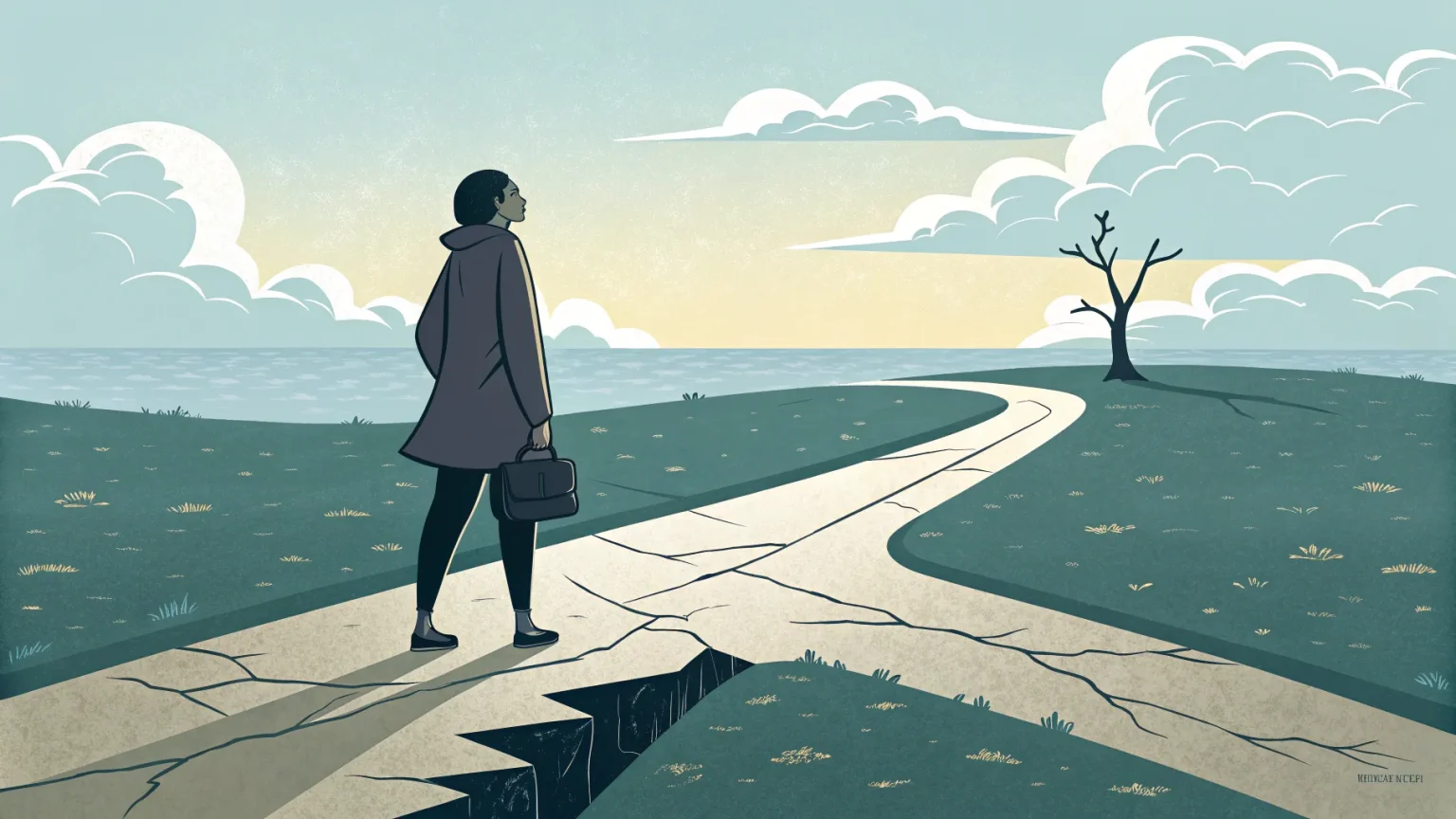
Why do we wait until everything falls apart before we change? For most of us, our catalyst for transformation isn’t success—it’s pain. It’s failure. It’s when our lives crumble so completely that we finally face ourselves honestly.
I’ve seen this pattern repeatedly in my years coaching executives and founders. We humans are remarkably resistant to change until we absolutely have to. We ignore the warning signs, push through the discomfort, and maintain unhealthy patterns until something breaks.
But what if we didn’t need pain to be our primary teacher? What if we could learn to listen sooner to those quiet signals that something isn’t right?
Catching Problems Before They Become Crises
The most effective leaders and entrepreneurs I’ve worked with share a common trait: they’ve developed the ability to recognize warning signs early. They pay attention to:
- Their internal self-talk and recurring thoughts
- Physical tension or discomfort that signals stress
- Patterns in their decision-making that lead to similar outcomes
- Feedback from trusted colleagues and friends
These signals are always present, whispering to us long before they start shouting. The challenge is developing the awareness to hear them and the courage to act on what they’re telling us.
Change doesn’t have to hurt to happen. This is perhaps the most important lesson I’ve learned in my work with high-performing individuals and teams. Preventative growth is far less painful than forced transformation.
Learning from Failure Without Being Defined By It
Of course, we’re all going to fail. Repeatedly. That’s part of being human and certainly part of any worthwhile endeavor. The difference between those who grow through failure and those who are crushed by it often comes down to how they process these experiences.
When failure happens, ask yourself:
- What specific actions or decisions contributed to this outcome?
- What assumptions did I make that proved incorrect?
- What can I learn that will make me better next time?
- How can I use this experience to help others?
By extracting the learning from our mistakes, we transform failures from endpoints into stepping stones. This doesn’t mean failure won’t hurt—it often does—but it doesn’t have to be the only way we learn.
I’ve coached founders who lost millions before they were willing to change their approach. I’ve worked with executives who damaged important relationships before recognizing their communication patterns needed work. The lessons they eventually learned were valuable, but the cost was unnecessarily high.
Creating a Practice of Self-Awareness
Developing the ability to catch problematic thoughts before they become entrenched patterns requires practice. It’s a muscle that strengthens with use. Some practical approaches I recommend include:
Regular reflection time is non-negotiable. Even 10 minutes daily to check in with yourself can reveal patterns you might miss in the rush of daily activity. Ask yourself what’s working, what isn’t, and what needs adjustment.
Seek feedback actively and often. Create environments where people feel safe telling you the truth about your blind spots. Thank them when they do, even if it stings.
Notice physical signals. Our bodies often recognize problems before our conscious minds do. Tension, fatigue, and irritability are data points worth paying attention to.
The most successful people I’ve worked with aren’t those who never fail—they’re those who learn efficiently, adapting quickly based on both subtle signals and direct feedback. They don’t need catastrophic failure to prompt change.
We all have the capacity to become more attuned to the early warning signs in our lives and work. By developing this awareness, we can make changes when they’re still relatively easy, rather than waiting until change is forced upon us through pain or failure.
The next time you notice that quiet voice suggesting something isn’t quite right, or feel that tension that signals misalignment with your values or goals, don’t wait. That awareness is a gift—a chance to adjust course before you hit the wall that would otherwise force the lesson.
Growth doesn’t have to come through pain. Sometimes, the most powerful changes happen when we simply choose to listen sooner.


