

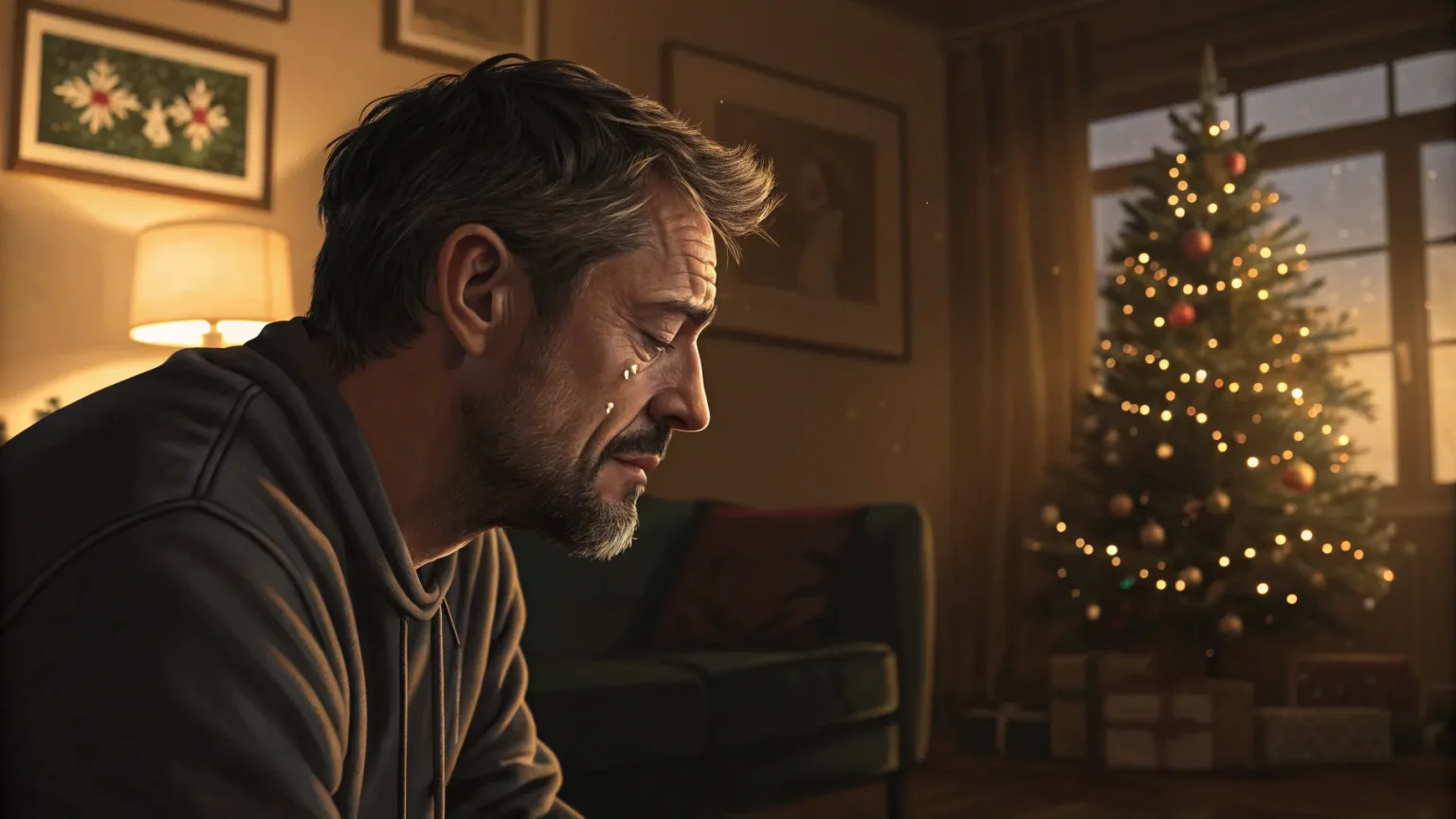
This past Christmas, Jennifer and I sat in a quiet house. That silence brought back a loud memory. My grandpa Fry, standing in a crowded living room, unfolded a worn slip of paper and tried to speak. He could barely get the words out. His hands shook. Tears ran down his cheeks. And the whole room leaned in.
Here is my opinion: we need more grown men who cry. Not just at funerals. Not only in secret. In front of families. In front of friends. In the moments that matter. Tears are not weakness. Tears are truth.
The Prayer That Taught Me Courage
Every year, Grandpa cleared his throat and read the same short prayer. He always broke down. He never apologized. He never hid. He let his emotion do the teaching.
“Our dear heavenly father, we come again to thee this Christmas season thanking thee that thou has sent thy only begotten son into this sinful world that whosoever believeth in him shouldn’t perish, but have everlasting life.
May we live a life that is pleasing in thy sight, so that none of our family will be missing in heaven. Bless our family gathering here tonight. It is my prayer. Amen.”
That simple, trembling voice shaped me. It set the tone for what mattered: faith, family, and a life that matches our words. His tears were not drama. They were alignment.
What Crying from Strong Men Signals
Some insist men should be stoic at all costs. I’ve led companies and guided CEOs for decades. Stoicism has its place. But constant control can turn into emotional distance. Families feel it. Teams feel it. Silence builds walls.
Here’s what a man’s tears can signal when they show up at the right time.
- Values that aren’t just talked about, but felt.
- Humility that lets others step in and speak up.
- Safety that invites honesty from the whole room.
- Memory that turns a moment into a marker for life.
- Strength that refuses the mask of perfection.
These signals shape cultures. They shape kids. They shape leaders. A tear can say what a speech never could.
The Pushback—and Why It Falls Flat
Here are the common objections I hear. They sound tough. They don’t hold up.
- “Crying makes you look weak.” No. Pretending you don’t feel anything is what weakens trust.
- “It distracts from the message.” Not when it’s true. It focuses the room on what counts.
- “People will lose respect.” In my experience, respect grows when leaders show real heart.
My grandfather didn’t lose respect. He gained influence. His yearly prayer did not make him smaller. It made the rest of us braver.
What I Learned in a Quiet House
Sitting with Jennifer this year, the house felt empty. Yet Grandpa’s voice filled it. The quiver. The pause. The line about no one missing. That line still lands. It calls for a life that matches our claims. It calls for words and actions to meet.
Emotion is not the enemy of clarity. It can be the proof of conviction. Leaders, fathers, sons—your people need to see what moves you. Not every day. Not for show. But when it matters most.
“I’m grateful for grown men who cry.”
That gratitude runs deep. It shaped how I lead, how I coach, and how I love my family. Tears remind me to choose presence over polish. They remind me to put people first.
A Simple Challenge
You don’t need a stage to practice this. You need a moment that matters and the courage to be real.
- Thank the person who showed you how to feel, even if they’re gone.
- Tell your family what matters most while you still can.
- Let your voice shake when your heart shakes. Don’t hide it.
Let’s raise boys who see strong men cry and know it’s safe to care. Let’s lead teams that trust us because they see our hearts, not just our plans.
If you’re lucky, your kids and grandkids will remember your tears as much as your words. And that memory might be the thing that keeps no one missing.
Who are you grateful for?


