

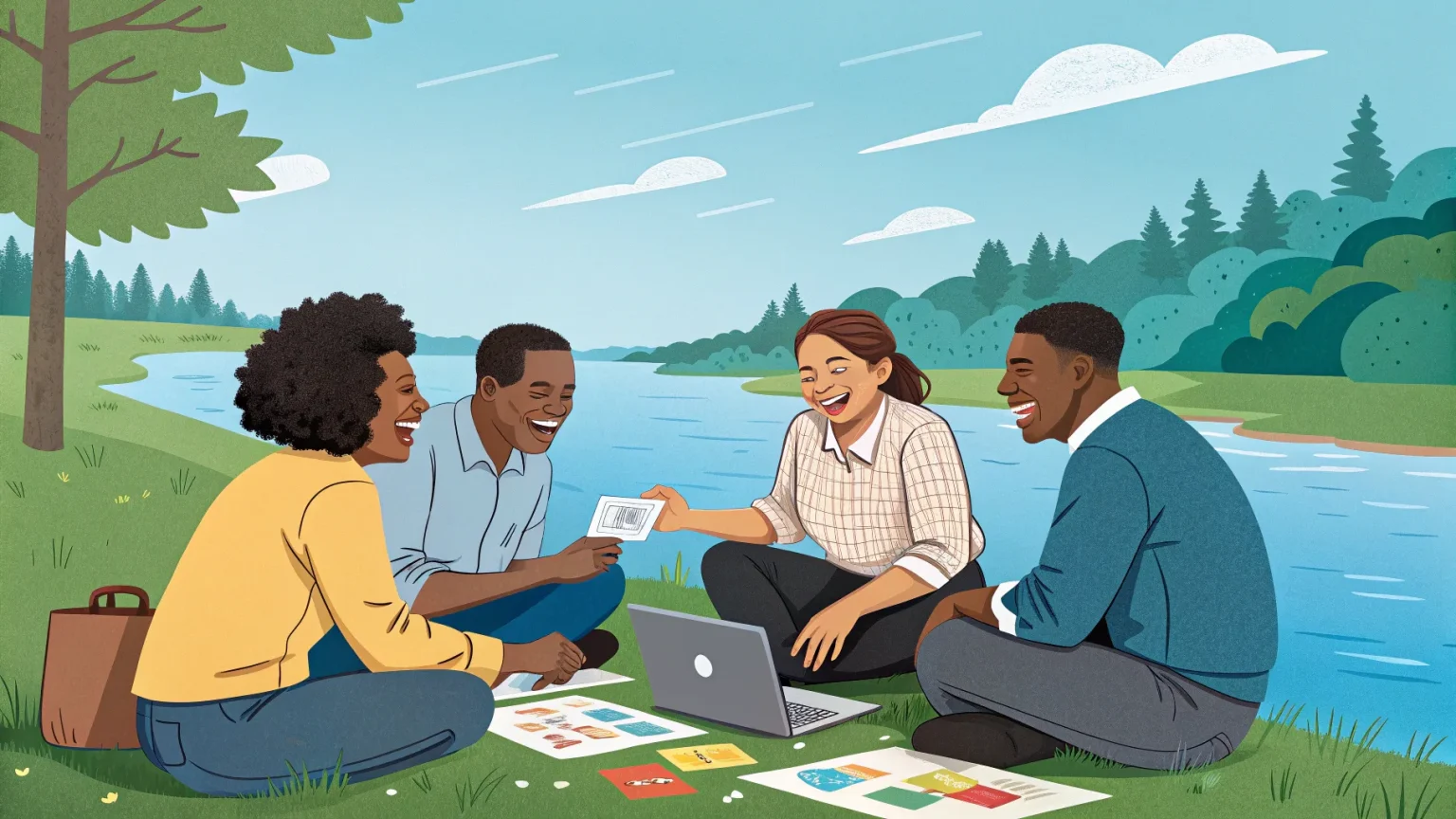
I believe great work happens when we stop treating it like a grind and start treating it like play. The past few days proved that, not with theory, but with experience. We created an intimate space, walked by the river, set clear intentions, and watched ideas turn into plans. My view is simple: productivity without joy is fragile; productivity with joy is unbeatable.
My Case for Intimate, Playful Work
Most people try to force results. They pack calendars, stack meetings, and drown in noise. That’s not creation. That’s compliance. Real progress thrives in safe spaces where people feel seen, where honesty is welcome, and where the body gets to move while the mind thinks. When the setting is right, people move fast. Not rushed—fast.
“I felt like we got more done in a day than most people get done in years.”
That wasn’t hype. That was clarity. We cut through the fluff, set direction, and moved. It wasn’t magic. It was design.

Why This Works
An experience can change the pace of progress in an instant. It’s one thing to read something I write or watch a video. It’s another to be there, in person, building in real time.
“Let’s walk the river and process it.”
Walking shifts energy. Nature clears the head. Voices get unfiltered. In that space, courage shows up. Ideas stop being abstract and start becoming actions.
“We can have your outline done today in 20 minutes if you guys want.”
Speed like that comes from trust and focus. It also comes from stripping away performance and letting people tell the truth. Vulnerability isn’t soft; it’s efficient. When people feel safe, they stop pretending. That’s when real work begins.
The Power of Intimacy and Team
We built this as a place where people can land in their purpose. That requires two things: a container that feels sacred, and a team that cares more about the person than the product. When those are present, everything accelerates.
“This blurs the lines between work and play.”
Exactly. Play isn’t the opposite of work. Play is the state where work stops feeling like punishment. In that state, confidence rises.
“I know this will be something and nothing can stop me. I feel like a winner.”
That’s not ego. That’s alignment. When someone hits that frequency, plans stick. Follow-through becomes natural.
What People Think They Need—And What They Really Need
Many believe they need more time, more tech, more data. What they need is a place to tell the truth, a rhythm that invites flow, and a team that listens. We built that on purpose.
- Small group, high trust.
- Nature, movement, and silence between sprints.
- Clear outcomes, short deadlines, zero fluff.
- Honest feedback without shame.
- Celebration of wins, not just checklists.
These choices sound simple. They are. They’re also rare. And that’s why they work.
Answering the Skeptics
Some say intensity like this can’t last or scales poorly. Wrong metric. You don’t need it every day. You need it at the right moments—kickoffs, resets, bottlenecks. Short, deep bursts create leverage for months.
Others think joy makes people soft. The opposite is true. Joy makes people brave. When work feels like play, people take ownership and move faster with less drama.
What This Means for You
If your work feels heavy, redesign the setting, not just the schedule. Here’s how to start this week.
- Choose one project that matters. Name the outcome in one sentence.
- Gather 3–5 people who care. No spectators.
- Meet in a place with light and space. Go for a short walk before you begin.
- Set a 90-minute sprint. Phones down. One decision-maker.
- End with a simple plan: who does what by when.
Do that and watch the fog lift. You’ll see the path, not just the tasks.
Closing Thought
My mission is to help creators, founders, and leaders stop grinding and start creating with joy. Work should feel like play again. Build spaces that honor honesty, movement, and connection. Make intensity short and focused. Choose courage over posturing. If you do, you won’t just get more done—you’ll do what matters, and you’ll enjoy doing it.


