

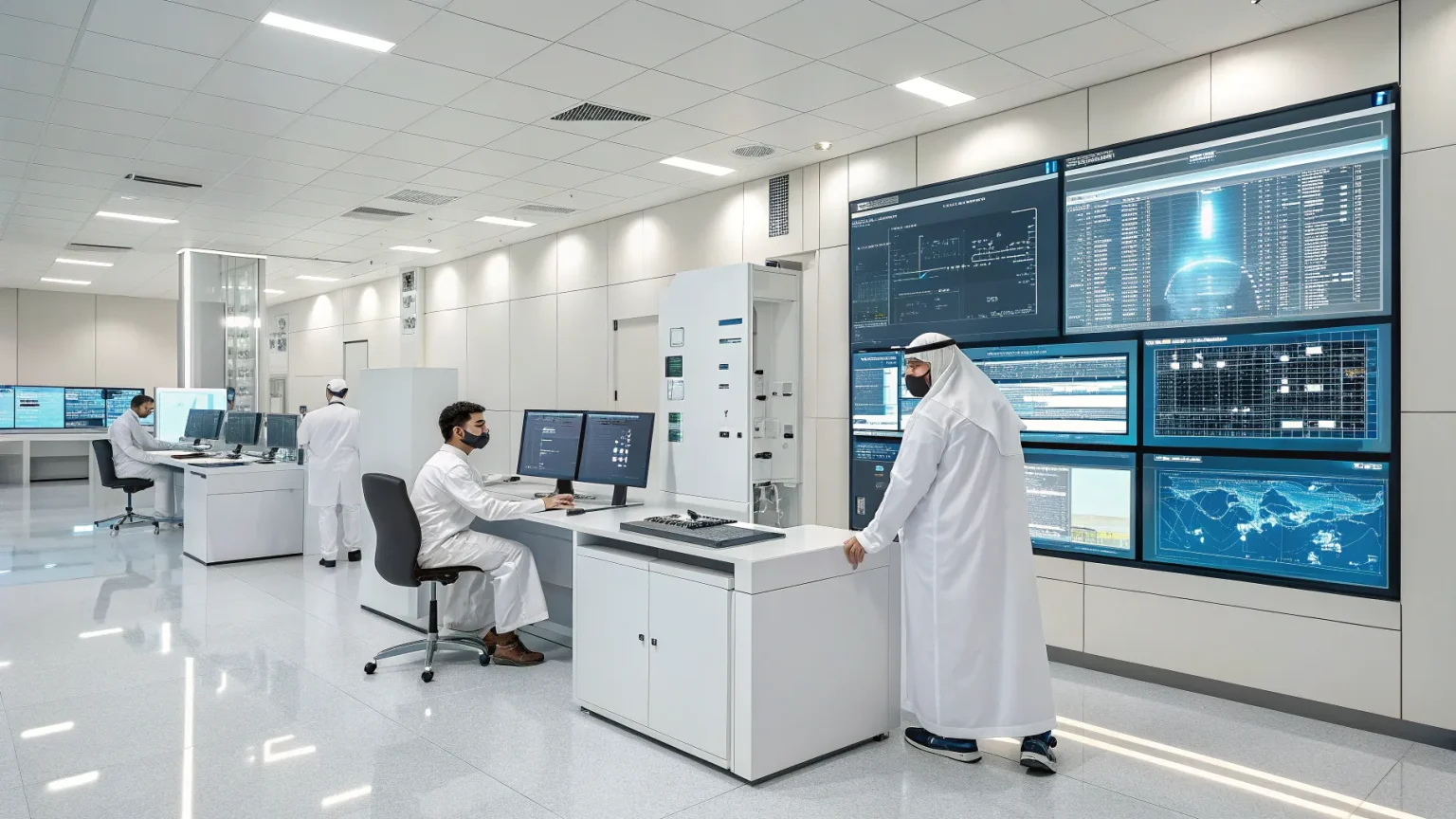
Abu Dhabi is moving to shape how artificial intelligence serves Arabic speakers and regional priorities, steering work on a carefully calibrated large language model designed to balance performance with safety and cultural norms. The effort, led by Emirati research centers and technology firms, comes as governments and companies race to deploy AI at scale across public services and industry.
The project’s core aim is clear from its guiding phrase:
“The Emiratis’ carefully calibrated large language model”
Work is centered in the United Arab Emirates, with teams focusing on accuracy, multilingual capability, and guardrails for sensitive content. The approach reflects the UAE’s wider strategy to become a leading AI hub while keeping tight control over risk.
Strategic Context and Recent Moves
The UAE has spent years building AI capacity. Abu Dhabi’s Technology Innovation Institute released Falcon models in 2023, helping spur open-source work for Arabic and English. The Mohamed bin Zayed University of Artificial Intelligence has trained specialists, while private firms such as G42 scaled cloud computing and data services for the region.
Partnerships with global players have grown. Emirati groups have worked with US and European companies to expand data centers, secure chips, and test safety tools. The aim is to blend local oversight with top-tier research and compute, while meeting export and security rules.
What “Carefully Calibrated” Means
Calibration here points to choices in training data, fine-tuning, and safety filters that reflect regional law and expectations. It also suggests tighter controls for harmful content, privacy, and misinformation, including in Arabic dialects where automated moderation is less mature.
Engineers often face trade-offs when tuning such models:
- Reduce harmful or illegal content without blocking legitimate debate.
- Improve Arabic fluency while keeping strong English performance.
- Increase factual accuracy while avoiding overcautious refusals.
- Comply with local rules and global standards at the same time.
Teams are likely using instruction tuning, red-teaming, and classifiers to shape outputs. They also need rigorous evaluation sets for Modern Standard Arabic and major dialects to spot gaps in reasoning, safety, and bias.
Use Cases and Limits
Officials and executives want dependable systems for public services, education, health, finance, and energy. In government, a calibrated model could answer routine questions, draft documents, and translate. In business, it could assist call centers and analytics in Arabic and English.
But well-known hurdles remain. AI models can misstate facts, reflect bias in training data, and leak personal information if controls fail. Overly strict filters can also block useful information and frustrate users. The challenge is to set guardrails that are clear, testable, and updated as threats evolve.
Why Arabic AI Needs Special Attention
Arabic is high-variance, with rich dialects and code-switching. Data is uneven across topics and countries, which makes high-quality pretraining harder. Safety tools trained mostly on English can miss context in Arabic and fail to catch harmful prompts or outputs.
To close the gap, Emirati teams are expected to expand curated Arabic corpora, add domain data for law and health, and improve dialect coverage. Transparent benchmarks for Arabic safety and reasoning would help the wider research community measure progress.
Governance, Data, and International Ties
Data protection rules and security vetting will shape how the model is trained and deployed. Hosting sensitive data inside the country and logging model interactions can improve oversight, but also raises questions about retention and access. Clear policies on redress, transparency, and appeal processes will be key for public trust.
International cooperation is also in play. Cloud providers and chip makers are needed for scale, yet governments are tightening controls on advanced hardware. To keep momentum, Emirati projects will have to align with allies on safety testing and supply chains while protecting national interests.
What to Watch Next
Key signals of progress will include published benchmarks for Arabic accuracy and safety, third-party audits, and real-world pilots in government services. Open models or APIs with detailed documentation would help researchers validate claims and find weaknesses early.
The market impact may be largest in customer service, media, and education, where high-quality Arabic output is scarce. If the model meets its goals, it could set a regional standard and push global developers to improve multilingual safety and performance.
The UAE’s calibrated path reflects a practical view: deploy AI where it adds value, and set rules before problems spread. The next phase will test whether careful tuning can deliver trustworthy systems at scale without slowing useful innovation.


