

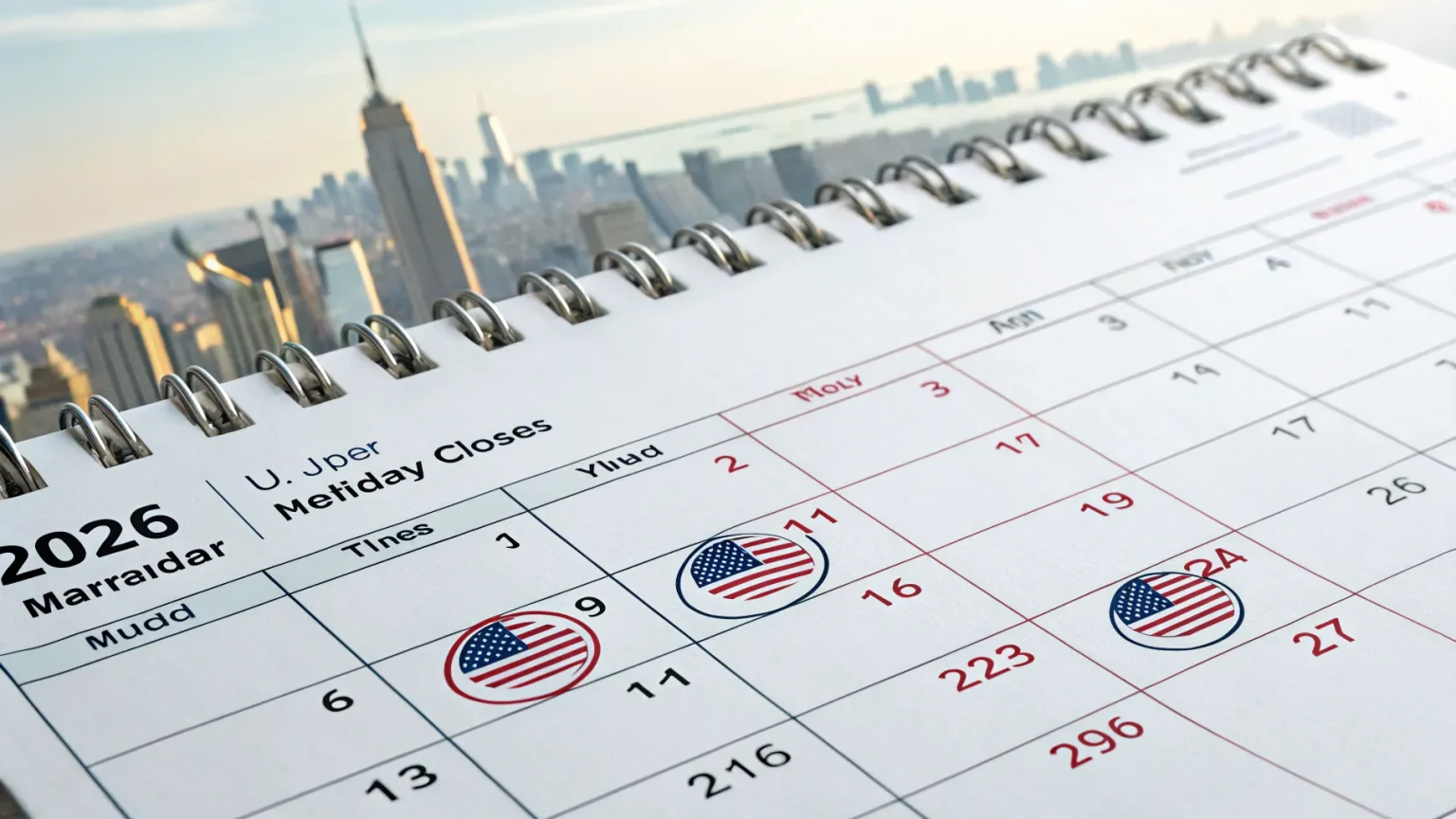
U.S. stock exchanges will close on a familiar slate of holidays in 2026, giving traders, investors, and companies clear dates to plan around. The New York Stock Exchange and Nasdaq follow federal holidays and exchange rules, shaping trading schedules across Wall Street and Main Street. The calendar also includes expected early-closing days that can thin liquidity and shift market activity.
The message for investors is simple. As one announcer put it, “Turn on your out-of-office email reply and book a vacation because these are the 2026 stock market holidays when traders have the day off!”
What Markets Will Close in 2026
Based on standard exchange calendars, U.S. equity markets are expected to close on the following dates in 2026. Settlement for trades and certain back-office functions follows separate schedules, but cash equity trading on primary venues will halt.
- New Year’s Day — Thursday, January 1
- Martin Luther King Jr. Day — Monday, January 19
- Presidents’ Day — Monday, February 16
- Good Friday — Friday, April 3
- Memorial Day — Monday, May 25
- Juneteenth National Independence Day — Friday, June 19
- Independence Day (Observed) — Friday, July 3
- Labor Day — Monday, September 7
- Thanksgiving Day — Thursday, November 26
- Christmas Day — Friday, December 25
Because Independence Day falls on Saturday in 2026, exchanges are expected to observe the holiday on Friday, July 3. If an observed date changes, exchanges typically post updates well in advance.
Early Closes And Liquidity Considerations
Exchanges often shorten trading on select days, with a 1 p.m. Eastern close for cash equities. In 2026, early closes are expected on:
- Wednesday, December 24 (Christmas Eve)
- Friday, November 27 (the day after Thanksgiving)
Some years also include early closes around Independence Day if operational needs arise. Market participants should check official notices ahead of each holiday week.
Early closes can reduce trading volume and widen bid-ask spreads. Portfolio managers often rebalance earlier in the week. Retail participation can rise near the open, while institutional flows may concentrate near the close.
Why Holiday Closures Matter
Holiday schedules affect pricing, liquidity, and settlement. Corporate actions, such as dividends and splits, follow set timetables that take closures into account. Options expiration and index rebalances can also cluster near these periods, requiring careful planning.
Shortened sessions may prompt brokers to adjust margin calls and cutoff times. Fund managers managing cash need to schedule subscriptions and redemptions with clearing banks in mind. Algorithmic strategies may downshift to match reduced liquidity.
Historical Patterns And Planning Tips
Trading often slows ahead of long weekends. Many managers prefer to limit risk into market closures, especially during periods of policy announcements or earnings reports. That can dampen volatility into a holiday and spark catch-up moves when markets reopen.
Investors and companies can prepare by syncing key deadlines with the calendar:
- Confirm brokerage cutoff times for orders, options exercises, and cash transfers.
- Review settlement cycles, especially for trades near quarter-end.
- Schedule earnings releases away from early-close afternoons.
- Coordinate board meetings and shareholder votes outside holiday weeks.
The settlement cycle for U.S. equities moved to T+1 in 2024. That change makes timing near holidays even more important for funds managing cash, collateral, and corporate actions.
What To Watch Next
Final calendars come from the exchanges and are posted each year. Derivatives venues, bond markets, and futures markets may follow different schedules. The Securities Industry and Financial Markets Association often issues separate guidance for fixed income.
Investors should verify dates on exchange websites as the year approaches. Brokerage platforms will post platform-specific hours and order deadlines. Any federal changes to holiday observance would filter through to exchange calendars.
With the dates above, traders can plan rebalances, tax moves, and cash management well ahead of time. The schedule sets expectations for liquidity and helps keep markets orderly during the year’s busiest travel weeks.
The bottom line: U.S. stock markets have a clear 2026 holiday plan. Mark the closures, note the early sessions, and align trading and operations to avoid avoidable surprises.


