

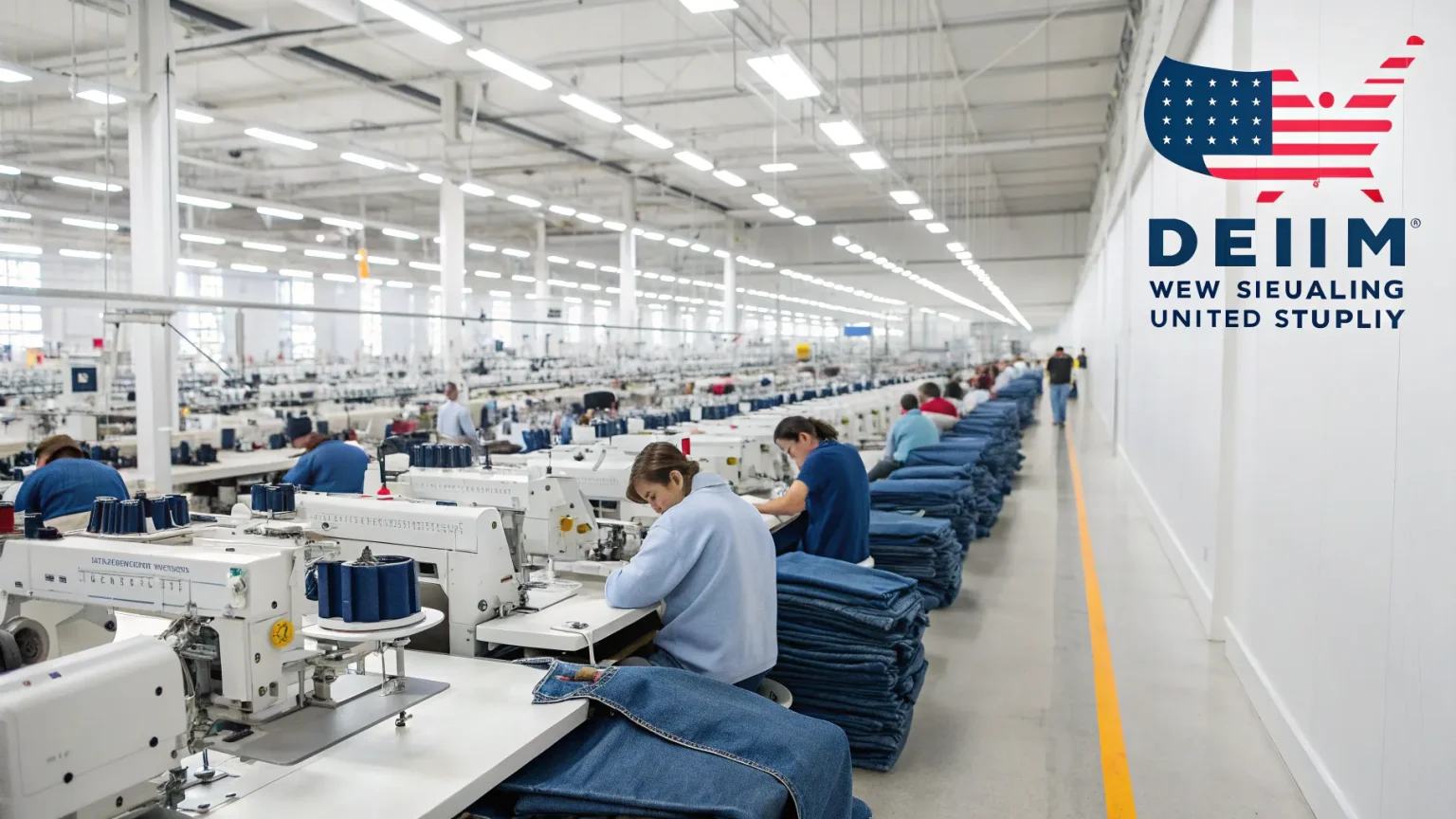
As shipping costs, geopolitical frictions, and demand swings reshape fashion, American denim makers are moving production closer to home. Brands are testing new mills, reviving sewing floors, and tightening links from cotton to finished jeans to restore control and reliability.
The push has gathered momentum over the past few years in Southern California, the Carolinas, Texas, and Louisiana. It follows pandemic-era disruptions and volatile lead times that left retailers short on core items. Companies say the goal is faster response, steadier quality, and clearer oversight of labor and environmental practices.
Why Reshoring Denim Is Back
Denim has long cycled between low-cost offshore sourcing and premium domestic production. The last major U.S. selvedge denim mill, Cone Denim’s White Oak plant in Greensboro, shut in 2017, symbolizing a wider industry retreat. Today, the pendulum is swinging again as brands look for shorter supply lines and more transparent inputs.
“The efforts of U.S. brands to rebuild domestic supply chains … the resilience of ‘Made in USA’ denim.”
That focus reflects lessons from container backlogs, port delays, and factory shutdowns. It also mirrors consumer interest in origin stories and traceable materials, especially for durable goods like jeans that anchor many wardrobes.
New Hubs And Old Mills
A new generation of facilities is filling the gap left by legacy plants. In Louisiana, Vidalia Mills has drawn attention by weaving denim with modern equipment and vintage looms sourced from historic sites. In North Carolina, smaller cut-and-sew shops work with regional brands to keep runs tight and flexible. Los Angeles remains a center for washing, finishing, and pattern work, thanks to a cluster of specialists and design talent.
Across the border, Mexico’s established cut-and-sew base continues to serve U.S. labels under the USMCA trade framework. Many brands are blending these options, weaving fabric domestically and sewing in nearby regions to balance cost and speed.
The Cost And Capacity Challenge
Reshoring is not simple. Labor, compliance, and energy costs are higher in the United States. Denim also requires heavy machinery, skilled operators, and specialized finishing. That limits the scale at which domestic plants can produce.
Brands are adapting with smaller batches, tighter SKU counts, and on-demand drops. The approach reduces inventory risk and supports quality control, but it asks consumers to accept higher prices and retailers to plan assortments with more discipline.
- Shorter lead times help match production to actual demand.
- Smaller runs curb markdowns and waste.
- Higher costs pressure retail prices and margins.
Sustainability And Speed-To-Shelf
Environmental scrutiny is another driver. With local production, brands can verify water use in dyeing, chemical management, and worker safety. Cutting transit distances also trims emissions tied to shipping. Some mills are using certified U.S. cotton and recycling programs to meet retailer standards.
Speed matters too. Domestic weaving and sewing can shrink design-to-shelf cycles from months to weeks. That gives merchants a chance to refill bestsellers during a season rather than betting everything upfront. It also enables more frequent fit updates and capsule collections tied to direct consumer feedback.
What It Means For Workers And Consumers
For workers, the shift brings a mix of revived trades and new technical roles. Pattern makers, loom technicians, wash experts, and quality managers are in demand. Training programs, often in partnership with community colleges, are helping fill the gap created when factories closed last decade.
For shoppers, “Made in USA” denim often means higher price tags, but also clarity on origin and materials. Many labels position these jeans as long-lasting and repairable, extending wear and cutting total cost over time. Retailers are leaning on storytelling and limited editions to justify premium pricing.
Outlook: A Hybrid Supply Strategy
Few expect a wholesale return to the past. Mass-market jeans will still rely on overseas partners with scale. The likely path is hybrid: core styles sourced from near-shore or domestic plants for speed and stability, with fashion-forward or volume lines produced through global networks.
Investment decisions over the next year will hinge on consumer demand, trade policy, and energy costs. If U.S. facilities can keep improving efficiency while holding quality high, the case for local denim strengthens.
For now, the early steps are clear. Brands are prioritizing shorter chains, traceable cotton, and flexible production runs. Shoppers can expect more labels to share where their denim is woven and sewn, and why that choice shapes fit, feel, and price.
The renewed focus on domestic capability will not solve every supply risk, but it gives companies more levers to pull when the next shock hits. Watch for deeper ties between mills and designers, more collaborative forecasting, and continued testing of U.S.-made capsules as the market settles on a new balance.


