

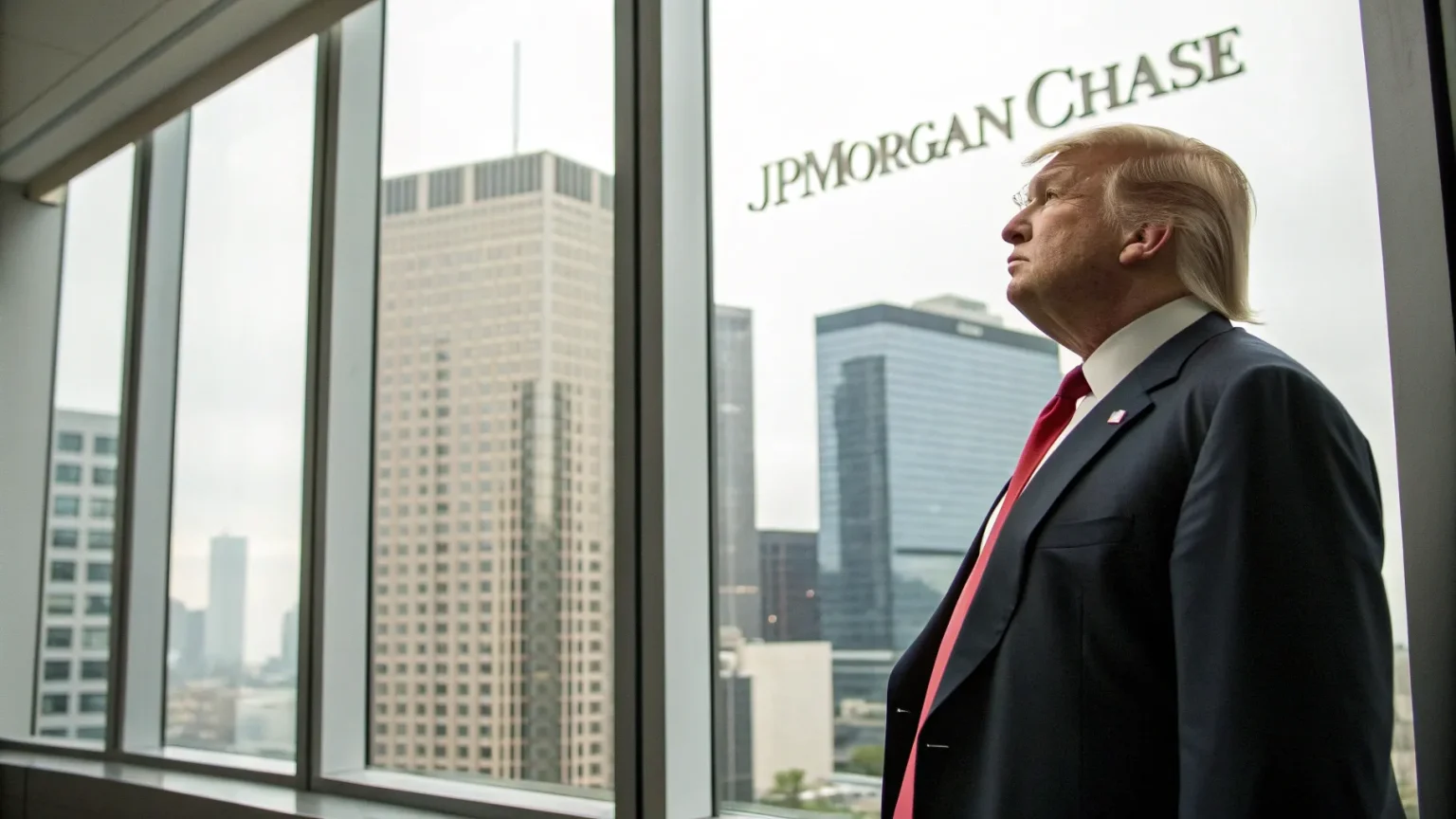
Former President Donald Trump has threatened to sue JPMorgan Chase, claiming the bank “debanked” him after the Jan. 6, 2021 attack on the U.S. Capitol. The allegation adds heat to a long-running fight over political access to financial services and how banks manage reputational and legal risk.
Trump’s threat targets the largest U.S. bank by assets. It suggests that his accounts or banking relationships were curtailed or closed in the post–Jan. 6 fallout. The dispute revives questions about how banks weigh customer conduct, public safety, and regulatory obligations.
President Trump threatened to sue JPMorgan for allegedly “debanking” him following the Jan. 6 insurrection in 2021.
What Trump Alleges
Trump contends that JPMorgan took adverse action against him because of events surrounding Jan. 6. He frames the move as politically motivated and says he is prepared to go to court. His claim mirrors broader complaints on the right about “debanking,” a term used when financial institutions close or restrict accounts for reputational or policy reasons.
The former president has long had complex banking ties. Some lenders distanced themselves from him after 2020. Those moves, reported at the time, followed public scrutiny and internal risk reviews at major banks.
Bank Policies After Jan. 6
Following Jan. 6, several large companies reassessed political giving and business relationships. Banks tightened oversight of donations through corporate PACs and reviewed high-profile clients. JPMorgan paused political contributions in early 2021 and later resumed with added criteria, according to public statements at the time.
Banks say they make account decisions under laws that require strong compliance. Know-your-customer and anti-money-laundering rules compel firms to monitor risk and potential misuse. Reputational risk committees also assess whether a client’s public conduct poses business hazards.
- Compliance programs must follow federal rules on customer due diligence.
- Firms can close accounts if they cannot manage legal or operational risk.
- Customers can challenge decisions in court, but private banks have wide discretion.
A Wider “Debanking” Debate
Trump’s threat lands amid broader fights over viewpoint discrimination in finance. Conservative politicians have accused banks of cutting off customers over politics. The issue drew attention in the United Kingdom after Nigel Farage said a bank closed his account in 2023. Regulators there pressed banks to justify closures and improve transparency.
In the United States, some states have sought to curb perceived political bias by targeting banks over environmental, social, and governance policies. Banks counter that risk decisions are nonpartisan and rooted in safety, compliance, and operational needs.
Legal and Industry Implications
A lawsuit against JPMorgan would test how far a high-profile customer can push back on account closures. Courts often uphold contract terms that give banks discretion, but legal arguments can turn on documentation, due process, and alleged discrimination.
For JPMorgan, any litigation would draw attention to internal controls and client review processes. It could also force disclosures about how decisions were made after Jan. 6. Other banks would study the case for guidance on handling public figures who bring both deposits and controversy.
Free speech advocates warn against politicizing access to finance. Banking experts note that banks face penalties if they fail to control risk. Consumer advocates want clearer rules for notice and appeal when accounts are closed.
What To Watch
Key questions remain. Did JPMorgan formally close or restrict any Trump accounts, and on what timeline. What policies or risk thresholds were applied. Will regulators weigh in on whether political activity can be a factor in account decisions.
Any formal filing by Trump would set out his claims in detail. A response from JPMorgan would outline the bank’s rationale and cite contract terms. Lawmakers may seize on the dispute to push new disclosure or due process requirements.
Trump’s threat underscores a volatile clash between politics, finance, and risk management three years after Jan. 6. If a case proceeds, it could clarify how far banks can go in dropping high-risk clients and what notice customers are owed. The outcome may influence how large institutions handle controversial figures, set precedents for transparency, and shape future state and federal policy on account closures.


