

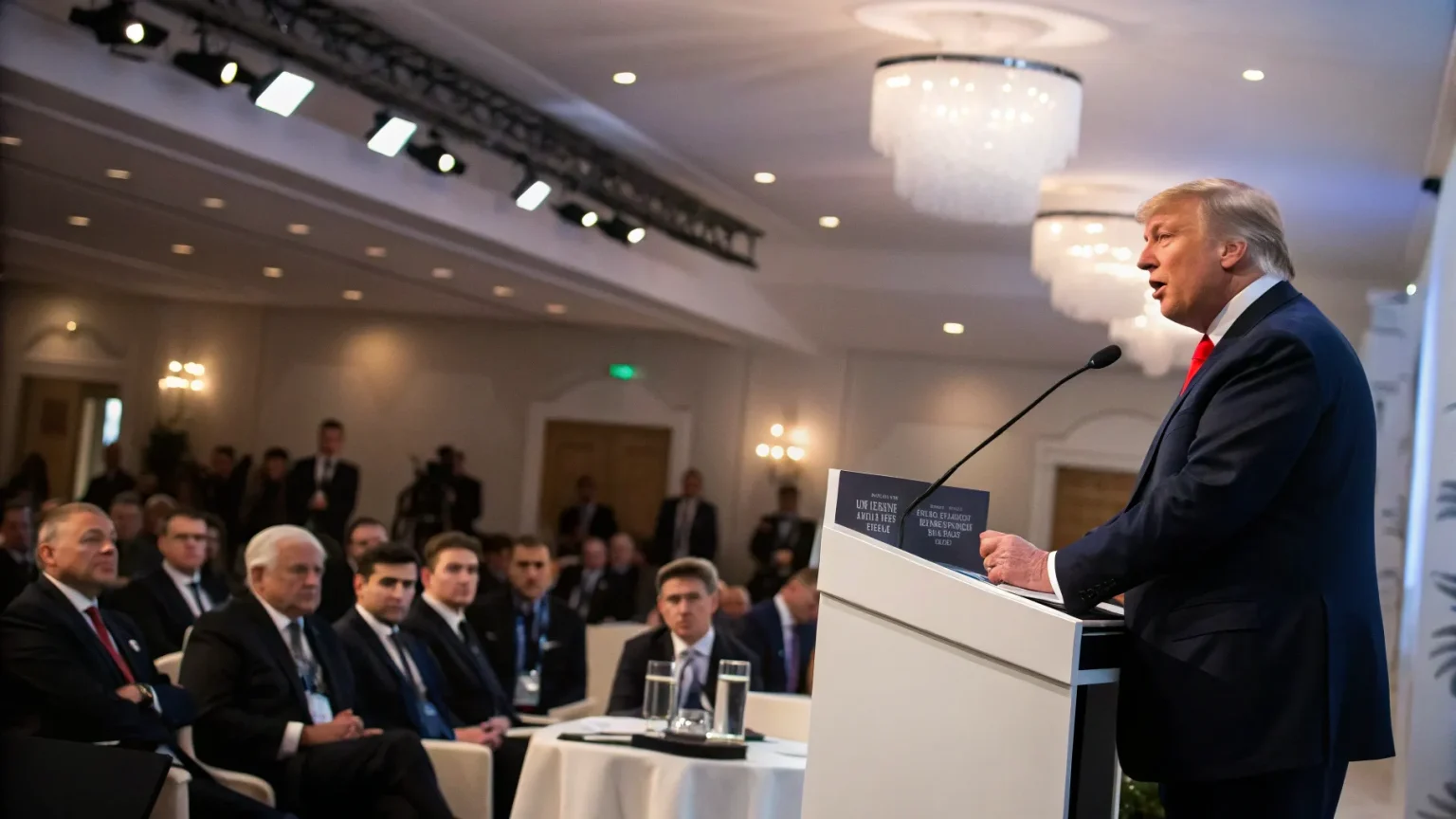
Former U.S. President Donald Trump startled attendees at the World Economic Forum in Davos by calling for immediate negotiations over Greenland, according to people in the room. The comments came during a private session in Switzerland, where CNBC reporters were present and described the mood as tense. The statement revived a geopolitical debate that first erupted in 2019 over the future of the vast Arctic territory.
Trump’s push centers on Greenland, an autonomous part of the Kingdom of Denmark. The island has rich mineral potential, growing strategic value as Arctic ice recedes, and a key U.S. military footprint. His call raises questions about diplomacy, law, and the Arctic’s future.
Background: A Proposal That Once Roiled Relations
In 2019, Trump expressed interest in purchasing Greenland from Denmark. The idea drew sharp rebukes in Copenhagen and Nuuk. Denmark’s prime minister, Mette Frederiksen, called the notion “absurd” at the time, and a planned state visit by Trump to Denmark was canceled soon after. Greenlandic leaders emphasized their right to self-determination and said the island was not for sale.
Greenland has roughly 56,000 residents and sits between North America and Europe. Most of its land is ice-covered. Yet it is rich in rare earth elements and other minerals. It also hosts Thule Air Base, a strategic U.S. installation central to missile warning and Arctic operations.
The Arctic is drawing new interest as melting sea ice opens shipping routes and access to resources. The United States, Denmark, Greenland, Russia, and China have all increased focus on the region’s security and infrastructure in recent years.
The Davos Moment
Trump’s latest push rekindled that debate in a high-profile setting. According to attendees, he framed the issue as urgent. CNBC journalists in the room described the atmosphere as strained as he pressed the point.
Trump demanded “immediate” negotiations over Greenland, according to people present.
The call did not include a detailed plan. It was not clear whether he envisioned a territorial transfer, expanded defense agreements, or economic partnerships. No formal response from Danish or Greenlandic officials was immediately available after the session.
Why Greenland Matters
Greenland’s value rests on three pillars: security, resources, and climate.
- Security: Thule Air Base anchors U.S. radar and space tracking.
- Resources: Rare earths, critical minerals, and possible hydrocarbons draw investor interest.
- Climate: Faster ice melt is reshaping shipping and research priorities.
These factors mean any proposal would ripple across NATO, the Arctic Council, and global markets. The United States already cooperates with Denmark and Greenland on defense and development, which could offer less contentious paths than a land deal.
Legal and Diplomatic Hurdles
Any change in Greenland’s status would require agreement from Denmark and Greenland’s government. Greenland enjoys self-rule in many areas and has the right to move toward full independence under its own process. International law, property rights, and the wishes of Greenland’s residents would weigh heavily on any talks.
Past reactions suggest stiff resistance to a sale or transfer. Danish leaders have defended sovereignty. Greenland’s government has focused on local control, sustainable development, and partnerships that respect its autonomy.
Industry and Market Implications
Mineral prospects on the island could shift supply chains for rare earths used in electronics and defense. A stronger U.S. role might aim to reduce reliance on foreign sources. Yet mining faces high costs, fragile ecosystems, and permit hurdles.
Shipping interests track the Arctic as ice retreats, but traffic remains seasonal and risky. Insurance costs, infrastructure gaps, and environmental rules limit rapid growth. Defense spending could rise as nations upgrade Arctic assets and surveillance.
What To Watch Next
Key signals will include any formal U.S. proposal, reactions from Copenhagen and Nuuk, and whether NATO allies weigh in. Market players will look for new defense or resource agreements rather than sweeping territorial moves. Climate trends will keep the Arctic in the spotlight, regardless of politics.
Trump’s call at Davos highlights a persistent question: how major powers will balance strategy, sovereignty, and commerce in the Arctic. For now, the path of least friction points to deeper cooperation with Greenland and Denmark, not a transfer of land. The next steps will show whether this renewed push becomes policy or remains a headline from a tense room in the Alps.


