

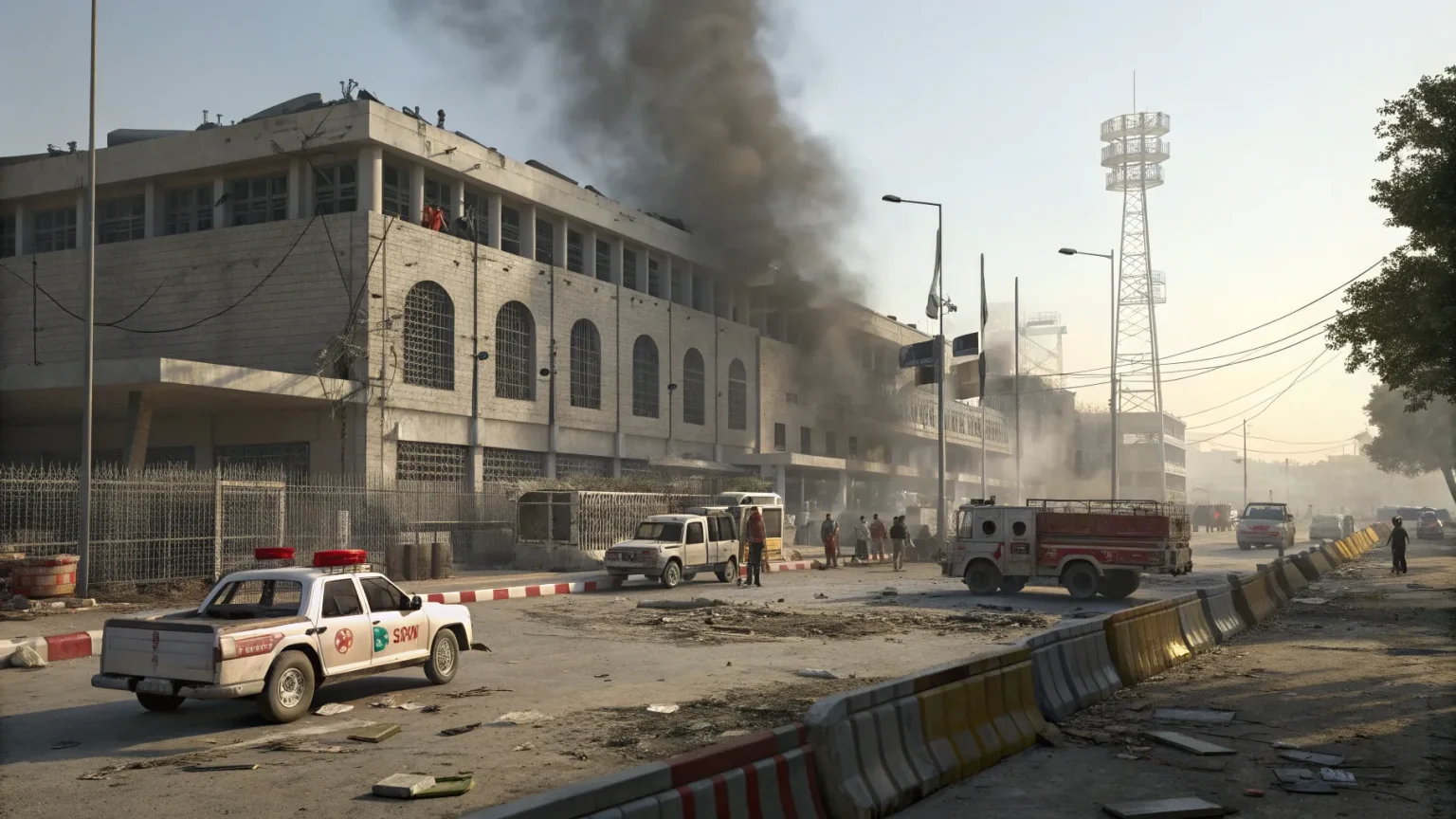
At least three officers were killed when two suicide bombers struck the headquarters of a security force in northwestern Pakistan, according to police. The assault targeted a guarded compound in a region long hit by militancy. Authorities said the attack happened in a busy area, heightening fears of more violence and raising questions about security in the frontier provinces.
Police described a coordinated operation by the bombers, who reached the entrance of the facility before detonating their explosives. No group claimed responsibility at the time of reporting. Officials said the death toll could rise as investigators examine the site and hospitals treat the wounded.
What Authorities Said
Police say two suicide bombers attacked the headquarters of a security force in northwestern Pakistan, killing at least three officers.
Local officials said the blast damaged nearby buildings and vehicles. They added that a search operation was underway to rule out additional threats. The site remained sealed off as forensic teams collected evidence.
Background: A Region on Edge
Northwestern Pakistan, which includes Khyber Pakhtunkhwa and the tribal districts, has faced attacks by militant groups for years. Security forces and police installations have often been targeted. The area borders Afghanistan, and cross-border dynamics have shaped patterns of violence and law enforcement challenges.
Authorities in recent years have reported security gains, yet sporadic bombings and ambushes continue. Suicide attacks, while less frequent than a decade ago, still cause high casualties and spread fear. Checkpoints, armored patrols, and intelligence-led raids remain common in towns near the frontier and in rural districts.
How the Attack Fits Recent Trends
Analysts say assaults on secure compounds are meant to test defenses and shake public confidence. Strikes on police and paramilitary sites also aim to slow operations against militant networks. The choice of a headquarters suggests planning and scouting by the attackers.
Witness accounts from previous incidents in the region show a similar playbook. Attackers try to breach gates with gunfire or an initial blast, then detonate a larger device. Such tactics strain first responders and complicate rescue efforts.
Immediate Impact and Response
Hospitals in the area moved to emergency footing, calling in extra staff and blood donors. The government is expected to review security protocols, including perimeter checks, camera coverage, and access control at sensitive sites. Officials also plan to update procedures for rapid medical evacuation and scene management.
- Casualties: At least three officers dead, with more injuries possible.
- Target: Headquarters of a security force in the northwest.
- Status: No immediate claim; investigation ongoing.
Community Concerns and Civilian Risks
Residents near the blast area reported panic and brief power outages. Small businesses closed early as rumors spread about more attacks. Local schools said they would review safety drills and coordinate with law enforcement on drop-off and pick-up hours.
Human rights advocates have urged security agencies to take care with cordon-and-search operations. They warn that broad sweeps can disrupt daily life and risk detaining people without cause. Police officials say they aim to keep operations precise and time-limited to reduce disruption.
Security Measures Under Review
Experts point to several steps that can reduce risk at high-value sites. These include layered barriers, license-plate checks, and early-warning systems tied to facial and object recognition cameras. Training for guards on suspicious behavior and bomb-detection techniques is also key.
Regional authorities may increase patrols on feeder roads and improve lighting on approaches to key compounds. Intelligence units are likely to examine phone records and CCTV footage to trace the bombers’ route and identify support cells.
What Comes Next
Officials are expected to release more details once families are notified and evidence is processed. The federal government may announce compensation for victims and funds to repair the facility. Neighboring districts could raise alert levels as a precaution.
The attack highlights the need for consistent security funding and closer coordination across agencies. It also shows how even hardened sites can be at risk without constant vigilance and up-to-date defenses.
The situation remains fluid. More information on the bombers’ identities, their network, and the exact method of entry will shape the response. For now, the priority is care for the wounded, support for the families, and a clear plan to prevent a repeat.


