

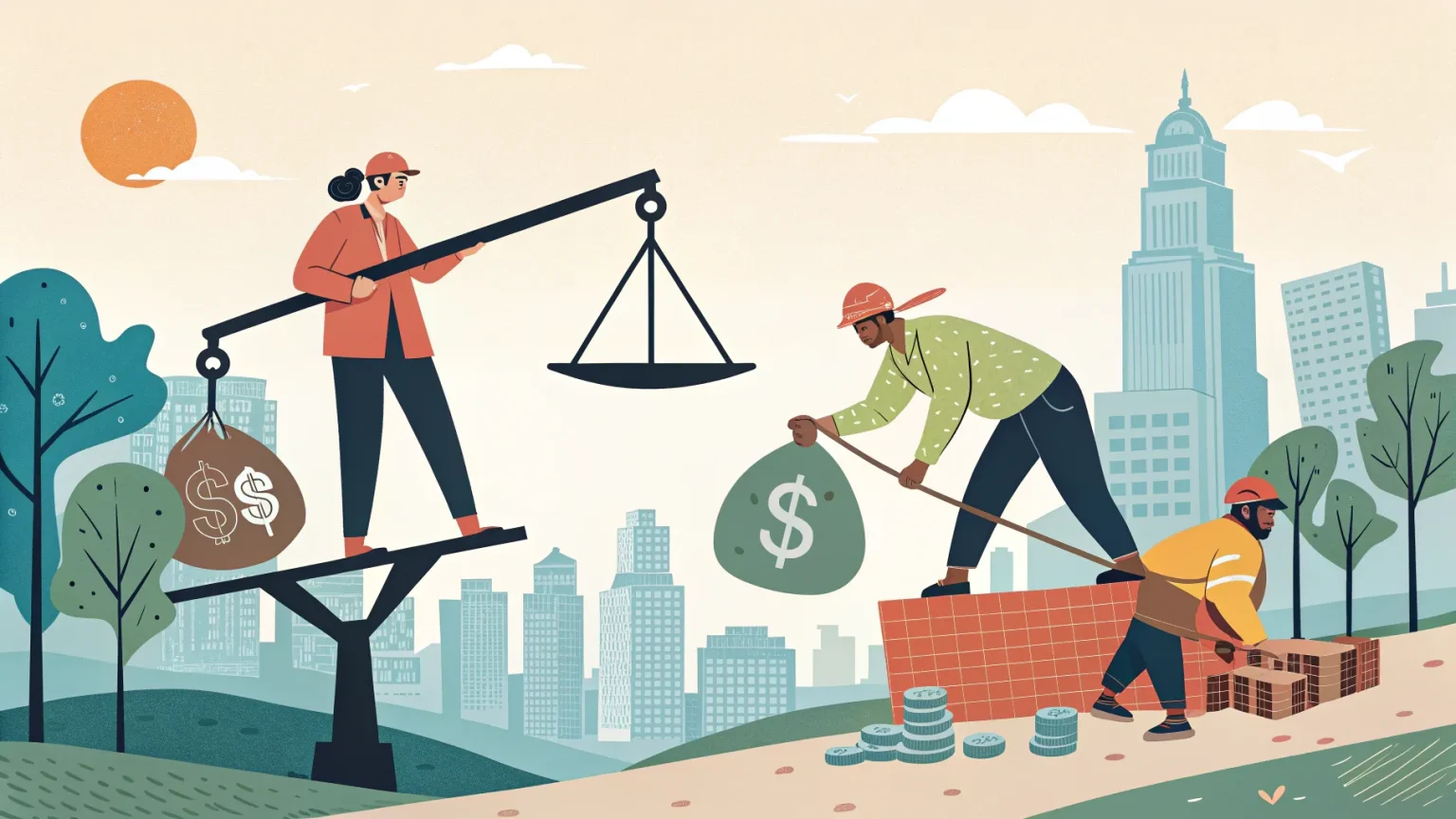
The tax system rewards capital and punishes labor. That is not a conspiracy. It is design. My stance is simple: if you work for money, you pay more tax than if money works for you. This isn’t about envy or heroes. It’s about incentives that shape behavior and outcomes.
Warren Buffett is the perfect example. People love to repeat the line that he pays a lower tax rate than his secretary. They say it with a shrug, as if it is a fun fact. It is more than that. It reveals how the game is played.
“Warren Buffett pays a lower tax rate than his secretary… she’s on a W-2 so she pays ordinary income… if he cashes out stock… it’s capital gains which is 20% versus 37.”
The Game: Own Assets, Don’t Earn W-2 Income
Here is how this works. W-2 income gets hit with the highest rates. It is the least efficient way to earn. Capital gains are taxed lower, and borrowing against assets can be taxed at zero. That is not shady. It is legal and common.
Buffett rarely sells. He owns businesses. He can borrow against appreciated stock to fund anything he needs. When you borrow, it is not income. There is no tax on a loan. Even if he sells, his rate is far lower than a high-earning employee.
“He… could borrow against that stock… or even if he cashes it out, it’s capital gains which is 20% versus 37.”
There is even a joke hidden in plain sight. He is famous for being frugal. He might use coupons for breakfast. People comp his meals and flights because they want him around. The message is clear: wealth buys options.
“He just doesn’t spend any money because he has an unlimited McDonald’s card and people pay for everything that he does because they want him around.”

My Take: Stop Worshiping Hard Work, Start Building Smart Work
I was raised to think hard work was the answer. Work is noble, but the tax code does not reward it. Ownership is rewarded. Cash flow from assets is rewarded. Strategic debt is rewarded. The system favors patient capital and planning, not punching a clock.
We need a mindset shift. The question is not “How much do I make?” It is “How is my income taxed?” Change that, and the result changes. You cannot out-hustle a bad structure.
Evidence, Pushback, and Reality
Some argue Buffett wants higher taxes on the wealthy. He has said that. That does not change what he does. He follows the law, as anyone should. The law treats gains from assets better than wages. Period.
Others say borrowing against stock is risky. It can be, if done without care. But big banks lend at low rates to people with strong collateral. It is common practice among the wealthy. They live on lines of credit, not paychecks.
If the goal is fairness, fix the incentives. Lower rates for productive business income. Reward patient capital for small owners, not only giant funds. Close loopholes that only insiders use. Stop hammering the people who do the work.
How To Play Smarter, Starting Now
You don’t need billions to change your approach. You need a plan that shifts you from labor to ownership over time.
- Build a business or side venture that qualifies for tax deductions.
- Acquire assets that produce cash flow and can grow in value.
- Use capital gains rates when possible instead of wage income.
- Reinvest profits instead of inflating lifestyle costs.
- Design access to capital through credit lines backed by assets.
These steps are not about tricks. They are about alignment. Match your efforts with the rules as written.
The Real Issue: Incentives Create Outcomes
We get what we design for. Reward ownership, and you get more owners. Punish wages, and you trap workers. We should stop pretending this is a mystery.
My view is direct: change policy so average earners can become owners faster. Make it easy to invest in small businesses. Simplify the code for first-time investors. Encourage saving and cash flow. End the bias against W-2 income without killing capital formation.
I coach top producers, and I see it every day. The people who win don’t just work more. They set up their lives so that value flows through entities, assets, and strategy. That is the real edge.
Here is the call to action: learn the rules, build ownership, and press lawmakers to stop punishing wages. We can honor work and still reward capital. Let’s do both. The future belongs to those who structure their lives to keep more of what they create—and use it to create even more.


